Saint Peter’s Church: A Lutheran Church in Slagelse, Denmark
Site at a Glance
- Rating
- 4.3
- Popularity
- Very Low
- Country
- Denmark
- Primary era
- Medieval
- External website
- Open
- Eras represented
- Medieval, Early Modern, Modern
- Civilizations
- Danish
- Site type
- Religious
- Remains
- Church
On this page14 sections
History
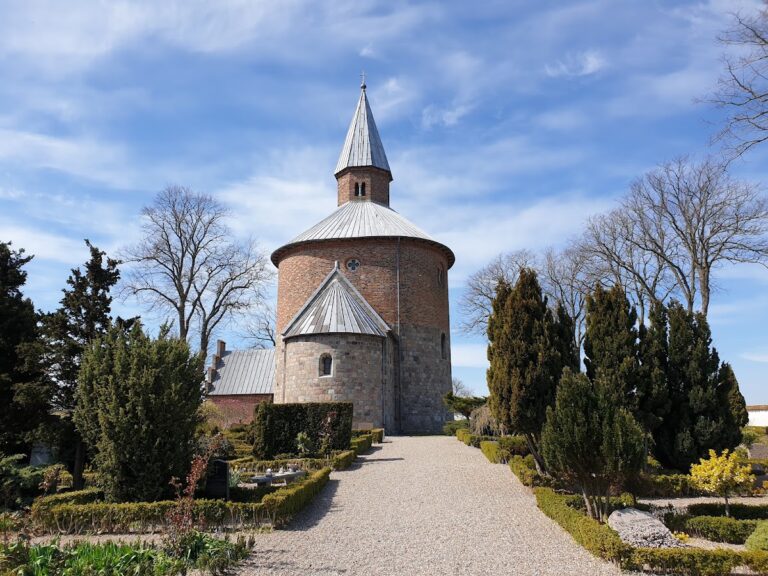
Saint Peter’s Church is a Lutheran church in central Slagelse, Denmark, originally built in the twelfth century in the Romanesque style. Its congregation began as Roman Catholic and became Lutheran during the Reformation, the sixteenth-century religious transformation through which Denmark became predominantly Lutheran. The church now belongs to the Church of Denmark, the Diocese of Roskilde, Slagelse Deanery, and Sankt Peders Parish.
Medieval origins and expansion
The church began as a stone building in the twelfth century. Its enlargement over time reflected the growth of Slagelse. An eastern choir and a porch were added in the early fourteenth century, followed later in the same century by a second chapel on the south side. These additions gave the building a cross-shaped plan, while the ceiling was reconstructed with vaults. In the fourteenth century, Saint Michael’s Church was also built and became the town’s main parish church in place of Saint Peter’s.
Saint Anders of Slagelse served as a priest at Saint Peter’s in the late twelfth century. He died in 1205 and was never canonized by the Roman Catholic Church, but local tradition associated him with miracles, including the healing of sick and blind people. He is traditionally believed to have been buried at the church.
Traditions of Saint Anders
Two local legends connect Saint Anders with distant travel and the Danish royal household. One relates that he made a pilgrimage from Slagelse to the Holy Land. After separating from twelve companions in Jaffa so that he could attend a Pentecost service in Jerusalem, he reportedly fell asleep outside Jaffa and was carried by a rider on a white horse to Hvilehøj, a hill outside Slagelse.
Another tradition presents Anders as a friend of King Valdemar II, known as Valdemar the Victorious, who ruled Denmark from 1202 to 1241. The king supposedly offered Anders as much land as he could circle on a nine-day-old foal while Valdemar took a bath. Anders covered enough ground to alarm the king’s squire. A spring was later said to have appeared at Landsgrav where Anders had dropped a glove, and people visited it for its alleged healing properties into the eighteenth century.
Damage, repair, and restoration
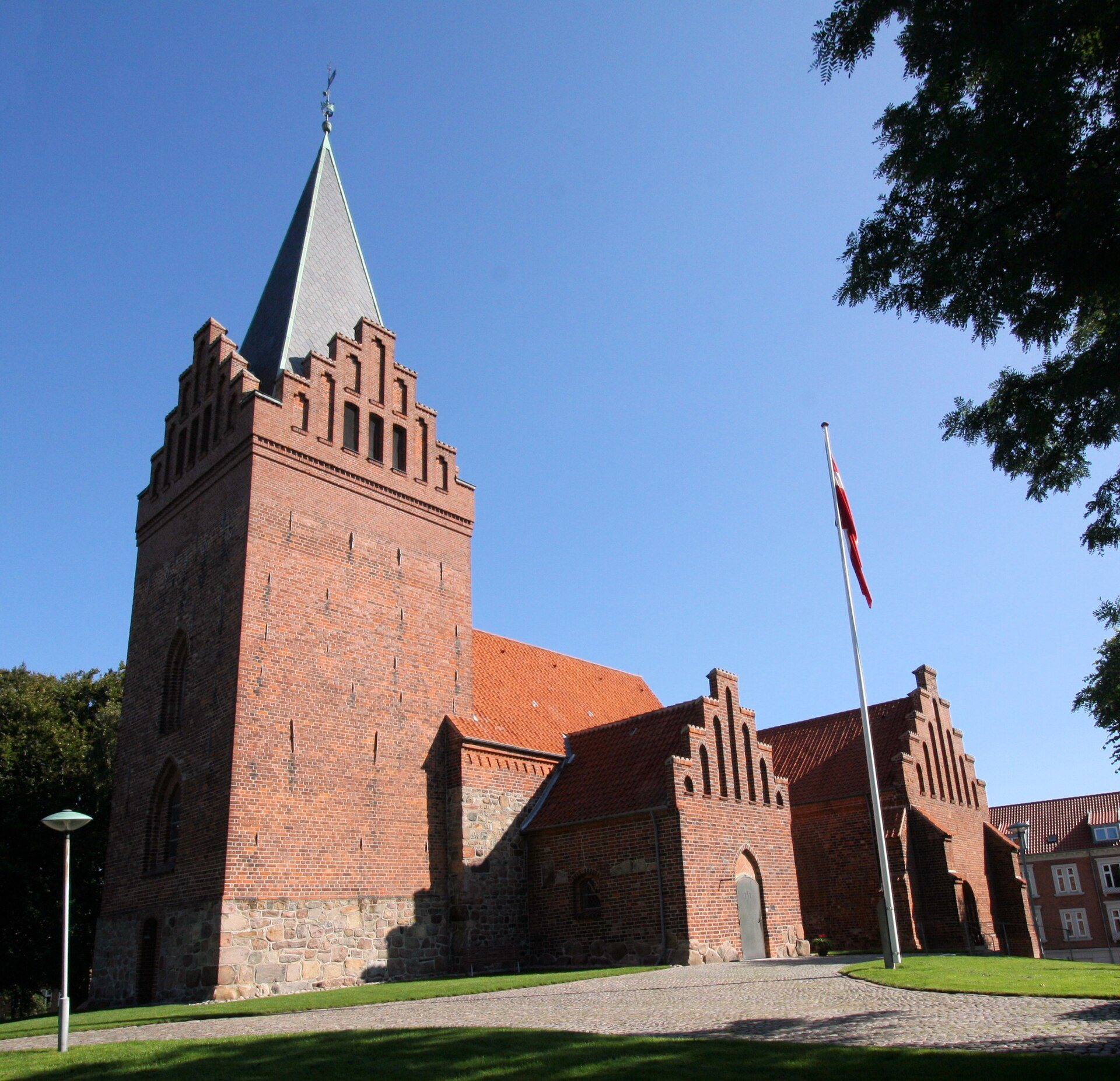
The original medieval tower was blown over in 1660. It was rebuilt in 1664 under Hans Spirhugger, whose memorial stone at the tower entrance records that he later died at Antvorskov in 1683. Iron anchors and the monogram of Frederick III, king of Denmark and Norway from 1648 to 1670, also indicate the date of the rebuilding.
By 1818 the church had become sufficiently dilapidated for closure to be considered, but structural repairs were carried out instead. The tower spire was removed and replaced with a mansard roof. During the restoration of 1871, that roof was removed and the present pyramidal spire was installed. Johan Daniel Herholdt completed another major restoration in 1880. The interior was plastered, and a fourteenth-century fresco behind the altar was uncovered and later restored by Jacob Kornerup. The present pews were installed during the same restoration.
The church’s original altarpiece was replaced by one transferred from Antvorskov, a medieval monastery near Slagelse, after the monastery was demolished. That work was replaced in 1882 by an altarpiece by August Jerndorff, which remains in use. The pulpit had been removed during the 1880 restoration but was returned in the early twentieth century and restored by Peter Axelsen in 1950.
Later furnishings and music
Saint Peter’s has two votive ships, model vessels placed in a church as devotional offerings or memorials. Haabet, meaning “the hope,” was made in 1800 by the Slagelse blacksmith Johs Rasmussen and restored by Ove Andersen in 1998. Ørnen, meaning “the Eagle,” was made by the Slagelse painter Ove Andersen at the request of Ole Haugaard. It was hung in the nave on 14 December 1997, after Haugaard’s death in April that year. At his request, one- and two-øre coins were placed beneath its masts.
Poul-Gerhard Andersen of Copenhagen installed the church organ in the 1970s. It has twenty registers distributed among manuals and pedals. No earlier organ is recorded.
Remains
Plan and medieval fabric
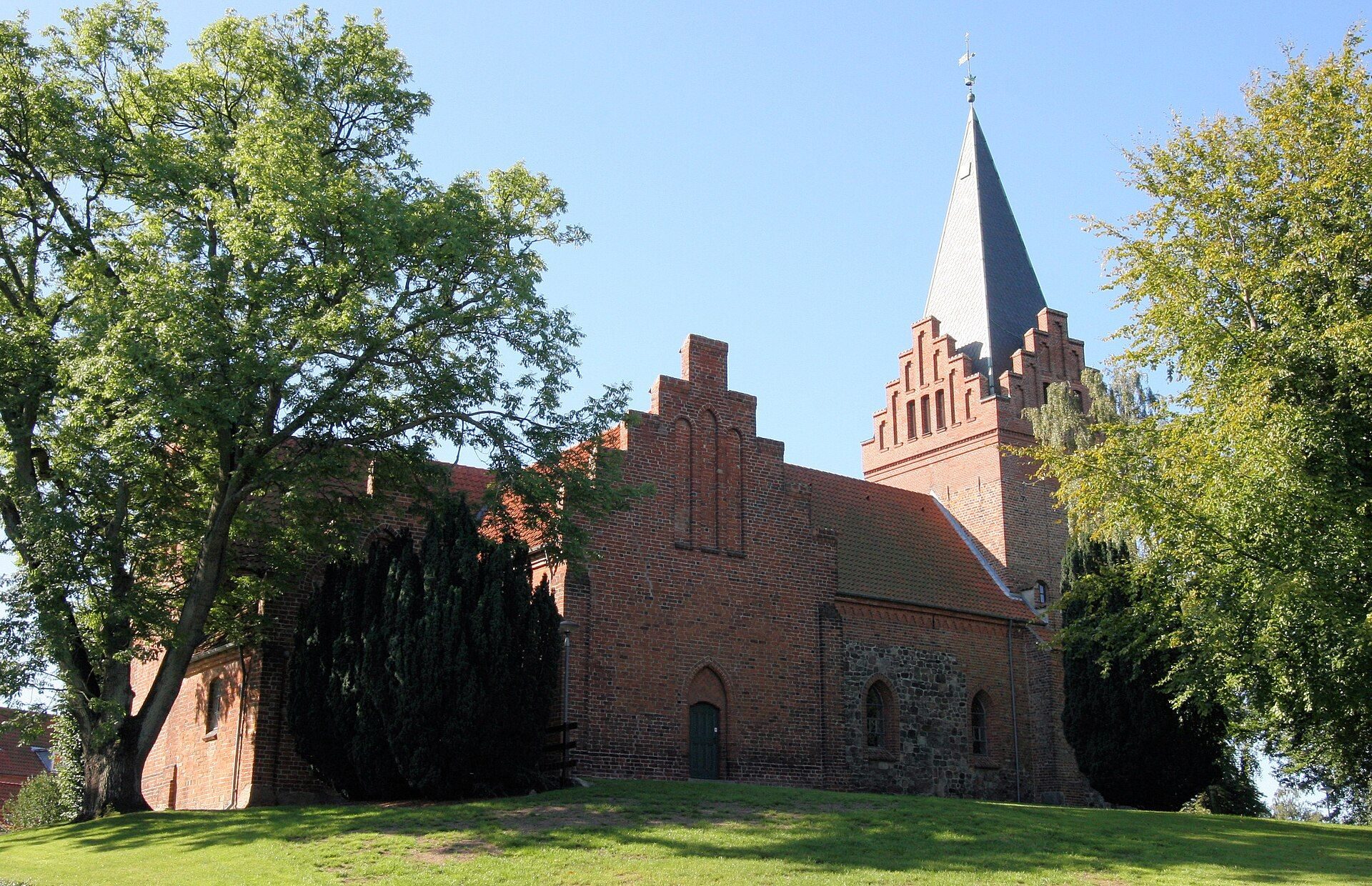
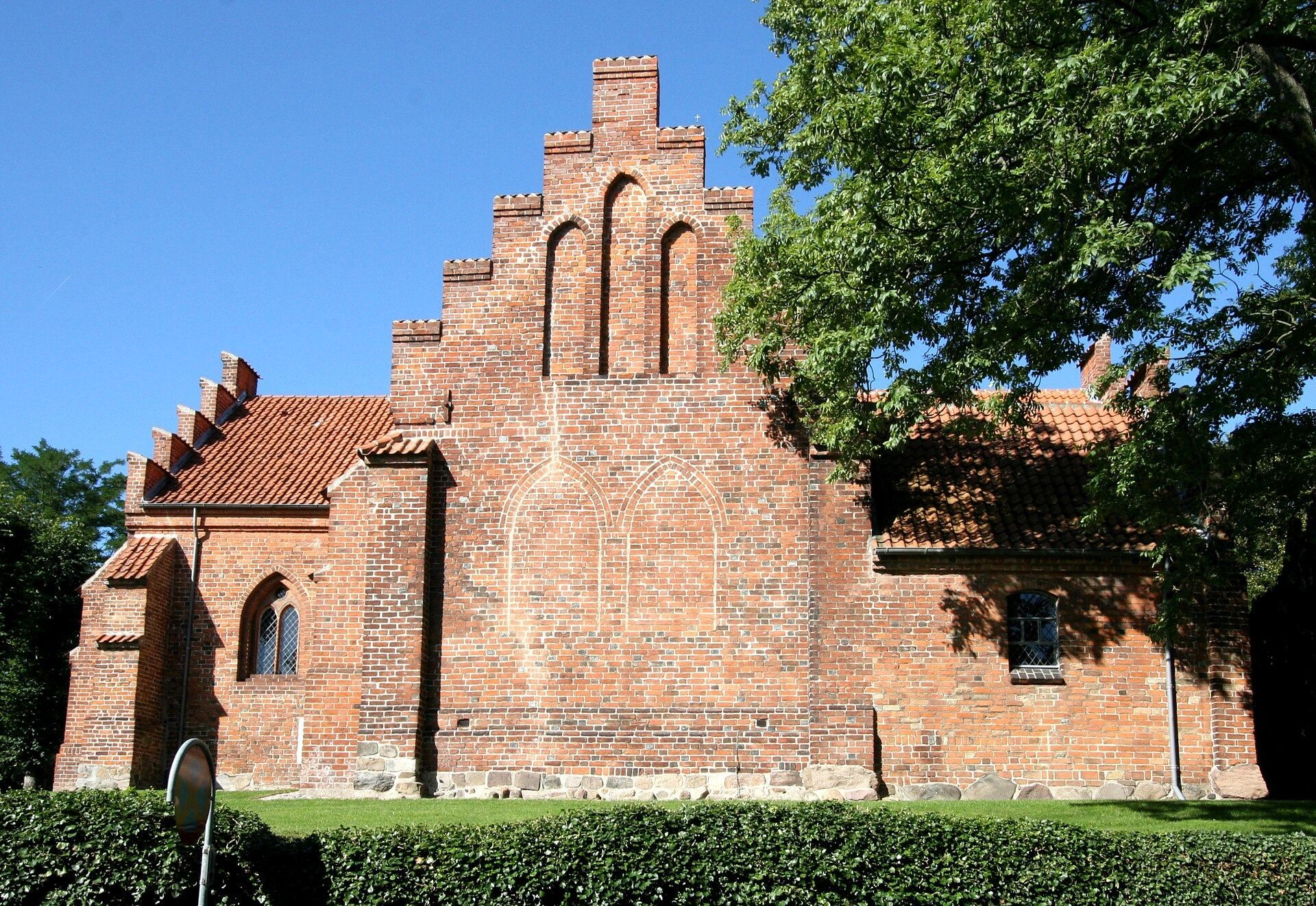
Saint Peter’s has a cruciform plan, meaning that its layout is shaped like a cross, and resembles a Latin cross with a longer nave and shorter cross-arms. The tower stands at the western end of the nave, the porch projects from the south side, and the sacristy occupies the southern end. The oldest fabric is the twelfth-century Romanesque stone structure. Large areas of this masonry remain visible in the lower nave walls, where the stone changes into brick added during later extensions and repairs.
Extensions and tower
Medieval additions
The eastern choir and church porch were added in the early fourteenth century. A second chapel was built on the south side later in that century, completing the building’s cross-shaped arrangement. The ceiling was reconstructed with vaults, and the sacristy, added in the early sixteenth century, received vaulted ceilings that correspond to those of the nave.
Western tower
The tower is built of large stones in its lower section, which may incorporate material reused from the foundation of the original medieval tower. Its entrance contains the memorial stone to Hans Spirhugger. The rebuilt tower is associated with 1664 through its iron anchors and the monogram of Frederick III.
Interior and liturgical furnishings
The interior walls are whitewashed and covered by vaults. Yellow tiles cover the floor, and the choir is raised one step above the nave. Most windows date from Herholdt’s restoration, while two windows facing east are considered original. Behind the altar is a fresco, a wall painting made on plaster, dating from about 1350.
Altar and medieval artworks
The brick altar contains a vaulted cavity in which a relic was discovered during the nineteenth century. The relic is now held in the collection of the National Museum. The 1882 altarpiece by August Jerndorff is divided into three fields showing Peter’s denial, the trial of Jesus before the Sanhedrin, and Peter’s repentance.
A fourteenth-century side altarpiece hangs north of the choir. It depicts Saint Dionysius of Paris, a Christian martyr traditionally associated with the early church of Paris. Rather than showing him carrying his severed head, the conventional attribute linked with his martyrdom, the image has the top of his mitre cut away.
Baptismal font and pulpit
The granite baptismal font dates from the thirteenth century and has an unusual octagonal form. Its shape suggests that it may originally have been made for another purpose. The font came from Antvorskov Monastery, which would not have conducted baptisms, and its brass inlaid dish dates from the seventeenth century.
The pulpit was made around 1630 in the late Renaissance style. It is octagonal, although only five sides are visible from the interior. Its original sounding board, the canopy traditionally placed above a pulpit to direct the speaker’s voice, was not reinstalled.
Votive ships and organ
Haabet and Ørnen remain suspended in the church as votive ships. Haabet carries the date 1800, while Ørnen hangs above the nave. The organ installed in the 1970s has twenty registers arranged among manuals and pedals, continuing the building’s use as a functioning Lutheran church.