Kragerup: A Danish Manor Estate
Site at a Glance
- Popularity
- Medium
- Country
- Denmark
- Primary era
- Early Modern
- Eras represented
- Early Modern, Modern
- Civilizations
- Danish
- Site type
- Domestic
- Remains
- Manor House
On this page10 sections
History
Kragerup is a manor estate near Ruds-Vedby, Denmark, whose history reaches back to a medieval village and farm. The place first appears in the record in 1327 as Krakæthorp, when it belonged to Matheaus Jakobsen Taa.
Medieval village and estate
Jens Nielsen Neb owned Kragerup from 1356 to 1376. After his death, several people held shares in the estate at the same time. It later passed to the Gyrsting family, and by the late fifteenth century Oluf Mortensen Gyrsting had gained almost complete ownership.
Following Oluf’s death, the estate passed to Eggert Andersen Ulfeldt, who died in 1505, and then to Peder Skram. Skram sold it to Ove Lunge in 1533. After Lunge died, his grandson Eggert Clausen Ulfeldt inherited Kragerup, followed by Eggert’s son, Eggert Ulfeldt. Eggert Ulfeldt’s wife, Elisabeth Galde, brought the estate into her second marriage, to Jørgen Friis.
Christen Friis and the seventeenth century
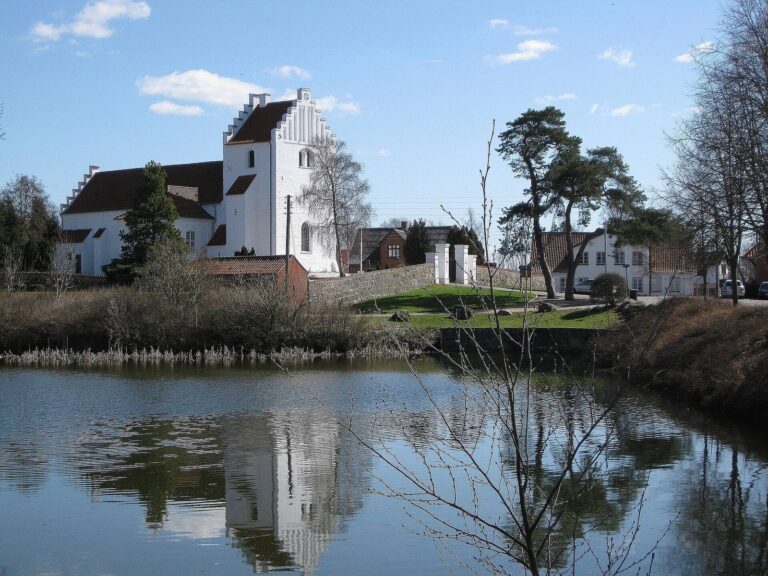
Jørgen Friis’s son from an earlier marriage, Christen Friis (1581–1639), inherited Kragerup in 1610. He served in the Kalmar War, a conflict between Denmark-Norway and Sweden fought from 1611 to 1613. Appointed chancellor in 1616, a senior government official, he commissioned a new main building in 1621 at a different location, on an island in a lake northwest of the village. He also expanded the estate by purchasing farms in nearby villages. In 1627, Kragerup received birk status, a special local jurisdiction associated with an estate.
After Christen’s death, his widow, Barbara Wittrup, kept the estate. Their son Hans took ownership in 1653 and sold it three years later to Frederik Urne. Urne was followed by his son-in-law Ove Juul, who later became vice chancellor, or deputy to the chancellor. Juul’s son Christian received the estate next, then transferred it in 1687 to his sister Mette Marie Juul, who also acquired Kattrup. She married Kragerup’s bailiff, Povl Pedersen Lerskov. After Lerskov died in 1692, Mette remained at Kragerup for another twelve years.
Expansion and agricultural enterprise
Jacob Lerche acquired Kragerup in 1705 and enlarged it with Kragevik, a group of three farms, and Nyrop, a group of four. Following Lerche’s death in 1721, the estate was sold at auction to Andreas Fogh for 25,000 Danish rigsdaler. A regimental quartermaster, responsible for a regiment’s supplies and administration, Fogh was credited with being the first person to grow potatoes on Zealand. He also established a wool factory and carp ponds.
After Lars Fogh died in 1764, Kragerup passed into joint ownership by his brother Clemens and three sisters. Mette Fogh outlived her brother and two of her sisters, then sold the estate to Peder Bech in 1797. Around 1800, the village disappeared as its farms were relocated out into the fields.
The Dinesen family and modern estate
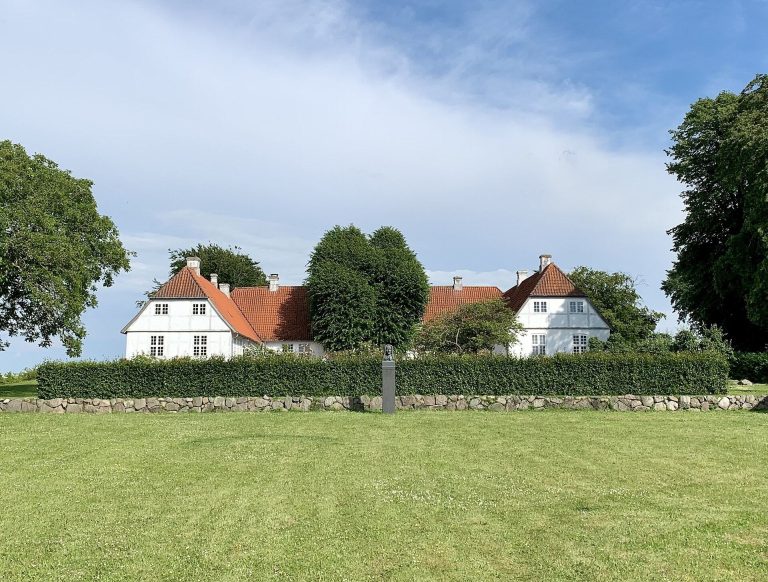
Jens Kraft Dinesen acquired Kragerup in 1801 and built a new main wing the following year. The estate remained in the Dinesen family. Anders Didrich Dinesen succeeded Jens, and after Anders’s death his wife, Sophie Jacobine de Neergaard, managed the property until her own death in 1857. Their son, Jens Kraft Jacob Sophus Dinesen, then inherited it. In 1880, he married Alvilde Dinesen, the widow of his younger brother.
Alvilde’s son from her first marriage, also named Jens Kraft Dinesen, inherited Kragerup in 1910. When he died in 1916, his son Wilhelm succeeded him. Later family owners included Ida Dinesen, Jørgen Dinesen and Erik S. Dinesen. Birgitte Dinesen has owned the estate since 1996. Kragerup was added to Denmark’s register of protected buildings and places in 1918, and the main building is now operated as a hotel.
Remains
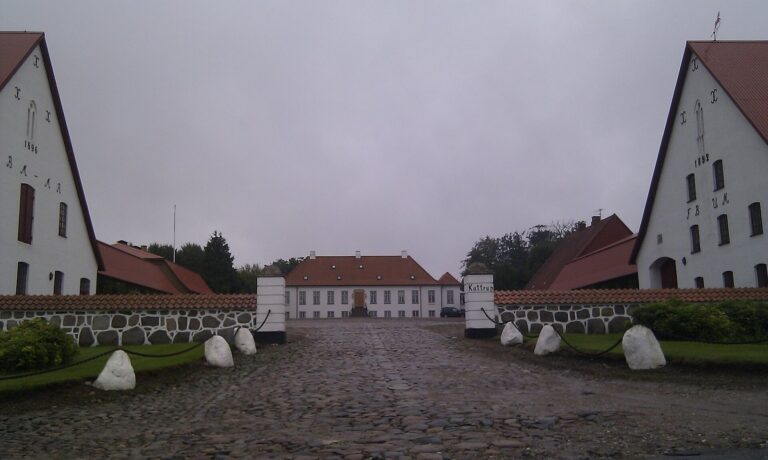
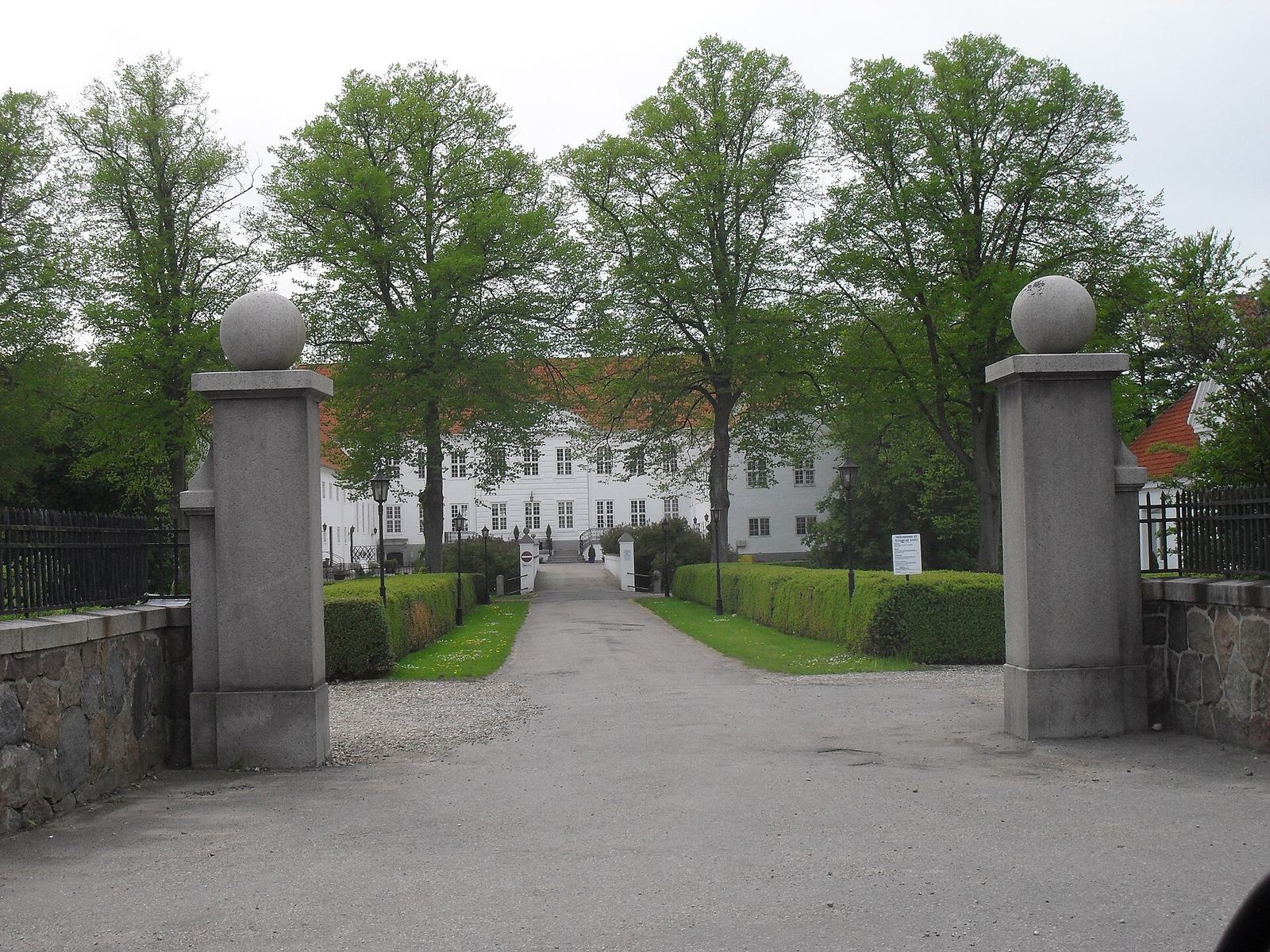
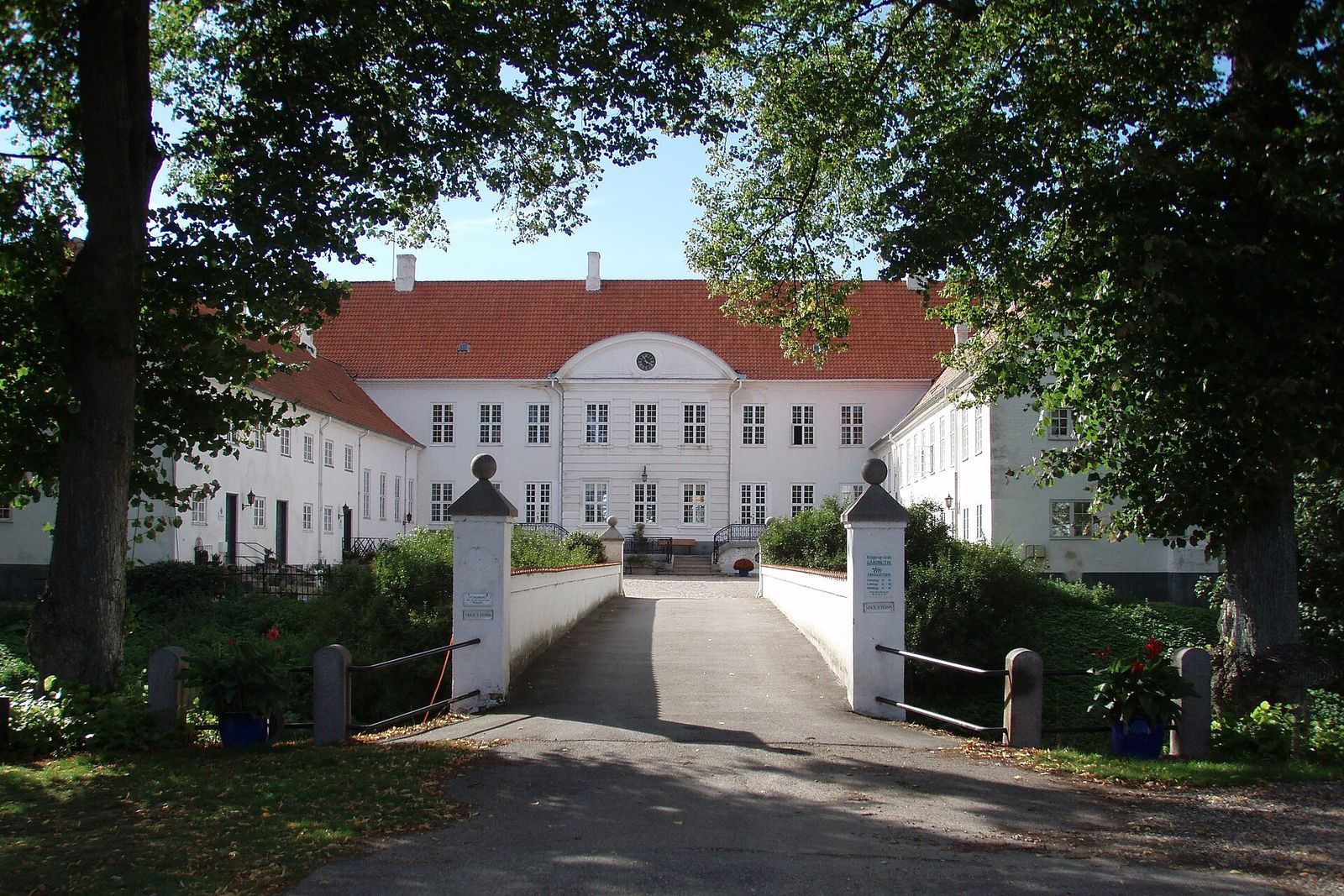
The estate’s main house is a two-storey, three-wing complex. Its western main wing rises slightly above the two side wings, while a garden pavilion and the hall contain surviving historic features and furnishings.
Main building
The main wing is 15 bays wide, with whitewashed walls and a red-tile roof whose ends slope down on four sides. At its center, a projecting section is topped by a rounded pediment.
Surviving objects
Board-game table
An octagonal granite table made for Eggert Ulfeldt in 1577 survives in a small thatched garden pavilion. Its marked surface was used to play alquerque, a strategy game played with pieces, and bears the coats of arms of Ulfeldt and his wife. The Danish artist and draftsman Johann Gottfried Burman Becker made a drawing of the table during a visit to Kragerup.
Carved cupboard
A carved cupboard dating from the seventeenth century has also survived and now stands in the hall.