Sønderborg Castle: A Historic Danish Fortress and Residence
Visitor Information
Google Rating: 4.4
Popularity: Medium
Official Website: msj.dk
Country: Denmark
Civilization: Early Modern, Medieval European
Site type: Military
Remains: Castle
History
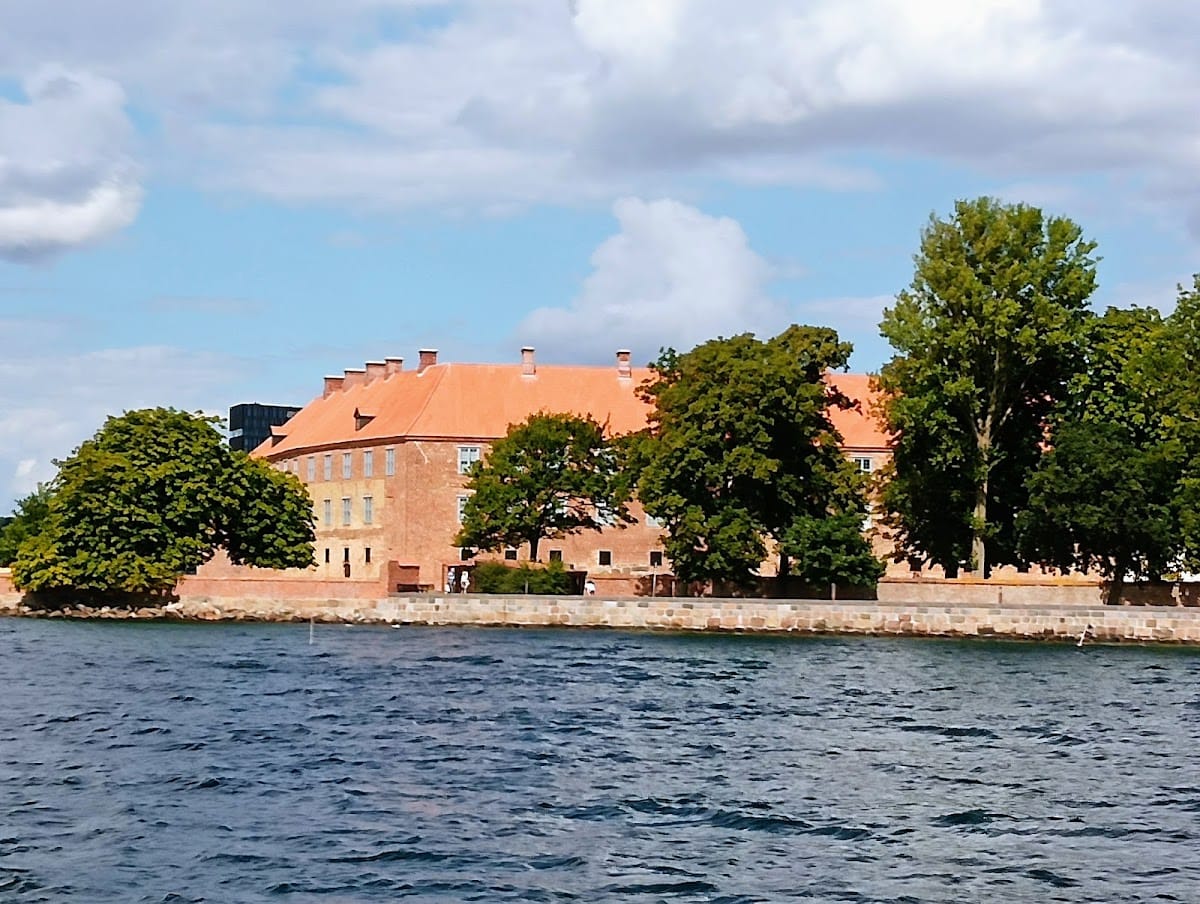
Sønderborg Castle is situated in the municipality of Sønderborg in modern-day Denmark. It was established in the mid-12th century by Danish rulers as a defensive stronghold on a natural peninsula overlooking the Als Sound, guarding the waters near the island of Als.
The founding of the castle dates to 1158 when King Valdemar I, known as Valdemar the Great, ordered the construction of a tower to protect the region from incursions by Wendish pirates. Positioned strategically at the entrance to Flensburg Fjord, Sønderborg formed part of a broader network of fortifications controlling access along this vital waterway. The earliest written record of the castle appears in 1253, when King Christopher I captured it during a conflict and caused significant damage. Despite this assault, the castle was subsequently repaired and expanded through the late 13th and 14th centuries, adding robust defensive walls arranged in a skewed quadrilateral pattern.
During the 14th and 15th centuries, the castle played a central role in power struggles between Danish monarchs, the dukes of Schleswig, and the counts of Holstein. It was subject to sieges in 1358 and again in 1410, reflecting the contested nature of the border region. Ownership fluctuated multiple times amid these disputes. Besides serving as a military fortress and ducal residence, Sønderborg also functioned as a prison; one notable inmate was Peder Höfel in 1289, and later King Christian II was confined there for seventeen years from 1532 to 1549.
Around the early 1500s, the castle underwent further strengthening to meet evolving military needs. This included the addition of a new tower on the northwest side and reinforced bastions, elevating its status as one of the strongest fortifications on the Cimbrian Peninsula. During the turbulent era of the Reformation, Sønderborg was connected to King Christian II’s promotion of Lutheran ideas. Significantly, it holds one of the scarce surviving editions of the first Danish translation of the New Testament, commissioned by Christian II himself.
The Renaissance and Baroque centuries brought a shift in the castle’s function and appearance. Under King Christian III and Duke John of Schleswig-Holstein-Sonderburg, it evolved into a princely dwelling. A prominent addition was the construction of a Renaissance-style chapel between 1568 and 1570, built for Queen Dorothea of Saxony-Lauenburg-Ratzeburg. After 1667, the castle returned to direct Danish crown ownership and intermittently served as an administrative residence as well as a military barracks. It saw renewed military use during the Schleswig Wars in the mid-19th century and was under Prussian control following the conflicts until its return to Denmark in 1920.
Since the early 20th century, Sønderborg Castle has been preserved as a site reflecting Southern Jutland’s long history, especially focusing on the Reformation era and Christian II’s imprisonment there. A major restoration project was conducted from the 1960s to the early 1970s to maintain the structure. Today, it stands as a testament to over eight centuries of Danish history shaped by warfare, governance, religion, and shifting political boundaries.
Remains
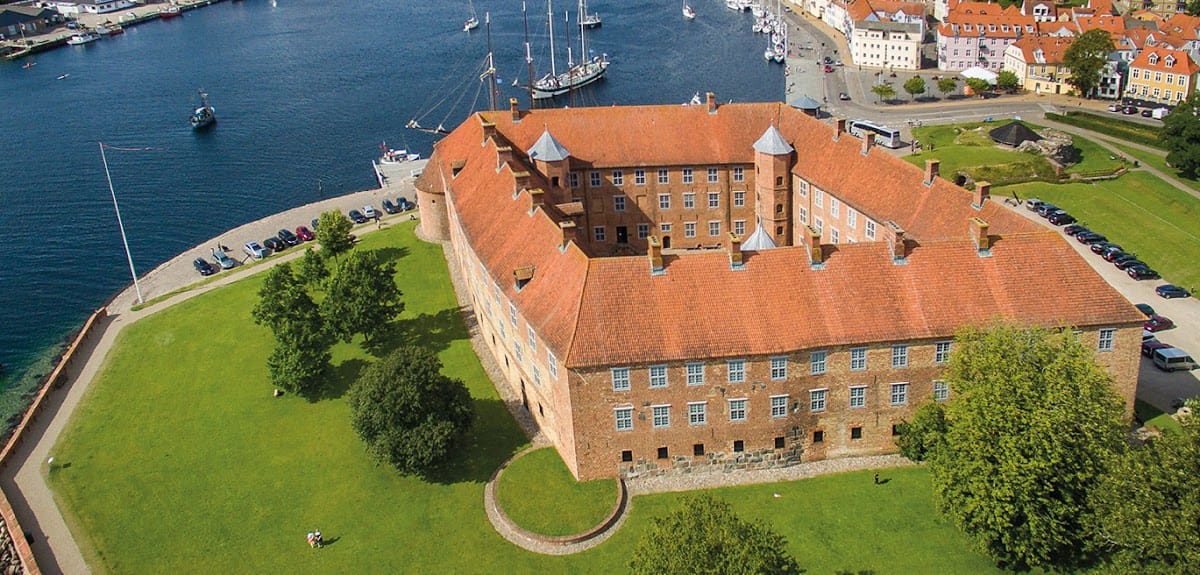
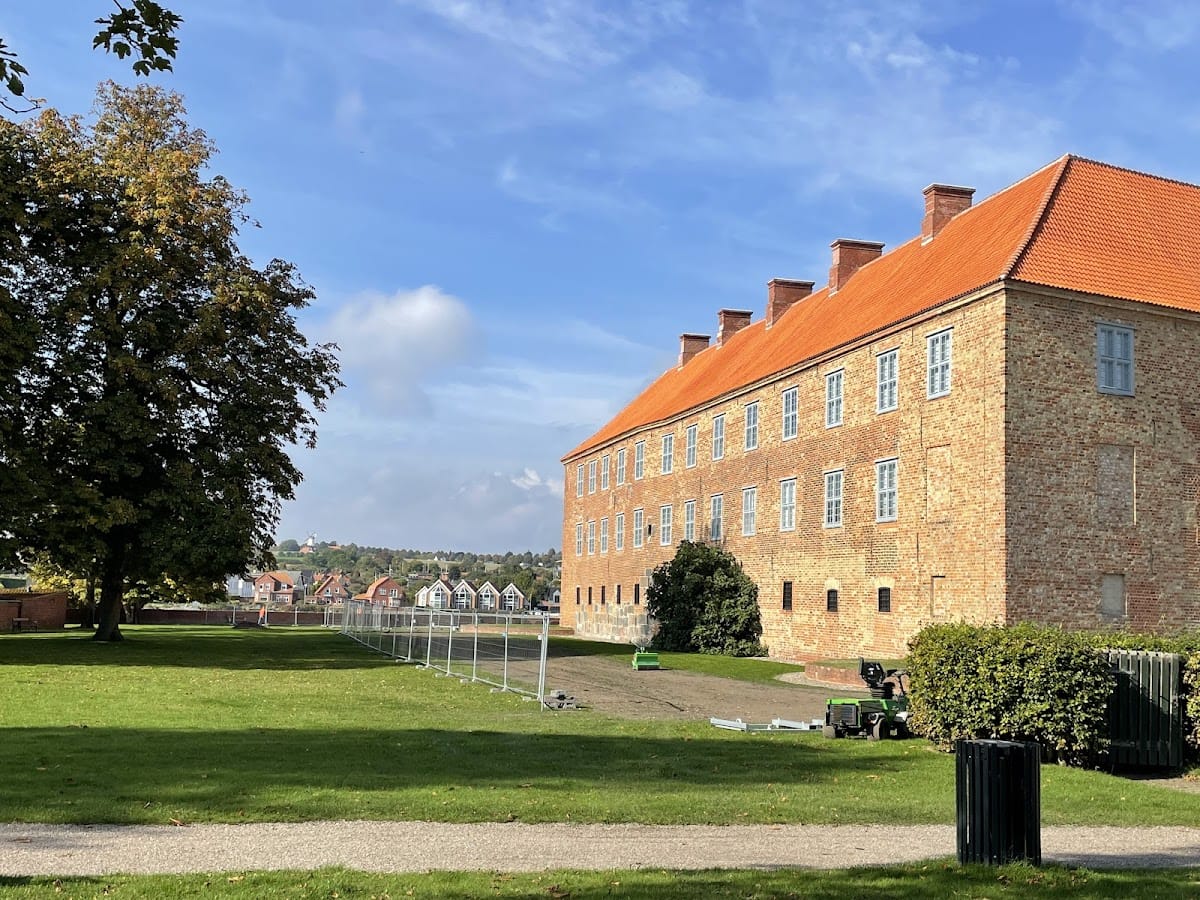
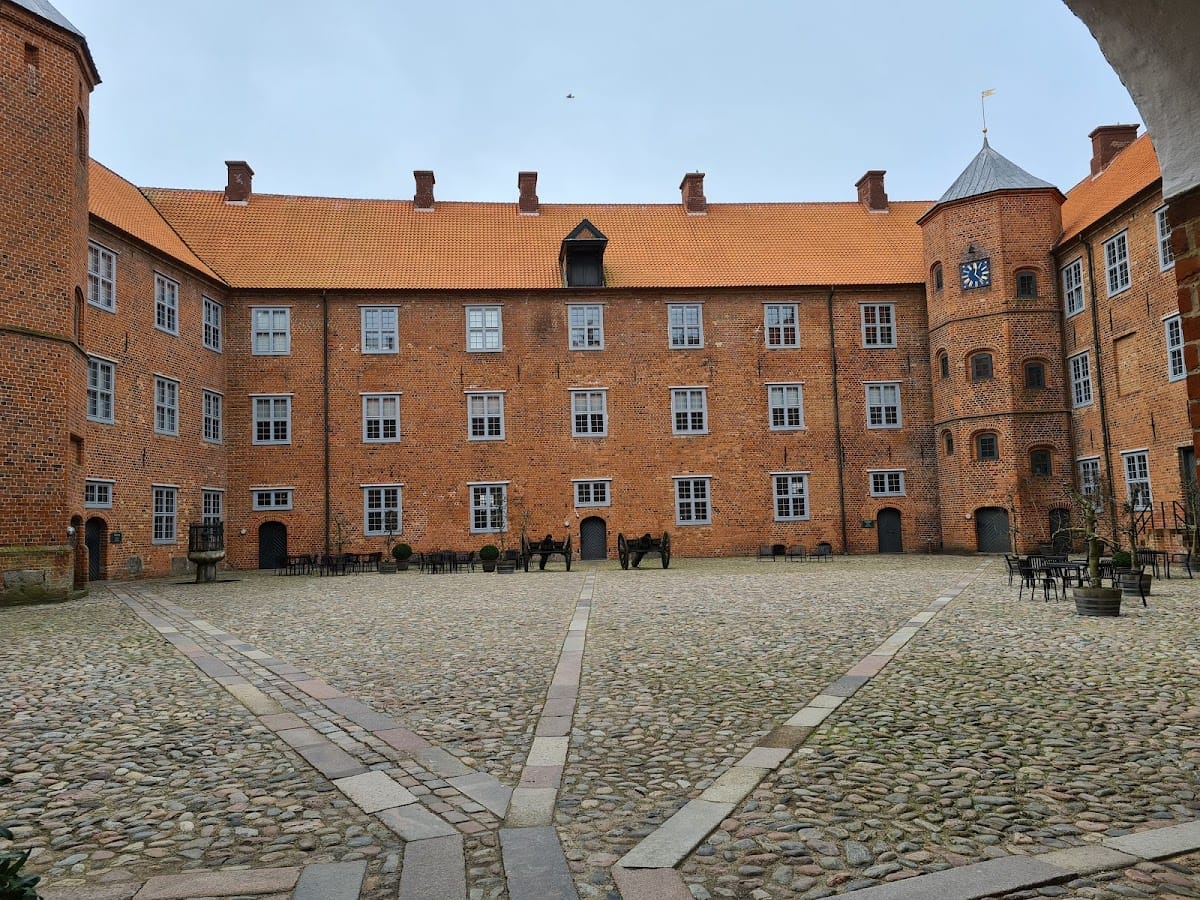
Sønderborg Castle today appears as a large, three-story complex arranged in four wings around a central courtyard, forming an approximately rhombus-shaped layout. The primary building material is brick set upon foundations of large stone blocks, a construction suggesting durability and a medieval origin.
Originally, the castle featured massive corner towers characteristic of the Renaissance period, each crowned with distinctive domed roofs. Presently, the towers survive only in foundational form, except at the northwest corner where a truncated base remains visible. The medieval entrance once stood in the northern wall, and while this gateway is still discernible, it has been sealed. Visitors now enter through the eastern wing, which opens into a spacious courtyard ornamented with three slender stair towers, lending a vertical emphasis to the central open space.
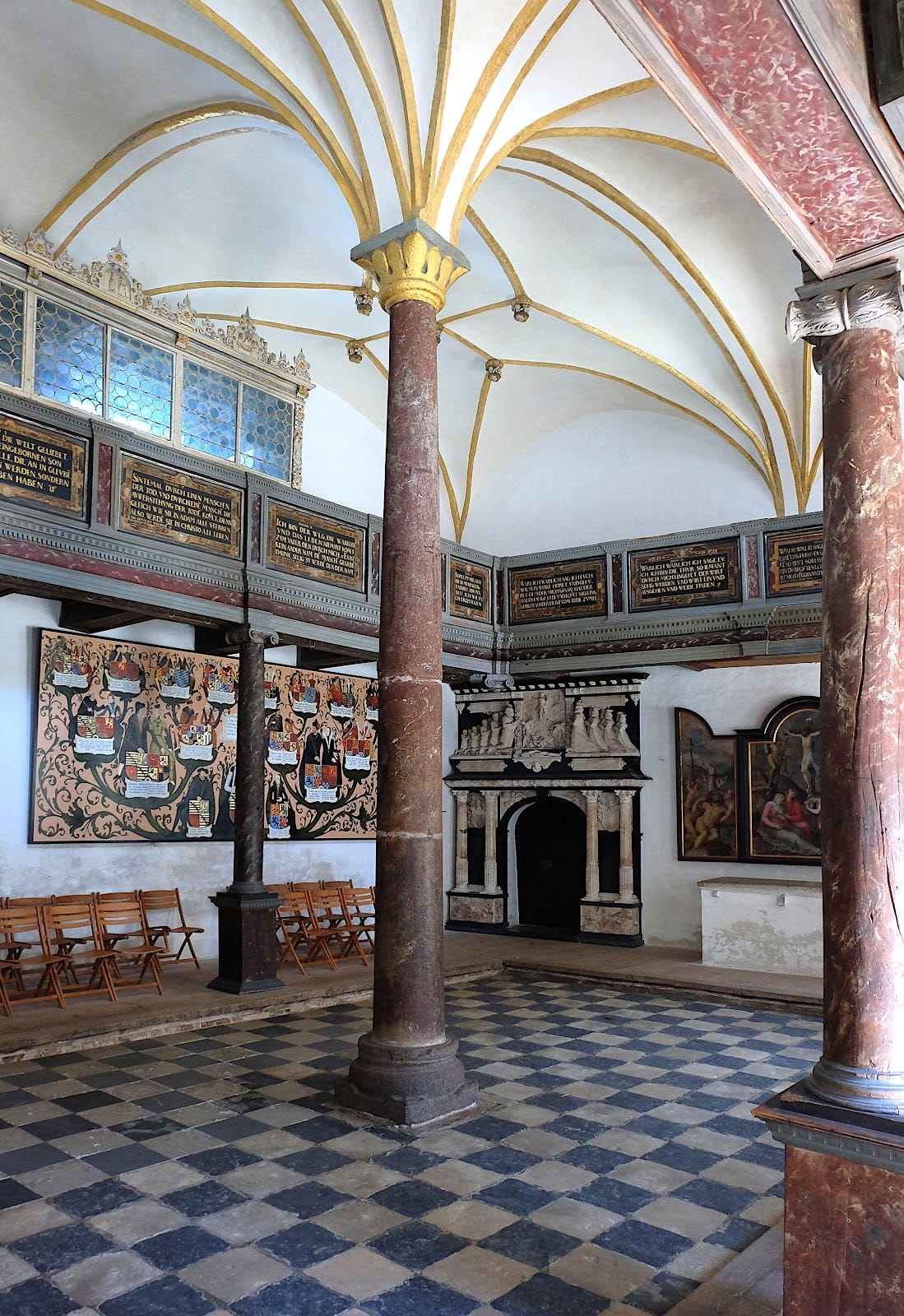
Inside, remnants of original medieval rooms have been preserved, most notably a lengthy Knights’ Hall stretching 34 meters used historically for gatherings and ceremonies. Another significant interior space is the Renaissance chapel erected between 1568 and 1570 at the request of Queen Dorothea. This chapel also houses Denmark’s oldest organ, built around 1570 by the Dutch craftsman Hermann Raphael Rodensteen and later enlarged in 1626. The instrument retains much of its painted wooden case and partial original pipework, restored in the 1990s to preserve its historical sound and appearance.
The castle’s former dungeons remain partially accessible, providing tangible links to its role as a prison, including the infamous confinement of King Christian II. Outside the main structure, the original fortifications such as bastions and curtain walls once formed strong defensive barriers. Over time, most of these outer works were dismantled; however, remnants remain visible primarily along the eastern approach to the castle grounds.
In the early 18th century, King Frederick IV commissioned Baroque-era renovations that simplified the exterior facades. This involved the removal of tower roofs and the enlargement of windows, resulting in a more restrained and regular appearance punctuated by numerous openings. The castle gardens occupy the site where earlier earthworks once stood, integrating cultivated green spaces within the historic defensive perimeter.
Within the chapel lies a burial crypt dedicated to Duke Hans II, distinguished by an elegant door crafted from marble and alabaster. Interior woodwork dating from the early 1600s, created by local artisans, adds to the chapel’s rich historic character. The Knights’ Hall continues its use today for special ceremonial occasions, including weddings, preserving its status as a significant interior space.
The management of Sønderborg Castle falls under a Danish government agency, and it is incorporated into the Museum Sønderjylland network, ensuring the ongoing care and interpretation of this site steeped in centuries of political, religious, and cultural history.