Soko Grad: A Sixth-Century Fortress in Serbia
Site at a Glance
- Popularity
- High
- Country
- Serbia
- Primary era
- Medieval
- Eras represented
- Medieval
- Civilizations
- Byzantine
- Site type
- Military
- Remains
- Fort
On this page8 sections
History
Foundation and medieval rule
Soko Grad, also known as Sokolac, is a stone fortress about 2 km east of Sokobanja in Serbia. It was founded in the sixth century under the Eastern Roman emperor Justinian I to guard against incursions into the Balkans by Avars, a Eurasian people, and Slavic groups. The fortress was built on older foundations.
In 1172, Stefan Nemanja, a ruler associated with the formation of the Serbian state, took control of Soko Grad and brought it into his realm. During the expulsion of the Bogomils, members of a religious movement opposed by Serbian authorities, Nemanja clashed with the fortress administrator, who belonged to that movement. The fortress later appears in the writings of Constantine of Kostenec, known as Constantine the Philosopher, a Serbian writer and scholar of the fifteenth century. The name Soko Grad means “falcon city” and may refer to falconers who paid taxes with trained birds.
Ottoman and Austrian control
The Ottoman Empire took the fortress in 1398. In 1412, Ottoman prince Musa Çelebi partially destroyed it. Serbs and Austrians recaptured Soko Grad together in 1689, and Austrian forces held it for a time in the late eighteenth century.
Capture and abandonment
In 1808, Serbian military leader Hajduk Veljko captured the fortress during the First Serbian Uprising against Ottoman rule. By then, Soko Grad had lost most of its strategic role. It was later abandoned and gradually fell into ruin.
Excavations took place from 1980 to 1982. In 1982, the Republic of Serbia designated Soko Grad a Monument of Culture of Great Importance and placed it under protection.
Remains
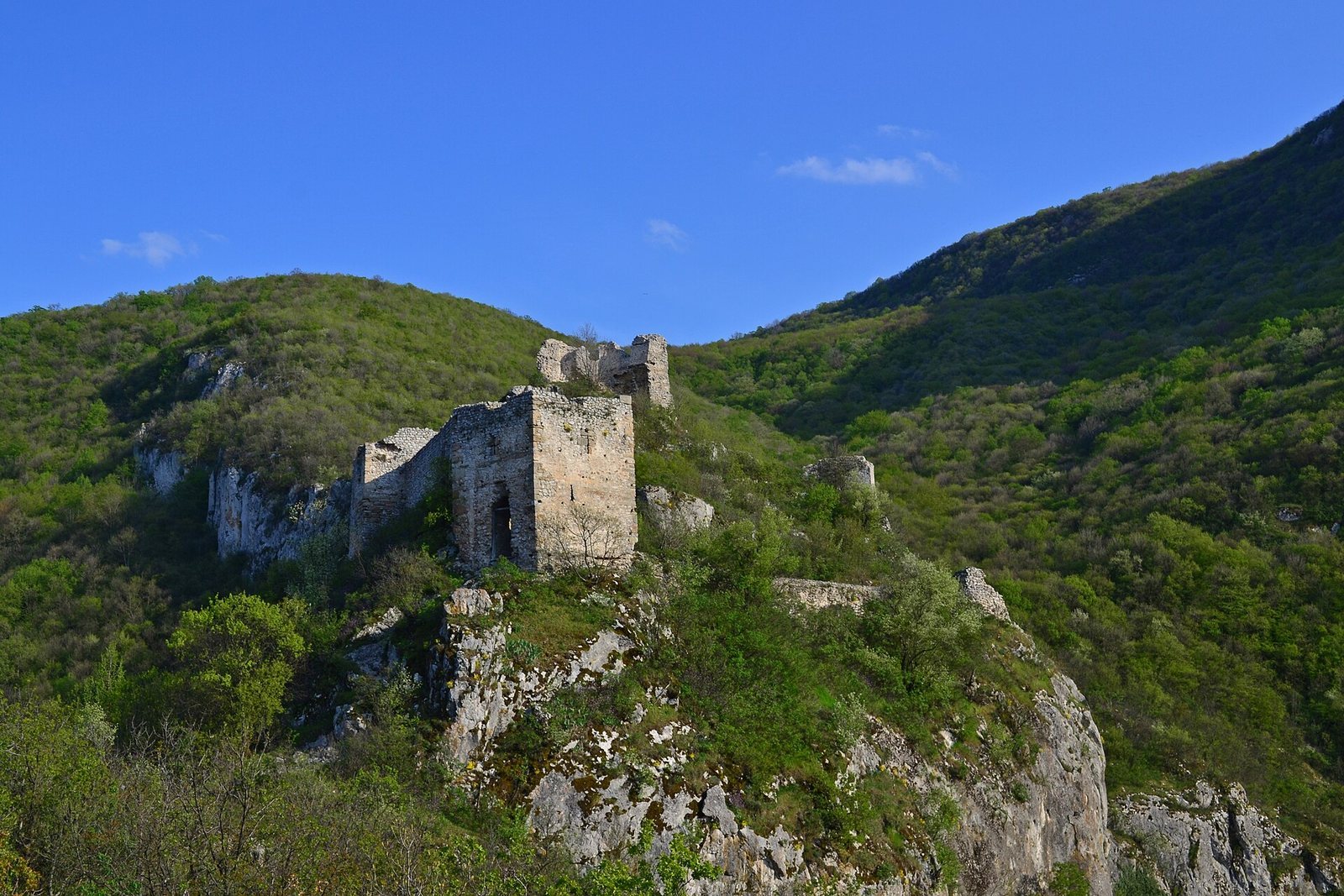
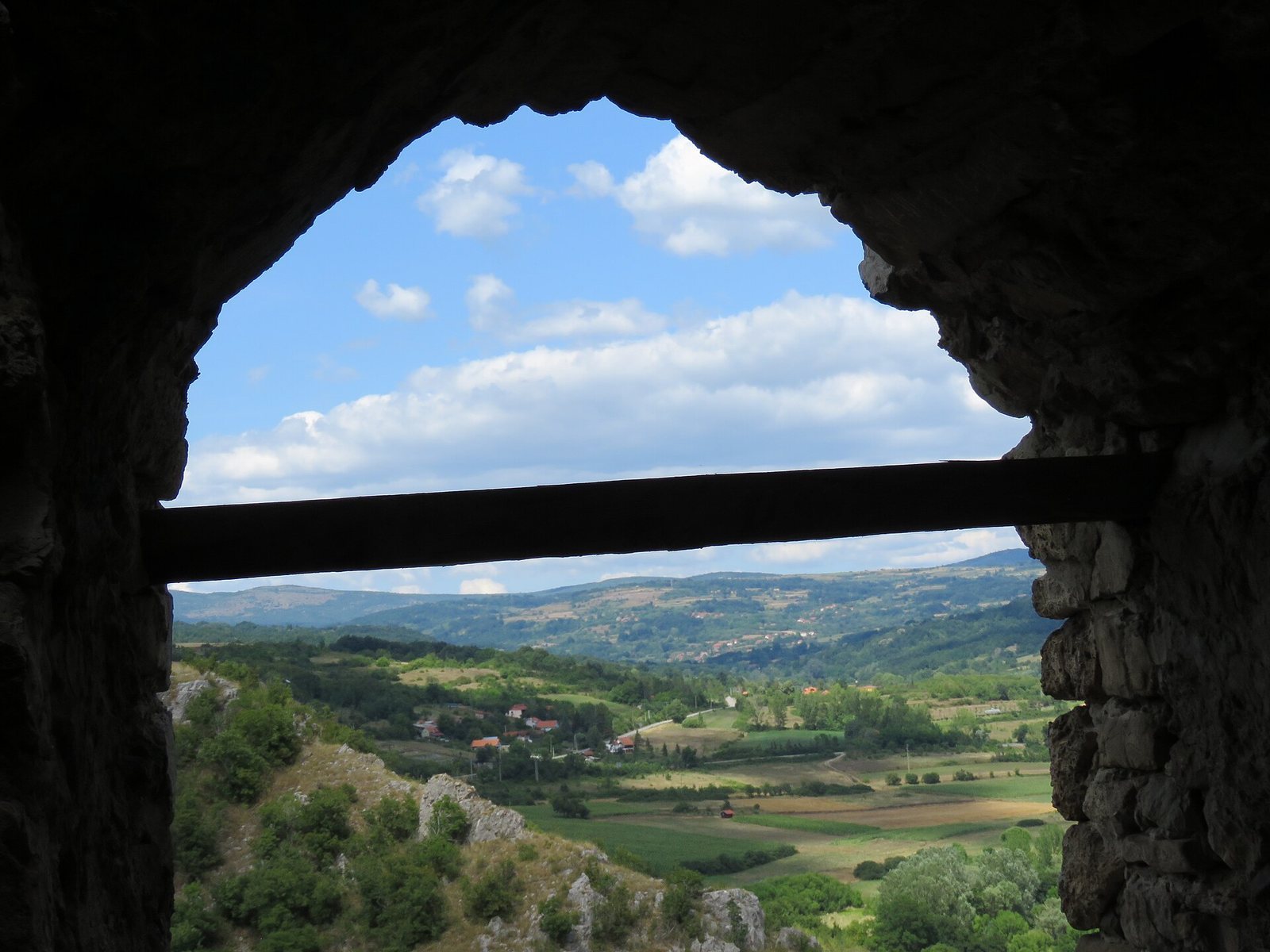
The stone fortress follows the contours of a steep height in the gorge of the Moravica River. Its irregular plan has two main parts, the Upper Town on the rock and the Lower Town on more accessible ground. As the fortress expanded from its original high position, defensive walls descended toward the river and enclosed the Lower Town.
Lower Town
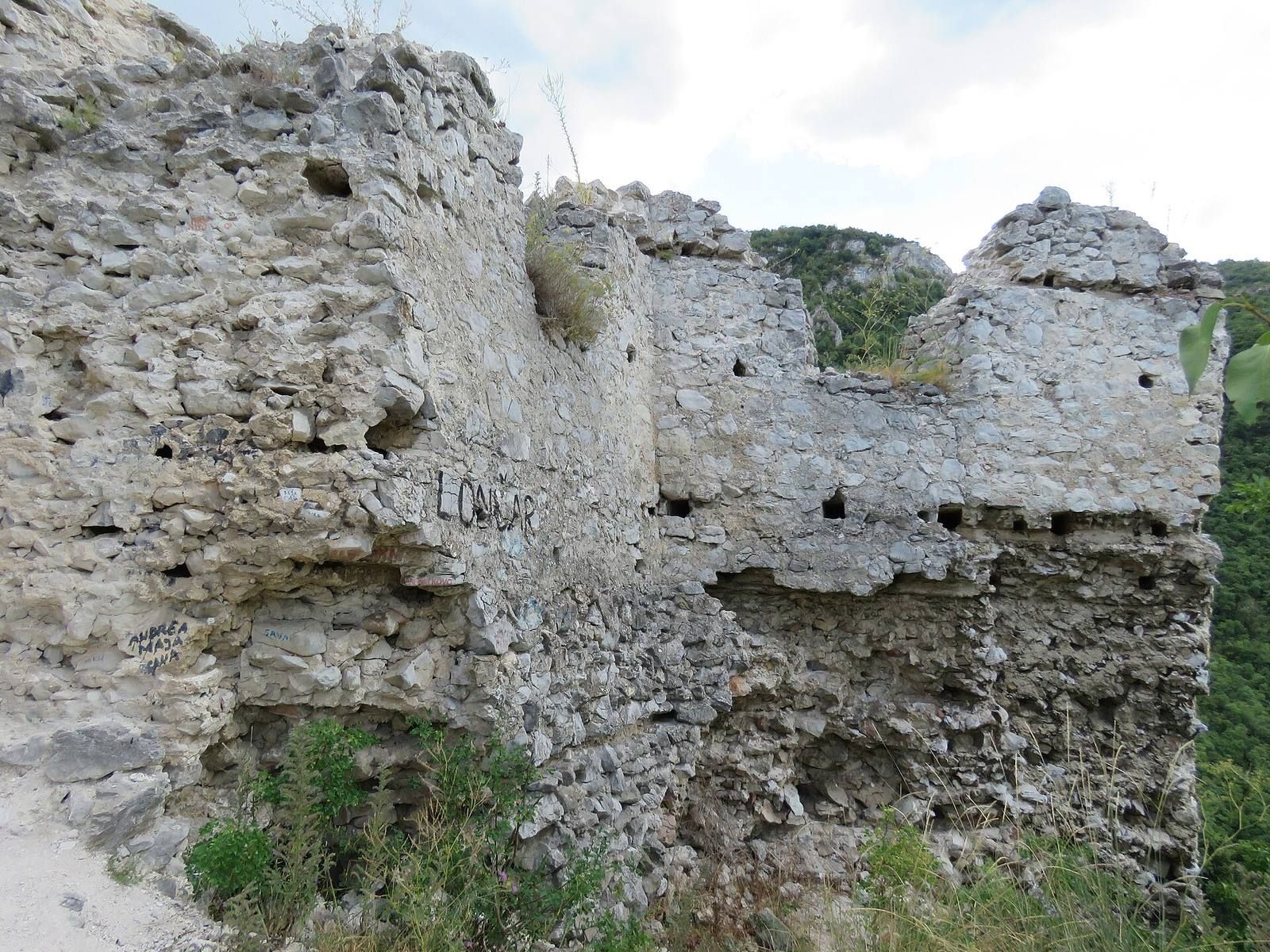
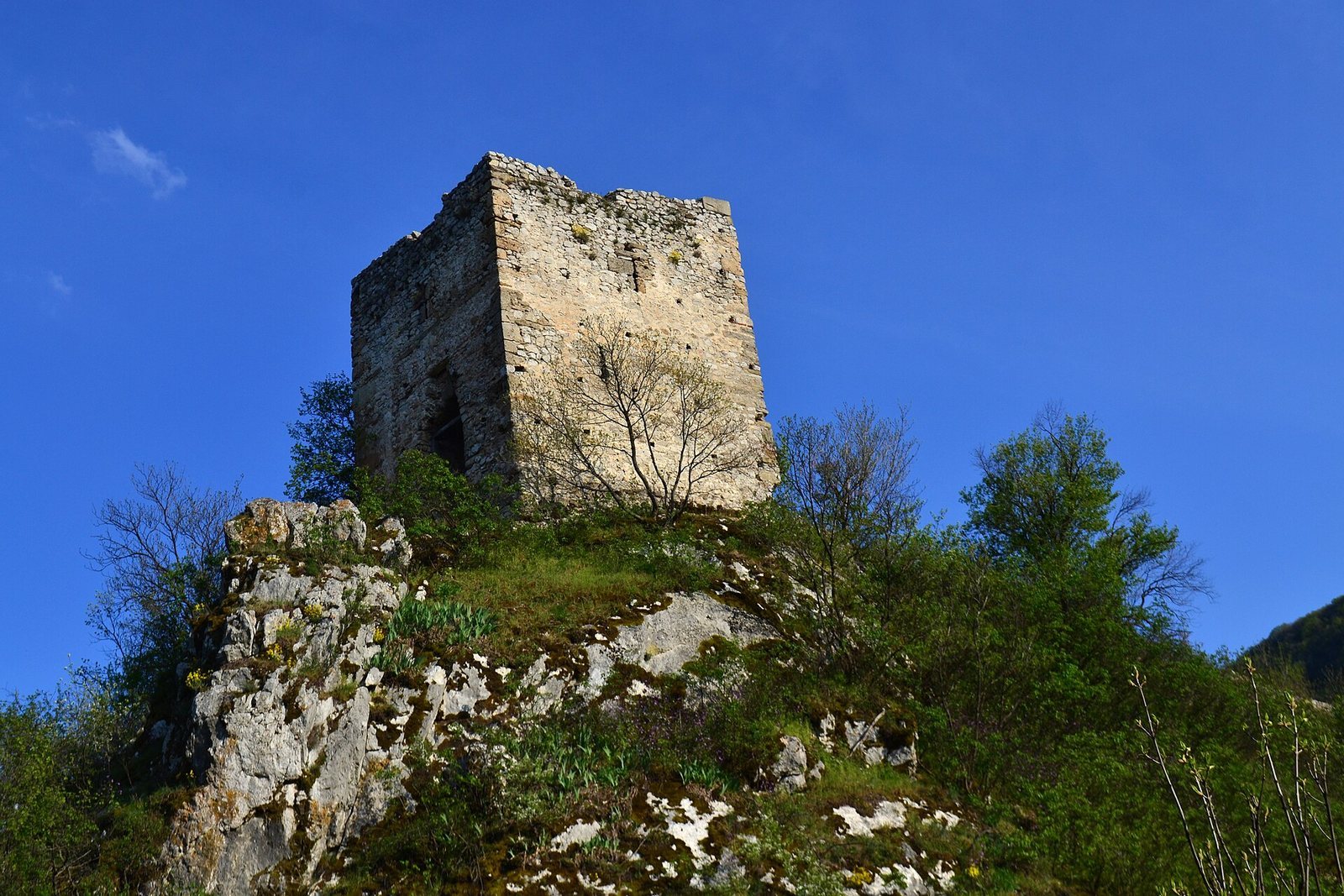
The Lower Town is largely destroyed. Surviving features include sections of its defensive walls, a square tower, and the principal gate to the fortified core, which remains relatively well preserved.
Upper Town
The Upper Town retains a gate, walls, and three towers. One entrance tower is in good condition; the other towers and the defensive walls are in ruins. A square tower is also identified in this part of the fortress.
Fortified core
The fortress began with a stronghold on the highest part of the rock, where the position made access difficult for attackers. A main tower stood within this original core.