Sōja Futagoyama Kofun: A Late Kofun-Period Burial Mound in Japan

Site at a Glance
- Rating
- 3.6
- Popularity
- Very Low
- Country
- Japan
- Primary era
- Medieval
- External website
- Open
- Eras represented
- Medieval
- Civilizations
- Yamato
- Site type
- Burial
- Remains
- Burial Mound
On this page9 sections
History
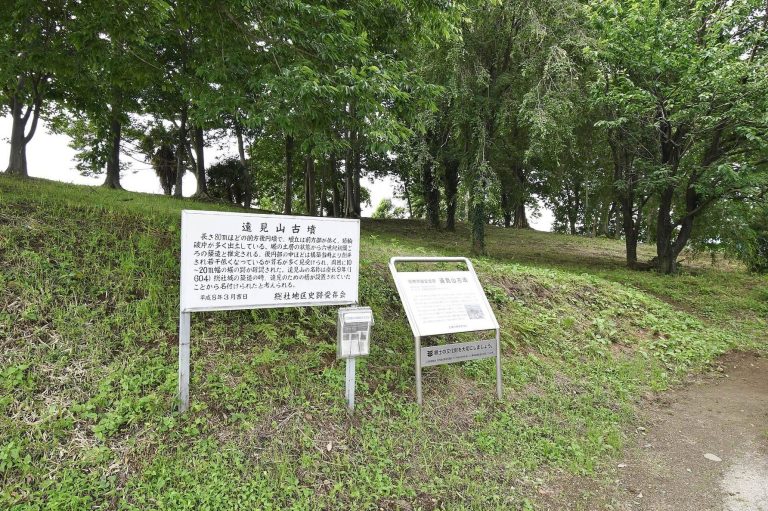
Sōja Futagoyama Kofun is a large burial mound in Maebashi, Japan, built during the latter half of the sixth century in the late Kofun period. The Kofun period, conventionally dated from the third to the sixth centuries, was an era when powerful elites were buried in monumental mounds. Also called Sōja-chō No. 11 and sometimes Dantaiyama Kofun, the monument belongs to the Sōja Kofun Cluster and is its largest mound. Its scale and burial facilities help explain how the Sōja area developed into a political and cultural center of ancient Kamitsukeno, later known as Ueno Province.
Formation of the Sōja Kofun Cluster
The mound was constructed on the Maebashi Plateau, near the southeastern foothills of Mount Haruna and west of the Tone River. Within the sequence of major tombs in the Sōja Kofun Cluster, it followed an earlier large mound and was built before Atagoyama Kofun. The person buried inside has not been identified.
Local tradition connected the tomb with Toyoki-irihiko no Mikoto, presented in early Japanese genealogical and legendary traditions as the first son of Emperor Sujin and an ancestor of the ruling lineages of Kamitsukeno and Shimotsukeno. Emperor Sujin is a traditionally recorded early emperor of Japan. This association influenced official treatment of the mound during the nineteenth century, although the identity of its occupant remains uncertain.
Excavation and Imperial Tomb Claims
In 1819, during the Edo period, the anterior stone chamber was opened. Human remains and numerous grave goods were recovered, and the finds were reported to the Maebashi Domain. The excavation provided early evidence of the richness of the burial, although the chamber’s contents were not preserved as a complete assemblage.
In 1874, Gunma Prefecture submitted the mound as a possible tomb of Toyoki-irihiko no Mikoto during the Meiji government’s nationwide investigation of imperial tombs. The claim was accepted, and a tombmaster and tombkeeper were appointed in 1875. A dispute in the village over salaries paid by the Imperial Household Ministry caused both officials to resign in 1876, ending the arrangement. Official attention later shifted to Maefutago Kofun, but that mound was not ultimately designated as Toyoki-irihiko’s tomb.
Modern Archaeological History
A measured survey was undertaken in 1967 by a team that included the archaeologist Kizao Ozaki. The Maebashi City Board of Education carried out range-confirmation archaeological surveys in fiscal years 2020 and 2023, with reports issued in 2023 and 2025. These investigations have continued to clarify the mound’s extent and physical organization.
The monument was designated a National Historic Site in 1927 under the name Futagoyama Kofun. In 2024, the existing Futagoyama, Hōtōzan, and Jaketsuzan designations were expanded to include the Tomiyama and Atagoyama sites, and the designation was renamed the Sōja Kofun Cluster. The designated area was expanded again in 2025.
Remains
Mound and Burial Chambers
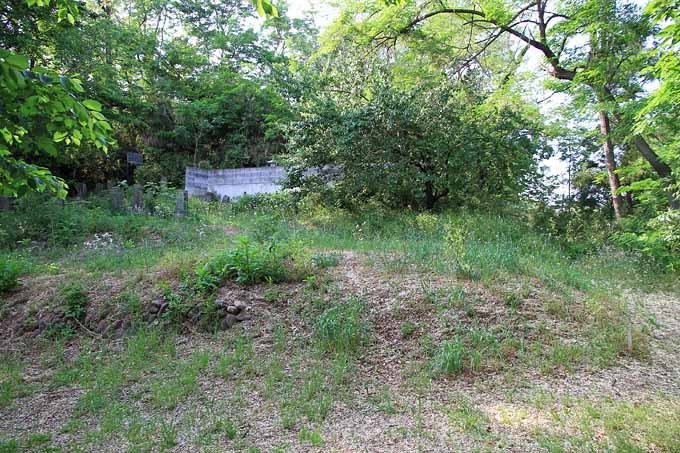
Sōja Futagoyama Kofun is a keyhole-shaped mound, or zenpō-kōen-fun, a form consisting of a circular rear section joined to a squarish front section. It measures 89.9 meters in length and reaches approximately 8 meters in height at the anterior section. The front section faces west. The mound was built in two stages, with stone revetment, known as fukiishi, covering its surface and rows of cylindrical haniwa, the clay funerary objects arranged around burial mounds. The surrounding topography indicates that a moat may have encircled the monument, but excavation has not confirmed it.
Posterior Stone Chamber
A double-sleeved horizontal stone chamber was constructed on a platform in the circular posterior section. A horizontal stone chamber is entered through a side passage rather than from above, while “double-sleeved” indicates that the entrance passage has lateral extensions or side compartments on both sides. The chamber opens south and measures approximately 9.4 meters long and 3.4 meters wide, making it one of the largest known stone chambers in Gunma Prefecture.
Its walls consist of five-faced dressed blocks of hornblende andesite, a volcanic stone derived from an eruption of Mount Haruna’s Futatsudake. The blocks were laid in staggered masonry. The ceiling stones have collapsed, leaving the chamber as a substantial but damaged part of the mound’s surviving burial architecture. This chamber is considered to have been built before the chamber in the anterior section.
Anterior Stone Chamber
The second double-sleeved horizontal chamber lies beneath the rectangular anterior section and also opens toward the south. It measures approximately 8.76 meters in length and 2.22 meters in width. Unlike the posterior chamber, it was built with natural stones arranged in irregular masonry. This was the chamber excavated in 1819, and its contents provide the principal surviving evidence for the status and material culture of the burial.
Grave Goods
The anterior chamber contained an elaborately decorated head-hilted sword, fragments of iron swords, two small knives, four magatama, a bell-adorned bracelet, a vessel, and a pedestal-mounted long-necked jar of Sue ware. Magatama are curved, perforated beads used as ornaments and status objects, while Sue ware is a high-fired gray ceramic tradition of the Kofun period.
A detailed drawing shows the sword as an ornate and elegant weapon, with decorative similarities to material from Kannonyama Kofun in Takasaki. Its present whereabouts are unknown. Other recovered or preserved objects include gold earrings, a six-bell bracelet, iron arrowheads, and another pedestal-mounted long-necked jar. The magatama, gold earrings, six-bell bracelet, iron arrowheads, and long-necked jar are held by the Tokyo National Museum. The jar is traditionally said to have been found during the Kansei era, from 1789 to 1801.
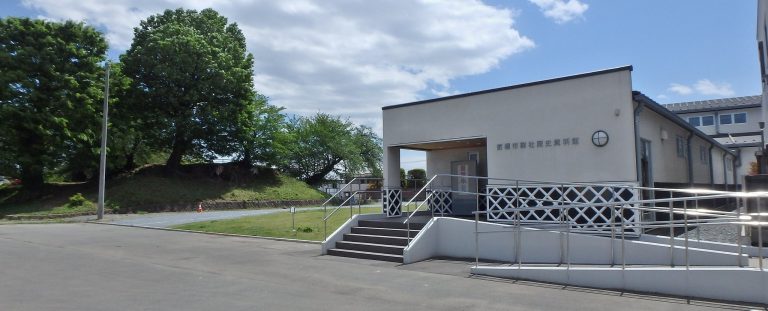
A reconstruction of the decorated head-hilted sword is displayed at the Maebashi City Sōja Historical Museum. Together, the two chambers, their construction materials, and the associated grave goods preserve evidence of the mound’s elaborate burial practices and its place within the late Kofun-period landscape of the Sōja area.