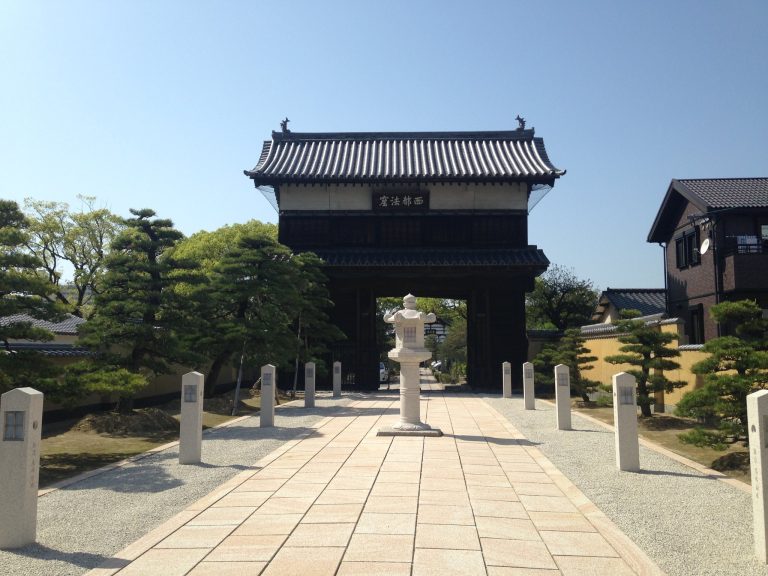
Miyajidake Kofun: An Elite Burial Mound of the Munakata Region in Japan


Site at a Glance
- Rating
- 4.5
- Popularity
- Very Low
- Country
- Japan
- Primary era
- Medieval
- External website
- Open
- Eras represented
- Medieval
- Civilizations
- Yamato
- Site type
- Burial
- Remains
- Burial Mound
On this page12 sections
History
Miyajidake Kofun is a large burial mound in Fukutsu, Japan, built by the local elite of ancient Japanese society during the mid-seventh century, in the final phase of the Kofun period. It formed part of the Tsuyazaki Kofun Group on the southern slope of Mount Miyajidake and is generally associated with the ancient Munakata clan, a regional lineage whose religious and political connections extended into the imperial court.
The Munakata leadership
The person buried at Miyajidake Kofun is unidentified. One interpretation names Munakata no Kimi Tokuzen, although no object from the tomb provides a personal name. Tokuzen is also proposed as the maternal grandfather of Prince Takechi. The Nihon Shoki states that Prince Oama, later Emperor Tenmu, married Tokuzen’s daughter and had Takechi. During the Jinshin War of 672, a conflict over the imperial succession, Prince Takechi commanded Tenmu’s forces. He later became Grand Chancellor in 690. These family connections are regarded as a possible foundation for the Munakata clan’s advancement into central political life.
The concentration of bulb-headed swords and other high-status grave goods in the Munakata region indicates that a territorial grouping corresponding to the later Munakata district had formed there by the sixth century. The proposed connection between Miyajidake Kofun and the Munakata clan also draws on the nearby Temitsu Namikiri Fudo Kofun and the Miyajidake Cremation Burial. Research carried out in 2010 and 2011 revised the earlier understanding of the two mounds’ sequence, placing Temitsu Namikiri Fudo Kofun before Miyajidake Kofun.
Later religious use and investigation
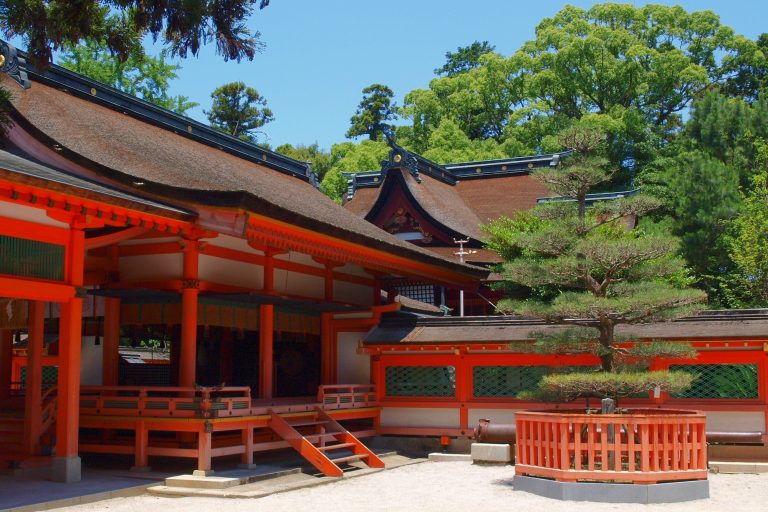
Heavy rain caused a landslide that opened the stone chamber in 1741. Six years later, a Buddhist image of Fudo was enshrined at the rear of the chamber. The tomb is now worshipped as Fudo Shrine, an inner shrine of Miyajidake Shrine.
Buildings and other facilities connected with Miyajidake Shrine were constructed around the mound during a shrine relocation in 1930. Horse gear and swords were found while a shrine office was being built in 1934, and additional grave goods were recovered near the chamber entrance in 1951. The chamber was measured in 1937 and again in 1996. Its grave goods are understood to have been placed inside the chamber, while the chamber itself has not undergone a formal excavation.
Miyajidake Kofun was included in the National Historic Site designation for the Tsuyazaki Kofun Group in 2005. Its grave goods received National Treasure status in 1952, Japan’s highest statutory category for designated cultural properties. The urn from the nearby Miyajidake Cremation Burial received the same status in 1961. Earlier designations had been made under the former National Treasure Preservation Law in 1936 and 1939, followed by treatment as Important Cultural Properties when the present cultural-property system began in 1950.
Remains
Mound and setting
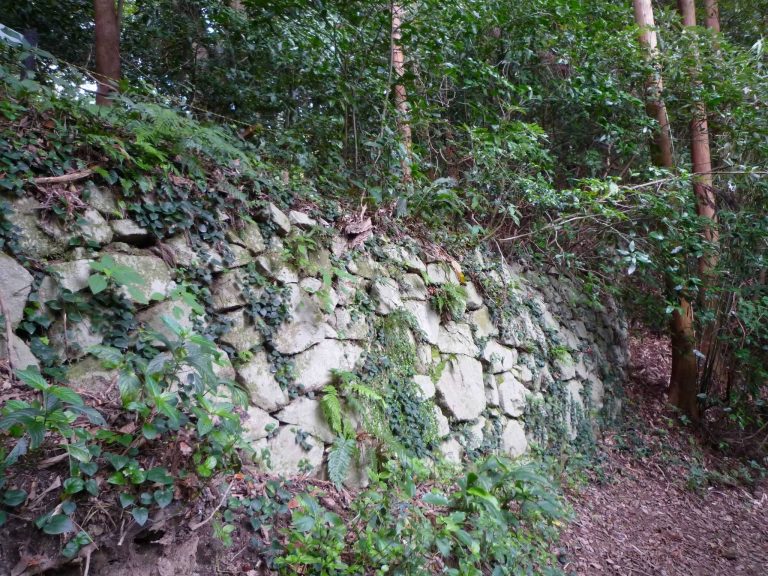
Miyajidake Kofun occupies a gently sloping ridge at about 55 metres above sea level on the southern side of Mount Miyajidake, whose summit reaches 180.7 metres. The builders cut and shaped the natural ground before raising the mound. It was originally circular and is reconstructed as approximately 35 metres in diameter, but later alterations have produced an elliptical appearance, with present dimensions of about 27 metres from north to south and 34 metres from east to west.
A secondary earth layer around 2 metres thick covers the mound. This material is considered to have come from deepening the stone chamber before 1934. A stone edging, approximately 1 metre wide and 1.4 metres high, surrounds the mound and is arranged in three courses on both sides of the passage entrance. Its installation required the perimeter to be cut down, so the mound originally extended farther outward. A small group of burial mounds once occupied the slope below, while Miyaji Idenoue Kofun stands on a hill across a purification pond.
Stone burial chamber
Passage and rear chamber
The burial facility is a horizontal-entry stone chamber, meaning that a side passage leads into the burial space. It faces east and has an overall length of approximately 23.1 metres, with present measurements placing it at about 23.5 to 24 metres. The chamber belongs to a type of stone crypt designed to contain a burial and has a complex arrangement in which the rear of the main chamber narrows into separate rear and front chambers. This multi-chamber plan can be compared with horizontal-entry stone crypts in the Kinai, the historical core around the imperial capital in central Japan.
The rear chamber is about 3.5 metres long and 1.75 metres wide. Its walls are formed from three single stones, each approximately 3 metres long. The passage uses stones arranged in two or three courses. Irregular stone masses measuring about 0.3 to 0.4 metres across near the entrance represent a later stone arrangement. The original floor is thought to have used paving stones over rounded stones, although the present concrete floor obscures its details. Roof stones measure about 0.5 metres above the rear chamber.
Front chamber and niches
The front chamber measures about 11.7 metres long, 2.5 to 2.8 metres wide, and 2.2 to 3.1 metres high. Single stones between 3.1 and 4.5 metres high stand upright along both side walls. The largest stone is more than 1.7 metres thick and contains two recessed niches. The southern niche is 1.9 metres long, 0.7 metres deep, and 1.5 metres high; the northern niche has the same length and depth but is 1.3 metres high. Edo-period records indicate that both niches formed part of the original construction. The roof stones rise about 1 metre above the second stone containing the niches and about 1.65 metres above the fourth stone.
The chamber stones are said to be conglomerate obtained from the Koinoura coast. Moving such large stones from the coast to the mountain slope required considerable labour. With an overall measured scale of about 23.5 to 24 metres, the chamber is regarded as the second-largest in Japan after the approximately 28.4-metre chamber of Gojono Maruyama Kofun in Kashihara, Nara Prefecture.
Grave goods
Swords and horse equipment
The grave goods include a large gilt-bronze bulb-headed sword, a sword with a rounded pommel, estimated at 2.4 to 2.8 metres long. Its pommel, guard, scabbard fittings, and blade survive. A second gilt-bronze bulb-headed sword is approximately 0.90 metres long and retains its pommel, collar fitting, scabbard-end fitting, and blade.
Horse equipment includes a gilt-bronze saddle with almost complete coverings for its front and rear bows, two gilt-bronze stirrups, two gilt-bronze bridles with cheek plates, two gilt-bronze pendants, and a saddle decorated with arabesque-pattern fittings. The assemblage also contains an iron buckle and seven gilt-bronze buckles or saddle fittings. The decorated horse gear, together with an openwork gilt-bronze crown, gives the assemblage a pronounced international character.
Metalwork, glass, and pottery
Other objects comprise three glass plates that may have served as raw material for glass beads, 27 glass-plate fragments, a whetstone, 265 large and medium green translucent lead-glass beads, three gold rings, three bronze bells, four bronze nails, two ornamental fittings, two other metal fittings, and a bronze chain made from 18 rings. A bronze vessel group consists of a lidded bronze bowl and a support tray. The finds also include a bronze knife with scabbard fittings.
The pottery consists of 17 Sue ware vessels and three Haji ware vessels. Sue ware was high-fired pottery often made on a wheel, while Haji ware was generally low-fired and unglazed. The Sue ware comprises six cup bodies, five cup lids, two tall stemmed cups, and one flat bottle. The Haji ware consists of one cup and two jars. None of the Sue ware is earlier than the Oda IVA phase, corresponding to the TK209 archaeological type.
Miyajidake Cremation Burial
A separate cremation burial was found in 1938 on the western slope of a hill about 65 metres above sea level, east of the kofun’s chamber entrance. Its glass cremation urn had been placed inside a nested ceramic vessel. Within that vessel was a lidded bronze pedestal jar containing a lidded short-necked glass jar. Because the ceramic containers are later than the burial, the arrangement is considered a reburial, and the original grave location and structure are unknown.
The glass urn resembles one from another seventh-century elite cremation burial in both form and manufacturing technique. That resemblance, together with a burial inscription dated 707 from the other tomb, supports a tentative date around the beginning of the eighth century for the Miyajidake burial. Proposed occupants include a daughter of Munakata no Kimi Tokuzen and a person appointed chief administrator of Munakata District in 709.
The kofun’s grave goods are owned by Miyajidake Shrine and deposited with the Kyushu National Museum. The cremation urn is held by the Tokyo National Museum.