Sōja Atagoyama Kofun: A Seventh-Century Burial Mound in Japan
Site at a Glance
- Rating
- 3.5
- Popularity
- Very Low
- Country
- Japan
- Primary era
- Medieval
- Eras represented
- Medieval
- Civilizations
- Yamato
- Site type
- Burial
- Remains
- Burial Mound
On this page6 sections
History
Sōja Atagoyama Kofun is a large burial mound in Maebashi, Japan, built during the first half of the seventh century near the end of the Kofun period, the era from approximately the third to the seventh century when monumental burial mounds were constructed across Japan. It lies within the Sōja Kofun Cluster and is also known as Sōja Town No. 10 Kofun. The mound was built after Futagoyama Kofun and before Hōtōzan Kofun.
Late Kofun-Period Development
Atagoyama belongs with Hōtōzan Kofun and Jaketsuzan Kofun to a group of exceptionally large square burial mounds in the Kamitsukeno region, a historical name for much of present-day Gunma later associated with Kōzuke Province. These tombs were constructed after the end of the keyhole-shaped tomb tradition. Together, they help explain the growth of the Sōja area as a political and cultural center of ancient Kamitsukeno, a development later associated with the establishment of the provincial government, provincial temple, and provincial nunnery.
Investigation and Protection
A survey took place in 1988, followed by excavations and related investigations from 1995 onward. A fiscal-year 1995 investigation confirmed the surrounding moat and established that the mound was square rather than circular, as had previously been thought. Extent-confirmation surveys were also carried out in fiscal years 2020 and 2023. On February 21, 2024, the mound was designated a National Historic Site under the name “Atagoyama Kofun” as part of the Sōja Kofun Cluster.
Remains
Square Mound and Moat
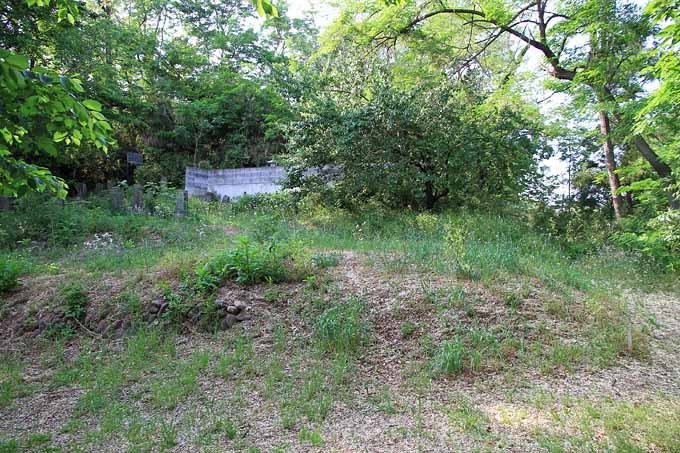
The kofun is a square burial mound, or hōfun, measuring 56 meters on each side and approximately 8.5 meters high. It was built in at least three tiers, revising an earlier interpretation that recognized two. Stones known as fukiishi cover parts of its exterior. A moat surrounds the mound, adding a defined boundary to the burial monument.
Stone Chamber and Coffin
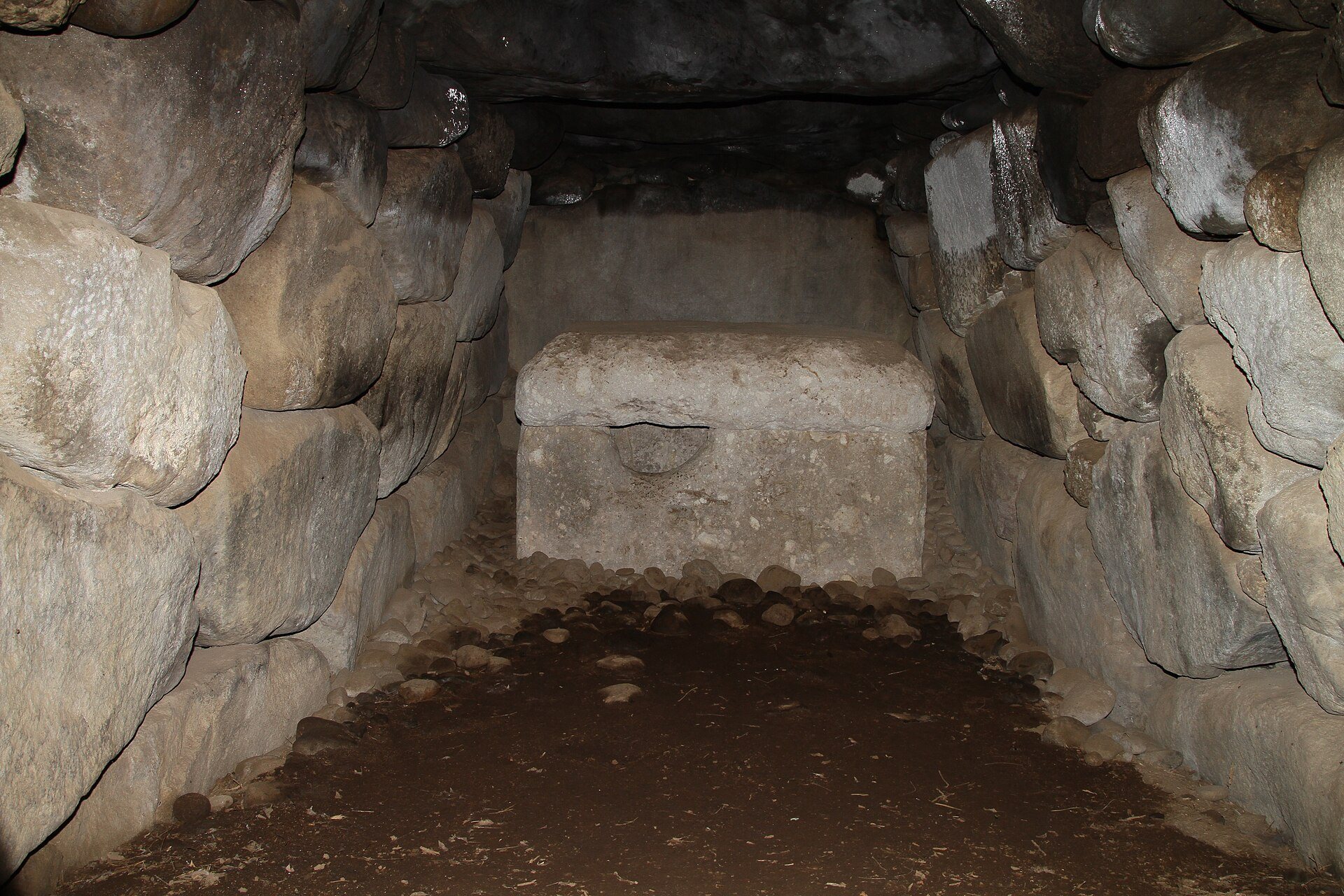
A south-facing horizontal stone chamber, entered through a side passage rather than from above, extends for approximately 9.3 meters. Its main burial chamber is about 7 meters long, 3 meters wide at the rear wall, and 2.8 meters high. The rear wall lies at the mound’s center, while much of the passage is buried by earth and sediment. Natural megaliths form the chamber, and some bear evidence of shaping.
At the rear of the main chamber is a house-shaped stone coffin carved from tuff, a relatively soft rock formed from compacted volcanic ash. Its long axis runs across the main axis of the chamber. The coffin body measures 2.22 meters long, 1.18 meters wide, and 1.02 meters high. Its separate lid is 2.26 meters long, 1.23 meters wide, and 0.50 meters high, with two pairs of carved projections for hanging rope on its long sides. This type of coffin is known at only three kofun in Gunma Prefecture: Sōja Atagoyama Kofun, Hōtōzan Kofun in the same cluster, and Imaizumi-guchi Hachimanyama Kofun in Ōta.