Sōfuku-ji Temple: An Oda Family Memorial Temple in Gifu


Site at a Glance
- Rating
- 4.2
- Popularity
- Low
- Country
- Japan
- Primary era
- Early Modern
- External website
- Open
- Eras represented
- Early Modern
- Civilizations
- Ashikaga shogunate
- Site type
- Religious
- Remains
- Monastery
On this page11 sections
History
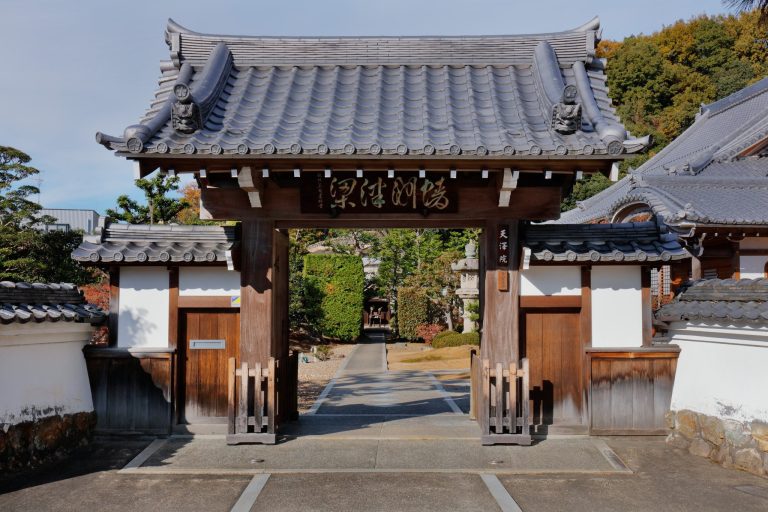
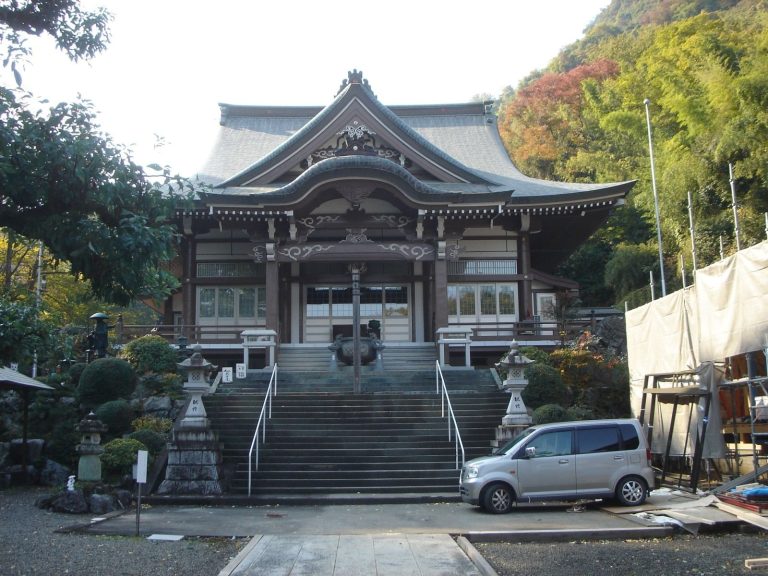
Sōfuku-ji Temple is a Buddhist temple in Gifu, Japan, belonging to the Myōshin-ji branch of Rinzai, a major Zen Buddhist school. It is associated with Saitō Dōsan and the Oda clan, and serves as the fourteenth station of the Mino Thirty-three Kannon pilgrimage, a regional circuit of thirty-three Buddhist sites connected with Kannon, the bodhisattva of compassion.
Competing foundation traditions
The temple’s beginnings are preserved through several traditions rather than a single agreed account. One tradition places its foundation in 1390 and attributes it to the monk Ryōtan Sōei, while another traces its origin to the Kamakura period. A further tradition dates its establishment to 1469 by Toki Shigeyori and Saitō Nagahiro, followed by a formal opening in 1493.
The deteriorated temple was moved and rebuilt by Saitō Toshimasa in 1511. It had earlier been known as Kōsai-ji, but received the name Sōfuku-ji in 1517. Its formal name is Jingo-zan Sōfuku Kōsai Zen-ji, also shortened to Jingo-zan Sōfuku-ji, and it is associated with the alternate name Daiju-zan Sōfuku-ji.
The Oda family temple
When Oda Nobunaga established himself in Gifu in 1567, he made Sōfuku-ji the Oda family temple. This decision followed the mourning of Kitsuno, one of Nobunaga’s concubines and the birth mother of his eldest son and heir, Oda Nobutada.
Nobunaga and Nobutada died in the Incident at Honnō-ji in 1582, the violent event in which Nobunaga was overthrown and killed at Honnō-ji. Kyōun’in, another of Nobunaga’s concubines and regarded at the time as his de facto wife, chose Sōfuku-ji as their memorial site. Their mausoleum and tomb were established at the temple, while their memorial tablets and personal belongings were brought there. One tradition specifically associates the transfer of those belongings from Gifu Castle with O-Nabe, another name used for Kyōun’in.
Gifu Castle and later patronage
In 1600, Oda Hidenobu responded to Ishida Mitsunari’s call for assistance and occupied Gifu Castle during the events leading to the Battle of Sekigahara. Fukushima Masanori and Ikeda Terumasa besieged and destroyed the castle in the Battle of Gifu Castle, and Hidenobu’s vassals died during the fighting. The temple later became associated with the fallen warriors through a memorial feature made from material taken from the castle.
During the Edo period, Sōfuku-ji prospered through official land grants and government protection. It also served as a prayer site for the Arisugawa-no-miya, a Japanese imperial princely house. Tokugawa Iemitsu, the third shogun of the Tokugawa shogunate, gave the temple particular support because his childhood wet nurse, Lady Kasuga, was the daughter of Saitō Toshimitsu, a relative of Saitō Dōsan.
The temple’s religious history includes the monk Kaisen Jōki, who became its third abbot. He was known for a death poem containing the phrase, “When the mind is extinguished, even fire is cool.” Sōfuku-ji is also associated with the training and production of many monks. The mausoleum site of Oda Nobunaga and Oda Nobutada is designated a Gifu municipal important cultural property.
Remains
The surviving features of Sōfuku-ji combine Buddhist images, Oda family memorials, material associated with Gifu Castle, and preserved historical objects. The temple’s central identity is expressed through its memorial spaces and religious images, while its collections connect the building with the Oda and Tokugawa figures who supported or shaped its history.
Memorial and religious features
Oda mausoleum and tomb
The temple contains the mausoleum and tomb of Oda Nobunaga and Oda Nobutada. Their memorial tablets and personal belongings were brought to Sōfuku-ji after their deaths in 1582, making the temple a place of commemoration for the father and son. The mausoleum site is recognized as a Gifu municipal important cultural property.
Blood Ceiling
Sōfuku-ji’s “Blood Ceiling” is formed from floorboards traditionally identified as having come from the main tower of Gifu Castle after its destruction in 1600. The boards bear bloodstains associated with the fighting and were reused as a ceiling at the temple. The feature also commemorates the thirty-eight warriors who died during the siege and destruction of the castle.
Buddhist images and preserved objects
Principal Buddhist images
The principal Buddhist images are an Enmei Jizō Bosatsu and a Shō Kannon. Jizō is a bodhisattva associated with protecting beings and assisting the dead; Enmei means longevity. Shō Kannon represents a principal, human-form manifestation of Kannon.
Historical objects
The temple preserves numerous objects connected with Oda Nobunaga, including his letters, a portrait, a turret clock, and a roof ornament from Kiyosu Castle. It also holds many objects associated with Tokugawa Iemitsu and the Arisugawa-no-miya, extending the physical record of the temple’s connections beyond the Oda family.