Sodo Archaeological Area and the Camucia Tumulus: Etruscan Burial Grounds in Italy
Site at a Glance
- Popularity
- Medium
- Country
- Italy
- Primary era
- Iron Age
- Eras represented
- Iron Age, Classical
- Civilizations
- Etruscan, Roman
- Site type
- Burial
- Remains
- Necropolis
On this page13 sections
History
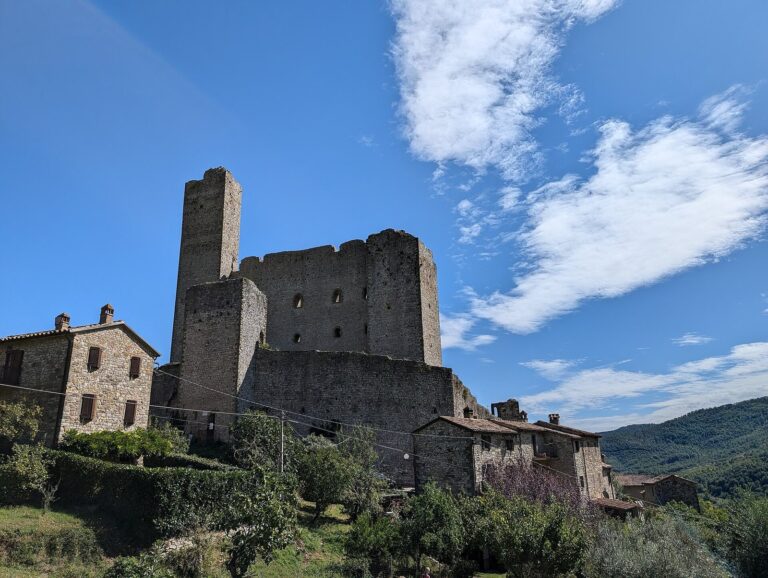
The Sodo Archaeological Area and the Camucia Tumulus comprise an Etruscan burial landscape on the plain below Cortona, near Camucia in Italy. The Etruscans were an ancient people of central Italy. Burial activity in the area began in the seventh century BC and continued into Roman times.
Etruscan and Hellenistic use
Three burial mounds are known in the area: Sodo Tumuli I and II, and the Camucia tumulus farther to the south. Their histories include more than one phase of use. Sodo Tumulus I was used during an early period and returned to use in a later Etruscan phase. The two tombs in Sodo Tumulus II represent separate periods of burial. The first was reused during the Hellenistic period, the era following Alexander the Great’s conquests. The second tomb was profaned in antiquity, when part of its roof apparently collapsed; pottery fragments point to some later use.
Continuing cemetery use and investigation
A funerary altar served ceremonies for the dead, and graves nearby reveal continued burial in the area. Seventeen graves indicate an early burial phase and renewed activity after the altar’s facing collapsed. This later cemetery use extended from the late Republican period, the Roman Republic’s final era, into the first century AD.
Archaeological work brought the tombs to light in stages. Sodo Tumulus I’s tomb was discovered in 1909, and the first tomb in Sodo Tumulus II was excavated in 1928. Work in 1928–1929 and 1990 recovered material from the area. The second tomb in Tumulus II was found in 1991 and excavated the following year.
Remains
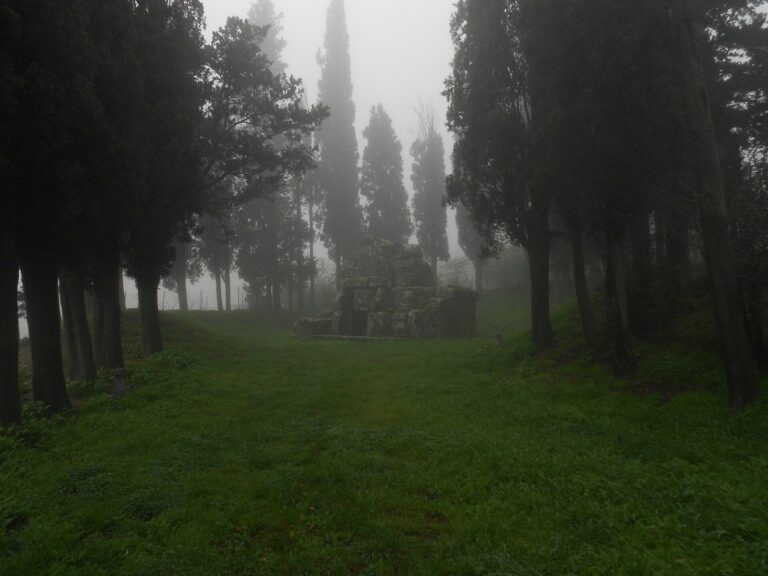
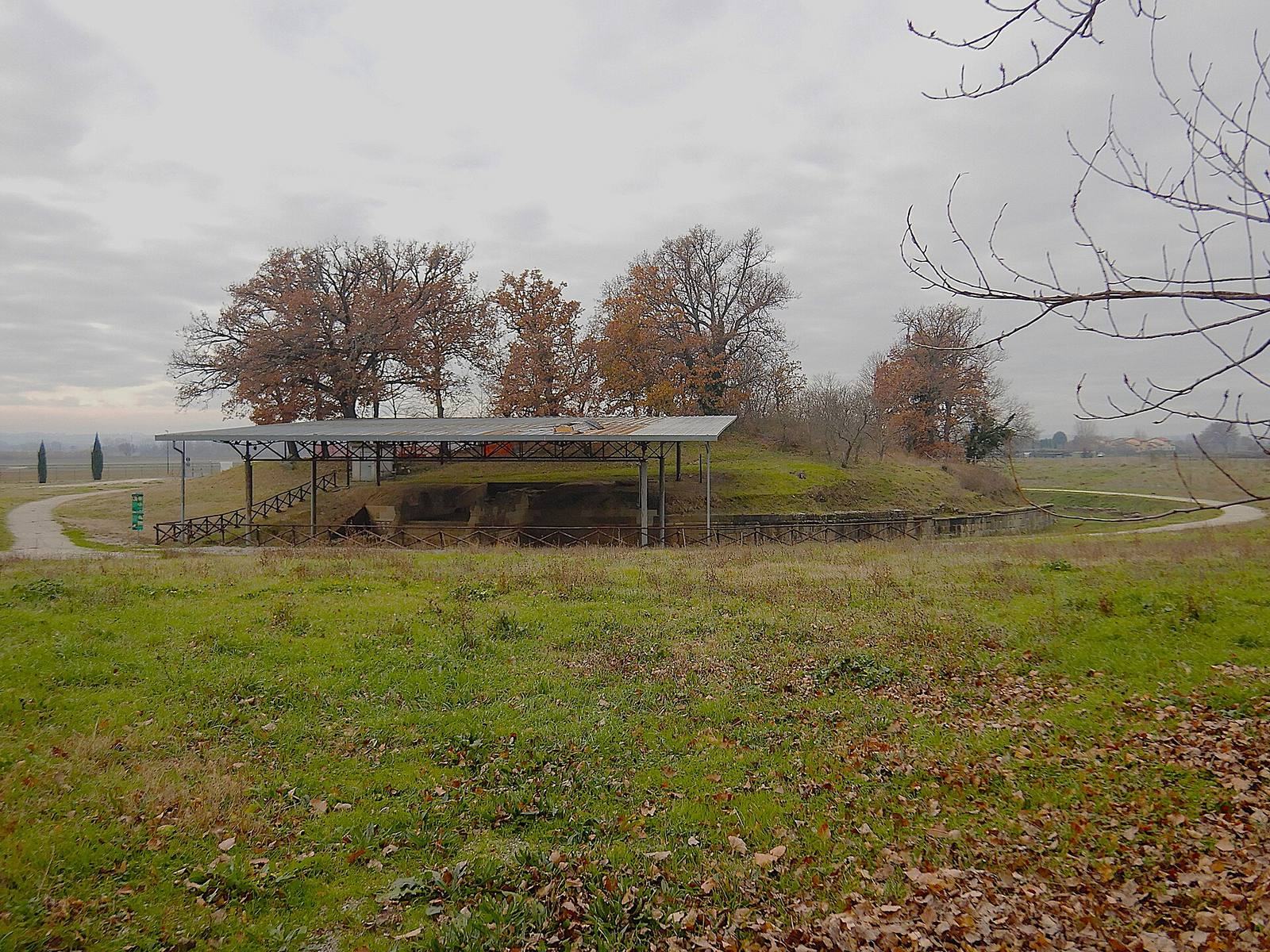
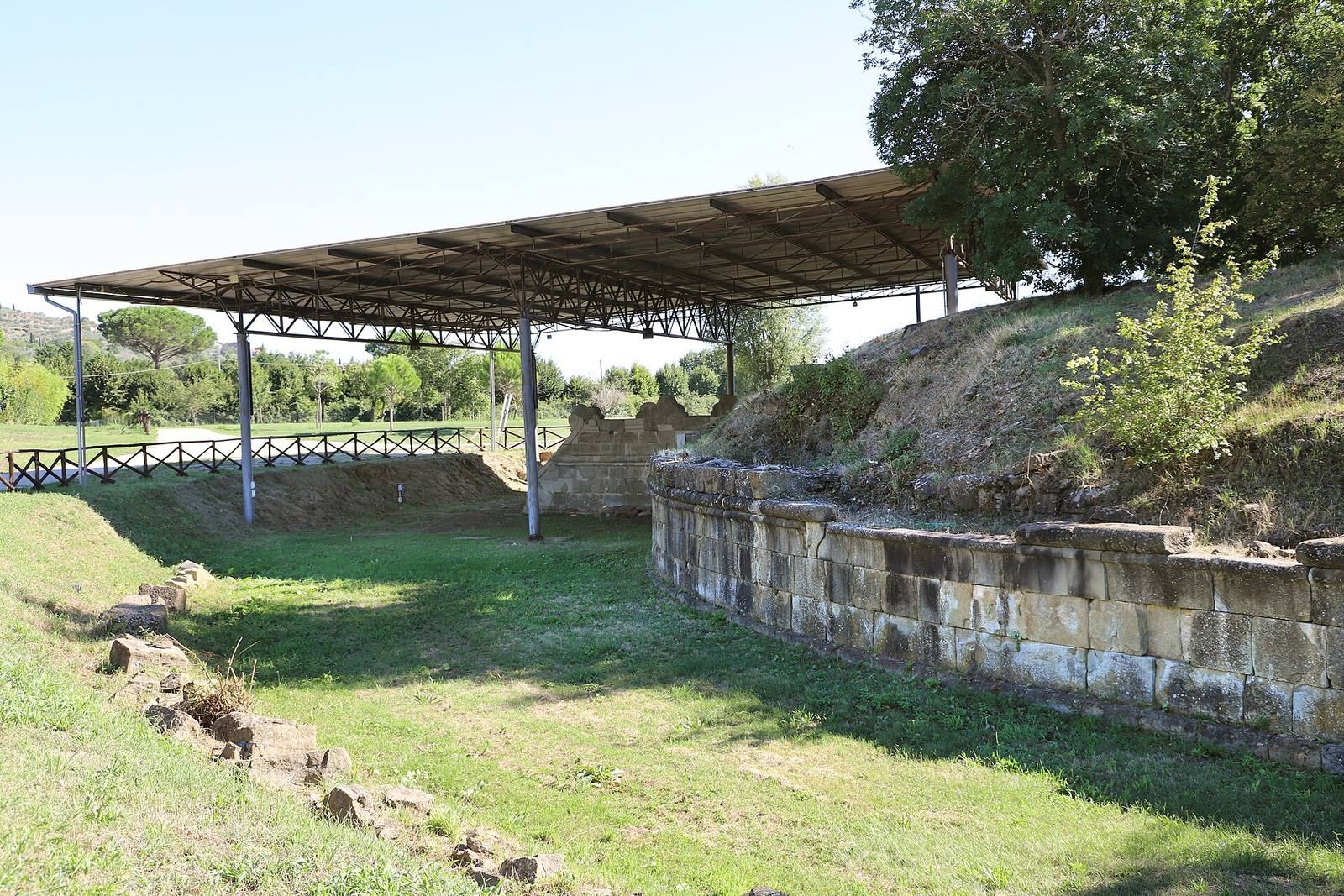
The archaeological area covers about 5,000 square metres and includes three rounded burial mounds, locally called meloni, or melons. Sodo Tumulus II is the largest, measuring 64 metres across. Sodo Tumulus I is about 50 metres in diameter and reaches roughly 10 metres in height. The Camucia tumulus lies about 2.5 kilometres to the south.
Sodo Tumulus I
Tomb plan and inscription
The tomb, dating to the seventh century BC, faces southwest. A short, open dromos (passage into a tomb) leads to a square vestibule and two rooms in sequence. Two burial chambers open on opposite sides, with a fifth chamber at the far end. The chambers originally had tholos vaults (rounded or domed roofs), extensively remade during restoration. An inscription above a passage between the chambers on the left names the owners, Arnt Mefanates and Velia Capisnei, and identifies the tomb as their burial place.
Objects from the tomb
Finds from the earlier burial phase include fragments of East Greek, Etruscan-Corinthian, and bucchero pottery, a distinctive black Etruscan ware. Other objects include bronze belt fasteners and decorative fittings, fragments of small glass vessels called alabastra, often used for perfumed oil, and small pieces of ivory boxes, probably made in Chiusi. The later phase is represented by the inscription and fragments of black-glazed and Etruscan pottery.
Sodo Tumulus II
The mound contains two damaged tombs entered through dromoi, as well as smaller burials near a large altar platform.
First tomb
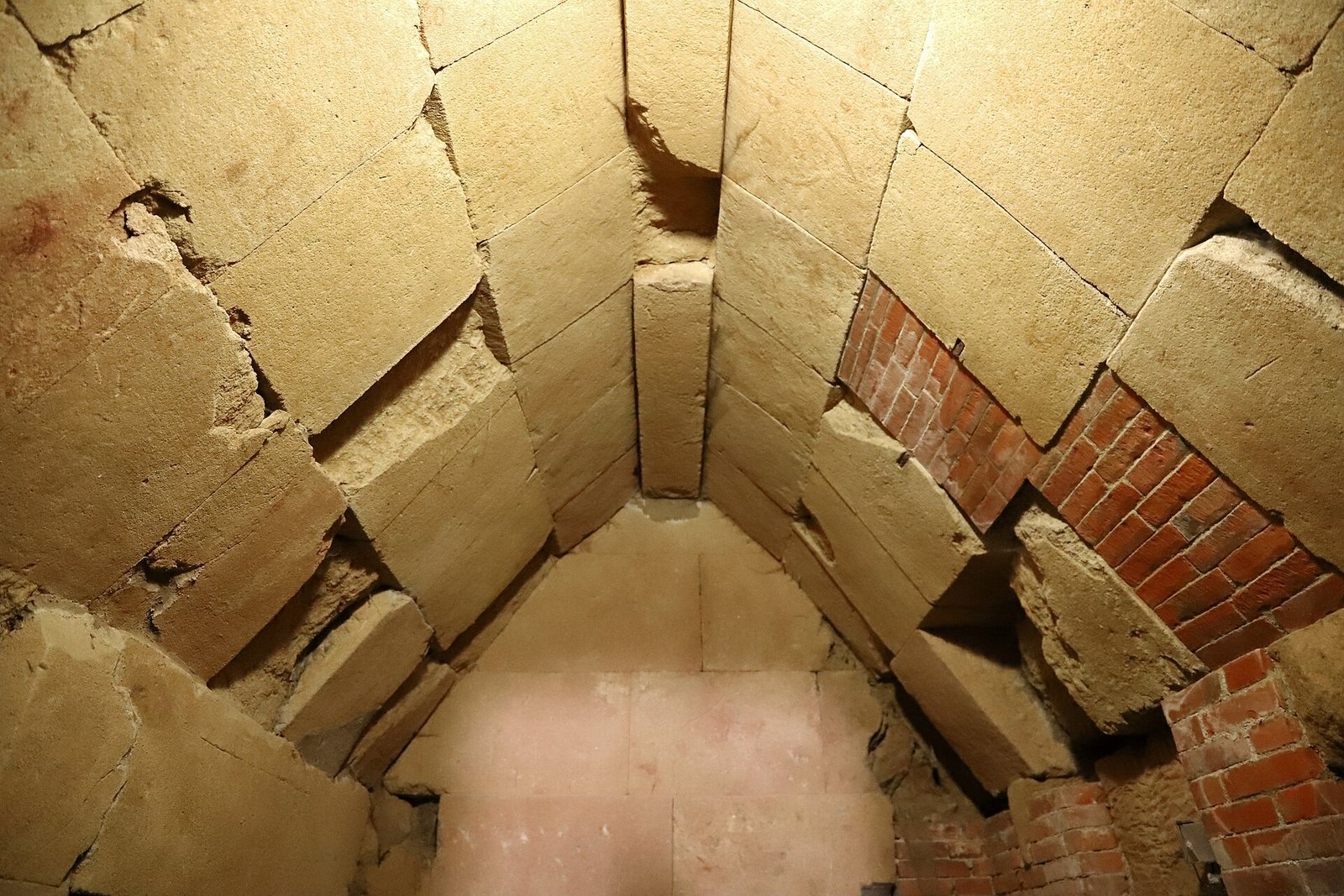
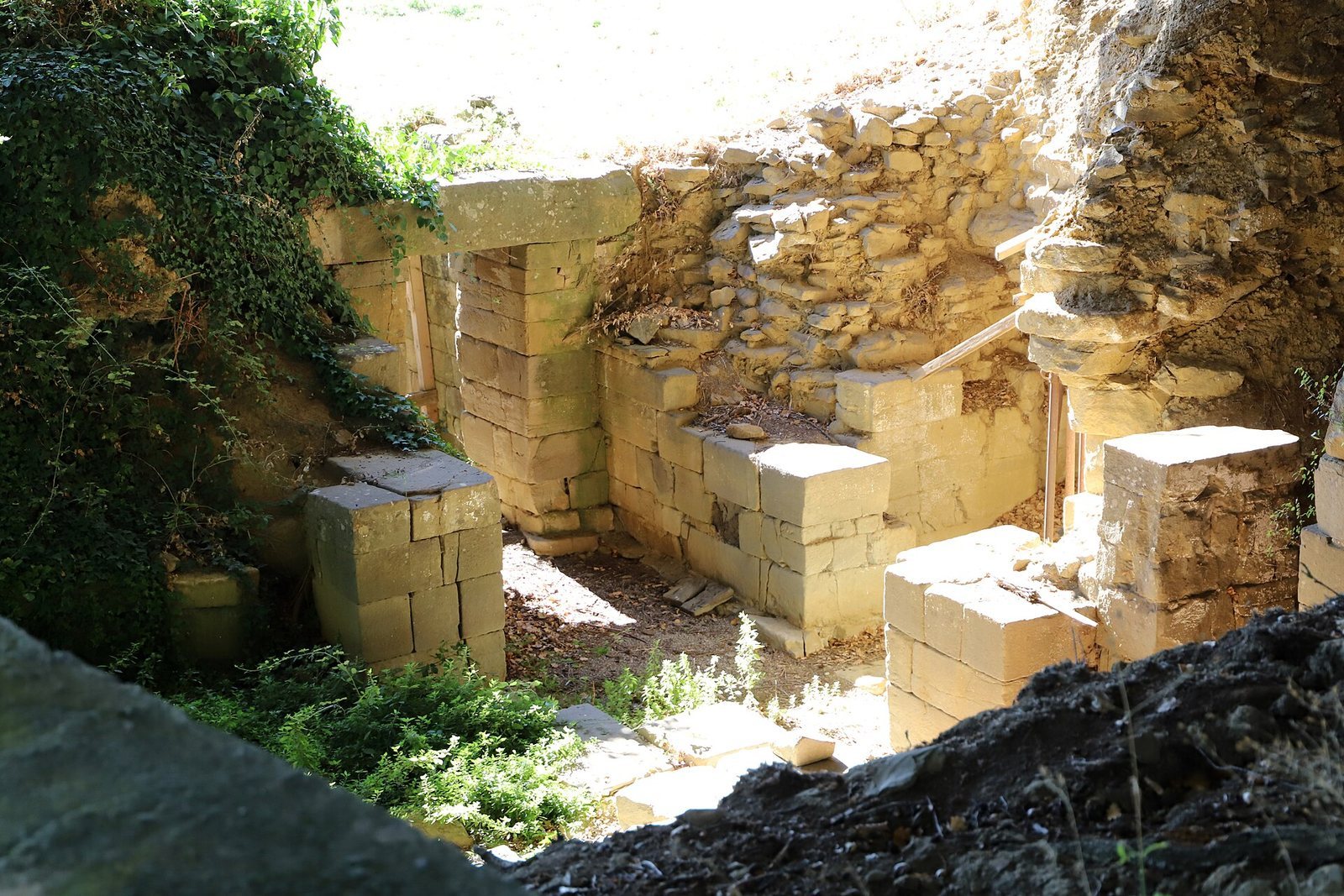
This tomb dates to about 580 BC. Its long entrance corridor runs west to a monumental doorway, of which the lintel survives. The entrance led to two square vestibules, three burial chambers on each side, and another chamber extending lengthwise at the end. Much of the centre has collapsed, but some chambers retain their pseudo-vaults, made from stone courses that project inward and are capped with wedge-shaped blocks. The walls use well-squared local sandstone in pseudo-isodomic masonry, regular courses whose blocks need not be the same height. Finds include Chiusi-style bucchero and Attic black-figure pottery, decorated with dark figures on a clay-coloured surface. The vessels date to about 600–550 BC, and their decoration is attributed to the Gorgon Painter, KX, Lydos, and artists who followed his style. Such pieces are very rare outside Greece. A gold bow-shaped fibula, or brooch, from the second half of the sixth century BC was also found.
Second tomb
Dating to about 480–460 BC, the second tomb has two burial cells reached by a dromos. Four benches held four sarcophagi made from fetid stone, a type used for Etruscan funerary objects; a fifth stood near the back wall. The sarcophagi are highly fragmentary but still held human remains. The tomb also contained two clay urns and three sandstone urns, two of the latter bearing inscriptions and decoration. More than 150 finely made jewellery pieces were recovered, chiefly beads of gold, rock crystal, and amber, along with rings and clothing ornaments. Objects associated with a male burial include a bronze writing tool topped with a statuette of Hercules, a curved body scraper called a strigil, part of a bone musical instrument, and components from bronze thrones and boxes.
Altar and nearby graves
Funerary altar
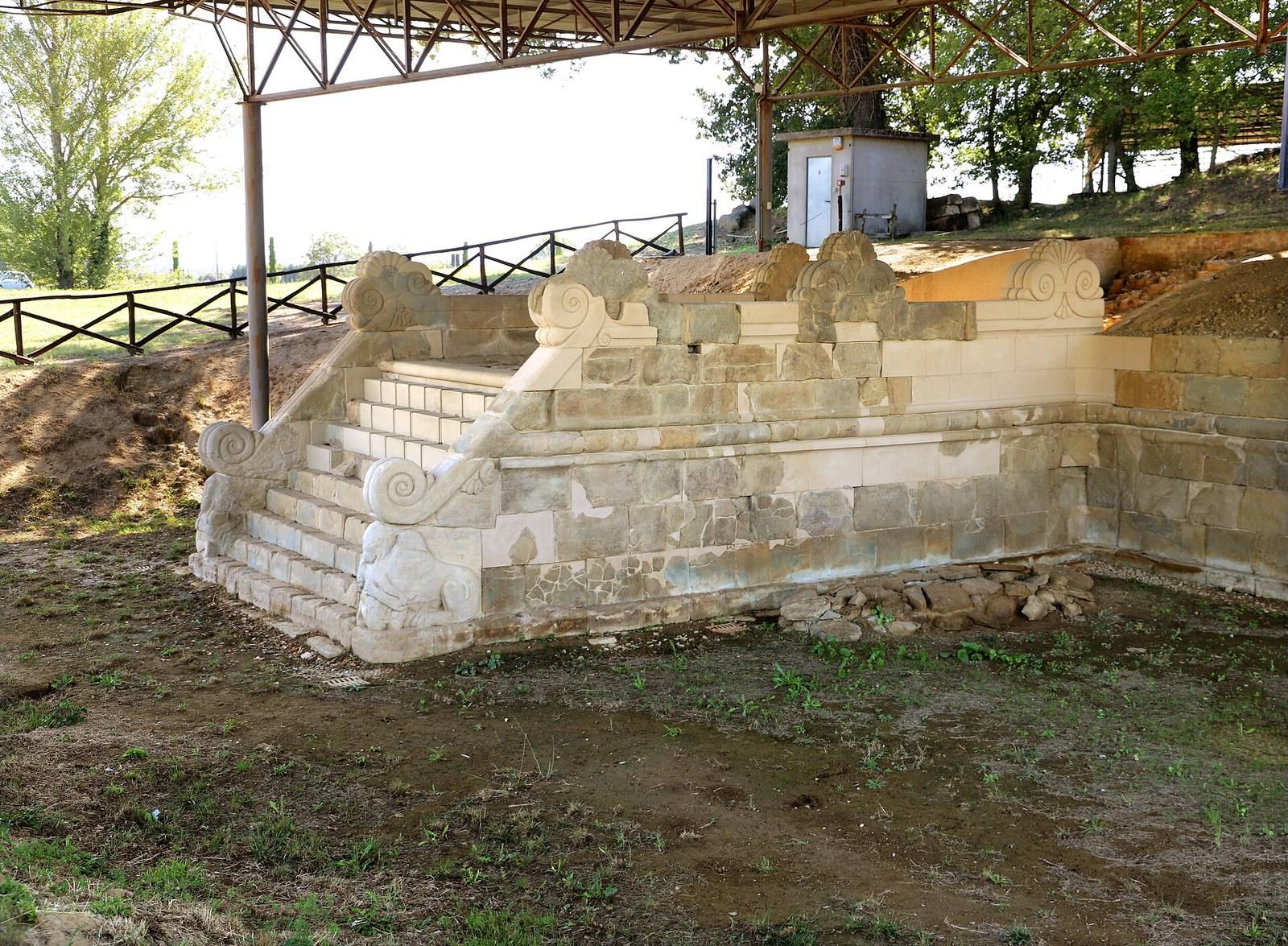
East of the tombs, a monumental platform altar was used for funeral ceremonies. It dates to the beginning of the sixth century BC. Sculpted reliefs decorate both ends of its stairway. The most important carved sections are kept at the Museum of the Etruscan Academy and the City of Cortona (MAEC); copies now occupy their places at the site.
Cemetery graves
Seventeen graves were excavated near the altar. Most are pits used for inhumation, or burial of the body. Their dates extend from the sixth century BC through the late Republican period and the first century AD, reflecting the continued use of the tumulus area as a cemetery.