Church of St. Joseph in Krzymów: A Medieval Church Remodeled in 1872
Site at a Glance
- Popularity
- Very Low
- Country
- Poland
- Primary era
- Medieval
- Eras represented
- Medieval, Modern
- Civilizations
- German, Holy Roman Empire, Margraviate of Brandenburg
- Site type
- Religious
- Remains
- Church
On this page9 sections
History
Medieval construction and nineteenth-century remodelling
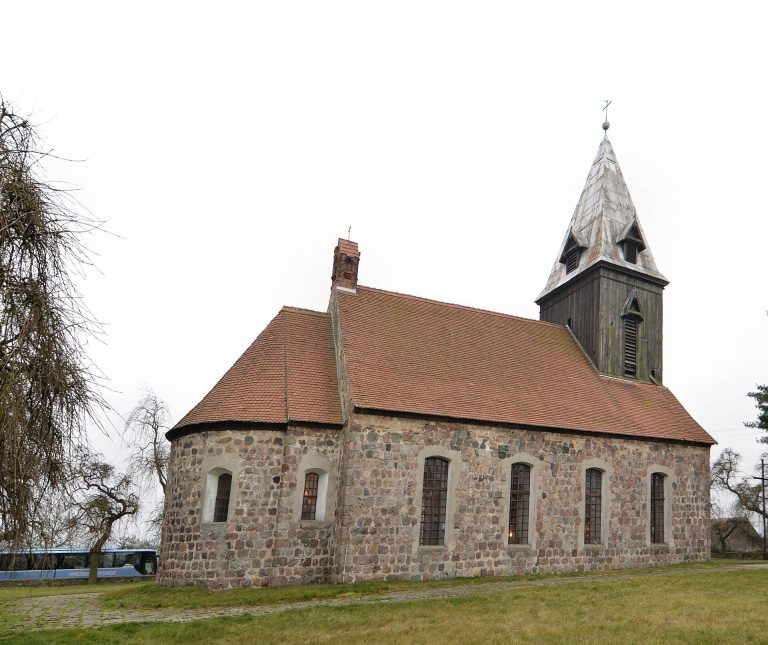
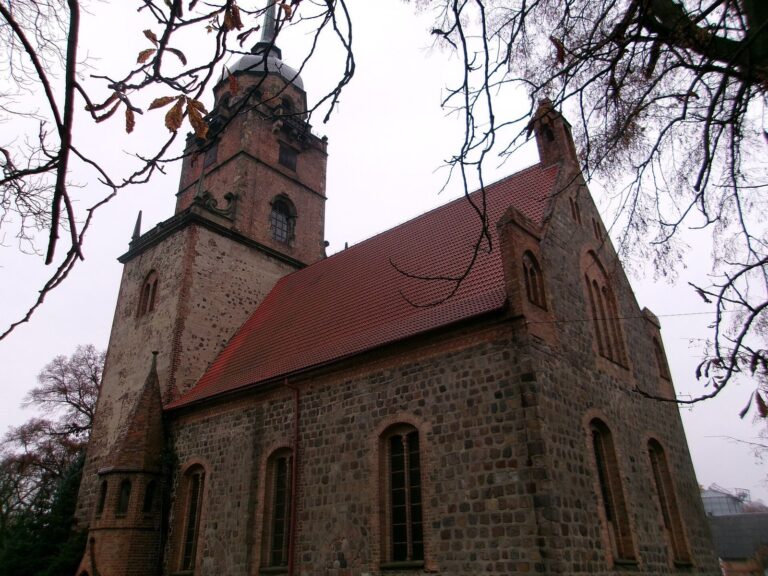
The Church of St. Joseph in Krzymów, Poland, is a Roman Catholic place of worship built in the second half of the thirteenth century. A major remodelling in 1872 gave the church a Neo-Gothic character, part of a nineteenth-century revival of medieval Gothic styles.
Postwar Catholic use
After the Second World War, the church was consecrated for Catholic worship in 1947. It serves as a subsidiary church of the Parish of St. Andrew Bobola in Krajnik Górny. St. Andrew Bobola was a Polish Jesuit priest and martyr of the seventeenth century.
Remains
Exterior and site enclosure
Nave and doorways
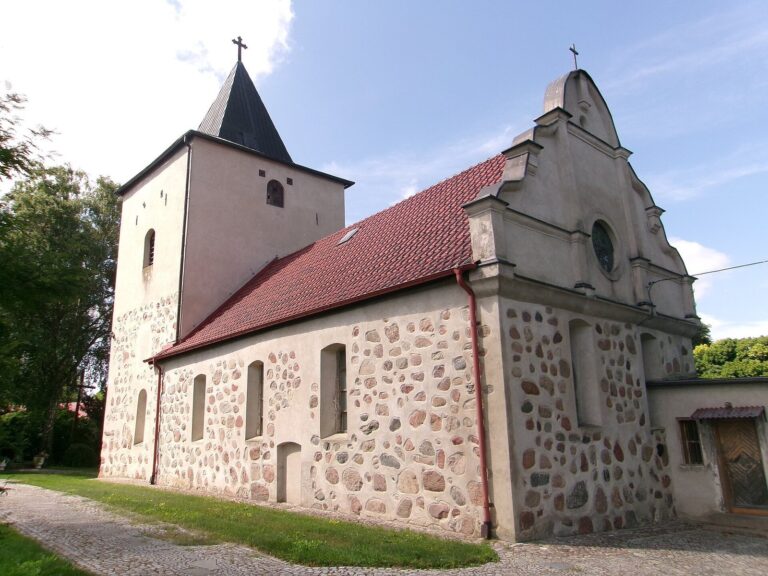
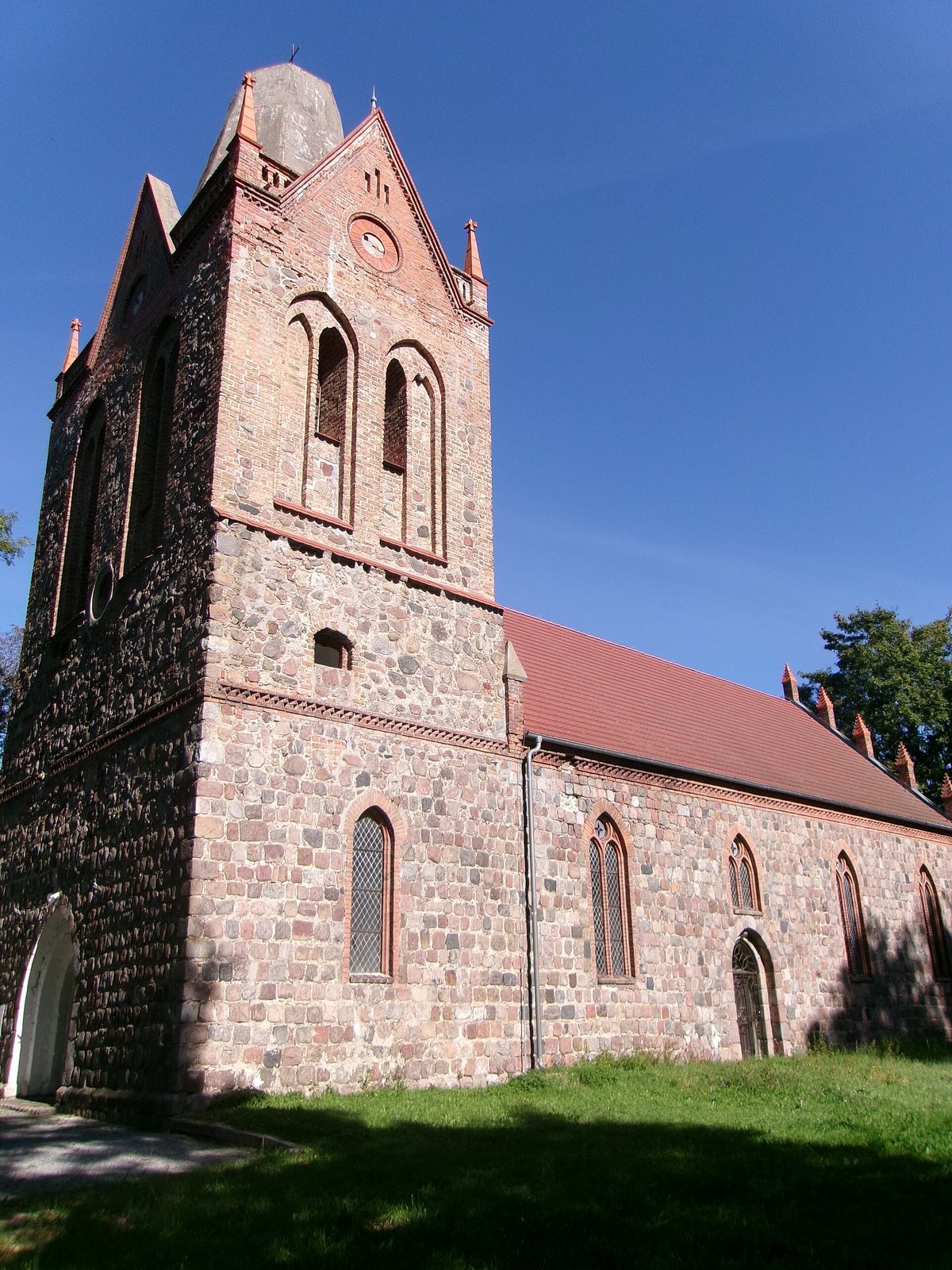
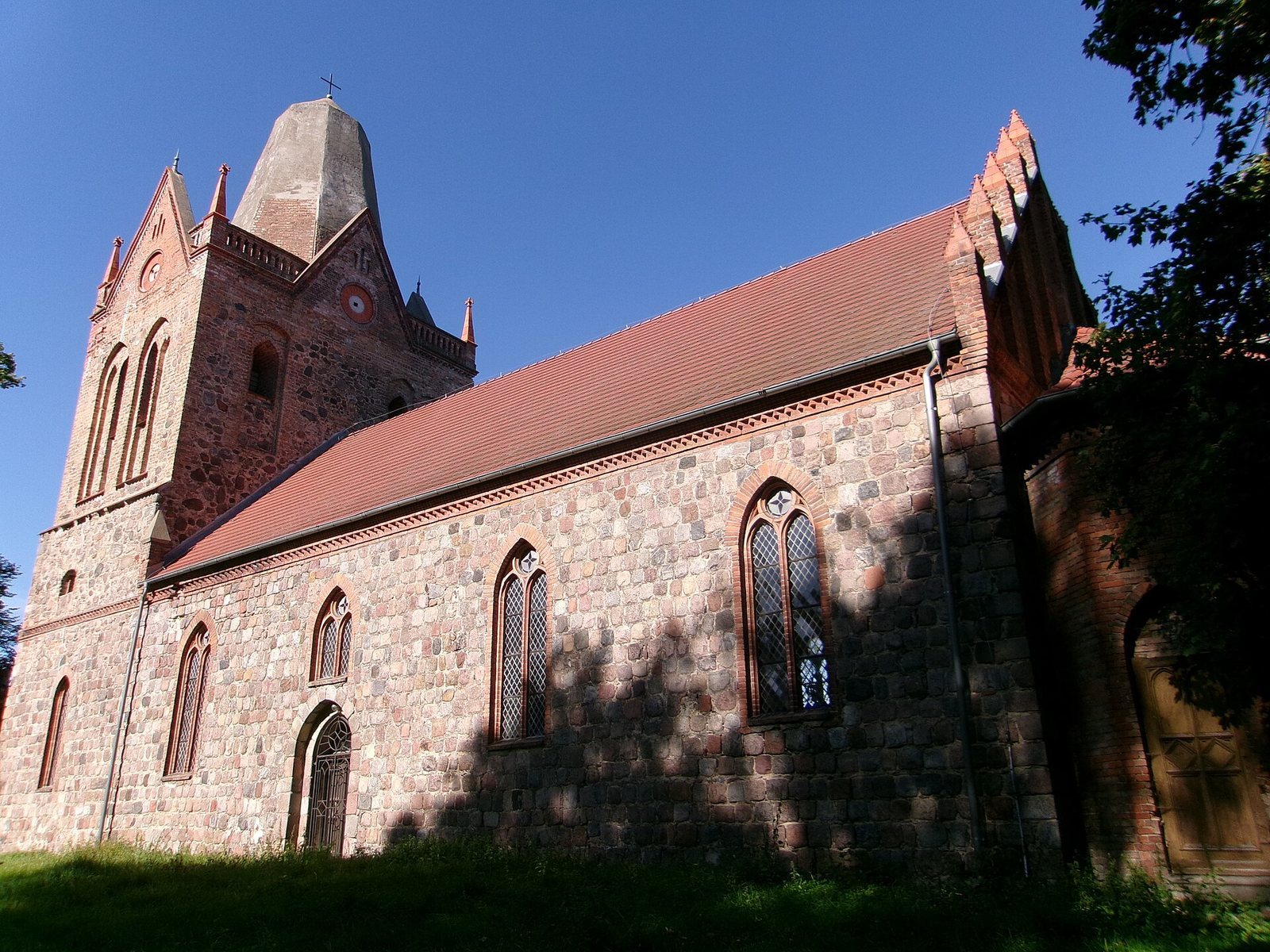
The church is a single-nave building of granite blocks, laid out as a rectangle measuring 21.3 by 9 metres. Its nave has a gabled roof, and pinnacles decorate the eastern gable. Two original pointed-arch doorways survive: the west doorway has three successively recessed frames, while the south doorway has two.
Tower and chancel
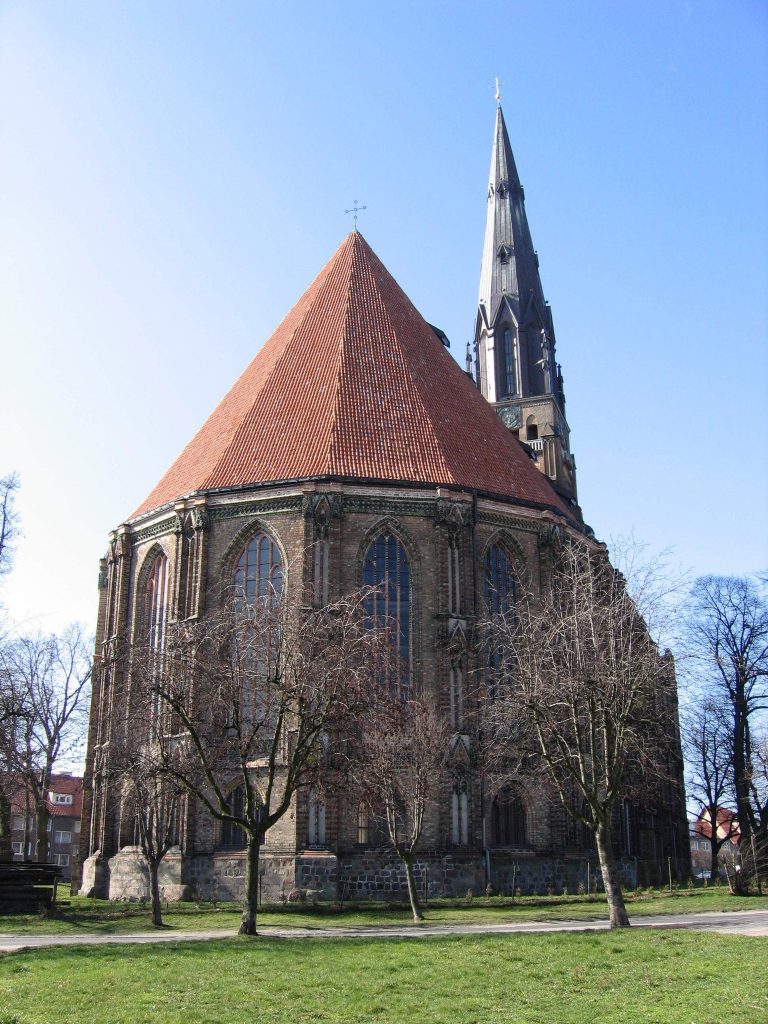
A tower added at the west end in the fifteenth century is as wide as the nave. Four small decorative gables and an octagonal spire crown it. The 1872 work also widened the windows and added a brick chancel, the area around the altar, at the east end. The chancel ends in five sides, with a small projecting chamber, or apse, adjoining it on both the north and south.
Cemetery enclosure
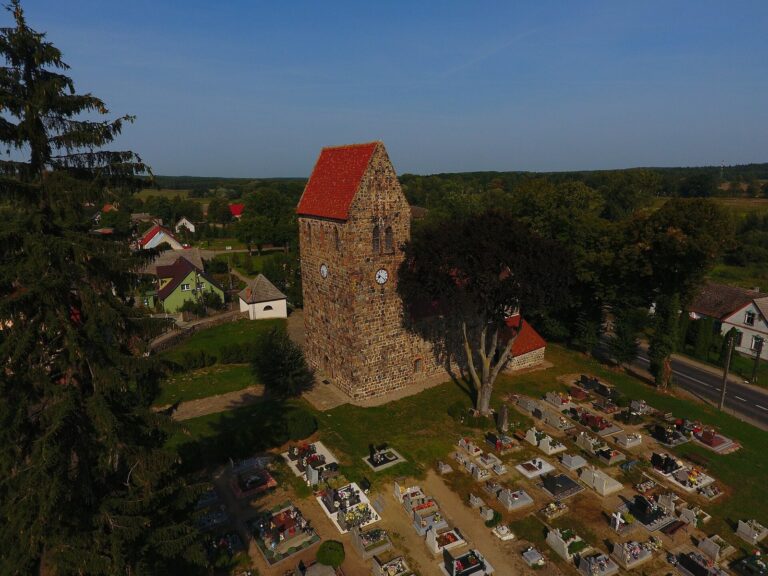
The church stands within the grounds of a former cemetery, enclosed by a stone wall. A brick gate dating to the fifteenth century provides an entrance through the enclosure.
Interior
A wooden ceiling covers the church, and a wooden gallery with an organ case stands against the west wall. The chancel arch divides the altar area from the nave; above it is a painting of the Lamb of God, a Christian title for Jesus often represented by a lamb. The furnishings include an eighteenth-century baptismal font and a wooden plaque commemorating those who died in the First World War.