Smolotely Castle: A Medieval Fortress Transformed into a Late-Baroque Chateau
Site at a Glance
- Rating
- 3.6
- Popularity
- Very Low
- Country
- Czechia
- Primary era
- Early Modern
- Eras represented
- Medieval, Early Modern
- Civilizations
- Holy Roman Empire, Kingdom of Bohemia
- Site type
- Domestic
- Remains
- Castle
On this page8 sections
History
Smolotely Castle is a former medieval fortress and late-Baroque chateau in Smolotely, Czechia. The village was first recorded in 1336, while the foundation of its fortress remains uncertain and the fortress itself was first mentioned in 1515. The site developed within the estates of lesser nobles and later became the centre of a larger manor.
Medieval estates and the Hussite Wars
During the fourteenth century, Smolotely belonged to the fief system of Vrškamýk Castle, a territorial arrangement in which dependent holdings were attached to a castle or lordship. After Karlštejn was founded, the village was transferred to the fiefs of Karlštejn. In 1336 it was divided among four lesser nobles, Jaroš and the brothers Enuglin, Mikuláš, and Jordán. Heřman of Smolotely was recorded there in 1357, and the village remained divided among several small estates during the later fourteenth century.
Several local families and landholders are named in records from this period. One estate belonged to Zachař, who died in 1382, and then passed to Oldřich and his wife Machna. Another was held by Ješek Morček and Ješek Zběh before passing to Mikšík, while a third belonged to Kuneš, who died in 1383. Matěj, Diviš, and Přibík also used the designation “of Smolotely” in 1388, 1394, and 1399. In that final year, Přibík donated five kopa, or 300 groschen, to the church at Hbity.
The Hussite Wars, fifteenth-century religious and political conflicts in Bohemia associated with the Hussite reform movement, brought opposing local loyalties into the history of Smolotely. Předbor of Radešín fought on the Catholic side. He occupied Černošice in 1422, later served in the garrison at Karlštejn, and died there on 6 July 1430. Buzek of Smolotely fought for the Hussites and, as one of their commanders, helped occupy Tachov Castle after the Battle of Tachov.
Consolidation of the estate
The gradual consolidation of Smolotely’s separate estates began in the early fifteenth century. In 1407 one holding belonged to Předbor of Radešín. In 1413 he acquired the escheated property of Jan Sestřenec, including a court at Smolotely and subjects at Žlakovice. Four years later he bought another Smolotely court from Linhart of Smolotely, together with subjects at Žlakovice and Radaši. Jan and Beneš of Smolotely still held another part of the village in 1414.
Předbor’s property passed to his son Petr of Radešín, who also owned Lazsko. In 1442 Petr bought another Smolotely court from Mrakš of Smolotely, together with parts of Hbity and Solenice. Although he was still living in 1480, he had transferred parts of Smolotely and Pečičky to his sons Václav and Ondřej in 1478. Václav’s estate already included the fortress.
In 1515 Václav’s son Zikmund sold the fortress, court, village, rents in Hbity, Pečice, and Vesec, and the right of patronage over the church at Hbity to Jan Šic of Drahenice. Zikmund bought Smolotely back in 1518 from Hynek Předbor of Radešín, who had inherited it from Jan Šic. The estate remained with Zikmund’s family until 1526, when Sixt Kafunk of Chlum acquired it.
Changing ownership and the Chanovský family
Ownership changed repeatedly during the sixteenth century. Jan Roh of Vlkanov held Smolotely in 1532, Petr of Újezd in 1536, and Jindřich Opršál of Jetřichovice and Břetislav of Rýzmberk in 1543, followed by Šimon of Šanov. Šimon’s son Adam was recorded in 1572. Adam’s son, Šebestián of Šanov, received the village as hereditary property in 1585. Four years later, Šebestián’s wife, Zuzana Šanovcová of Sudoměř, acquired it, and in 1605 the brothers Kryštof and Jindřich Chanovský of Dlouhá Ves purchased the estate.
The Chanovský family of Dlouhá Ves held Smolotely until 1740, apart from the years 1608 to 1612, when it belonged to Jeroným Puchfelder and Oldřich of Doudleby. After Jindřich Chanovský died in 1619, his widow Anna of Příchovice administered the estate as guardian of their underage children. She became its hereditary owner in 1634. The inheritance later passed to her son Jan Vilém Chanovský and, in 1672, to his younger son Adam Maxmilián Chanovský of Dlouhá Ves.
Transformation into a chateau
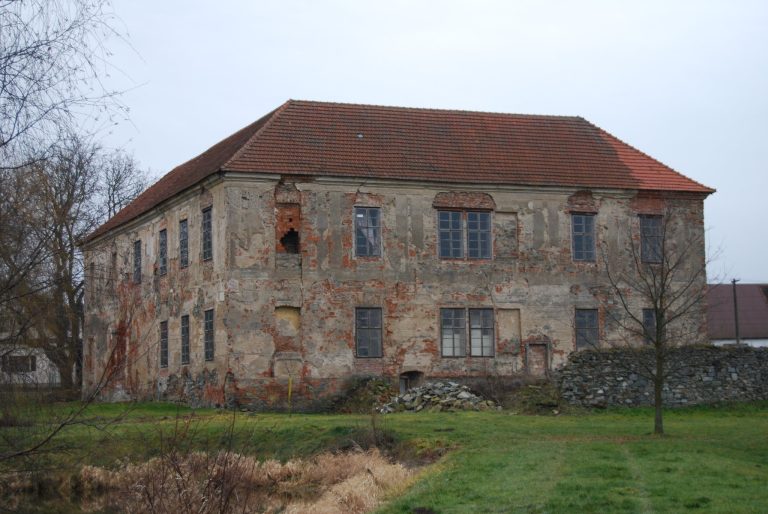
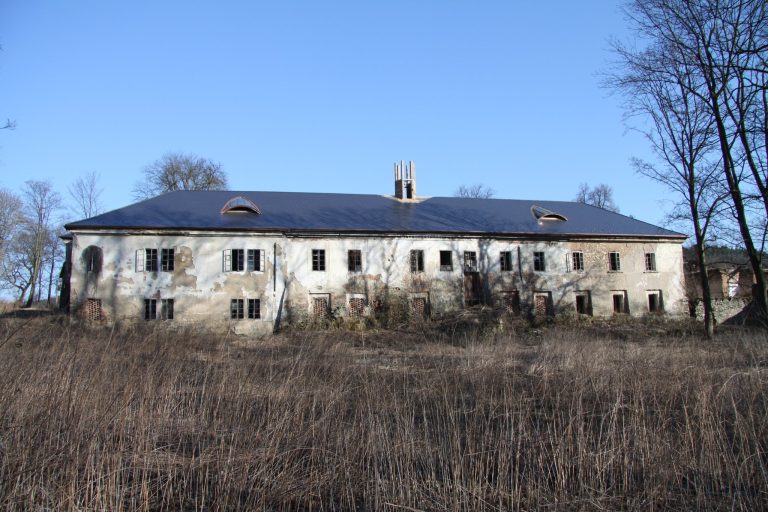
In the first half of the eighteenth century, the Chanovský family converted the old fortress into a late-Baroque chateau. Zdeněk Jiří Chřepický of Modliškovice bought it in 1740, and the property remained with his heirs until 1809. During their ownership the chateau was damaged by fire and repaired between 1778 and 1791.
After 1809, the chateau passed through a succession of owners. In the second half of the twentieth century, the building was used by a state farm. The former manager’s house now accommodates the municipal office. The chateau complex, including its park and former brewery, is protected as a cultural monument.
Remains
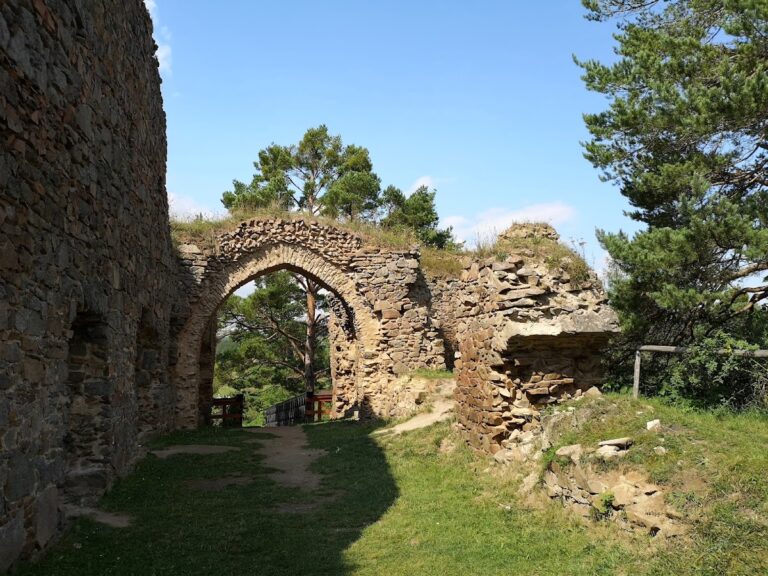
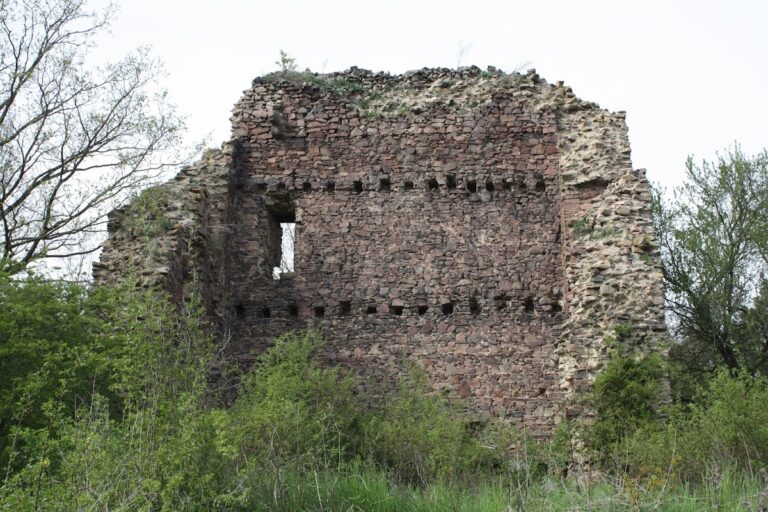
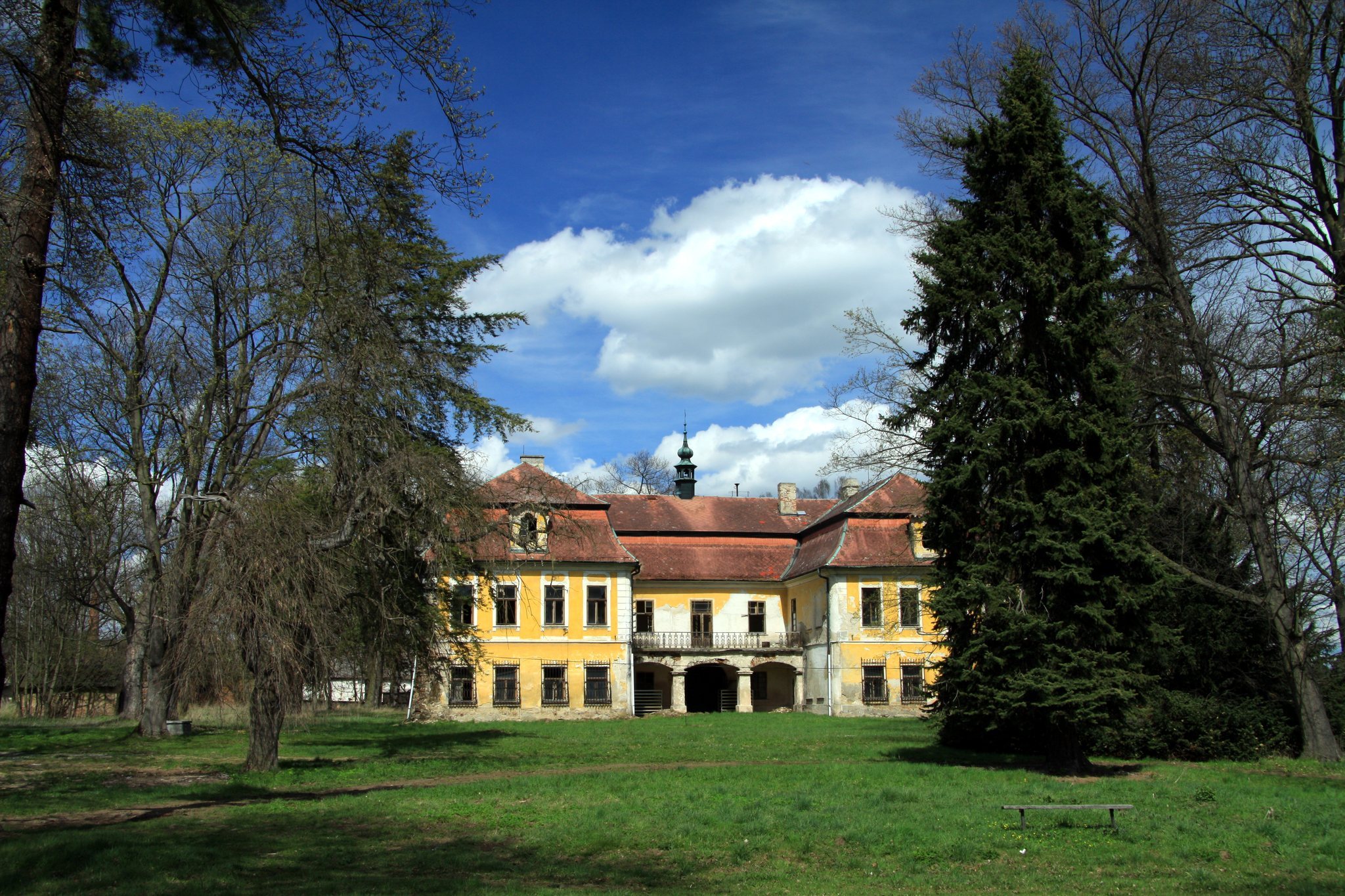
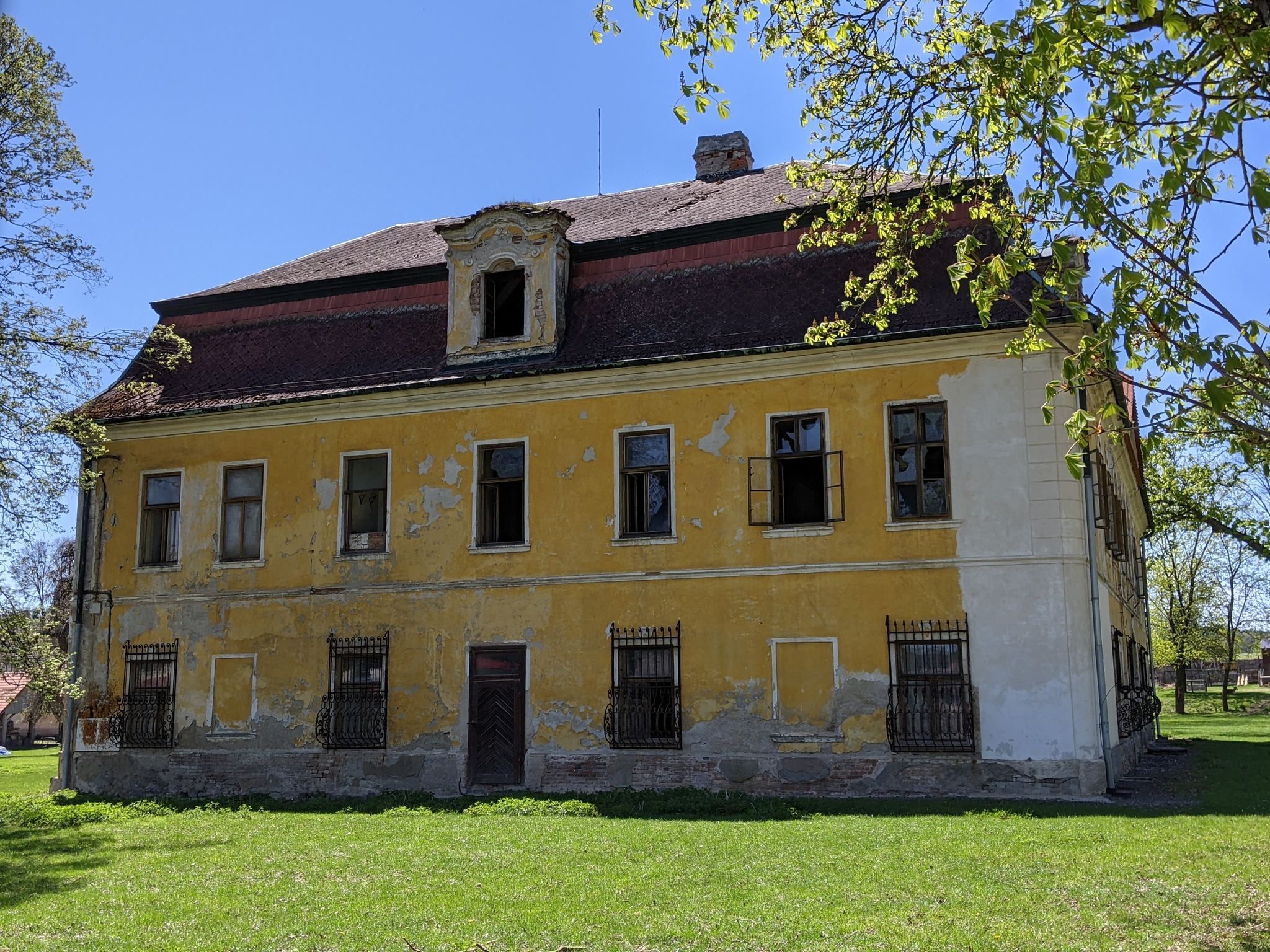
Smolotely Castle is a one-storey building with three wings, standing at the centre of a landscaped park enclosed by a stone wall. Parts of the original medieval fortress survive in the northwestern and northeastern sections of the chateau. The later building combines this earlier fabric with a late-Baroque architectural composition.
Chateau building
The northern facade is marked by a four-bay projecting central section that rises into a triangular gable. A broad carriage entrance leads into the building from this side, with windows placed on both sides. The gable was formerly decorated with vases and sheet-metal gargoyles. A mansard roof, with two slopes on each side and a steeper lower slope, covers the building; at the end of the nineteenth century it was clad with wooden shingles.
Park and associated buildings
The park is entered through a broad pier gate, a gateway formed by substantial masonry posts, with smaller pedestrian gates at the sides. The complex includes the former brewery, later converted into a guesthouse, and the former manager’s house. It also contains statues of Saint John of Nepomuk and Saint John the Baptist, together with the Chapel of the Holy Trinity.
A small-leaved lime tree formerly stood in the park north of the chateau. It reached 21 metres in height and had a trunk circumference of 694 centimetres. It was protected as a landmark tree from 1947 until it was uprooted in 2003.