Skottorp Castle: An Empire-Style Palace in Sweden


Site at a Glance
- Rating
- 4.3
- Popularity
- Very Low
- Country
- Sweden
- Primary era
- Modern
- Eras represented
- Modern
- Civilizations
- Swedish
- Site type
- Domestic
- Remains
- Elite Residence
On this page9 sections
History
Early estate and ownership
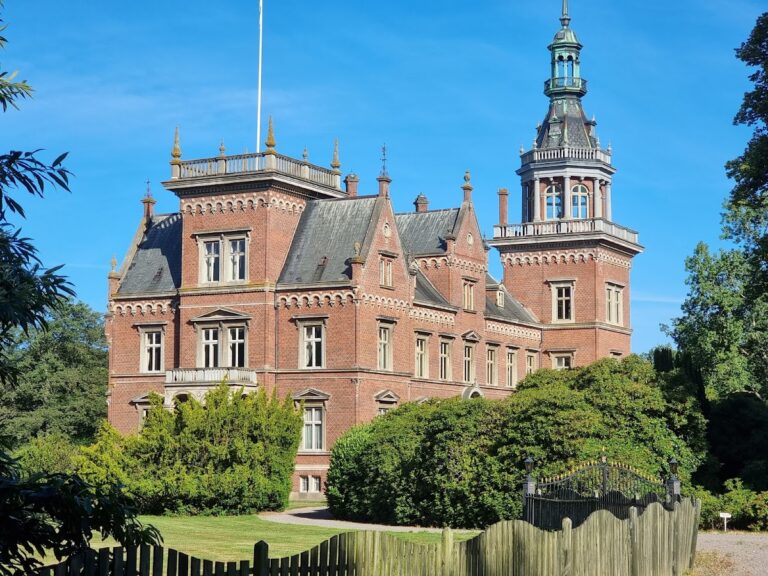
Skottorp Castle is an Empire-style palace in Sweden, near Hallandsåsen and Lake Stensån in southern Halland. The estate grew from the principal farm at Veka, mentioned in the early fourteenth century. Axel Nielsen Baden was recorded as lord of Skottorp after 1505, placing the property within the region’s established landed society.
In 1663, Holger Rosencrantz of Dömestorp sold Skottorp to Councillor Peter Julius Coyet, who transferred it later that year to Court Chancellor Frans Joel Örnestedt. After Örnestedt died in 1790, his granddaughter Marianne von Krassow bequeathed the estate to her son, Gustaf Adam von Krassow.
The Örnestedt palace and royal wedding
Örnestedt commissioned an earlier palace during the second half of the seventeenth century, following plans by Nils Eosander, a Swedish architect active during that period. Its Royal Hall hosted the wedding of King Charles XI of Sweden, who reigned from 1660 to 1697, and Ulrica Eleonora of Denmark on 6 May 1680.
For the royal occasion, Nicodemus Tessin the Elder, a leading Swedish architect of the seventeenth century, designed a two-storey banqueting hall with a high dome and adjoining rooms for the royal family. This royal association gave Skottorp a place in the history of Sweden’s monarchy.
Rebuilding in the nineteenth century
In 1801, Gustaf Adam von Krassow’s sons divided the property. The principal estate, also known as Gamla Skottorp, passed to Captain Carl Gustaf von Krassow, who sold it to Commissioner Peter Möller in 1813.
Möller ordered the deteriorated earlier palace to be demolished in 1816. The present palace was built in the following years in the Empire style, an early nineteenth-century form based on formal classical references and monumental design. The building was remodeled and modernized during the 1820s, with Carl Fredrik Sundvall as its architect.
Möller’s widow transferred the estate in 1846 to her nephew, the horseman Peter Möller. He further developed the property through reforestation, rational agriculture, and additional improvements to the estate.
Protection and later ownership
Skottorp received protection as a Swedish building monument on 28 November 1986, when the Grankvist family assumed responsibility for the property. The Müller-Uri family owned the castle from 2005 and opened parts of it for cafés and conferences. Leija Graf and Åke Hellstedt acquired it in 2018.
Remains
Present palace
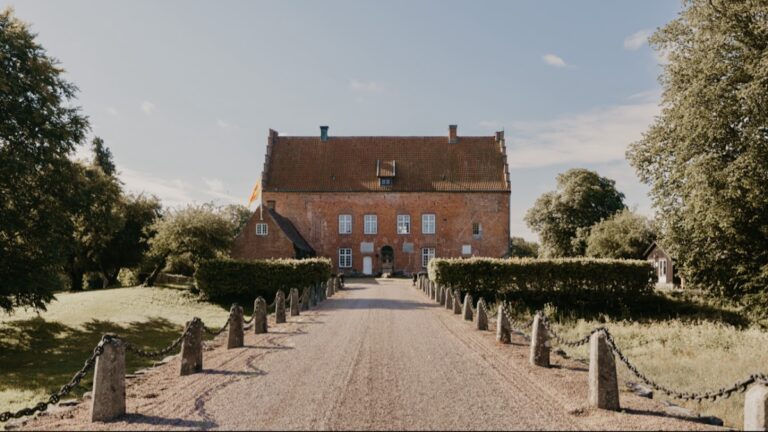
The present main building is a two-storey Empire-style palace designed by Carl Fredrik Sundvall. Separate wing buildings flank it on both sides, giving the residence a balanced arrangement. Inside, a well-preserved Empire-style furnishing scheme retains the formal classical character associated with the building’s early nineteenth-century construction and later modernization.
Royal Hall
The earlier palace included the Royal Hall, a two-storey banqueting space with a high dome, together with adjoining rooms intended for the royal family. Its design belonged to the seventeenth-century palace commissioned by Frans Joel Örnestedt and associated with Nicodemus Tessin the Elder.
Park and landscape setting
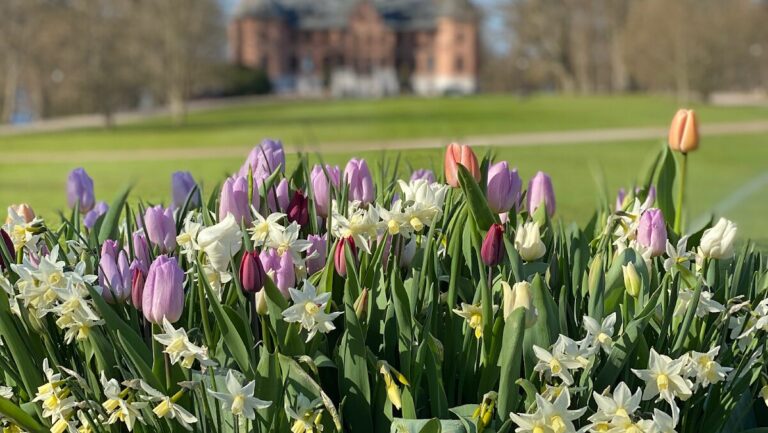
An English-style park extends in front of the castle. It contains a wide variety of trees and shrubs, including relatively rare varieties. The estate stands near Hallandsåsen and beside Lake Stensån, linking the palace grounds to the surrounding Halland landscape.
Nearby sites