Shirotayama Kitsunezuka Kofun: An Early Japanese Burial Mound
Site at a Glance
- Popularity
- Very Low
- Country
- Japan
- Primary era
- Classical
- Eras represented
- Classical
- Civilizations
- Unclassified
- Site type
- Burial
- Remains
- Burial Mound
On this page4 sections
History
Early Kofun period
Shirotayama Kitsunezuka Kofun is a Japanese burial mound in Matsuo, Iida, Japan, dating to around the first half of the 4th century, during the early Kofun period, an archaeological era named for this type of tomb. It is regarded as the oldest kofun in the Ina Valley. Its form differs from the predominantly keyhole-shaped tombs of the Iida Kofun Group, built from the late 5th century under the influence of the Yamato kingship, the early Japanese political authority centered in the Yamato region. The difference has drawn attention as possible evidence of links with political powers in Tokai, a region of central Japan.
Survey and designation
The Iida City Board of Education surveyed the mound in 1993 and reported the results the following year. Nagano Prefecture designated it a prefectural historic site on February 17, 1994.
Remains
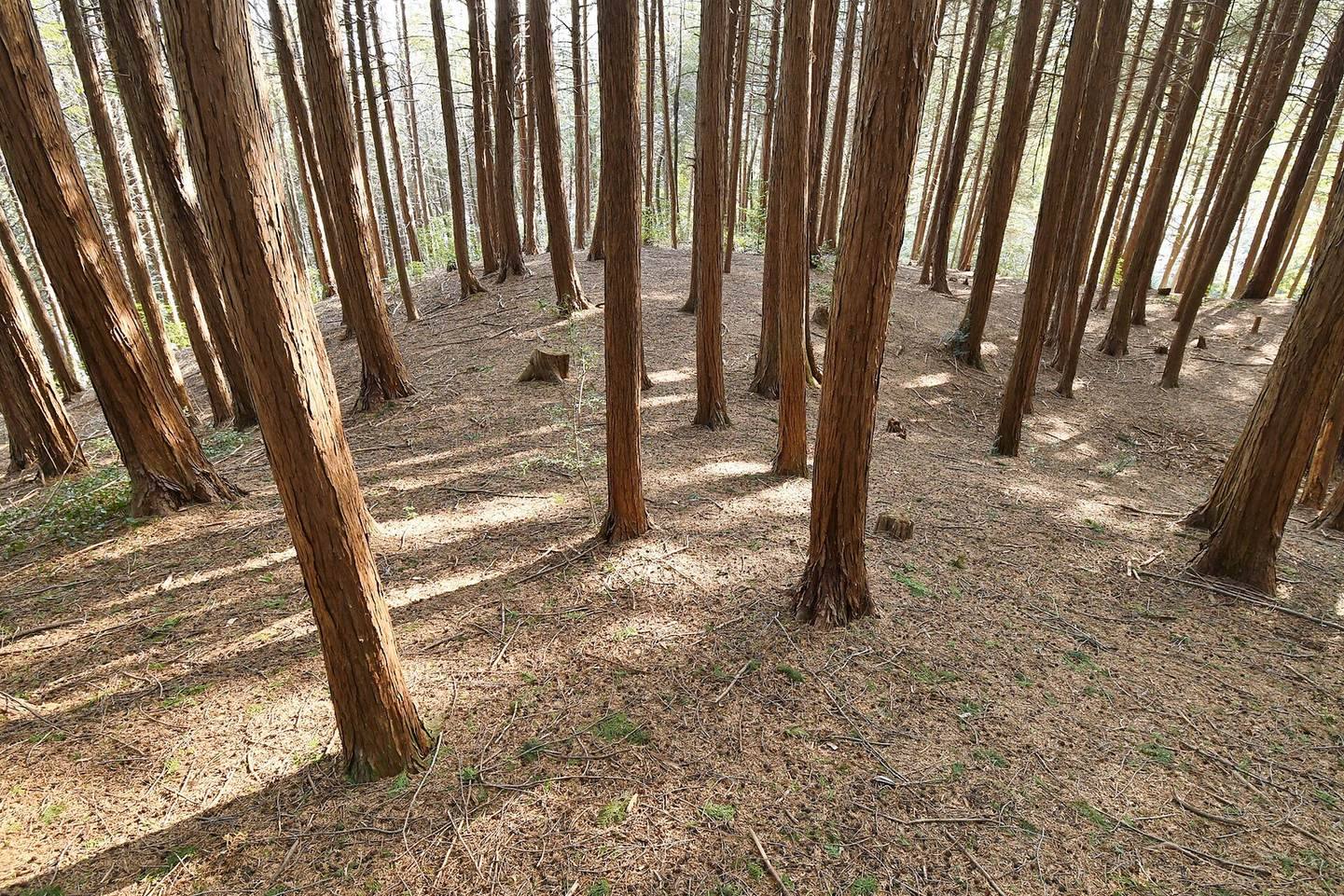
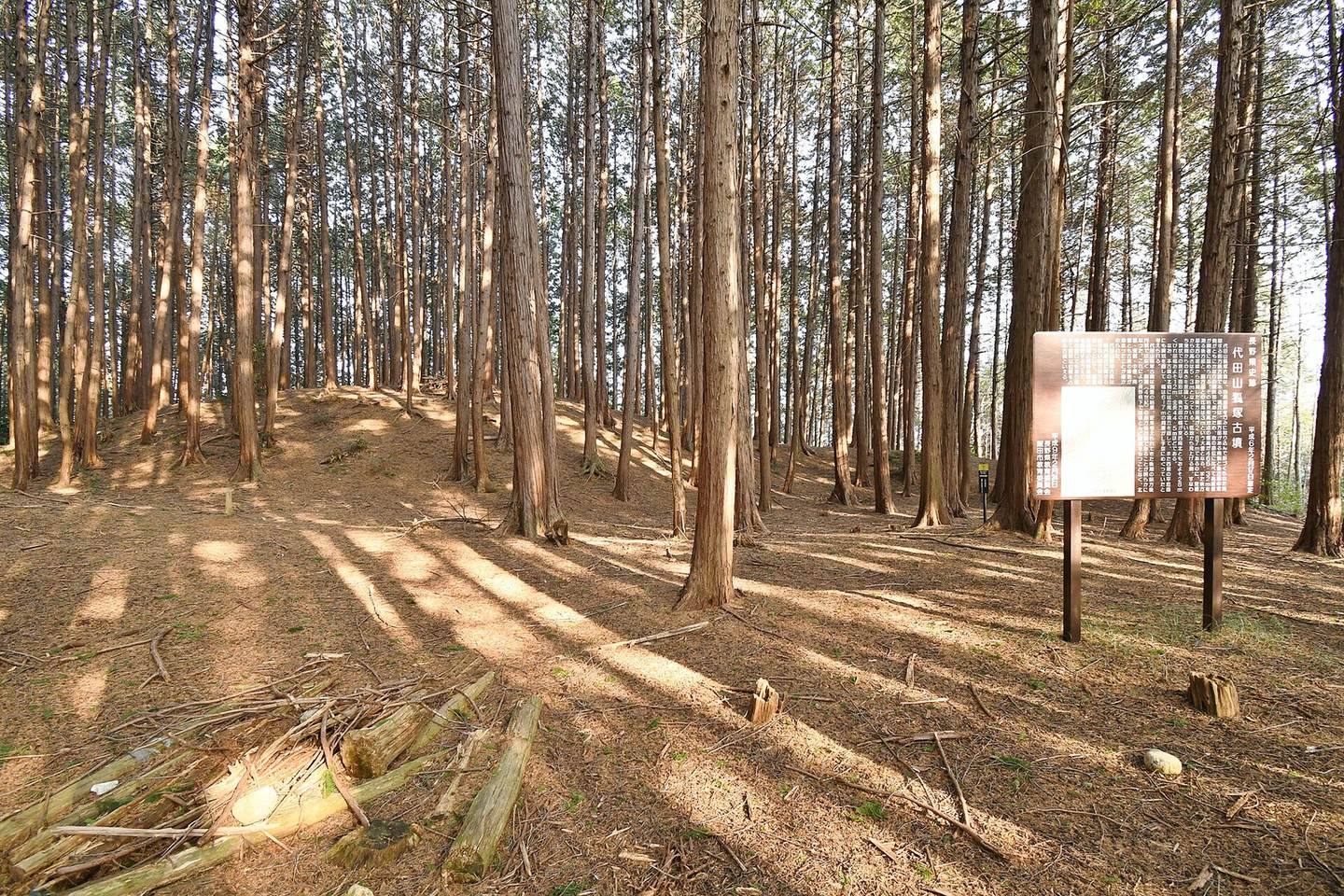
The well-preserved mound stands on the eastern edge of a middle terrace on the right bank of the Tenryu River. It is built on a steep slope, with its eastern side shaped to appear higher when viewed from the lowlands. Its rear and front sections are square, and the front faces south. The rear section is 28 m wide, the narrowed middle is 11.3 m wide, and the front is 13 m wide.
The mound is about 42 m long, while the site information board gives a length of 44.5 m. Moats are believed to have run along its north and west sides.