Iwamura Castle: A Japanese Mountain Castle in Ena


Site at a Glance
- Rating
- 4.2
- Popularity
- Medium
- Country
- Japan
- Primary era
- Early Modern
- External website
- Open
- Eras represented
- Early Modern
- Civilizations
- Tokugawa
- Site type
- Military
- Remains
- Castle
On this page7 sections
History
Iwamura Castle is a Japanese mountain castle in Ena, Japan, founded around 1185 and developed as a yamajiro, a fortress built on a mountain for defense and territorial control. It stood in southeastern Mino Province, an area now forming Iwamura in Gifu Prefecture, and controlled routes across the surrounding region. The castle’s foundation is attributed to Katō Kagekado, a vassal of Minamoto no Yoritomo, who founded the Kamakura shogunate. Another tradition places its construction between approximately 1185 and 1195, while its first recorded mention dates from 1337.
The Tōyama Lords
Kagekado’s descendants established cadet branches associated with their residences, and the Tōyama clan ruled Iwamura from the medieval period for nearly four centuries. The Tōyama often had to submit to stronger neighboring powers, and by 1545 they were subordinate to the Takeda clan. Their position also brought them into the rivalries of the Sengoku period, an era of prolonged civil warfare among regional warlords.
Oda Nobunaga sought an alliance with the Tōyama because their territory bordered that of his rival, Saitō Dōsan. Nobunaga sent his aunt, Otsuya-no-kata, to marry Tōyama Kagetō. Because the couple had no heir, Nobunaga arranged for one of his sons to be adopted into the Tōyama family.
The Sieges of 1572 and 1575
Iwamura became a battleground in the conflict between Takeda Shingen and Oda Nobunaga. In 1572, Takeda general Akiyama Nobutomo attacked the castle. The Tōyama defenders initially repelled the assault, but Kagetō died from wounds received during the fighting. Otsuya-no-kata then took command and continued the defense for several months.
The castle eventually surrendered under terms that sent the adopted heir as a hostage to Kai Province and required Otsuya-no-kata to marry Akiyama Nobutomo. The remaining Tōyama forces joined the Takeda, leading Nobunaga to attack Iwamura repeatedly. After the Takeda defeat at the Battle of Nagashino in 1575, an engagement that weakened Takeda power, Oda forces besieged the castle again. The defenders held out for six months, but negotiations ended with Nobunaga repudiating the agreement. Otsuya-no-kata and Akiyama Nobutomo were executed on 23 December 1575, and the remaining defenders were killed. The Iwamura branch of the Tōyama clan thereby came to an end.
From the Mori Clan to the Edo Period
In 1582, Nobunaga stayed at Iwamura Castle while receiving reports about his campaign in Kai Province. The castle later passed to Mori Nagayoshi and then to his son, Mori Tadamasa. During the Mori family’s seventeen-year tenure, the fortress was extensively transformed with stone walls, creating the configuration later associated with Iwamura.
After Toyotomi Hideyoshi’s death, Iwamura was assigned to Tamura Naomasa. The Tamura supported the Western Army at the Battle of Sekigahara, the 1600 conflict that established Tokugawa Ieyasu’s supremacy, and lost their lands after its defeat. Matsudaira Ienori of the Ogyū-Matsudaira clan then became lord of the newly established Iwamura Domain.
The Niwa clan held Iwamura from 1638 to 1702, after which the Ogyū-Matsudaira governed it until the Meiji Restoration in 1868. Iwamura was therefore one of the Japanese mountain castles that remained in use after 1600, continuing into the Edo period, the era of Tokugawa rule.
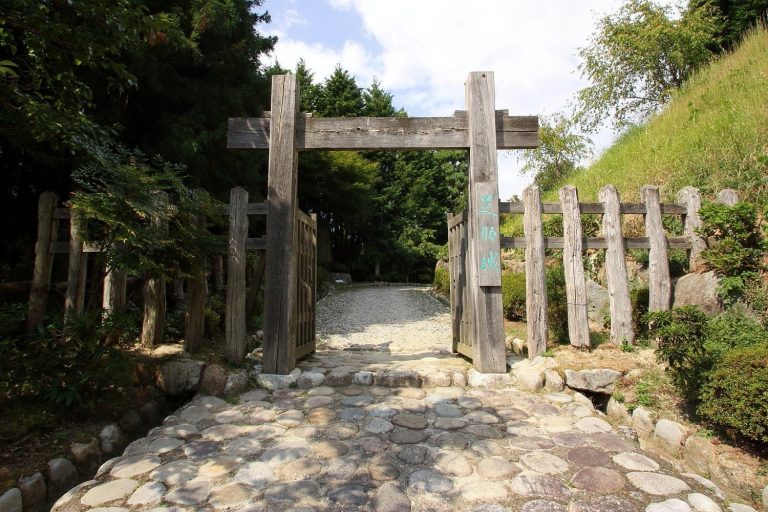
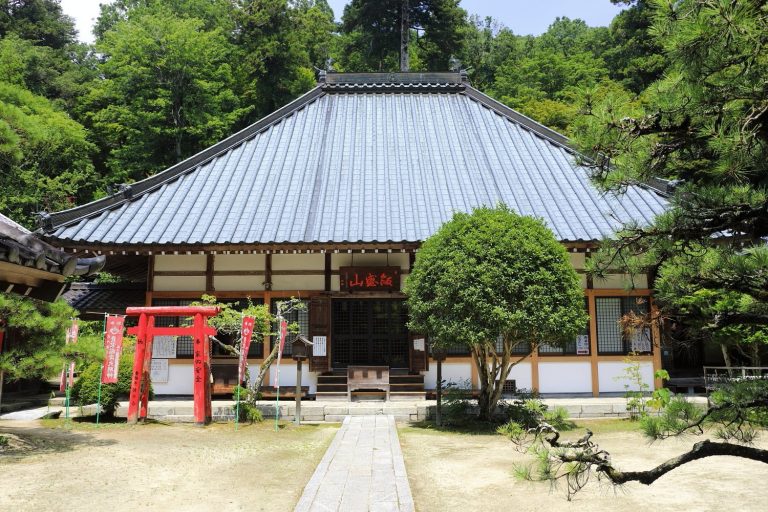
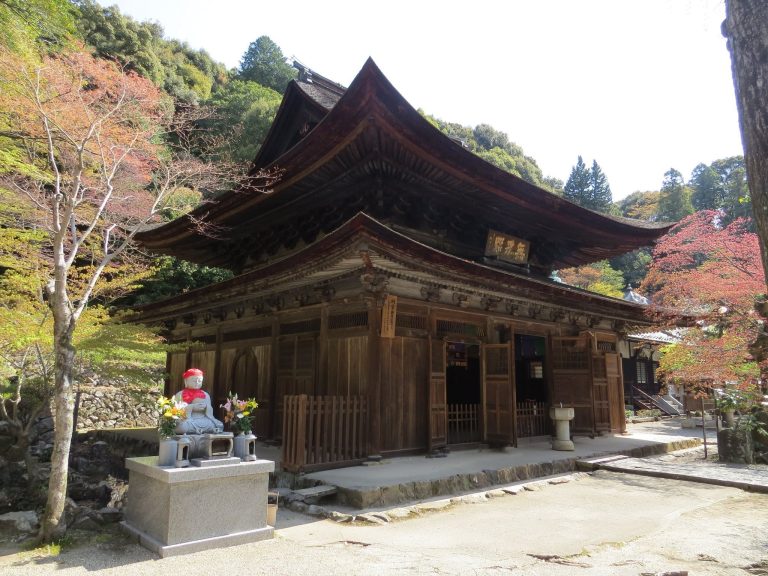
Following the Meiji Restoration, the castle buildings were dismantled in 1873. A surviving gate was transferred to a neighboring temple. The lower residence burned in 1881, and part of the residence, together with a gate and drum tower, was reconstructed in 1990.
Remains
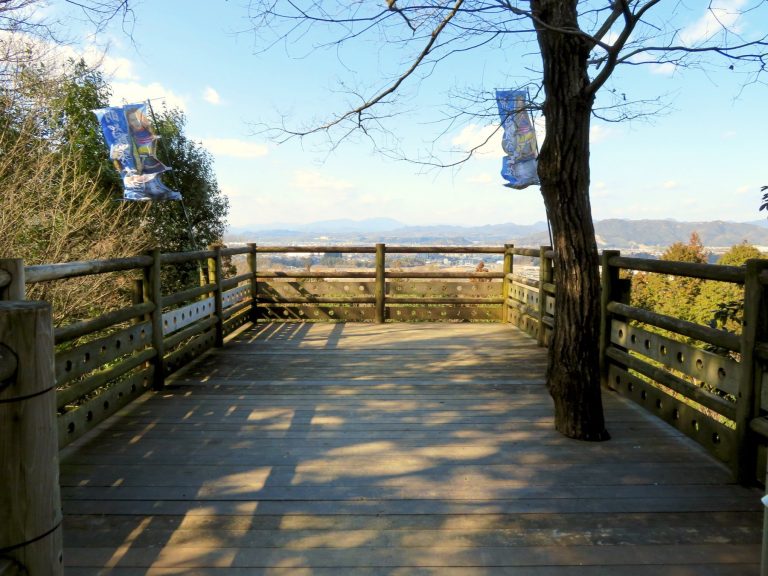
Iwamura occupies a steep mountain overlooking the Iwamura Basin. The site lies at approximately 721 meters above sea level, about 200 meters above its immediate surroundings. Its position made it one of Japan’s highest castles and the highest mountain castle of the Edo period. The fortress also commanded an intersection of the Sanshu Kaidō, which connected southern Shinano Province with central Mikawa Province and the Pacific coast, and a route linking Mikawa with Tōtōmi to the east.
Fortified Mountain Layout
The honmaru, the principal fortified enclosure, occupied the highest point of the complex. It was surrounded by separate fortified areas called kuruwa, including the Ni-no-maru, Higashi-guruwa, Obi-guruwa, De-maru, and Hachiman-guruwa. Two two-story watchtowers stood within the honmaru. Iwamura had no tenshu, or central keep. Instead, a three-story watchtower at the main gate, Ōte-mon, fulfilled the function normally associated with a central tower.
Residences and Defensive Works
When Matsudaira Ienori took possession in 1601, a residence was established below the northwestern slope, along with quarters for his retainers. These buildings formed a castle town beneath the principal mountain fortifications. A record made when the castle changed hands in 1702 gives its perimeter as 1,255 meters. Within that circuit were eleven watchtowers, including one three-story and one single-story tower, eight large and small covered wall sections known as tamon, and seventeen large and small gates.
The buildings were removed after the castle was abandoned, while the stone walls remained on the mountain. The lower residence was partly reconstructed in 1990, together with a gate and a drum tower. Iwamura is regarded, alongside Takatori Castle in Nara and Bitchū-Matsuyama Castle in Okayama, as one of Japan’s three foremost mountain castles.