Shimojō Myōren-ji Temple: A Nichiren Buddhist Temple in Fujinomiya


Site at a Glance
- Rating
- 4.4
- Popularity
- Low
- Country
- Japan
- Primary era
- Modern
- External website
- Open
- Eras represented
- Early Modern, Modern
- Civilizations
- Japanese, Tokugawa
- Site type
- Religious
- Remains
- Monastery
On this page9 sections
History
Shimojō Myōren-ji Temple is a Japanese Buddhist temple in Fujinomiya, Japan, founded in 1324 within the Fuji lineage of Nichiren Buddhism. The temple was established on the former residence of Nanjo Tokimitsu to commemorate the first anniversary of the death of his wife, Myōren-ni. Tokimitsu invited Jakunichibō Nichika to serve as the founding priest. Myōren-ji later became one of the Fuji Five Mountains and one of the Eight Head Temples of the Kōmon school, giving it an important place in the institutional history of the tradition.
Foundation and Fuji lineage
Myōren-ji, formally called Myōren-ji and bearing the mountain name Tahō Fuji-san, belongs to the Fuji lineage associated with Nikkō, one of Nichiren’s major disciples and the founder of that religious line. Its tradition is connected with Nichiren Shōshū, a Japanese Buddhist denomination that emphasizes the authority of Nichiren’s teachings through the lineage of Nikkō. The temple follows the Shōretsu branch, whose teaching holds that Nichiren is the original Buddha.
The Fuji Five Mountains formerly consisted of Myōren-ji, Taiseki-ji, Kitayama Honmon-ji, Nishiyama Honmon-ji, and Koizumi Kuon-ji. Myōren-ji was also counted among the Eight Head Temples of the Kōmon school, together with Yōhō-ji, Jitsujō-ji, and Myōhon-ji. Nichika was traditionally honored as one of the chief priests of Nichiren Shōshū. He was also remembered as a supporter and deputy of Nikkō, a tradition reflected in the red-painted gates and walls of the Jakunichibō associated with him at Taiseki-ji.
Religious affiliation and institutional change
In 1876, Myōren-ji and seven subordinate temples joined Nichiren Kōmon-ha, a unified organization of the Fuji lineage. The organization adopted the name Honmon-shū in 1899. In 1900, Taiseki-ji and its subordinate temples left Honmon-shū to establish Nichiren Fuji-ha, which was later renamed Nichiren Shōshū. Myōren-ji remained within Honmon-shū during this separation.
The temple’s main hall was moved to Kitayama Honmon-ji in 1914, where it became that temple’s founder’s hall. In 1941, Honmon-shū joined Nichiren-shū and Kempon Hokke-shū in a three-way merger that created Nichiren-shū. Myōren-ji and six former subordinate temples left Nichiren-shū on December 25, 1950, and joined Nichiren Shōshū, the organization to which the temple still belongs. One former subordinate temple that had remained in Nichiren-shū later joined Nichiren Shōshū in 1960, while Myōten-ji continued in Nichiren-shū.
Myōren-ji’s traditional regulations and religious practices followed those of Taiseki-ji. Its institutional prosperity was historically linked to cooperation between the clergy and lay followers, a relationship that continued until changes to Japan’s religious-corporation law after the Second World War. The grounds were also affected by postwar agricultural land reform, which reduced the size of the temple estate.
The historical compound and surrounding land
The original compound extended for more than 1 kilometer from north to south. It reached from the area around Myōren-ni’s grave to the former main gate, traditionally called the Great Gate, which disappeared in 1737. The site once included seven sub-temple residences and additional subordinate temples in Fujinomiya. Four of the present sub-temple residences were established in 1972.
Myōren-ji was also connected with the irrigation system around the former compound. The eastern boundary followed the Ōzeki-bori, while the western boundary followed the Hanbei-bori, a branch of the Ōzeki channel. Other waterways included the Nakazeki-bori and the Shinbori, the latter a branch of the former. These channels probably existed before the Tokugawa period, although the idea that they were constructed as a project of the Nanjo family remains conjectural.
Remains
Present compound and layout
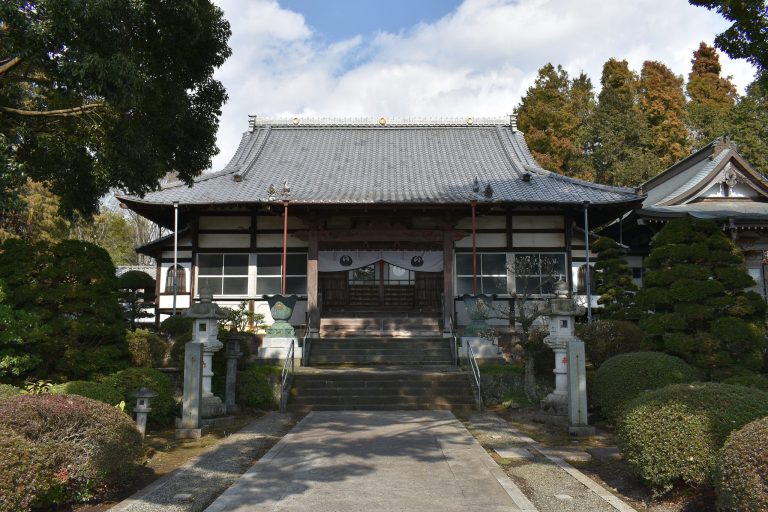
The present temple compound is smaller than the historical estate. It contains the main hall, also called the Image Hall, the guest hall, the founder’s hall dedicated to Nichika, the abbot’s quarters, the main gate, cemeteries, and seven sub-temple residences. Myōren-ni’s grave lies about 200 meters north of the present Image Hall. The former Great Gate stood farther south, near the area between Myōren-ji’s southern cemetery and Shimonobō.
Wooden temple buildings
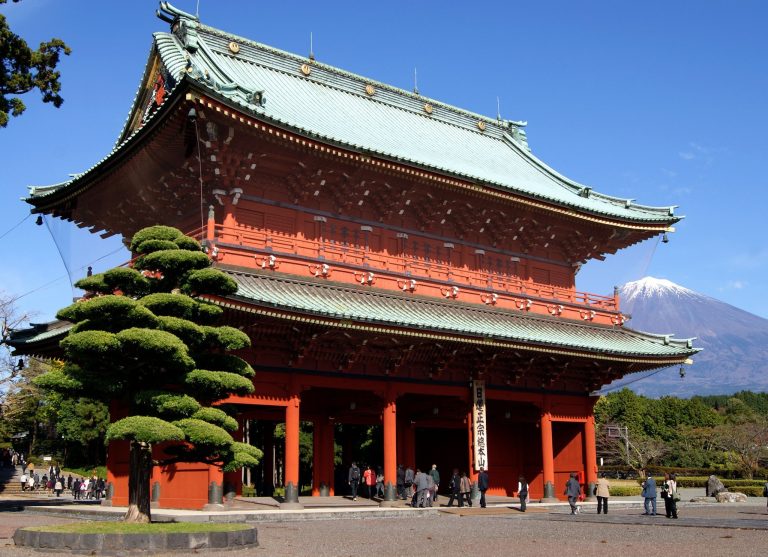
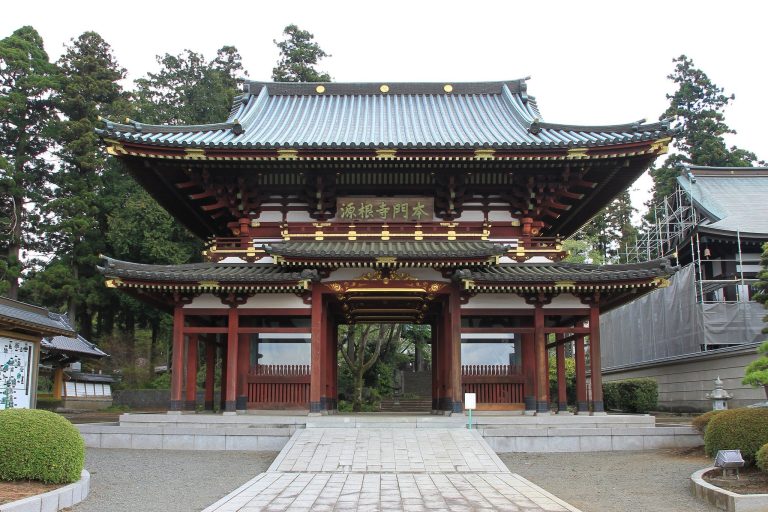
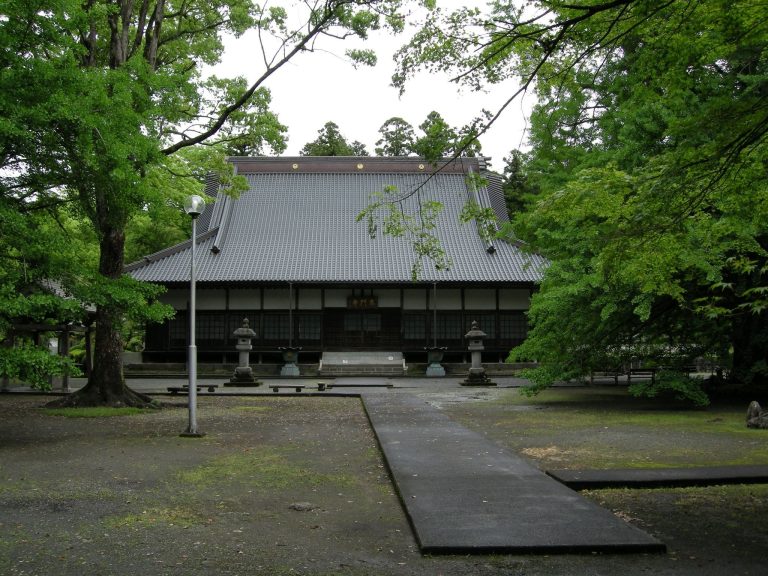
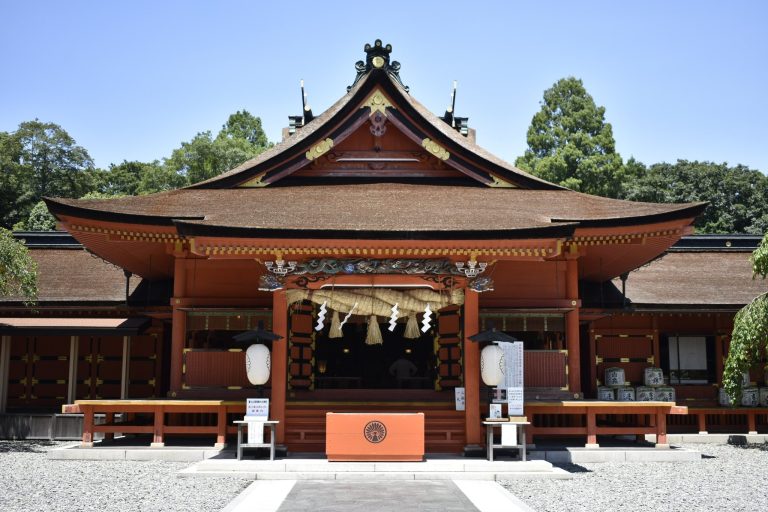
The Image Hall is the principal worship building, traditionally containing an image or representation of the central religious figure. The present building was reconstructed in 1974 after the earlier main hall had been transferred to Kitayama Honmon-ji in 1914. A treasure house and bell tower were added in 1981, and the founder’s hall for Nichika was rebuilt in 1986. The front gate and guest hall are substantial wooden buildings and are described as among the largest surviving examples of wooden architecture in the surrounding region. Together with the other buildings, they preserve the principal religious and residential functions of the compound.
Irrigation channels and landscape
The former boundaries of the temple grounds can be understood through the irrigation channels that bordered them. The Ōzeki-bori marked the eastern edge, and the Hanbei-bori marked the western edge. The wider network drew water from the Shibakawa, a spring-fed river with a relatively stable and abundant flow. The nearby Uruigawa depended on snowmelt from Mount Fuji and had less stable flow, making it unsuitable for reliably irrigating the fields.
Miyamae cemetery
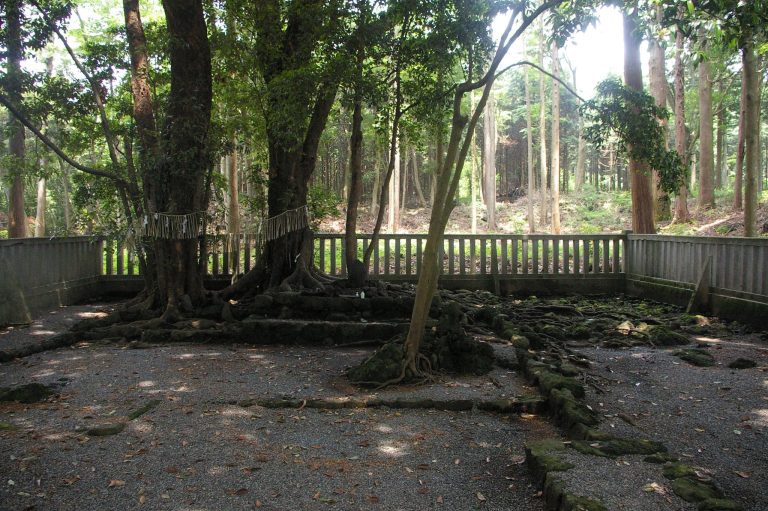
The temple-associated cemetery at Miyamae contains the grave of Nanjo Tokimitsu, about 1 kilometer southwest of the temple. A stone monument at the grave was erected in 1962 by Urushihata Nichikō, the temple’s forty-fourth chief priest. Monuments to Tokimitsu’s father and mother were erected at the same time. Behind Tokimitsu’s monument stands an older stone monument dating from 1655, erected by Nanjo Ajari Nichitai, the temple’s nineteenth chief priest.
Tokimitsu’s father, Nanjo Hyōe Shichirō, was buried at Takando, about 200 meters farther southwest, and Nichiren is believed to have visited that grave in 1265. Tokimitsu’s grave may originally have been at Takando before being moved to Miyamae, but the original location and timing of any transfer remain uncertain. The grave was already under Myōren-ji’s administration, and if a transfer occurred, it took place before 1655 or may have been arranged by Nichitai.