Segorbe Aqueduct, Castle and Walls: A Fortified Complex in Spain


Site at a Glance
- Rating
- 4.5
- Popularity
- Low
- Country
- Spain
- Primary era
- Medieval
- External website
- Open
- Eras represented
- Classical, Medieval, Modern
- Civilizations
- Crown of Aragon, Roman, Spanish, Taifa Kingdoms
- Site type
- Military
- Remains
- Castle
On this page12 sections
History
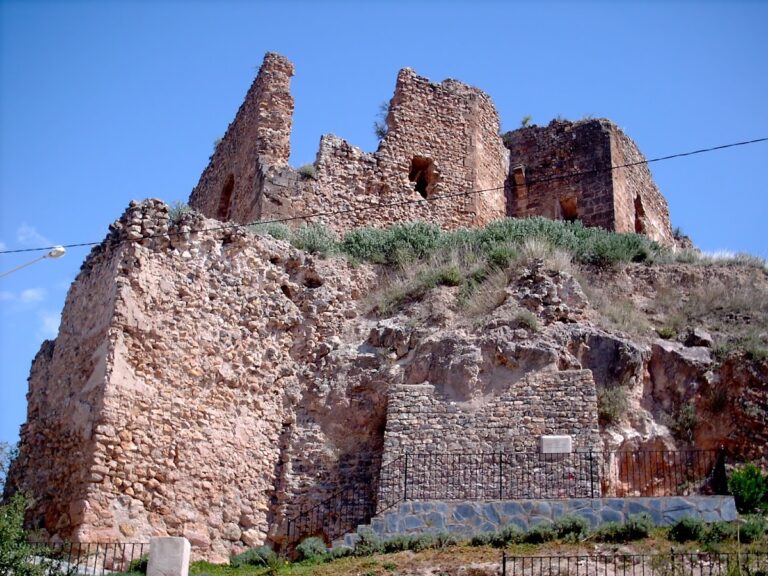
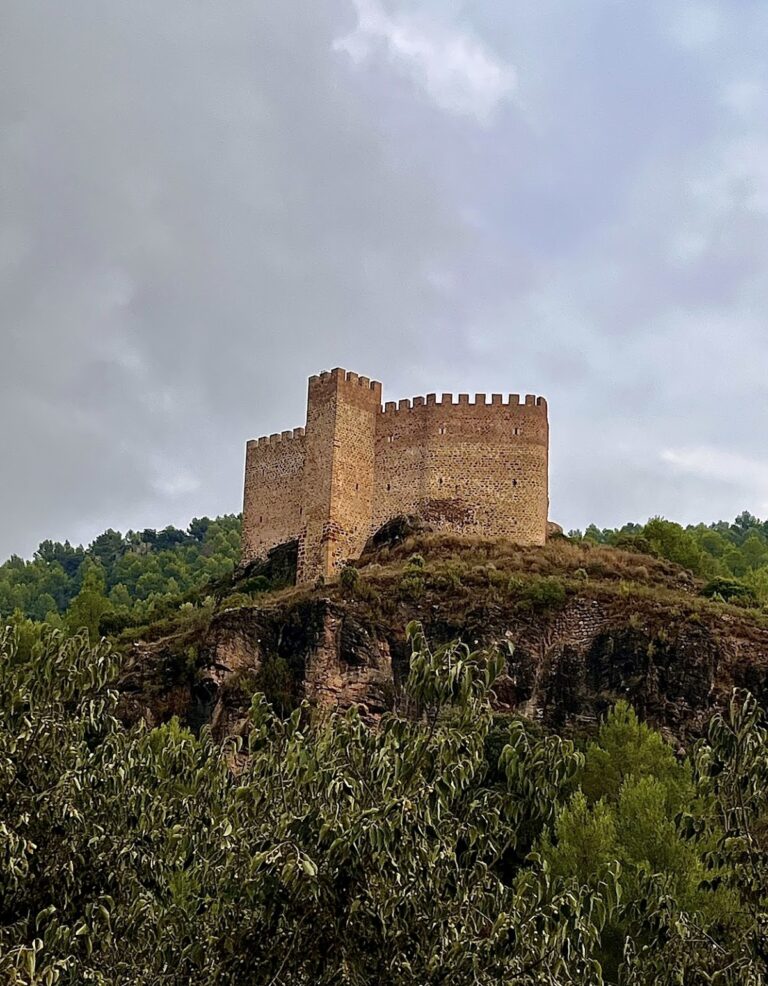
Segorbe Aqueduct, Castle and Walls is a fortified complex in Segorbe, Spain, combining the Castle of La Estrella, also called Sopeña, with the town’s defensive circuit and water-supply structure. The origins of the castle have been linked by some writers to an Iberian settlement that was later Romanized and rebuilt, although the proposed Roman, Visigothic, and Muslim fortification phases cannot all be established securely. The complex developed on the hills and urban slopes of Segorbe and later became an important medieval stronghold.
Roman and Muslim phases
The walls are considered very ancient, and a defensive wall may already have existed in the Roman period. Reused material from earlier buildings makes it difficult to assign many surviving sections to a precise date. The Muslim-period settlement certainly possessed at least one alcazar, a fortified palace or citadel, together with an associated governor. Some interpretations have proposed that the castle later served as a Visigothic and Muslim fortress, but the evidence does not securely confirm those successive uses.
Christian conquest and medieval development
In 1229, after converting to Christianity, Zayd Abu Zayd, a Muslim ruler in Valencia, entered into a vassal agreement with James I, the medieval king of Aragon whose reign expanded Aragonese control into Valencia. Under the agreement, James I allowed Zayd Abu Zayd to conquer and populate places and castles in Muslim Valencian territory in return for one-quarter of their revenues. Zayd Abu Zayd conquered Segorbe in 1245 and withdrew there to live.
The fortified area reached its greatest prosperity during the fifteenth century. The castle and its surrounding defenses subsequently saw declining use as the dukes of Segorbe transferred their residence into the urban settlement. Written evidence nevertheless suggests that King Philip IV may have stayed in the castle in 1620.
Nineteenth-century military use and later change
The complex was used during the Carlist Wars, a series of nineteenth-century civil conflicts in Spain. Its defenses were maintained and strengthened during this period, with some towers constructed and sections of wall rebuilt. These nineteenth-century defensive works remain in better condition than other military elements of the complex.
Later urban growth altered the defensive circuit. New streets and buildings destroyed portions of the walls or incorporated them into later structures as exterior walls. Materials from the castle were also reused in urban buildings, including the Hospital and the Casa de la Misericordia. The castle is now ruined and has been partly restored within a municipal park. The entire complex is protected as a Spanish Property of Cultural Interest, a statutory heritage designation for protected cultural sites and monuments, under a generic declaration covering the castle, aqueduct, and walls. The declaration dates from 25 June 1985, with the ministerial annotation recorded on 8 May 2003.
Remains
The surviving complex occupies one of Segorbe’s hills and extends into the built-up area of the old town. Its physical remains include the ruined castle, isolated sections of the defensive circuit, medieval gates and towers, and three complete pointed arches of the aqueduct. The walls originally formed a circuit of approximately one kilometre, beginning on the castle hill, descending along Argén Street, continuing parallel to present-day Colón Street and Plaza de la Cueva Santa, then rising along Tirador Street and Plaza de las Almas before returning to the castle. Approximately 300 metres survive, mainly between Argén Street and the beginning of the Sopeña promenade.
Early and medieval defenses
Roman wall remains
The surviving Roman wall remains are built of rubble masonry bonded with lime mortar. They were approximately 1.5 metres thick and reached about eight metres in height. A few sections remain near the castle hill, providing the physical evidence associated with the possible Roman fortification.
Argén arches
The Argén arches represent an earlier defensive phase. Dating from the end of the eleventh century, they formerly served as an entrance to the city and survive as part of the fortification’s older architectural fabric.
Verónica Gate
The medieval enclosure included the Verónica Arch, or Verónica Gate, a small gateway with a semicircular arch formed from elongated, carefully cut stone blocks called ashlar voussoirs. Its name comes from an image of the Holy Face placed inside the gateway. The date and origins of the entrance remain uncertain.
Botxí Tower
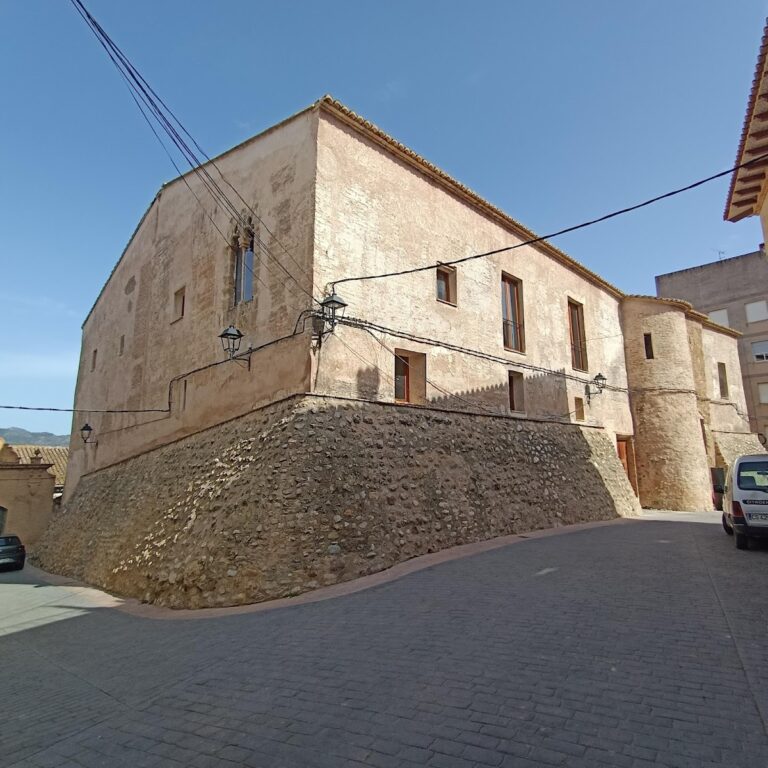
The Botxí Tower, or Executioner’s Tower, is a cylindrical structure with two levels and a height of 17.3 metres. Its upper interior is hexagonal and covered by a Gothic ribbed vault, a vault supported by intersecting masonry ribs. The tower’s name reflects its former association with the residence of the town executioner.
Cárcel Tower
The Cárcel, or Prison, Tower is circular and stands in the oldest part of the settlement. It rises 21.3 metres and contains two principal levels. The second level is divided into two octagonal floors, each covered by a Gothic ribbed vault. A spiral staircase attached to the wall leads to the terrace. The tower served a defensive purpose and protected the gates giving access to the urban settlement.
Aqueduct and surviving wall circuit
The aqueduct remains lie within Segorbe’s built-up area. Three complete pointed arches constructed from ashlar masonry survive together with the remains of four further arches. Sections of the aqueduct and walls follow the routes of streets in the old town, where gates, towers, and fragments of the defensive circuit remain integrated into the urban fabric. The surviving wall circuit is associated with the fourteenth century, while the Botxí and Cárcel towers and the sections along Argén Street can be attributed with relative confidence to the medieval enclosure.