Castell de la Rodana: A Mountain Fortress in Spain
Site at a Glance
- Rating
- 4.4
- Popularity
- Very Low
- Country
- Spain
- Primary era
- Classical
- Eras represented
- Classical, Medieval
- Civilizations
- Roman
- Site type
- Military
- Remains
- Castle
On this page10 sections
History
Castell de la Rodana is a small fortress above Almedíjar in Spain, probably originating in the Iberian period, the Iron Age culture of eastern and southern Iberia. Its position in the centre of the Sierra de Espadán gave it a strategically important position, and it may have served as a stronghold from Iberian times onward.
From Iberian Origins to Christian Rule
Construction remains associated with Roman and Arab building traditions show that the site continued to have connections with later cultures. From 1233, Almedíjar received Muslims fleeing the Plana de Castellón after the Christian conquest of Burriana.
After James I, known as James the Conqueror, conquered the area and established Christian rule, he granted the castle in 1238 to Friar Bernardo de Bort, commander of Alcalá and a member of the Order of the Temple. This religious-military order held fortified possessions before its dissolution in 1312. The castle then passed among several lords, including Bernat Serra, before becoming part of the Lordship of the Moncada and later passing to the Centelles family.
Conflict and Heritage Protection
In 1526, the Moriscos, Muslims living under Christian rule after the medieval conquests, suffered their final defeat near the castle. Troops commanded by the Duke of Segorbe, Alfonso of Aragon and Portugal, defeated the revolt in the area.
Castell de la Rodana was declared an Asset of Cultural Interest in Spain on 25 June 1985. Its heritage identifier is RI-51-0011218, with ministerial registration dated 9 September 2004.
Remains
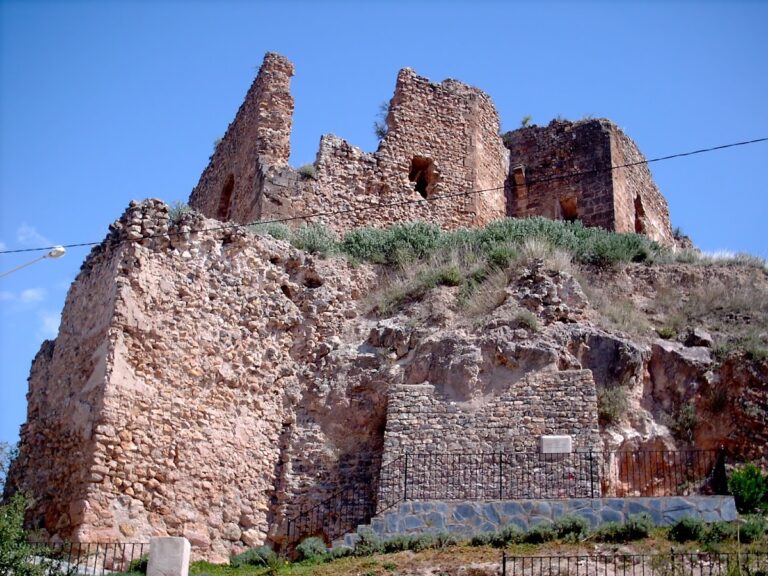
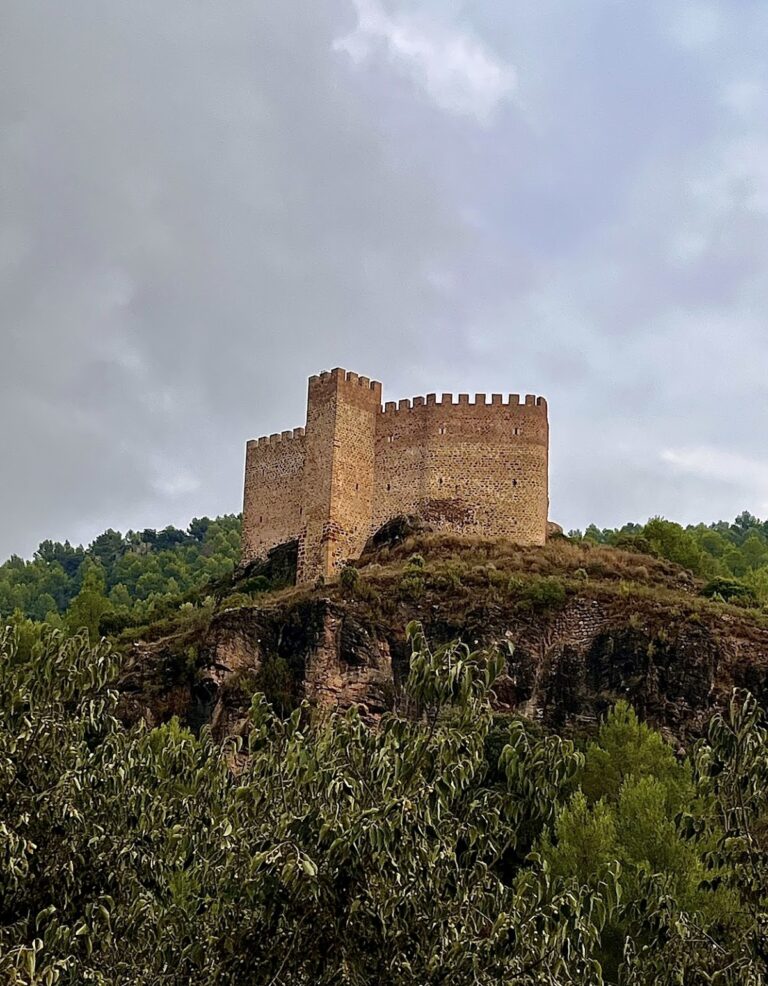
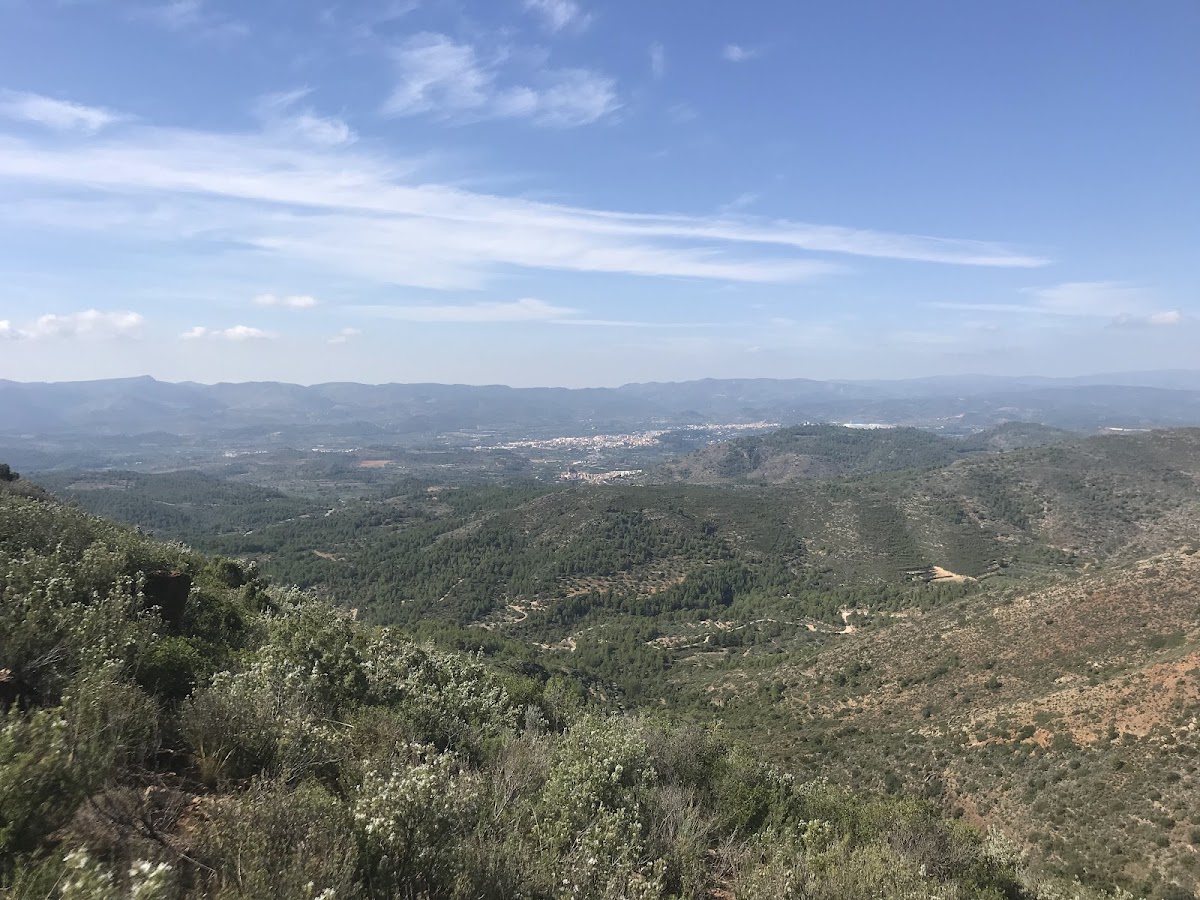
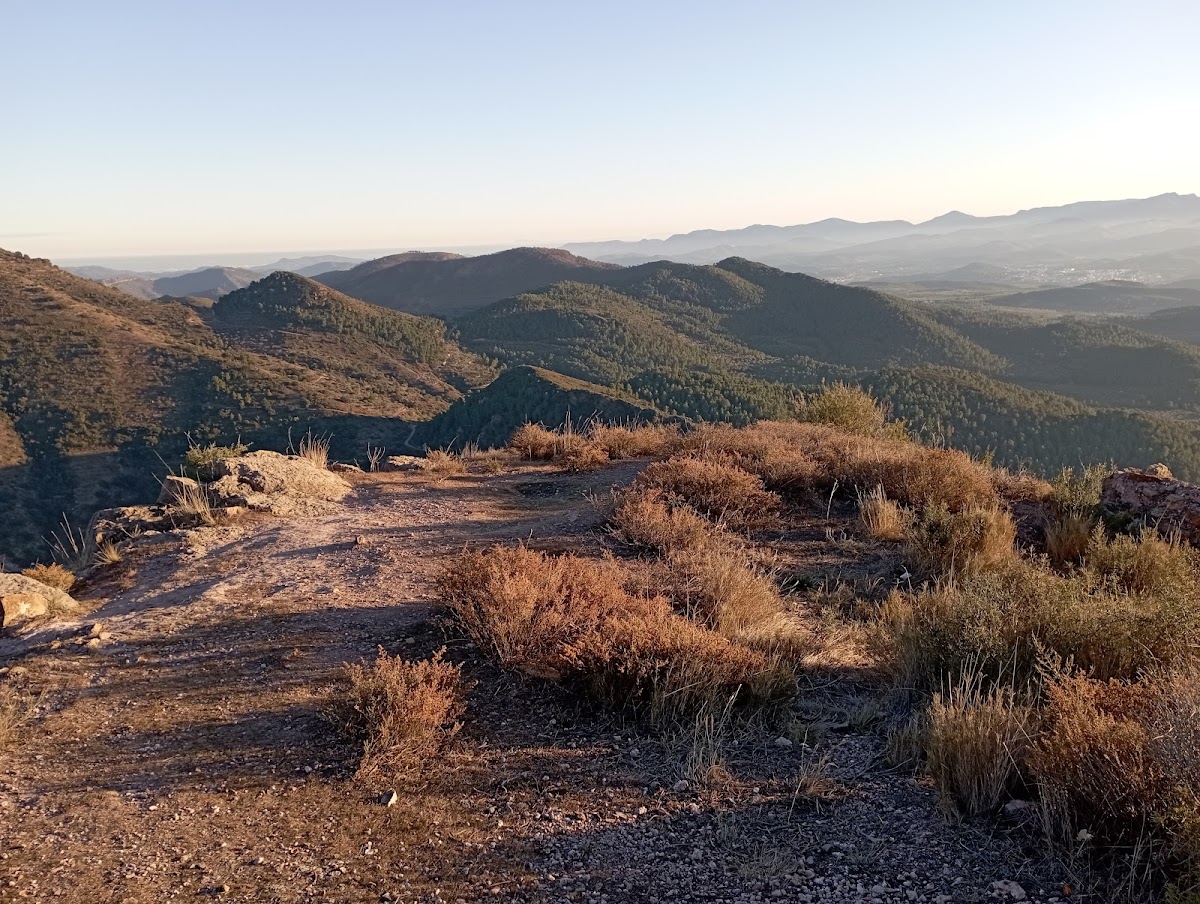
The fortress occupies the summit of Mount Rodana, approximately 684 metres above sea level, behind Almedíjar. Its plan is believed to have been very elongated, irregular, and dispersed, incorporating the natural rocks of the hill. The surviving fortifications are concentrated mainly on the northern and southern sides, while the rocky slopes themselves formed part of the defence on the eastern and southern flanks.
Defensive Walls
Northern Wall
On the northern side, a surviving section of double defensive wall is attributed to Roman construction. It was built over exposed rock, which served as its foundation and integrated the fortification with the summit.
Southern Wall
The southern side preserves a complete angular wall considered possibly Arab in construction. Together with the natural rock of the hill, it formed part of the fortress’s defensive perimeter.
Tower, Entrance, and Wider Setting
Principal Tower
The lower part of the principal tower survives among the ruins. Foundation remains also appear on the western side, where the entrance to the castle is thought to have been located.
Relationship with Castillet
From its elevated position, the castle overlooks the neighbouring Castillet, a smaller fortified site that protected the population from within the valley.