Second Ancient Theatre of Larissa: A Roman-Era Performance Venue
Site at a Glance
- Popularity
- Low
- Country
- Greece
- Primary era
- Classical
- Eras represented
- Classical, Early Modern
- Civilizations
- Ottoman, Roman
- Site type
- Entertainment
- Remains
- Theatre
On this page8 sections
History
The Second Ancient Theatre of Larissa, in Greece, was built during Roman rule in the second half of the 1st century BC. Its construction was probably linked to the conversion of Larissa’s larger First Ancient Theatre into an arena for gladiatorial contests and public spectacles after Rome conquered Greece. The new theatre continued the city’s tradition of staging plays.
Roman-period use
The theatre also hosted festivals with theatrical, musical, and poetry performances. Archaeologist Athanasios Tziafalias proposed that it may have been connected with the Eleutheria, an ancient Greek festival that included athletic and equestrian contests as well as performances.
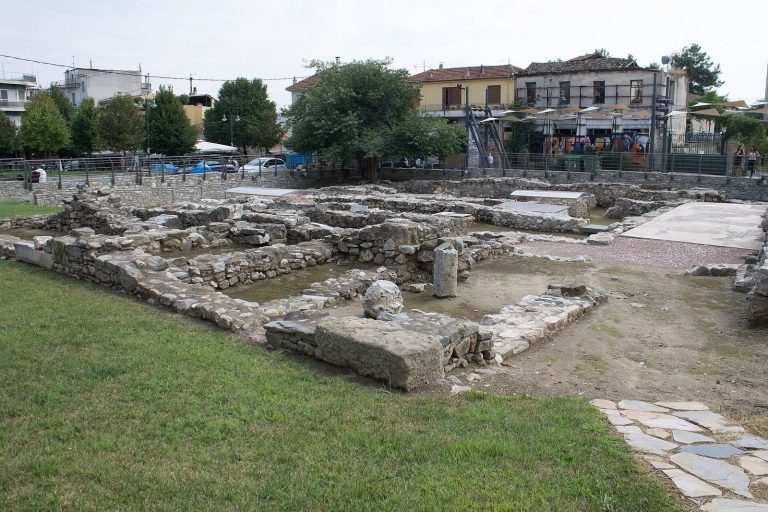
A temple dedicated to Demeter, a goddess associated with agriculture, and Kore, a title for her daughter Persephone, was associated with the theatre. A sanctuary to the same deities had stood nearby since the Classical period, the fifth and fourth centuries BC.
Medieval and Ottoman transformations
The theatre fell into ruin during the Middle Ages. A church from the Byzantine period, the medieval Eastern Roman Empire, was built in its place and dedicated either to Holy Wisdom, a Christian dedication to divine wisdom, or to Saint Paraskevi, a female saint venerated in Eastern Orthodox Christianity. During the Ottoman period, the era of Ottoman Empire rule, the church was replaced by the Hasan Bey Mosque.
Rediscovery and modern use
Pefkakia Hill was levelled in the 1950s to make room for housing. Excavation for an apartment complex uncovered the theatre in 1978, and archaeological excavations followed in 1985 and 1986. Since 1987, the site has occasionally hosted performances of ancient plays.
Remains
Layout and seating
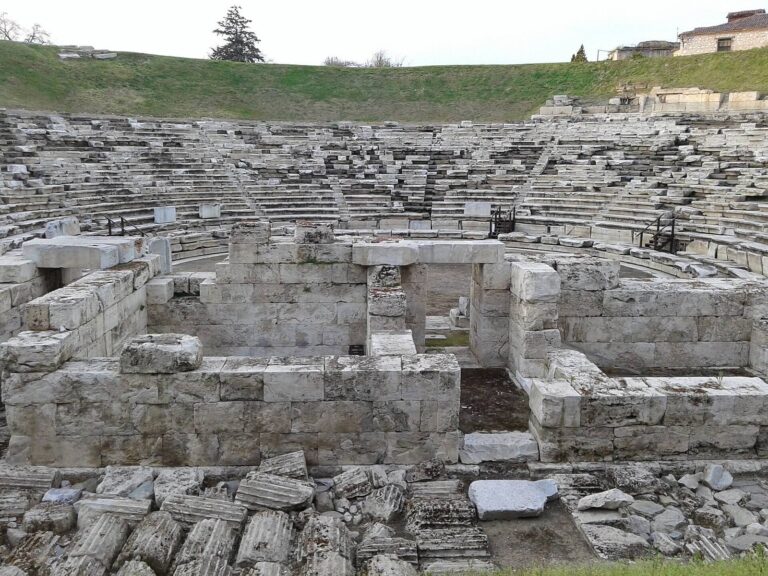
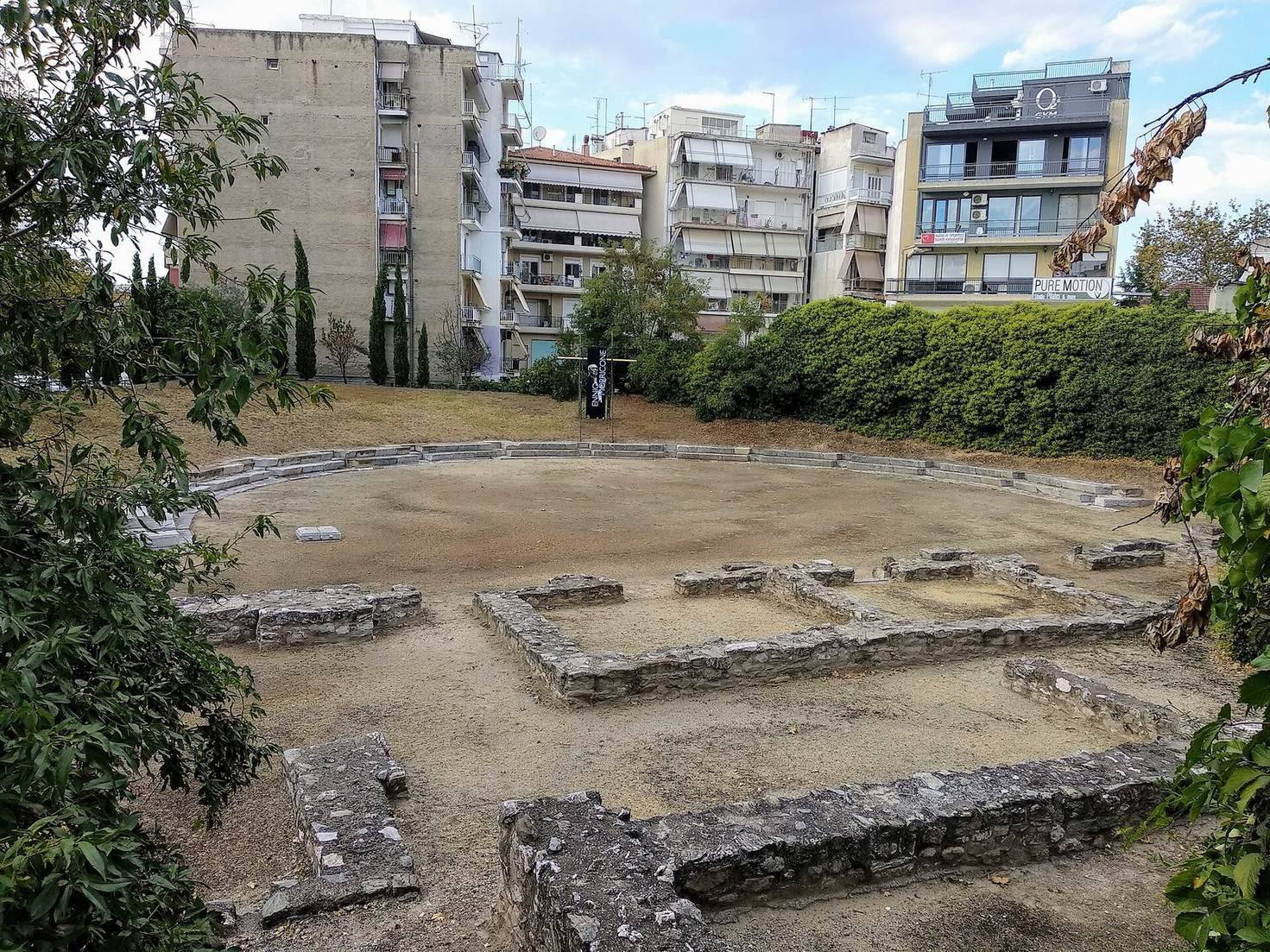
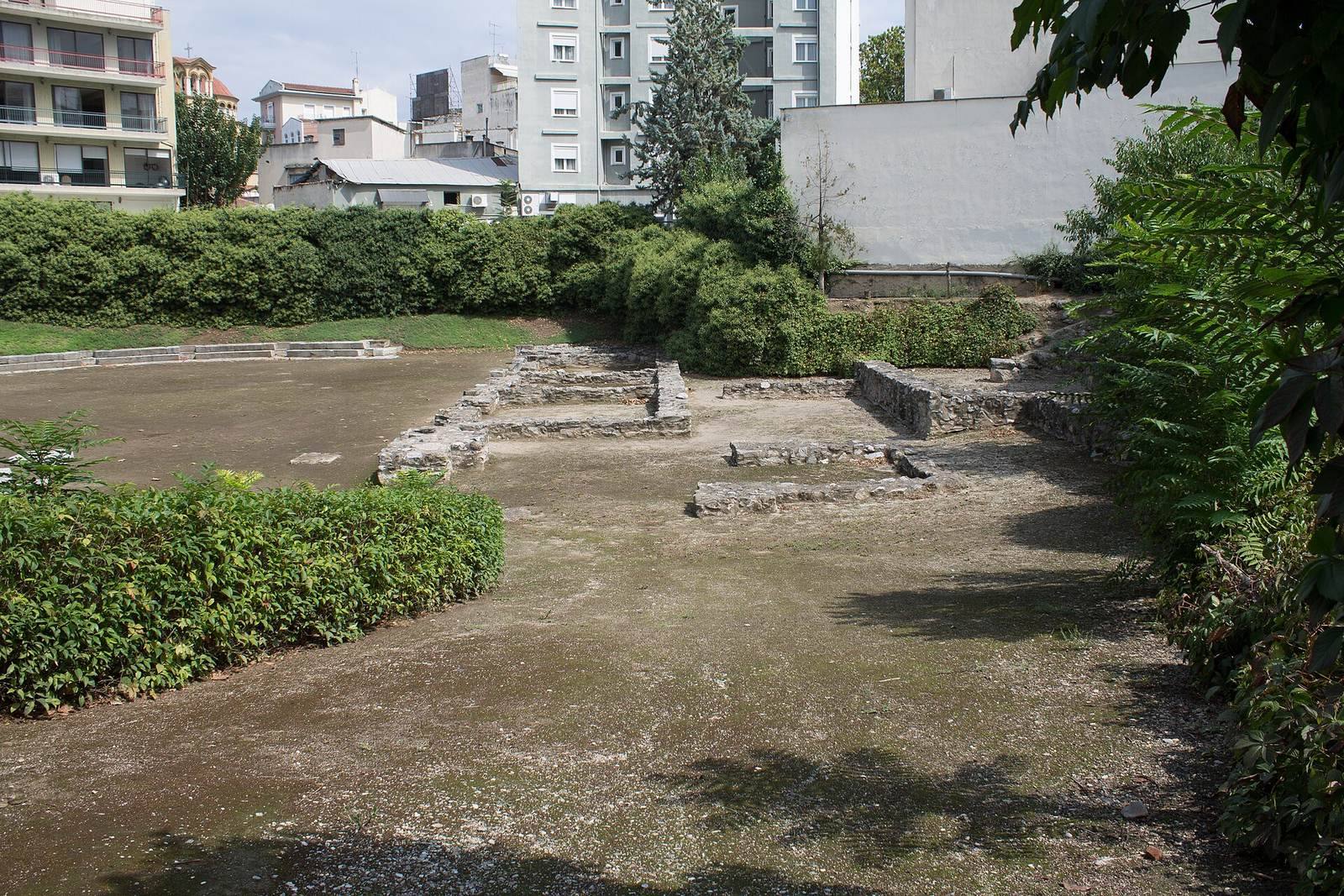
The theatre stood on the southwestern slope of Pefkakia Hill, west of the larger First Ancient Theatre. Its plan was only partly completed: the circular performance area and stage building were finished, while the semicircular seating area and side entrances remained incomplete, apparently because of limited funds. Fourteen stairways divided the seating into thirteen sections. Each section retains two low rows of grey-white marble seats. The rest of the seating was never completed, and wooden seats were probably used in its place.
Performance area and altar
The circular performance area measured 29.7 metres across and was made of two layers of stamped earth mixed with gravel. A small square altar of white marble stood to its right. It was decorated with ornamental moldings in the Lesbian style, an ancient Greek decorative form associated with Lesbos, and rested on a three-step base. The two lower steps survive.
Stage building and reused stone
The stage building measured about 15.7 metres long and 4.5 metres wide. It had three spaces, and its walls now stand about 0.6 metres high. Marble in the theatre had been reused from an earlier building, probably circular in shape. Some blocks bear late 3rd-century BC inscriptions by freedmen, people who had once been enslaved and later gained their freedom. A dedicatory inscription to Demeter and Kore is also associated with the site.