Moni Prodromou Agias: A Post-Byzantine Monastery in Thessaly
Site at a Glance
- Popularity
- Very Low
- Country
- Greece
- Primary era
- Early Modern
- Eras represented
- Early Modern
- Civilizations
- Ottoman
- Site type
- Religious
- Remains
- Monastery
On this page9 sections
History
Origins and foundation
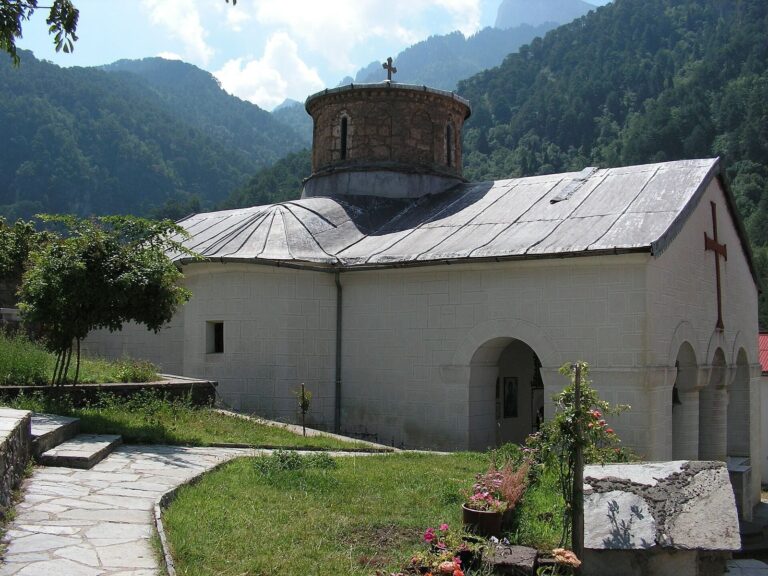
Moni Prodromou Agias is an Orthodox monastery on Mount Kissavos in Thessaly, Greece. Its origins are placed around the 10th century, while its establishment as a male communal monastery and its construction date to 1550. Its architectural style is post-Byzantine, a style from the period following the Byzantine era.
In 1550, the monk Damian the New came from Philotheou, a monastery on Mount Athos, a major Orthodox monastic center in northern Greece, with a group of fellow monks. They established the monastery where Damian had previously lived as a hermit. The community prospered in connection with his work. Damian was martyred by the Turks in 1568 after being accused of urging Christians to observe Sunday. He spent his final years in prayer and solitude in a cave on the opposite slope of Mount Kissavos.
Abandonment and renewal
The monastery operated continuously until the Second World War and was abandoned afterward. In 1980, monks from Mount Athos arrived under Gabriel, an experienced spiritual guide, and renewed the old monastic cells. They left in 1983 because of the harsh living conditions. Gabriel, the last resident monk, died at the monastery in 1985.
Women’s monastery since 2000
Moni Prodromou Agias reopened in 2000 as a women’s communal monastery. Its sisters came from the Monastery of the Apostle Paul near Lavrio in Attica, whose sisterhood had formed in the 1970s. The monastery belongs to the Dimitriada and Almyros Metropolis, an ecclesiastical district of the Church of Greece.
The community includes about 30 sisters from 13 countries: Australia, Austria, the United States, England, Armenia, Germany, Greece, Cyprus, China, Lebanon, Russia, Estonia and Japan. Greek is their main language of communication, with English and German also in use. Services are conducted in ancient Greek and in the sisters’ national languages. Their spiritual life emphasizes serving Christ through love and service to others, setting aside self-centeredness, and using nature and its resources with gratitude and creativity.
The sisters maintain an ecologically managed farm on rocky upland ground. They grow vegetables and fruit, gather medicinal herbs and honey, and raise wild boar, goats, cattle, rabbits, chickens, horses, sheep and parrots. Their work includes making cheese and other dairy products, olive-oil soap with mountain herbs, herbal extracts, jams and pasta. They also distribute free seeds of varieties that are not genetically modified, including vegetables, salad crops, flowers and medicinal plants.
Remains
Churches and related features
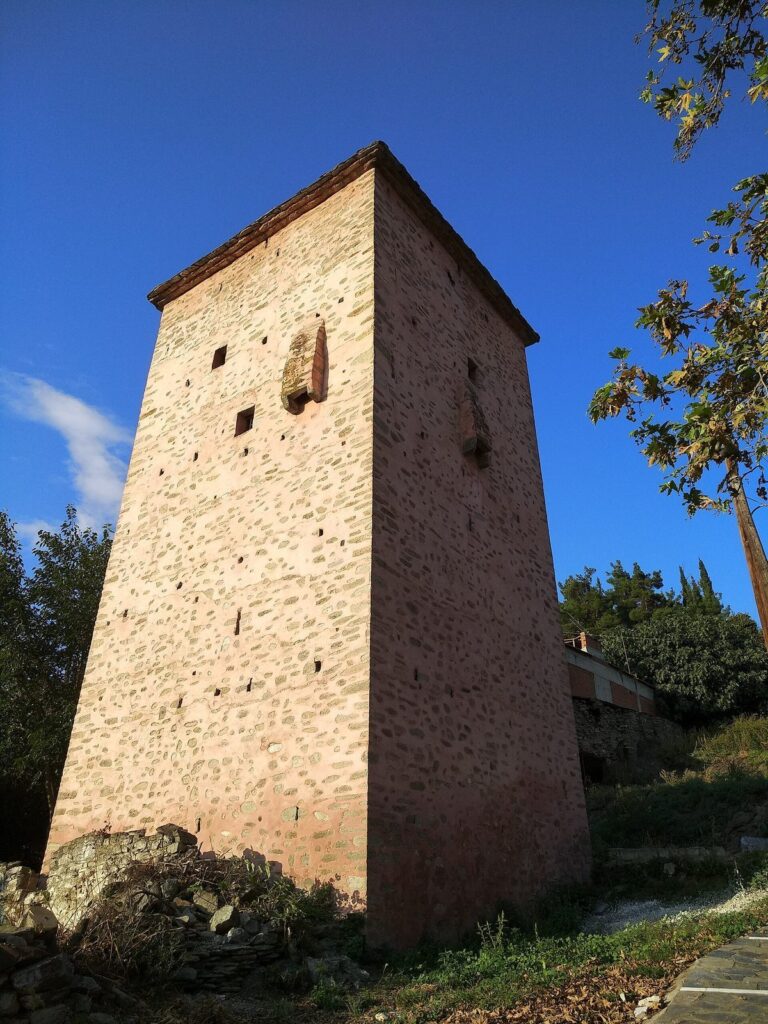
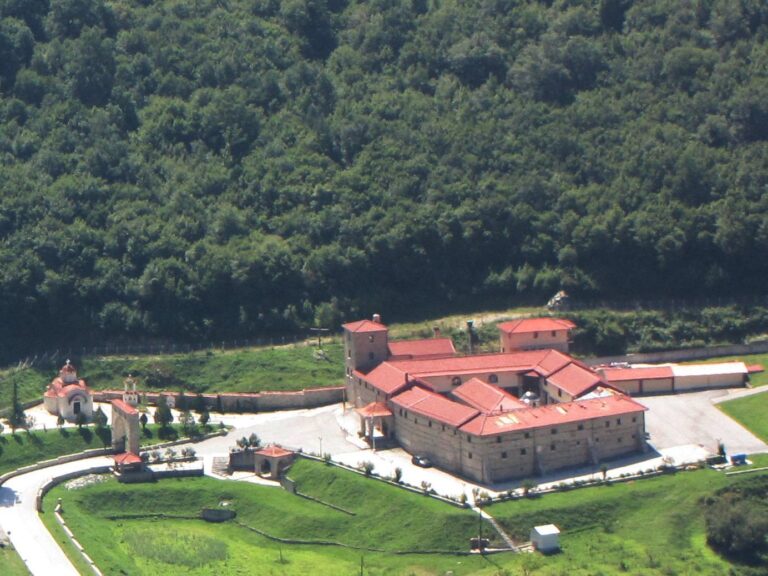
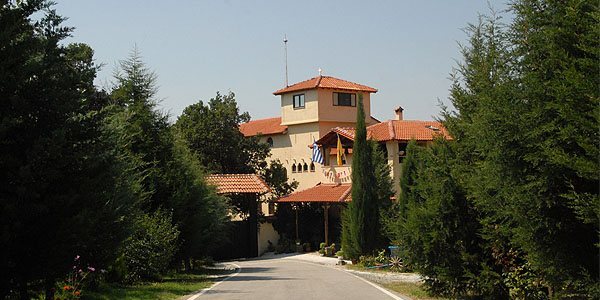
The monastery stands at an elevation of 1,080 metres on Mount Kissavos, also called Ossa. It is near Anatoli, about four kilometres northwest of the village and 30 kilometres northeast of Larissa. The post-Byzantine complex includes nine churches.
Church of John the Baptist
The ancient Church of John the Baptist was consecrated in 1599 and restored in 2016. Its frescoes depict John the Baptist in prison, soldiers casting lots for Christ’s tunic, the denial and crucifixion of the Apostle Peter, the martyrdom of the Apostle Thomas, and Judas with a black halo.
Church of the Great Martyr Demetrios and the ossuary
The Church of the Great Martyr Demetrios of Thessaloniki stands near the Church of John the Baptist. Relics of monks who lived at the monastery were once kept in the Demetrios church and are now held in the monastery’s ossuary.
Cave on Mount Kissavos
A cave remains on the opposite slope of Mount Kissavos, where Damian spent his final years in prayer and solitude.