Scone Palace: A Royal Coronation Site and Gothic Revival Country House



Site at a Glance
- Rating
- 4.6
- Popularity
- Medium
- Country
- United Kingdom
- Primary era
- Modern
- External website
- Open
- Eras represented
- Medieval, Early Modern, Modern
- Civilizations
- British, Kingdom of Scotland
- Site type
- Domestic
- Remains
- Elite Residence
On this page15 sections
History
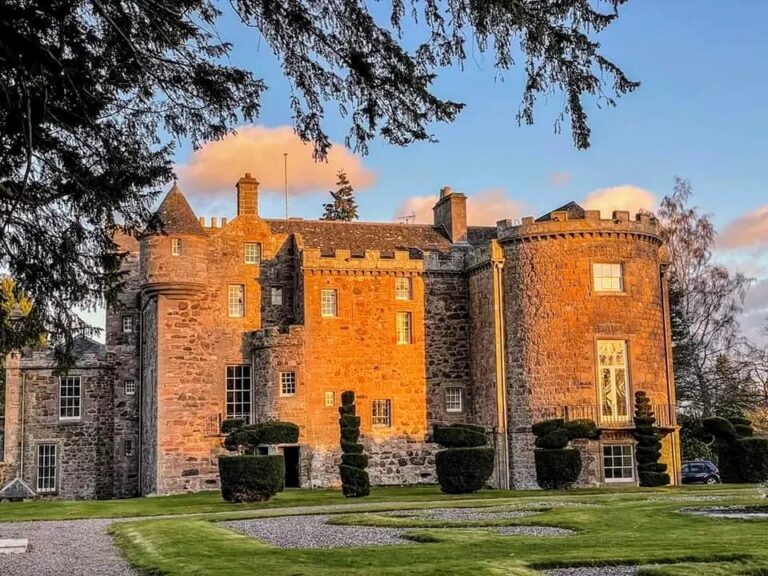
Scone Palace is a Gothic Revival country house in the United Kingdom, near Perth, completed in 1807 after the enlargement and remodelling of a late-sixteenth-century residence. Its setting at Scone preserves the memory of an ancient Pictish gathering place, an early Christian centre, a royal inauguration site, and a major political and religious centre in Scottish history.
Royal Scone and the Kingdom of Alba
Scone was probably used as an early Christian church site before becoming an important centre of the early medieval Kingdom of Alba, the kingdom that developed into medieval Scotland. The first firm documentary evidence linking the place to this history is a charter dated 906. From at least the ninth century, Scone served as a royal residence, hunting ground, place of inauguration and coronation, and meeting place for political assemblies.
King Constantine II summoned an assembly at Scone in 906. It is regarded as the first Scottish Parliament or as a predecessor council, placing the site within the early development of Scottish lawmaking and royal government. The royal inauguration mound, known as the mons placiti or Moot Hill, was used for assemblies, judgments, and the formal installation of rulers. It was also called Boot Hill. Tradition connects that name with nobles bringing soil from their own lands, or wearing it in their boots, while swearing loyalty to the king.
Scone was associated with the Stone of Scone, also called the Stone of Destiny, and with the inauguration and coronation of 42 Scottish kings. Tradition names Kenneth MacAlpin, Macbeth, Robert the Bruce, and Charles II among the rulers connected with these ceremonies. Gaelic poetry gave Scone the epithets “Scone of the High Shields” and “Scone of the Noisy Shields.” The latter refers to a traditional ceremony in which magnates displayed their shields and struck them with weapons.
Abbey, parliaments, and royal ceremonies
Scone probably became an Augustinian religious centre, whose members followed the rule of Saint Augustine, before its status was formalized by a charter of King Alexander I. From 1114 to 1559, Scone was one of Scotland’s major monasteries and later abbeys. Between 1284 and 1402, the abbey, also known as the Palace of the Abbots, frequently housed the Parliament of Scotland. Alexander II and Alexander III, both crowned at Scone, ruled during the period from 1214 to 1286.
Robert II spent much of his life at Scone and was eventually buried in Scone Abbey, although the location of his grave has never been found. Edward I of England removed the Stone of Scone to Westminster Abbey in 1296, where the coronation chair was made to fit over it. Robert the Bruce was crowned at Scone in 1306, while Charles II accepted the Scottish crown there in 1651. Charles II’s ceremony was the last Scottish coronation held at Scone.
In 1559, during the Scottish Reformation, a mob from Dundee associated with the Protestant reformer John Knox severely damaged and largely destroyed Scone Abbey. The Reformation transformed Scotland from a Catholic religious settlement into a Protestant one. A medieval stone cross on Moot Hill probably disappeared during the same period.
From abbey estate to palace
In 1580, the abbey estates were granted to Lord Ruthven, later Earl of Gowrie. The Ruthvens rebuilt the former Abbot’s Palace as a grand residence. In 1600, James VI accused the Ruthven family of treason, and the Scone estates passed to Sir David Murray of Gospetrie, later Lord Scone. By 1604, Scone Palace had become the family seat of the Murrays of Scone, a branch of the Murrays of Tullibardine.
The Murrays remained associated with Scone for more than four centuries. Their family included William Murray, 1st Earl of Mansfield, who served as Lord Chief Justice of the King’s Bench from 1756 to 1788. In 1802, David William Murray, 3rd Earl of Mansfield, commissioned William Atkinson to enlarge and remodel the late-sixteenth-century palace. The work updated the residence while retaining features associated with the medieval Gothic abbey buildings on which it had been built, and most of the work was completed by 1807.
John Claudius Loudon later carried out landscaping work around the palace. Further alterations were undertaken in 1842 in preparation for a visit by Queen Victoria and Prince Albert. Scone Palace is a Category A-listed historic house, Scotland’s highest level of statutory protection for buildings of special architectural or historic interest. Its designed landscape was added to the Inventory of Gardens and Designed Landscapes in Scotland on 1 July 1987.
Remains
The surviving site combines a red-sandstone Gothic Revival palace with the physical setting of Scone’s earlier religious and royal history. The palace has a castellated roof, with battlement-like features, and preserves characteristics associated with the medieval Gothic abbey buildings incorporated into the earlier residence. The grounds also contain Moot Hill, detached architectural fragments connected with Scone Abbey, landscaped areas, woodlands, and the Murray Star Maze.
Palace building
The present palace was created through William Atkinson’s enlargement and remodelling of the late-sixteenth-century Palace of Scone. Built of red sandstone and completed in 1807, it uses Gothic Revival forms that recall medieval architecture while serving as a country house. The Long Gallery is one of its best-known interior features.
Abbey and royal mound
Scone Abbey
Scone Abbey stood within the palace grounds. Detached architectural fragments preserve part of its material history, while the abbey seal and surviving fragments indicate a Romanesque character, including a central tower crowned by a spire. Romanesque architecture is associated with heavy masonry, rounded arches, and robust structural forms.
Moot Hill
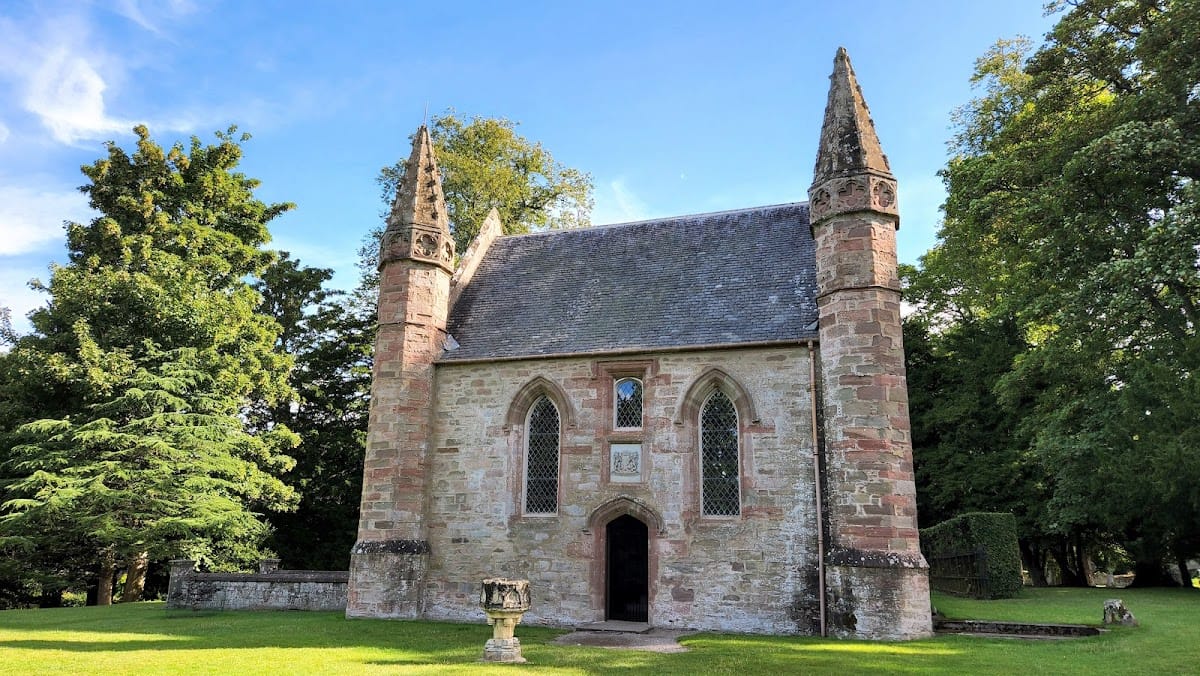
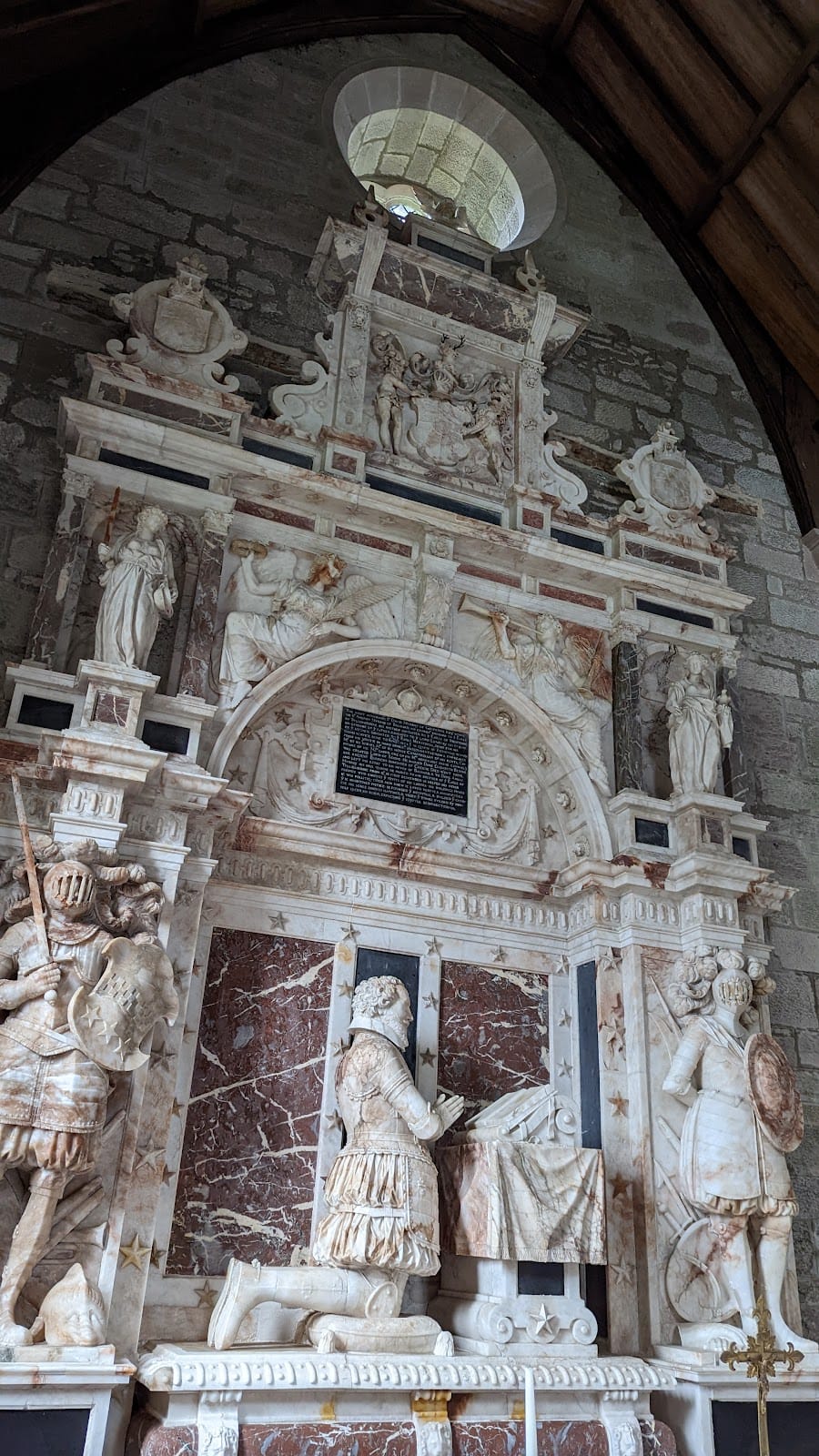
Moot Hill, the former royal inauguration mound, survives within the grounds. A replica of the Stone of Scone stands on the mound in front of a seventeenth-century chapel. The chapel contains a monument to the 1st Lord Scone by the Flemish sculptor Maximilian Colt. It also contained a monument commemorating the encapsulated heart of the first wife of the 2nd Earl of Mansfield.
Interiors and collections
State Rooms
The State Rooms contain furniture, ceramics, ivories, clocks, Scottish and British portraits, and other works of art. Among the furnishings are Rococo chairs by Pierre Bara, objects associated with Robert Adam and Chippendale, Dresden and Sèvres porcelain, Vernis Martin vases, and a writing desk by Jean-Henri Riesener. Marie-Antoinette gave the desk to David Murray, 2nd Earl of Mansfield.
The palace collection includes portraits and other works by Reynolds, Ramsay, and de László. Sir David Wilkie’s The Village Politicians is among the best-known paintings. The Lennox Room, named after the Duke of Lennox, contains objects connected with royalty, including bed hangings made by Mary, Queen of Scots.
European ivories
The collection of large European ivories originated in Bavaria, Italy, Flanders, and France. The pieces were carved during the seventeenth, eighteenth, and nineteenth centuries from elephant and walrus tusk. William David Murray, 4th Earl of Mansfield, collected most of them.
Designed grounds
Murray Star Maze
The Murray Star Maze covers 1,600 square metres. Copper and green beech form a five-pointed star based on the Mansfield family emblem, while its pattern follows the family tartan, Ancient Murray of Tullibardine.
Woodlands and conifers
The grounds include woodlands and conifer trees, some at least 250 years old. They were also the first place in Britain where David Douglas introduced the Douglas fir.
Nearby sites