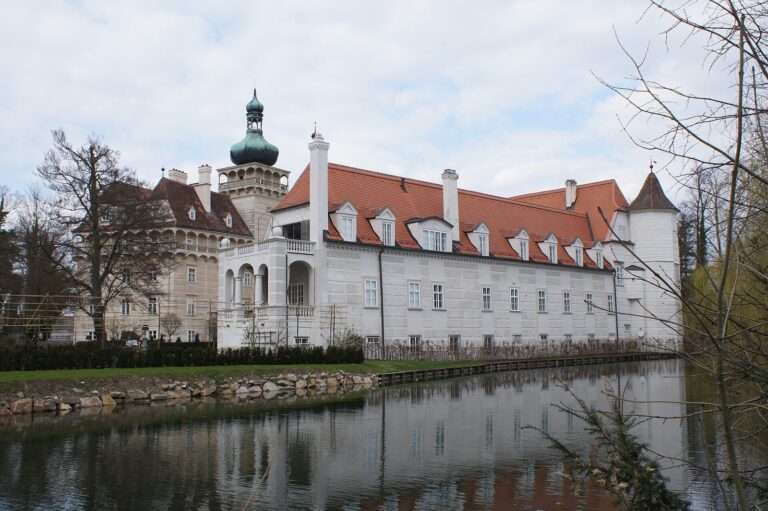
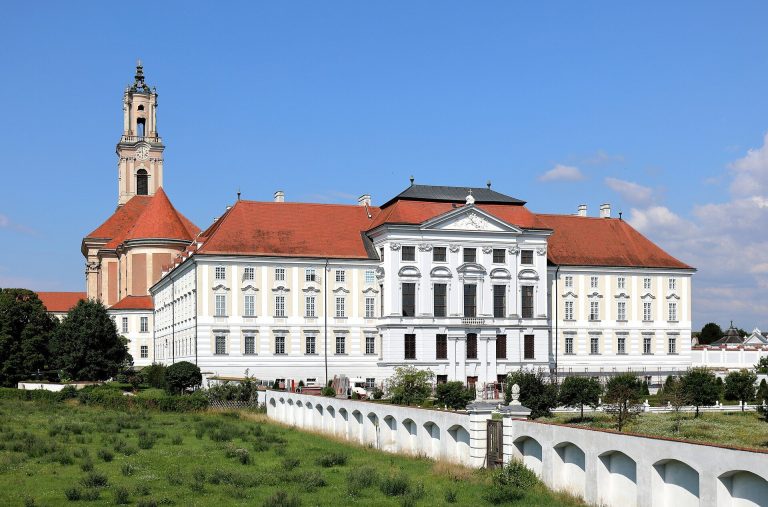
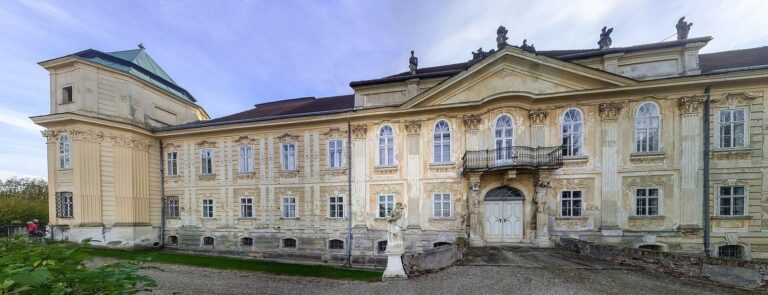
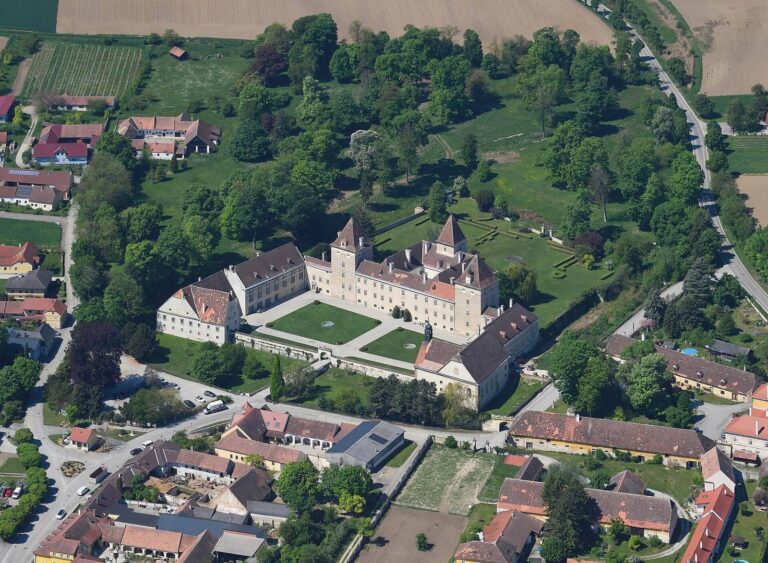
Schloss Wasserburg in St. Pölten: A Baroque Castle and Family Seat
Site at a Glance
- Rating
- 4.5
- Popularity
- Medium
- Country
- Austria
- Primary era
- Early Modern
- Eras represented
- Early Modern
- Civilizations
- Habsburg, Habsburg Austria, Holy Roman Empire
- Site type
- Domestic
- Remains
- Castle
On this page5 sections
History
Schloss Wasserburg in St. Pölten is a castle in Austria. First mentioned in 1185, it passed through several noble families before becoming the Zinzendorf family seat for almost 400 years.
Medieval Lords
In 1185, Dietmar von Wasserberg was named as a member of the Wasserberg family. At the start of the 13th century, Heinrich von Wasserberg was another prominent family member and the brother-in-law of Ulrich von Liechtenstein, a medieval German-language poet known as a Minnesinger, or courtly lyric poet.
In 1283, Otto von Haslau and Wulfing von Arnstein were identified as lords of Wasserburg. The castle passed to the Puchberg family soon afterward through marriage.
The Zinzendorf Family Seat
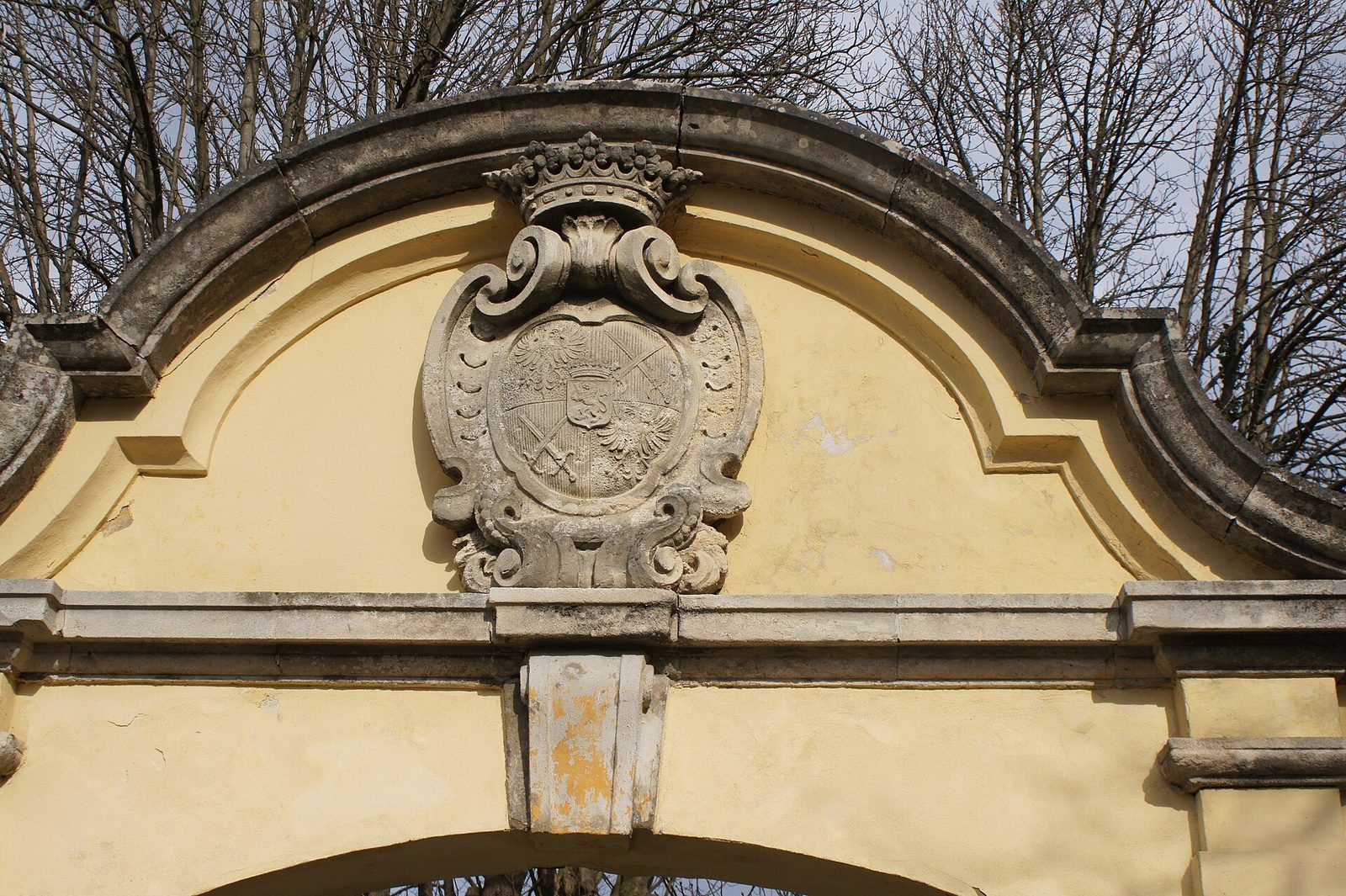
Christoph von Toppel sold Wasserburg and several other properties to Christoph von Zinzendorf in 1515. The estate remained the seat of the Zinzendorfs and later the Baudissin-Zinzendorfs for almost four centuries. After Karl von Zinzendorf died in 1813, the estate passed to Heinrich August, Count of Baudissin, who adopted the Zinzendorf name and coat of arms.
Ownership in the Twentieth Century
The Counts Baudissin-Zinzendorf-Pottendorf sold the estate to Count Heinrich Fünfkirchen in 1912. During the First World War, a temporary convalescent home for soldiers opened in the castle in 1915. Carl Hugo, Count of Seilern and Aspang, bought the estate in 1923, and it has remained in his family’s possession.
Remains
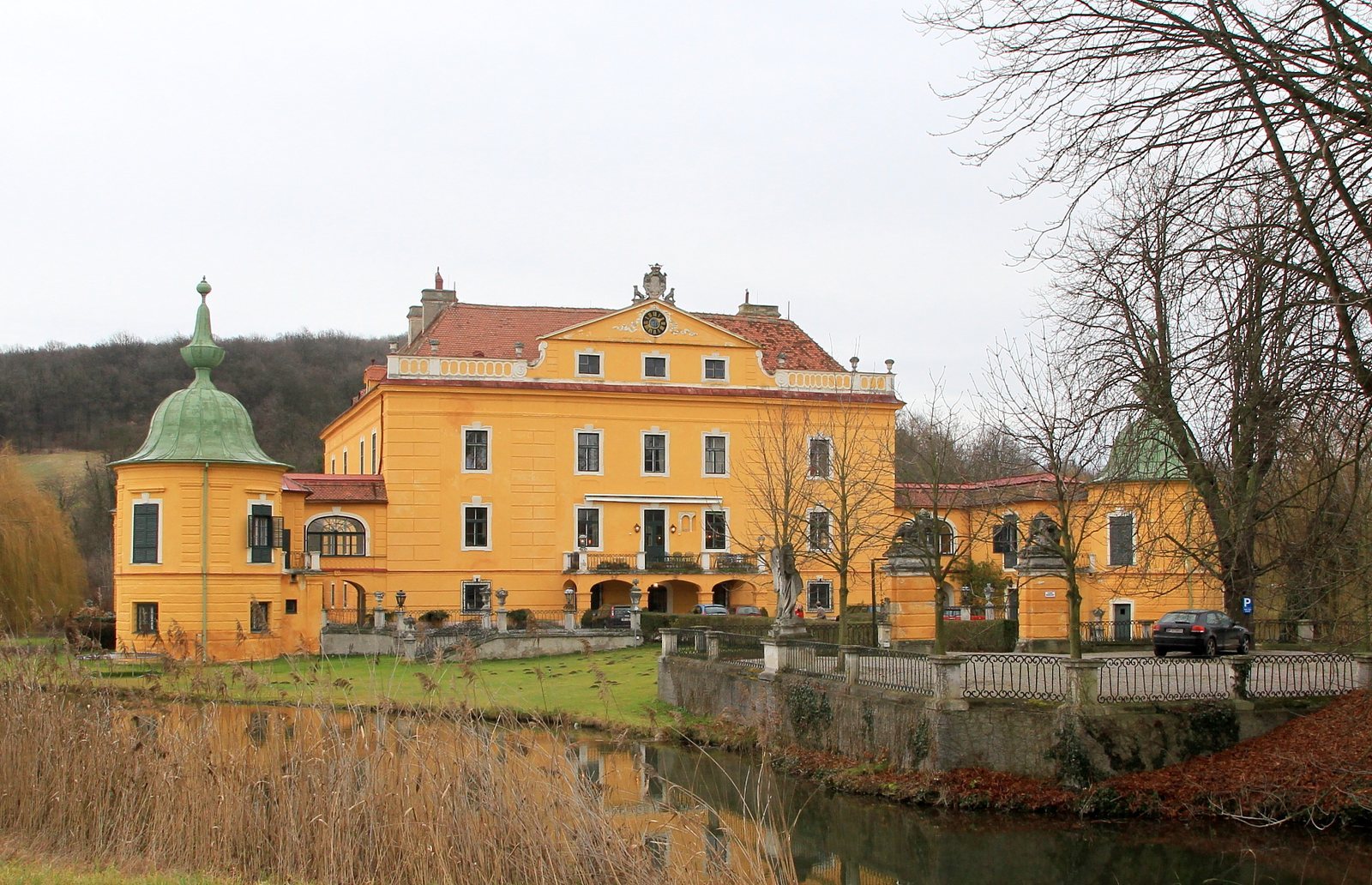
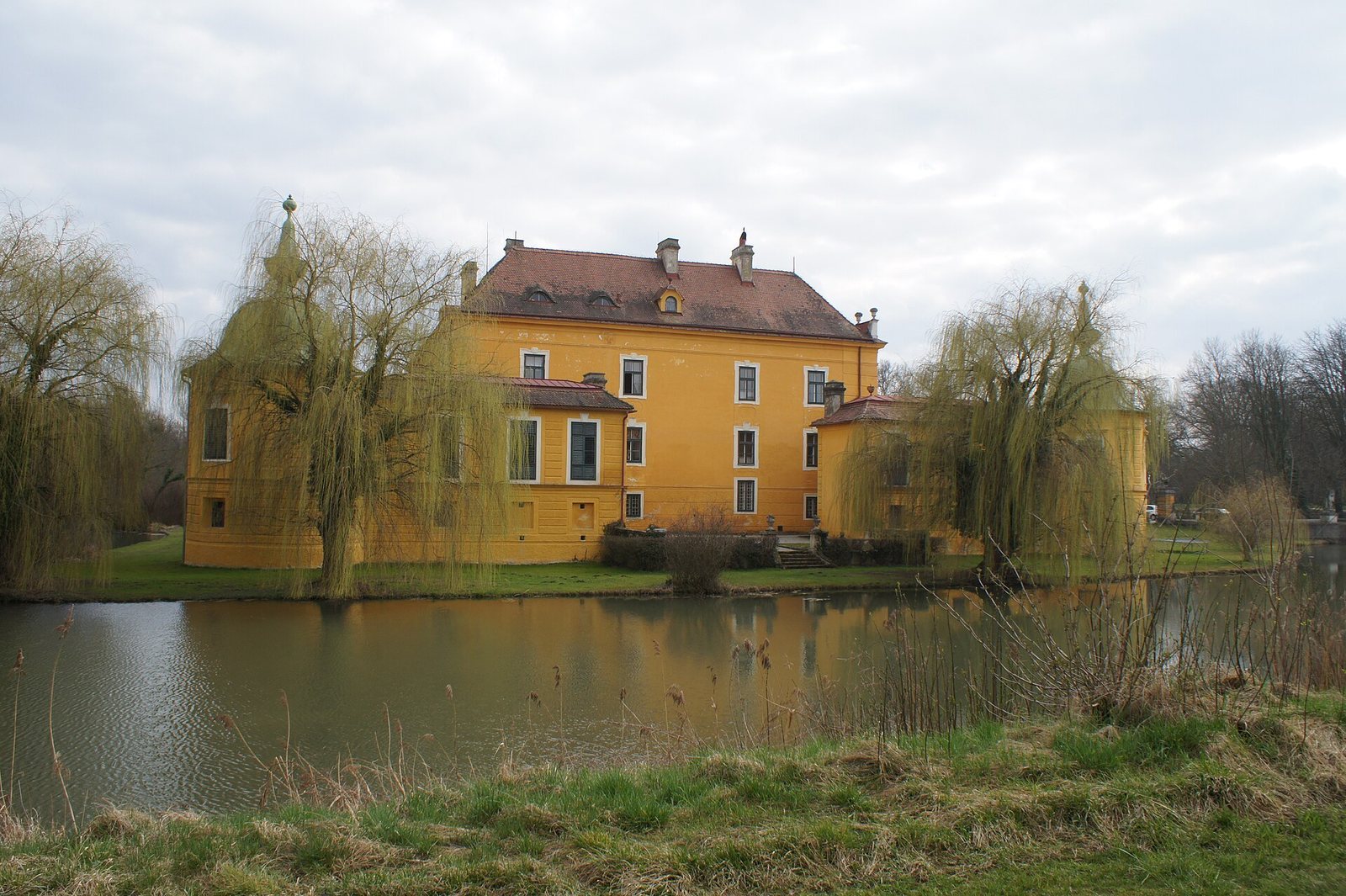
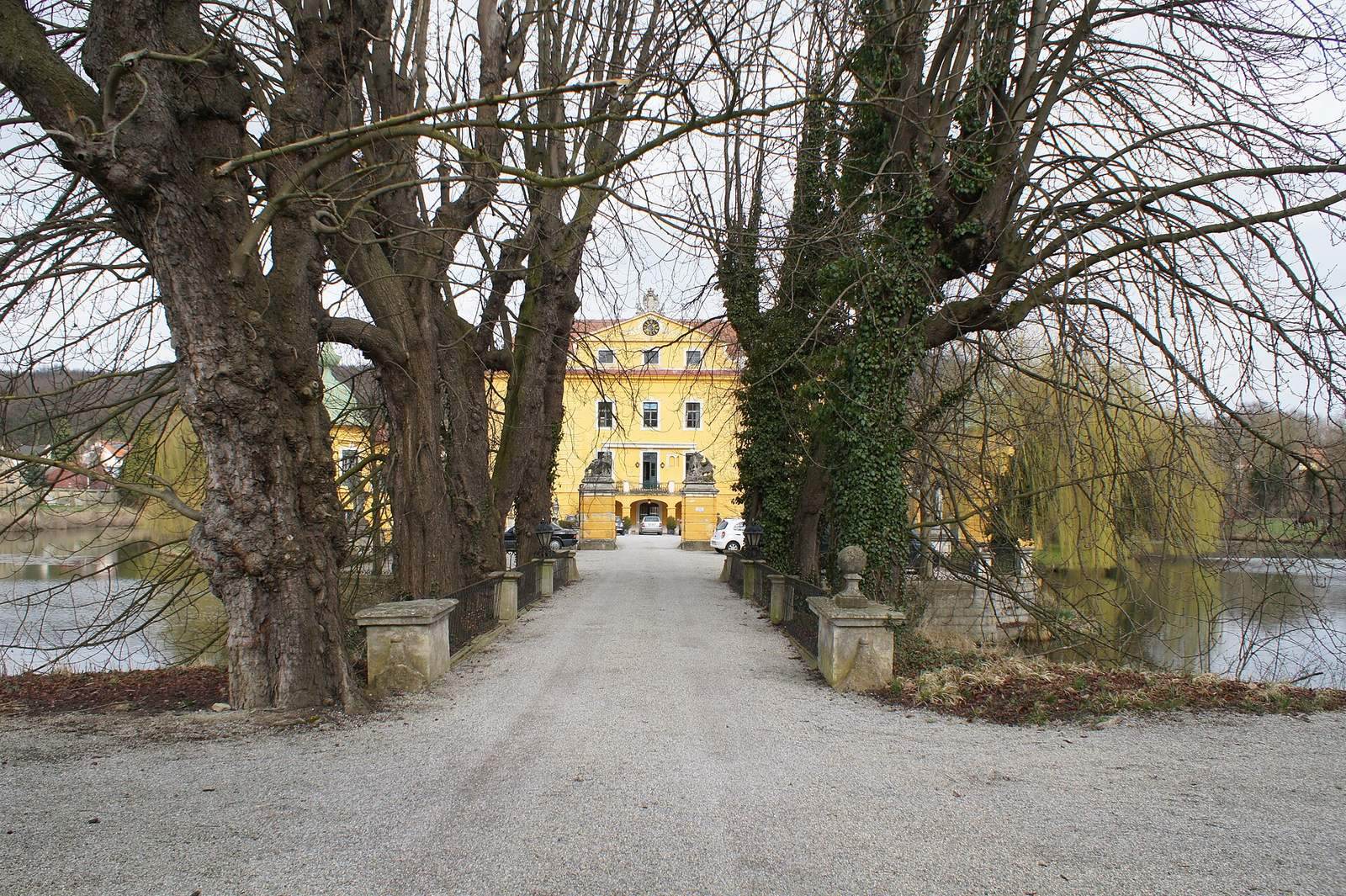
The castle is Baroque, a European artistic and architectural style that flourished especially in the 17th and 18th centuries. It is in Wasserburg, a cadastral community, an Austrian unit used for land registration, within the Pottenbrunn district of St. Pölten.