Schloss Wachwitz: A Royal Residence and Estate in Dresden
Site at a Glance
- Popularity
- Medium
- Country
- Germany
- Primary era
- Modern
- Eras represented
- Modern
- Civilizations
- German, Kingdom of Saxony
- Site type
- Domestic
- Remains
- Castle
On this page11 sections
History
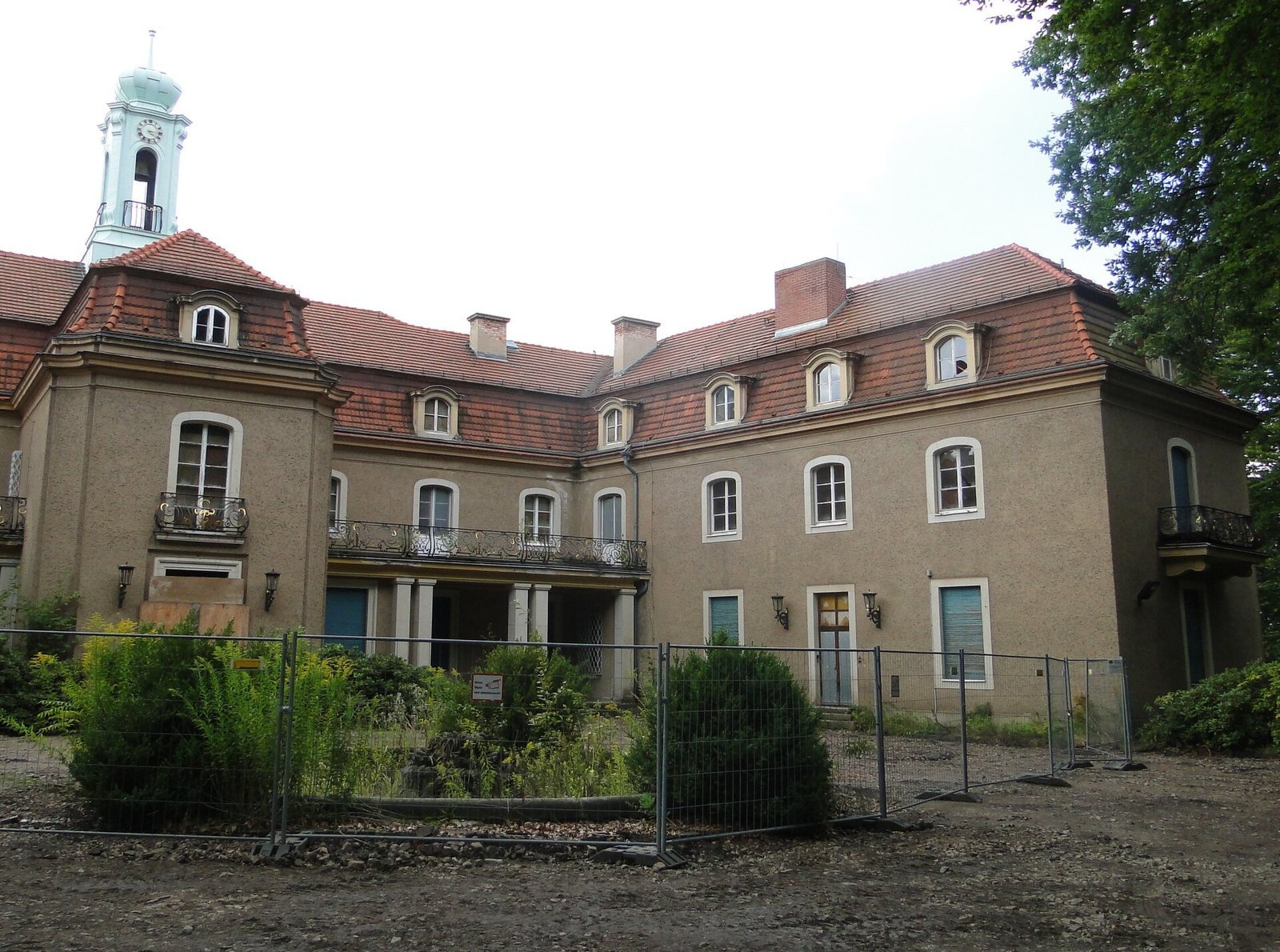
Schloss Wachwitz is a castle on the Elbe slope in Wachwitz, Dresden, Germany, built from 1936 to 1937 as a residence for Friedrich Christian of Saxony. The estate’s history began with earlier royal summer residences and continued through a succession of administrative, educational, and residential uses.
Royal summer residences
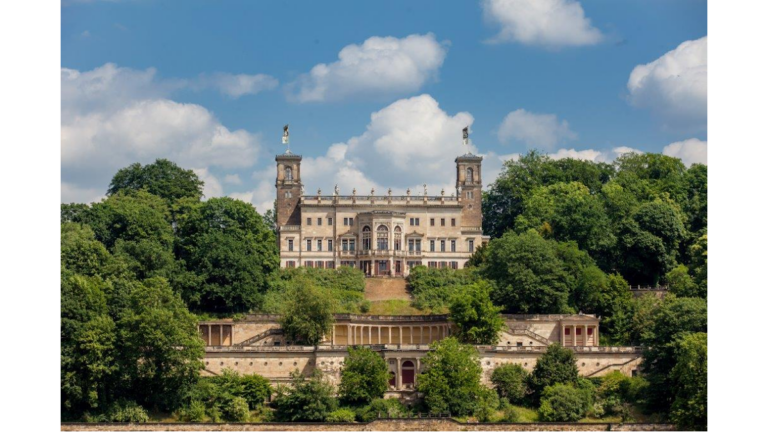
In 1824, Crown Prince Friedrich August, then living in Niederpoyritz, acquired three vineyards in Wachwitz and built a summer palace. The building later became known as the Old Villa. In 1892, it was replaced by a new residence, the Royal Villa. After Friedrich August became King Friedrich August III in 1904, he and his family used the villa as their summer residence.
Friedrich Christian’s residence
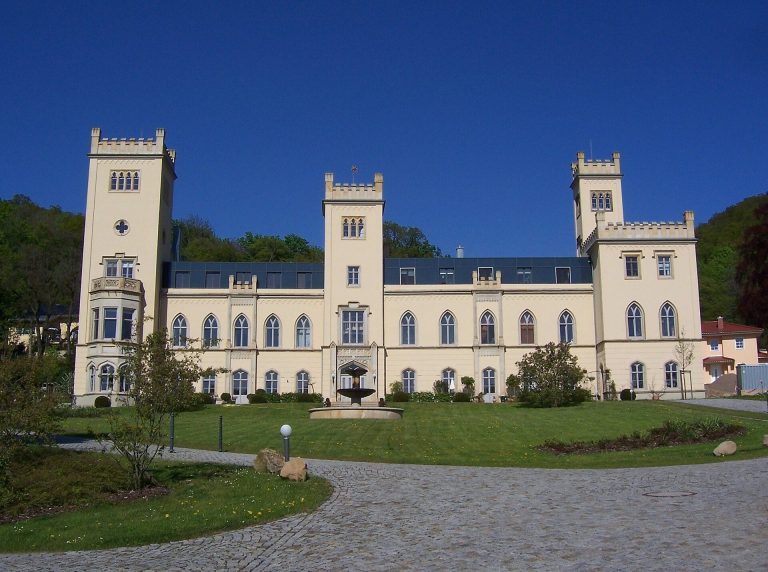
Architect Max Hans Kühne built Schloss Wachwitz above the Royal Villa in 1936 to 1937 for Friedrich Christian, a prince of the Wettin dynasty, Saxony’s historic ruling family. The Wettins were expropriated in 1945.
Postwar administration, education, and garden
After 1945, Soviet forces used the castle and villa as an administrative seat of the Soviet Military Administration, the occupation authority governing the Soviet zone of Germany after the Second World War. From 1947 to 1949, the castle operated as an Intourist hotel. Intourist was the Soviet state travel agency.
In 1950, the castle passed to the Saxon state government’s Ministry of People’s Education and became a district youth school for the Free German Youth (FDJ), East Germany’s state-sponsored youth organization. From 1984 to 1990, it housed a branch of the Wilhelm Pieck Youth Academy, named for East Germany’s first president, where FDJ cultural cadres were trained. The Royal Villa also served educational institutions: it was used for teacher training until 1990 and housed the Saxon Academy for the Further Education of Teachers and Educators from 1990 to 1993.
The Wachwitz Rhododendron Garden opened on 13 May 1972, following two years of design and construction. Horticultural engineer Karl Scholz, regarded as the garden’s founder, worked on the project with Werner Dänhardt of the Pillnitz Institute for Horticulture, garden designer Henke, Siegfried Sommer of Dresden University of Technology, and volunteers.
Vacancy and redevelopment
From 1990 to 1993, Schloss Wachwitz served as a conference venue and guesthouse for the Dresden Medical Academy. It then stood vacant from 1994, and the castle and villa deteriorated during years of disuse. The Royal Villa was unused from 1997 before its later renovation and conversion into condominiums.
In 2002, Wettin heirs sought the return of the estate. The Dresden Administrative Court rejected their claims in mid-2003, after which they brought the dispute to the European Court of Human Rights in Strasbourg. They argued, in part, that a 1924–1925 state treaty had made the entire estate their private property. The Free State of Saxony sold Schloss Wachwitz to V.V.K. Dresden, an asset-management office, in July 2007. From 2011 to the end of 2012, the castle was renovated and converted into 20 condominiums.
Remains
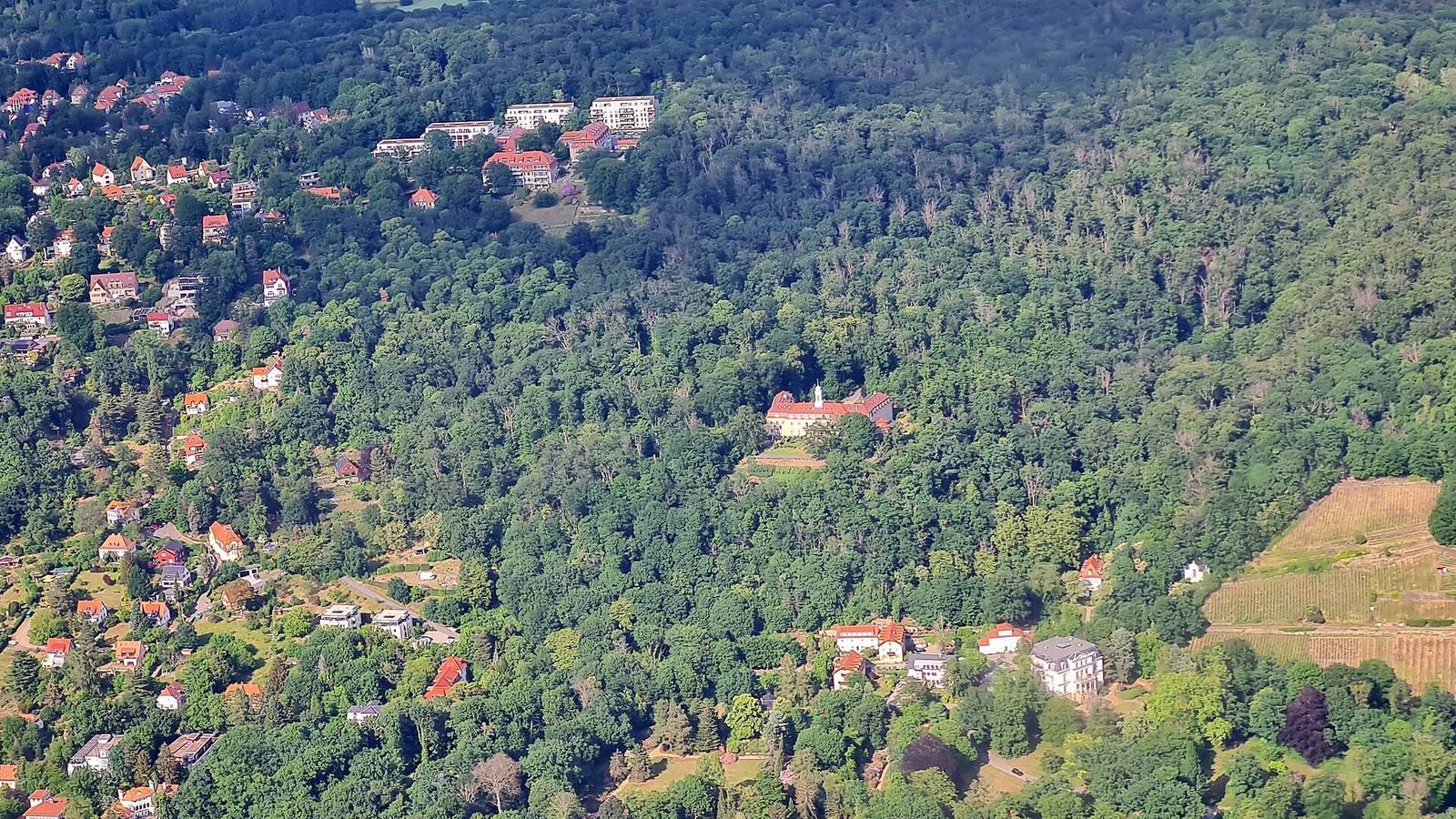
The approximately 27-hectare estate lies on the Elbe slope at Wachwitz, within Wachwitzer Höhenpark. Its grounds include the castle, the Royal Villa, the rhododendron garden, and ancillary buildings. The Royal Villa has a Neo-Renaissance design, a later adaptation of Renaissance forms; a small Neo-Baroque chapel, adapting Baroque forms, stood on the castle’s south side.
Estate buildings and garden
The castle
The castle has about 40 rooms. Its ground floor contained the Red Salon, used as a reception room, along with social rooms, a dining room, and a library. The upper floor held the family’s private rooms.
The Royal Villa
Also called the New Villa, the Royal Villa was designed by Wilhelm Teichgräber. It forms part of the estate’s succession of residences in Wachwitz.
The chapel
The small chapel on the castle’s south side had a family crypt beneath it. Its fittings included a high altar by Otto Heybey, a ceiling painting by Heinrich Bickel depicting Saint Elizabeth of Thuringia, a medieval Christian saint, and a small organ made by the Jehmlich brothers.
The rhododendron garden
The garden covers 10,000 square metres and contains about 1,000 rhododendrons, representing 200 varieties and 60 species. Its planting also includes many kinds of trees and ornamental shrubs.