Schloss Störmede: A Historic Medieval Castle in Geseke, Germany
Visitor Information
Google Rating: 4.8
Popularity: Low
Official Website: www.rittergut-stoermede.de
Country: Germany
Civilization: Early Modern, Medieval European, Modern
Site type: Military
Remains: Castle
History
Schloss Störmede is located in the municipality of Geseke, Germany. This site originated as an early medieval fortification built by local noble powers during the early Middle Ages.
The earliest known reference to the location dates back to the year 826, when documents from the Corvey monastery recorded a donation connected to the site, suggesting the presence of a fortified settlement or precursor to the castle. In the High Middle Ages, the castle became the residence of the Edelherren von Störmede, a noble family first mentioned in records from 1155, exemplified by Wernor von Störmede. At that time, the castle served as the center of an extensive territory and held strategic importance in the region, drawing the attention of powerful neighboring figures, such as the Archbishops of Cologne.
A conflict in 1233 led to the castle’s destruction at the hands of Cologne’s forces. Following this, Albert von Störmede (1217–1255) expanded the family’s regional authority by obtaining county rights from the Counts of Arnsberg. Around the mid-13th century, the lords established a nearby town, which, along with the castle, suffered destruction again in 1277 amid disputes between the Archbishops of Cologne and the bishops of Paderborn. Reconstruction took place after 1292, with the castle being rebuilt on a site slightly shifted from the original location.
The original noble line of Edelherren von Störmede became extinct around 1300, after which the estate passed by inheritance to the von Hoerde family. This family branched into several lines, including one known as Hoerde zu Störmede. Subsequent ownership transferred to the von Ketteler family before eventually coming into the possession of the city of Geseke in 1970. Later, in 2010, the estate was acquired by the Bröggelwirth family.
Throughout the 16th century, the castle grounds were the focus of political disputes. Alhard von Hoerde sought to secure imperial immediacy, a status granting direct authority under the Holy Roman Emperor, bypassing regional overlords. This ambition encountered resistance from the Cologne archbishops, culminating in the Salentinischer Rezess agreement, whereby the Hoerde family lines relinquished their territorial claims in return for settlement.
Archaeological work in 2011 and 2012 uncovered remnants of an original fortified building or residential tower beneath what is today known as the “Altes Haus.” These findings confirmed the site’s medieval origins and its sustained significance through multiple phases of construction and destruction.
Remains
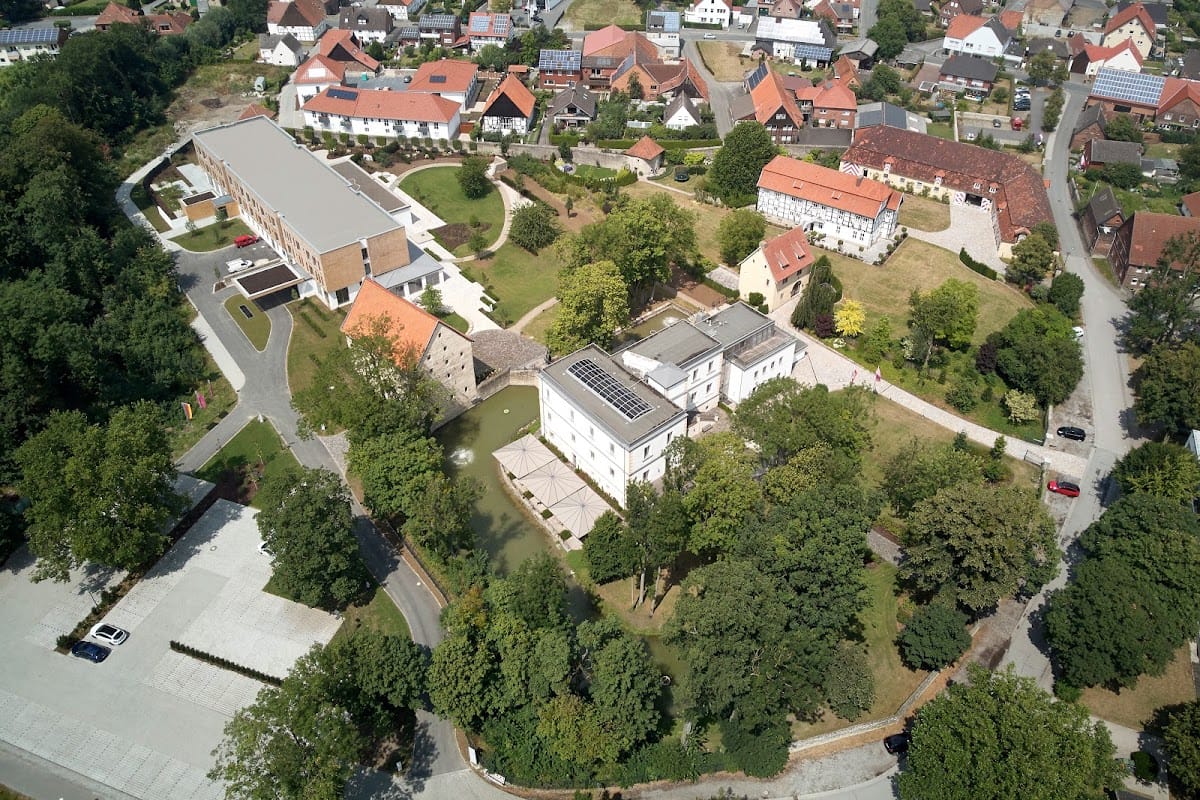
The current layout of Schloss Störmede reflects a complex history of rebuilding and adaptation, with structures dating from the medieval period through to the 20th century. The castle occupies a site that was relocated slightly after its destruction in the 13th century, differing from the original medieval location near what now serves as the church square.
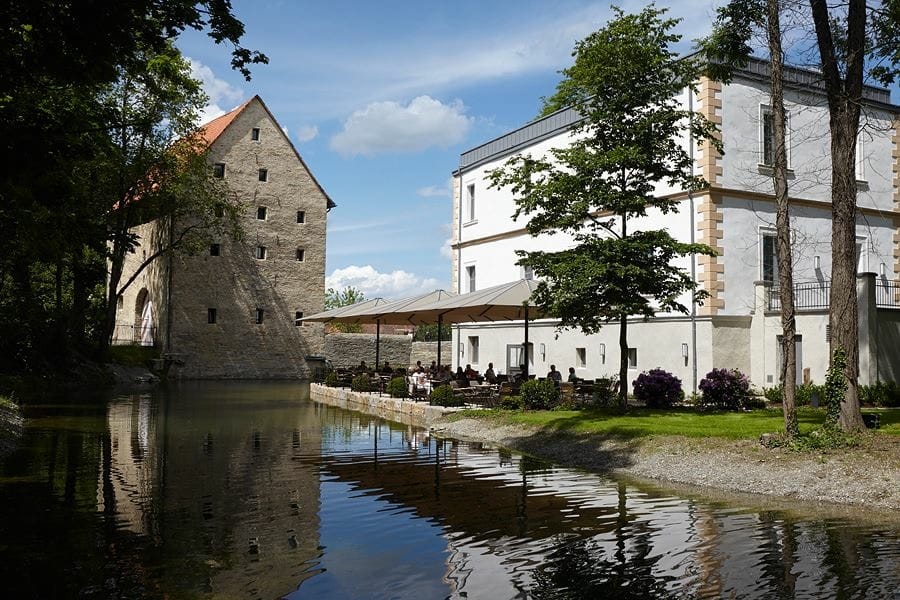
Excavations beneath the “Altes Haus,” a two-winged building likely constructed in the 17th century, revealed parts of the original fortified residence from the medieval era. This building, notable for its square stair tower set into the inner corner, once stood within a stone pond that has since been partially drained. In the 19th century, it gained late-classical plaster decorations. After suffering extensive fire damage in 1989, the structure remained a roofless ruin for an extended period.
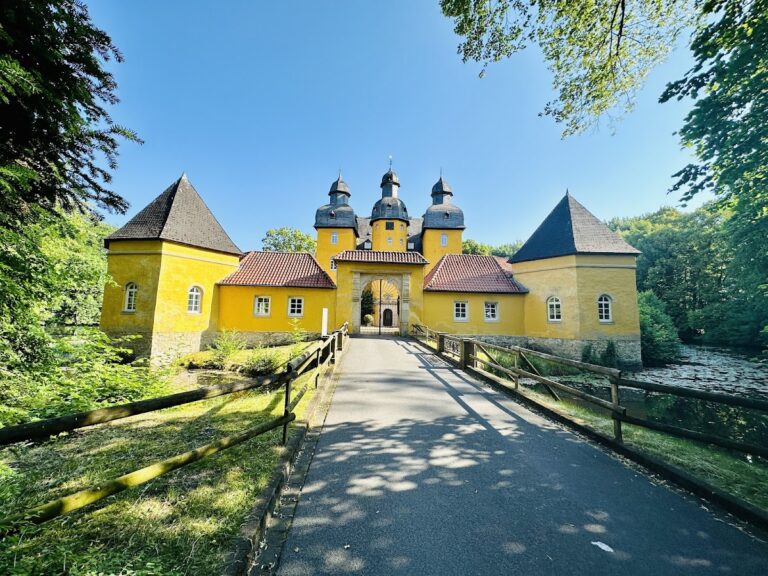
The castle complex was historically protected by a moat and rampart recorded in 1438, highlighting its defensive character. Within the southern area lie two gatehouses: a large main gatehouse and a smaller one centrally located on the grounds, both bearing inscriptions dating them to 1617. These suggest that the castle site was divided by walls and ramparts into distinct sections. A short segment of this dividing wall survives near the “Hohes Haus,” a half-timbered building from the late 18th century whose earlier form remains undocumented.
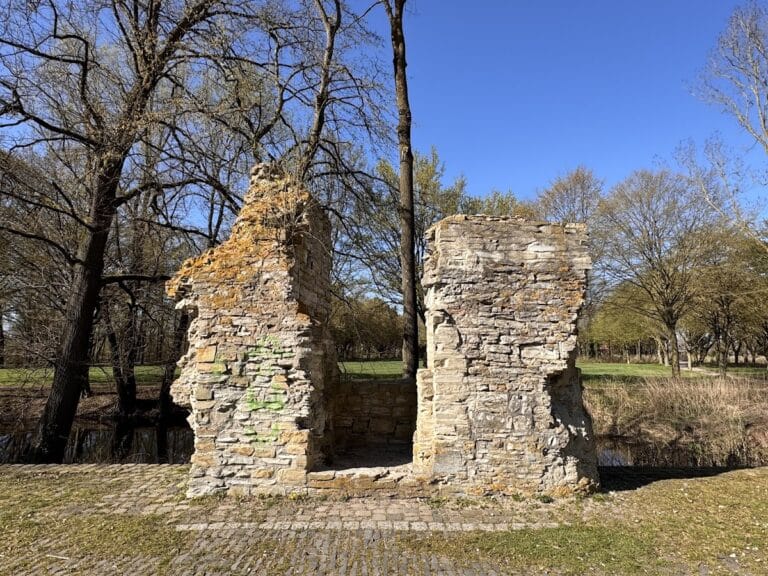
The defensive ring wall from the early 17th century still stands in parts of the site. It includes two round towers equipped with shooting slits at ground level designed for defense. Historically, a third tower occupied the northeastern corner of the site but no longer remains.
Throughout the western and northeastern parts of the Schloss grounds, farm buildings constructed during the 19th and 20th centuries are present, reflecting the estate’s agricultural use in those periods.
While the “Mittlere Haus,” once part of the complex, is no longer extant and details about its appearance or functions remain unknown, the preserved elements of Schloss Störmede paint a layered picture of a site evolving through centuries as a noble residence, fortified stronghold, and later as a country estate. Since 2011, ongoing reconstruction has sought to restore this heritage, preserving the blend of medieval foundations and later architectural phases visible today.
Nearby sites