Schönfeld Castle in Kassel: A Summer Residence and Literary Meeting Place
Site at a Glance
- Popularity
- Medium
- Country
- Germany
- Primary era
- Early Modern
- Eras represented
- Early Modern, Modern
- Civilizations
- Holy Roman Empire
- Site type
- Domestic
- Remains
- Elite Residence
On this page8 sections
History
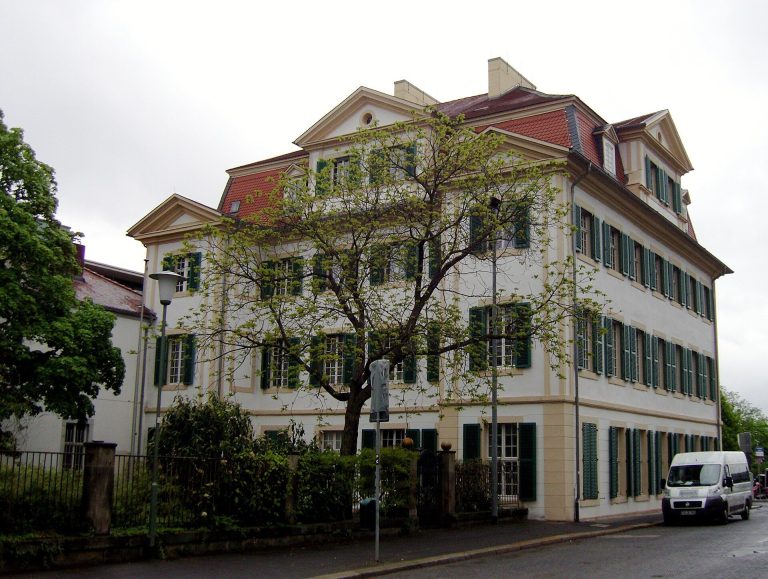
Schönfeld Castle is a historic residence in Park Schönfeld, in the Wehlheiden district of Kassel, Germany. Nikolaus Heinrich von Schönfeld (1733–1795), a general and chamberlain (a court official with household duties), had it built in 1777 as a summer residence on land granted by Landgrave Frederick II, the territorial ruler of Hesse-Kassel.
Early ownership and Romantic writers
Landgrave Wilhelm IX took possession of the castle in 1790. Andries Hendrik Thorbecke bought it in 1793, intending to establish a tobacco factory, but permission for the necessary additions was refused. After two further changes of ownership, the property belonged by 1806 to Frankfurt banker Carl Jordans.
After Jordans married Maria Ludovica Katharina Brentano, known as Lulu, the castle became a meeting place for writers and intellectuals associated with Romanticism, an artistic and literary movement that emphasized emotion, imagination, and historical themes. Its visitors included Clemens Brentano, Achim von Arnim, poet and translator Ernst von der Malsburg, and the Brothers Grimm, writers and scholars known especially for collecting folktales.
Royal residence and the Schönfeld Circle
Following Napoleon’s conquests, the Kingdom of Westphalia, a French-backed kingdom established in German lands, was founded in 1807 with Kassel as its capital. In 1809, Jordans was compelled to sell the castle to King Jérôme Bonaparte, Napoleon’s younger brother, who held lavish celebrations there. Court lady and writer Jenny von Gustedt was born at the castle on September 7, 1811.
The Kingdom of Westphalia ended after Napoleon’s defeat at the 1813 Battle of Leipzig, which helped end French control in German lands. Hesse-Kassel’s landgraviate, the territory ruled by a landgrave, was restored, and the castle returned to Wilhelm. He had become Elector Wilhelm I in 1803; an elector was a prince entitled to vote in choosing the Holy Roman Emperor.
When Wilhelm II came to the throne in 1821, he gave the castle to his wife, Auguste. The couple had been formally separated since 1815. Auguste gathered the Romantic-minded Schönfeld Circle at the castle, a group whose members opposed her husband. After her death in 1841, their daughter Caroline inherited the property. During Caroline’s ownership, the castle and park fell into disrepair.
Prussian ownership and changing uses
Prussia annexed Hesse-Kassel in 1866. Prussian Lieutenant General Richard von Kalkreuth (1808–1879) lived at the castle from that year until his death. In 1880, Prussia transferred the estate to Hesse-Philippsthal, a branch of the House of Hesse, the ruling dynasty. Prince Karl lived there until 1888. The castle then stood empty until Karl Kreibe leased it in 1891 and established a short-lived animal park around it.
City ownership and wartime damage
The city of Kassel acquired the castle in 1906, renovated its buildings, and opened the park to the public. During the First World War, the castle served as a hospital and military prison. After the war, a restaurant and outdoor dining venue operated there again, followed by extensive renovation work in 1933.
During the air raid on Kassel on the night of October 22–23, 1943, bombs struck the castle. Some reconstruction took place in 1965. In 1989, the Schloss Schönfeld Association took over the buildings from the city and undertook a major renovation through 1992. The association owns the castle today, and a restaurant and its club are housed there.
Remains
The castle and its wings
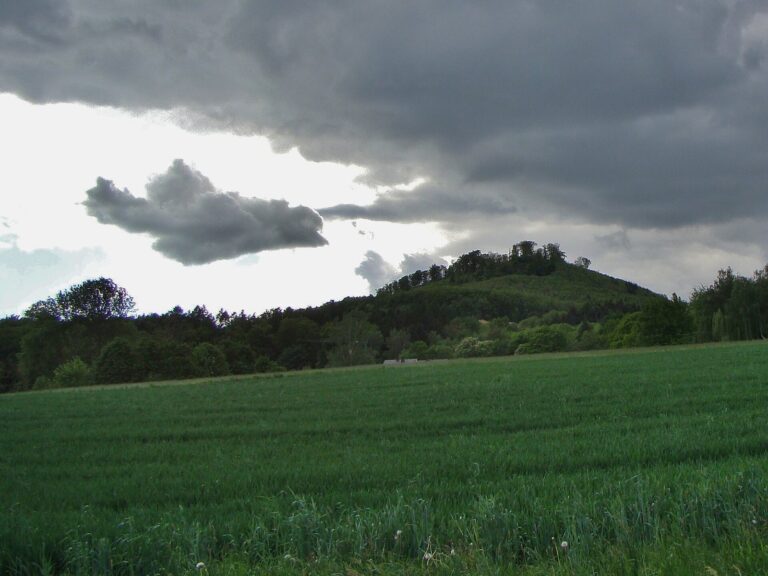
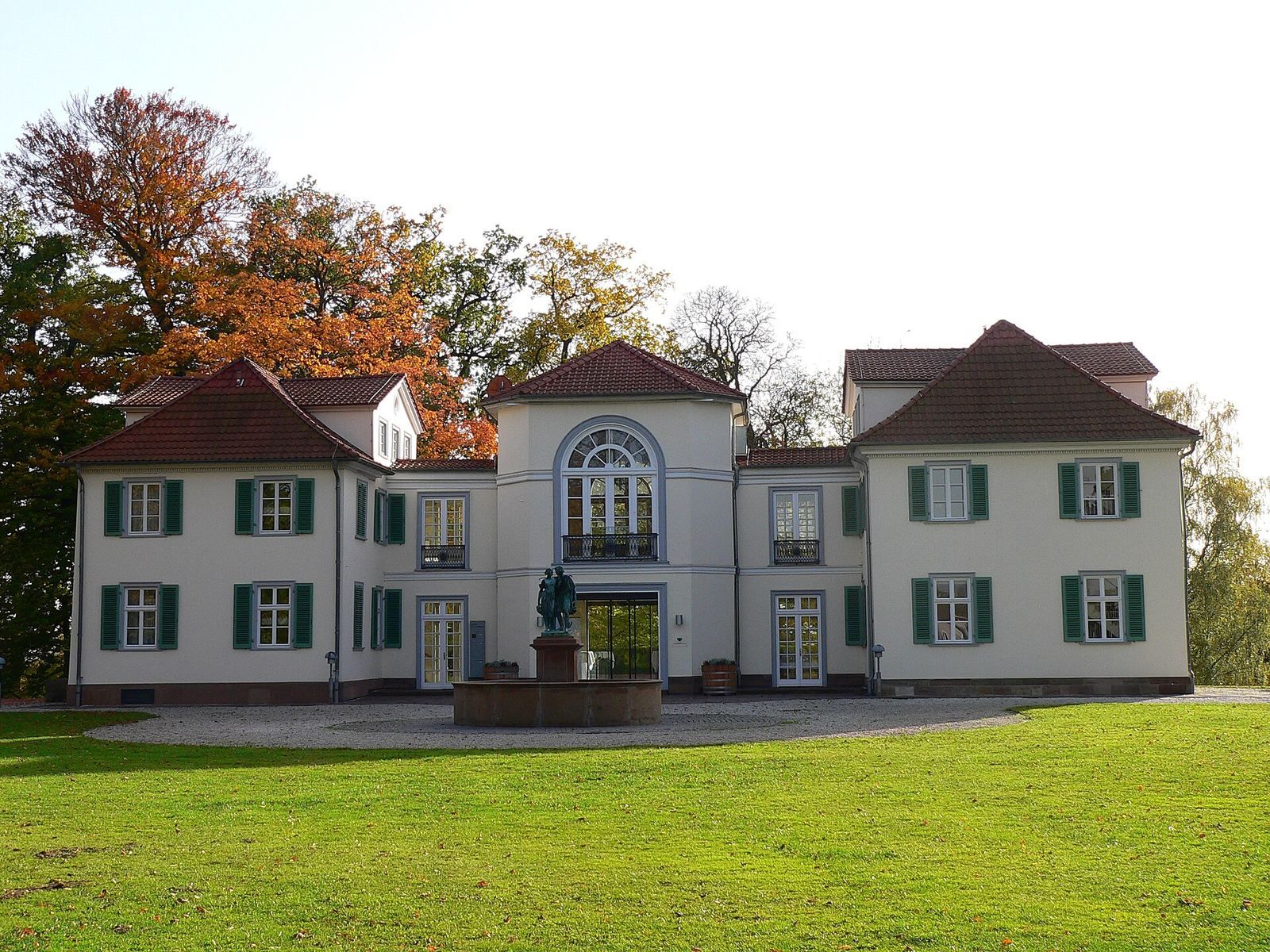
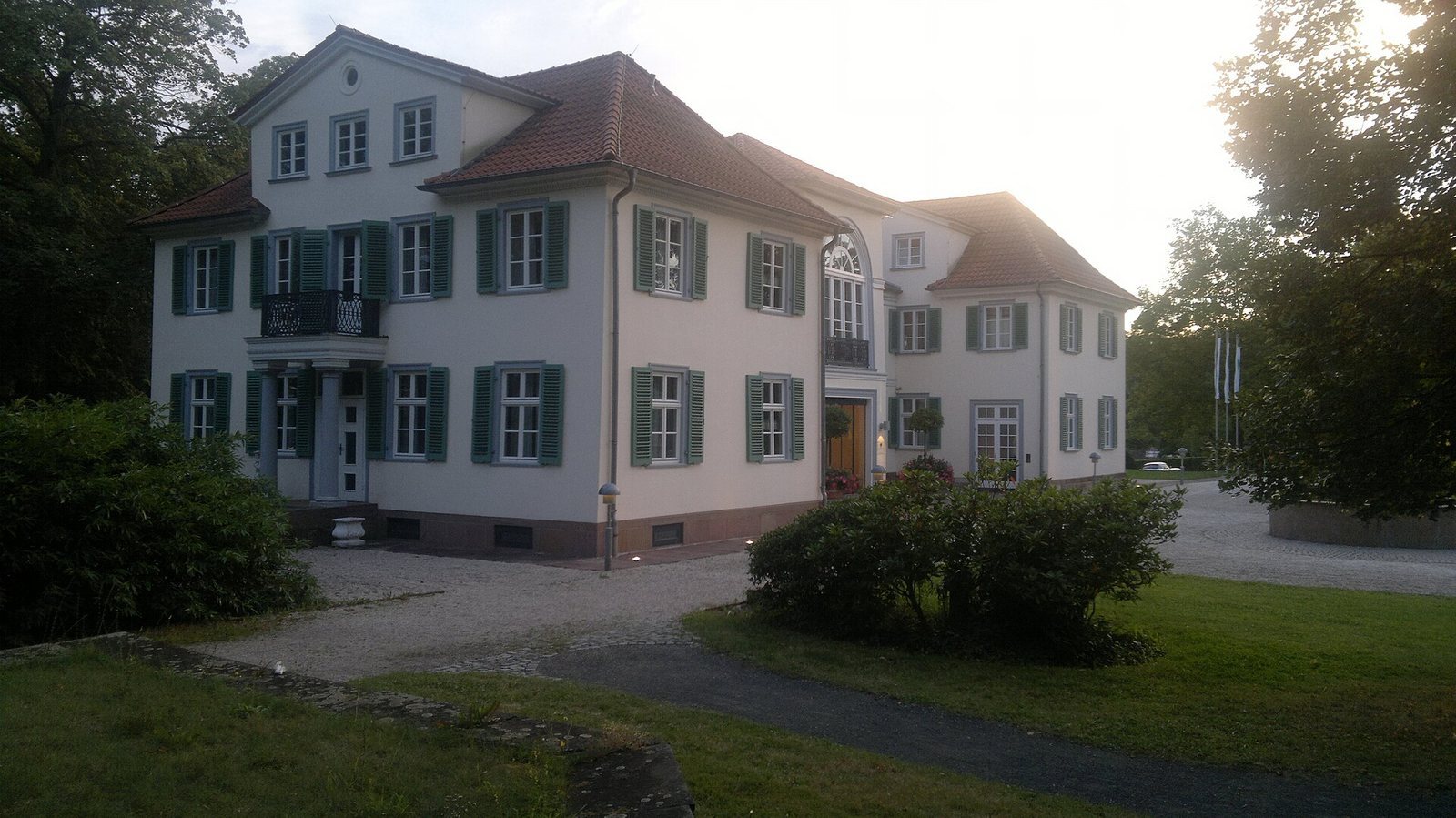
Schönfeld Castle stands on Lengberg within Park Schönfeld, which takes its name from the building. Its form developed through successive additions. Leo von Klenze, a German Neoclassical architect, enlarged the castle for Jérôme Bonaparte. During Auguste’s ownership, court architect Johann Conrad Bromeis added a central pavilion and an intermediate wing. Bombing destroyed the west wing and damaged the central wing; reconstruction work followed in 1965, and the association’s major renovation took place from 1989 through 1992.
Park structures and fountain
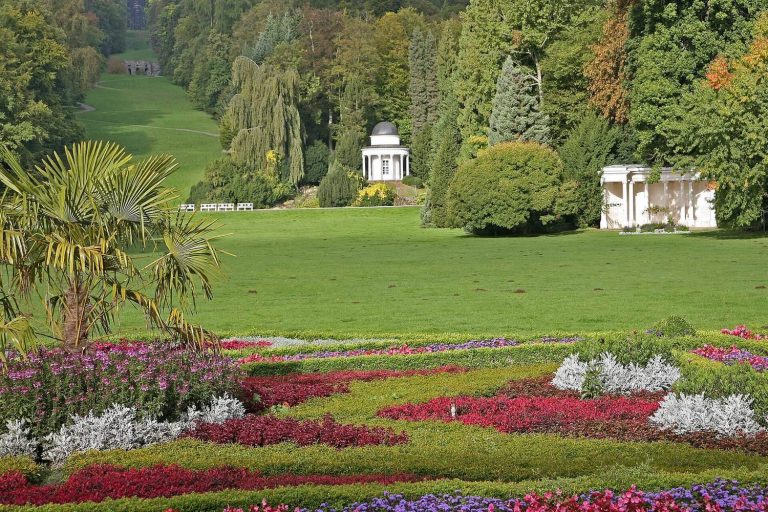
The park’s built features included a garden restaurant, a shooting club house, and a music stage, constructed by city garden director Karl Justus Engels. In front of the castle is a fountain with a bronze sculptural group titled Hermann and Dorothea, made by Johann Werner Henschel after Johann Wolfgang von Goethe’s verse epic.