Sandegg Castle: A Castle of Reichenau Abbey
Site at a Glance
- Popularity
- Medium
- Country
- Switzerland
- Primary era
- Unclassified
- Eras represented
- Unclassified
- Civilizations
- Unclassified
- Site type
- Domestic
- Remains
- Castle
On this page9 sections
History
Early tradition and Reichenau ownership
A tradition preserved in fifteenth-century writings places Sintlaz, a Frankish royal official and envoy of Charles Martel, at Sandegg in the eighth century. Charles Martel was a Frankish political and military leader. The tradition also claims that Reichenau Abbey, a Benedictine monastery on an island in Lake Constance, was founded from Sandegg.
By the mid-thirteenth century, Sandegg belonged to Reichenau Abbey. Around 1260, its owner Eberhard von Steckborn is said to have sold it to the Teutonic Order, a Catholic religious order with a military history. The transaction was disputed and reversed within a few years. After 1272, Sandegg became a preferred residence of Abbot Albrecht, the head of the monastic community, while the abbey itself was still in ruins after a fire in 1235.
From 1350, the impoverished abbey had to pawn the castle, bringing repeated changes of ownership. A chapel at Sandegg is first mentioned in 1402; the parish priest of Ermatingen served it. In 1497, the abbey pawned the property again, this time to a wealthy citizen of Constance, apparently because of continuing financial strain.
Repair and rebuilding
In 1575, the abbey granted the badly ruined, overgrown castle as a fief to Hans Ulrich Herter, meaning he held it subject to obligations. The abbey waived its tithe, a levy owed to the religious institution, for ten years on condition that he repair the property. By 1586, Herter had spent considerably more than expected.
In 1603, Dietrich Erckenbrecht of Reichenau arranged urgent repairs, including work on the tower after it had collapsed. By 1663, several buildings were partly collapsed. The abbey then granted Sandegg to Johann Julius Kröll, a member of the clergy at Constance Cathedral, who was required to rebuild it. By 1670, the rebuilt property was an aristocratic house.
Sandegg was sold to the Jesuits of Constance, members of the Catholic Society of Jesus, in 1671, and to Muri Abbey, a Benedictine monastery, in 1693. Abbot Plazidus Zurlauben expanded it into a larger complex.
Nineteenth-century ownership and destruction
Farmer Johannes Eigenmann of Homberg acquired Sandegg in 1807. He later sold the castle to the Delisle merchants of Constance but retained the estate. About a decade afterward, Louise Cochelet, a lady-in-waiting to former Dutch Queen Hortense de Beauharnais, bought the castle. In 1819, Hortense’s brother Eugène de Beauharnais acquired the estate from Eigenmann, but not the castle. Eugène, a French military leader and statesman, had Eugensberg Castle built on his land; it was ready for occupation in 1821.
Cochelet married Denis-Charles Parquin, a former officer in Napoleon’s service, at Arenenberg Castle in 1822. Parquin sold Sandegg in 1832 to Hans Konrad Hottinger, a Paris banker originally from Zurich. Hottinger apparently intended the purchase for a niece of the French diplomat and statesman Charles-Maurice de Talleyrand-Périgord.
Hottinger extensively renovated Sandegg. On the night of 2-3 September 1833, the castle burned completely after its stove was heated especially strongly to dry newly applied paint. A person staying in the building died. In 1834, Heinrich von Kiesow, then the owner of Eugensberg Castle, bought the ruin and had it dismantled. Industrialist Hippolyt Saurer of Arbon acquired the ruins in 1915.
Remains
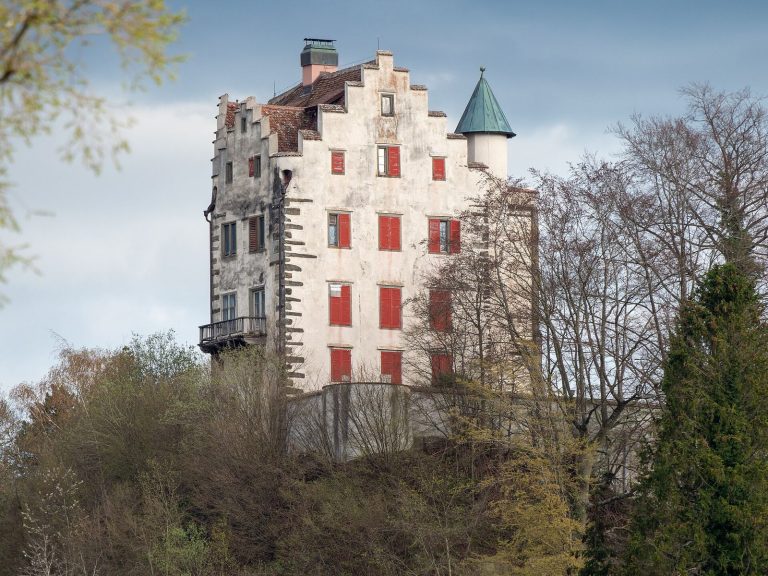
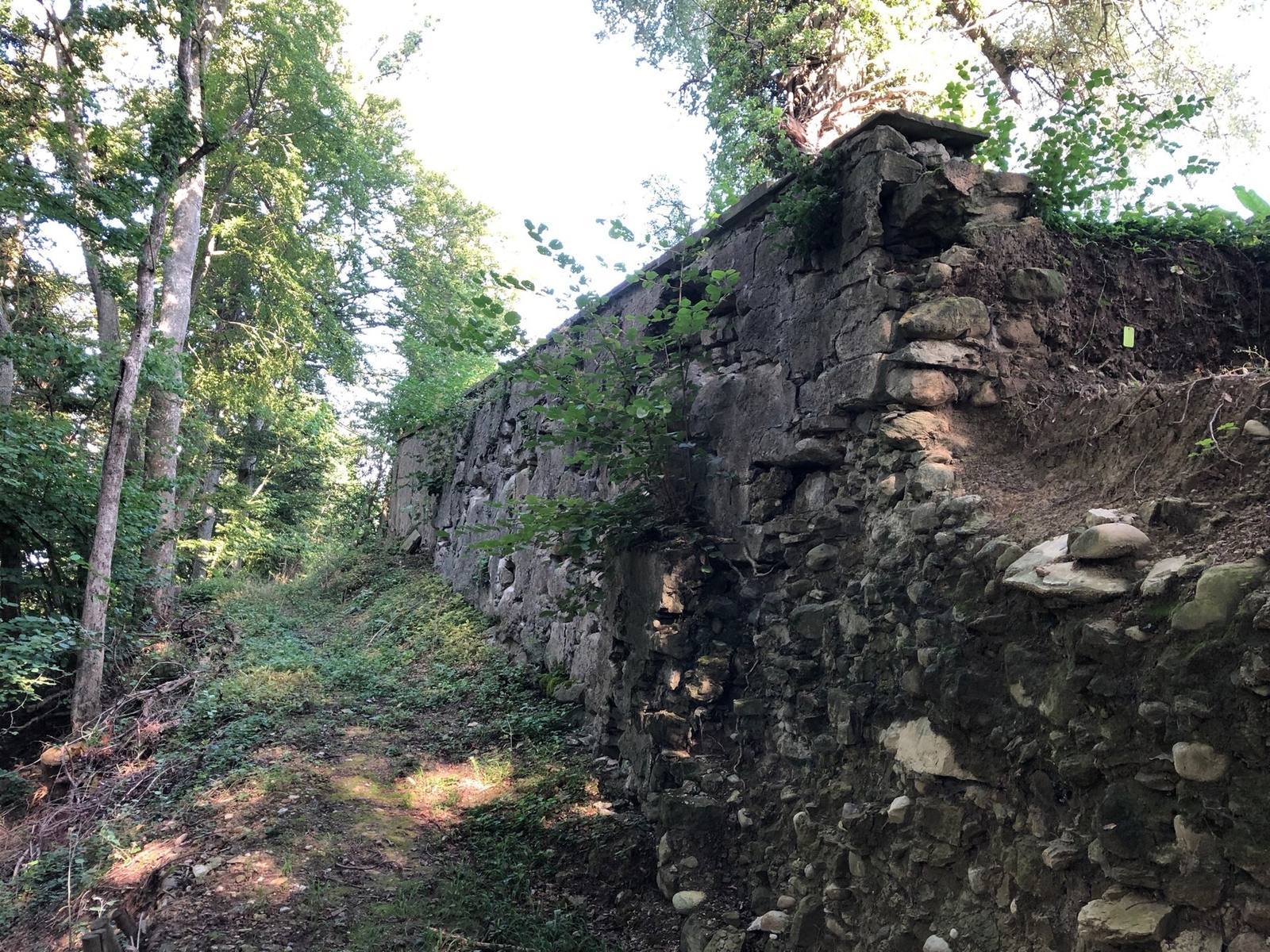
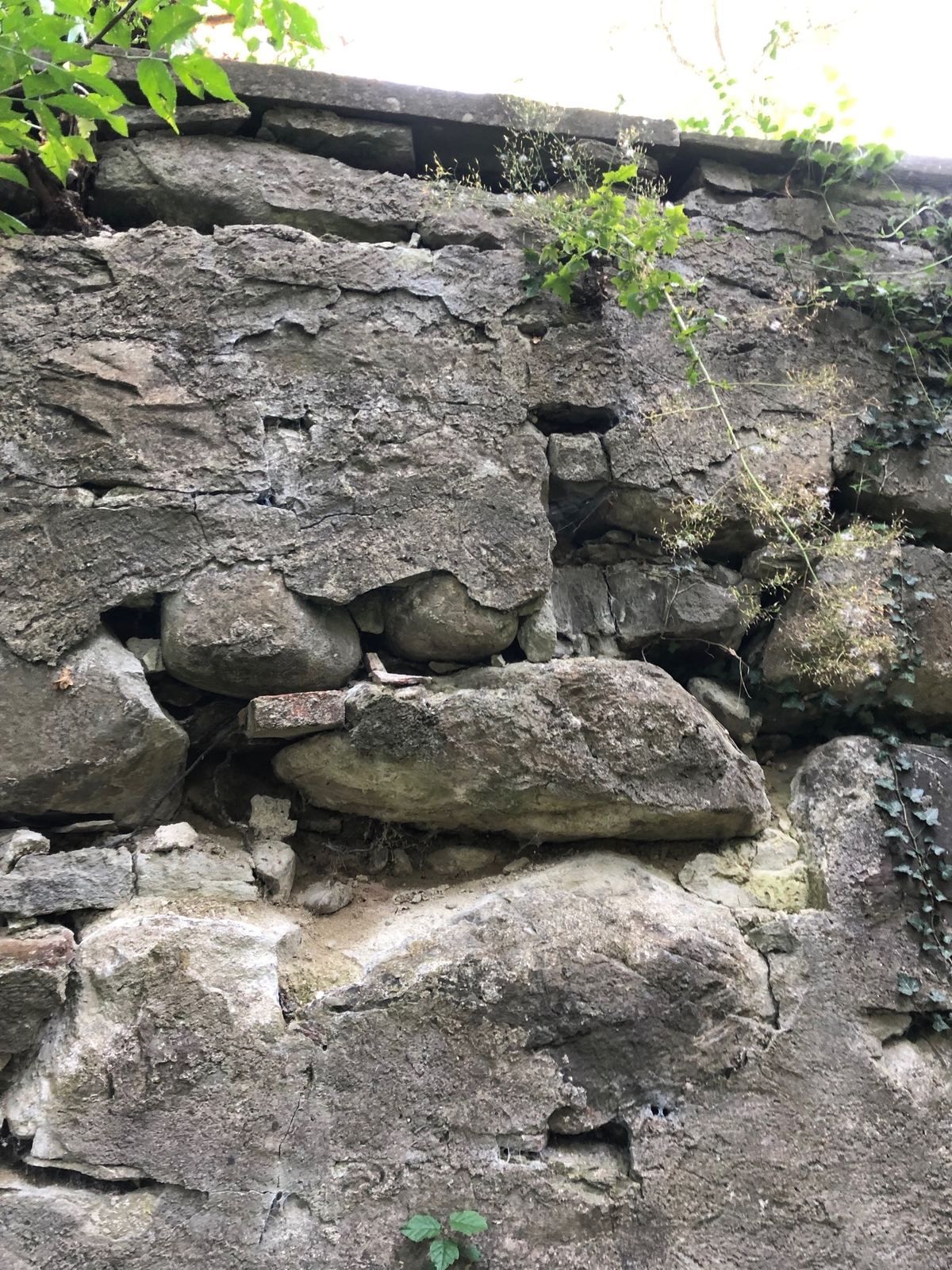
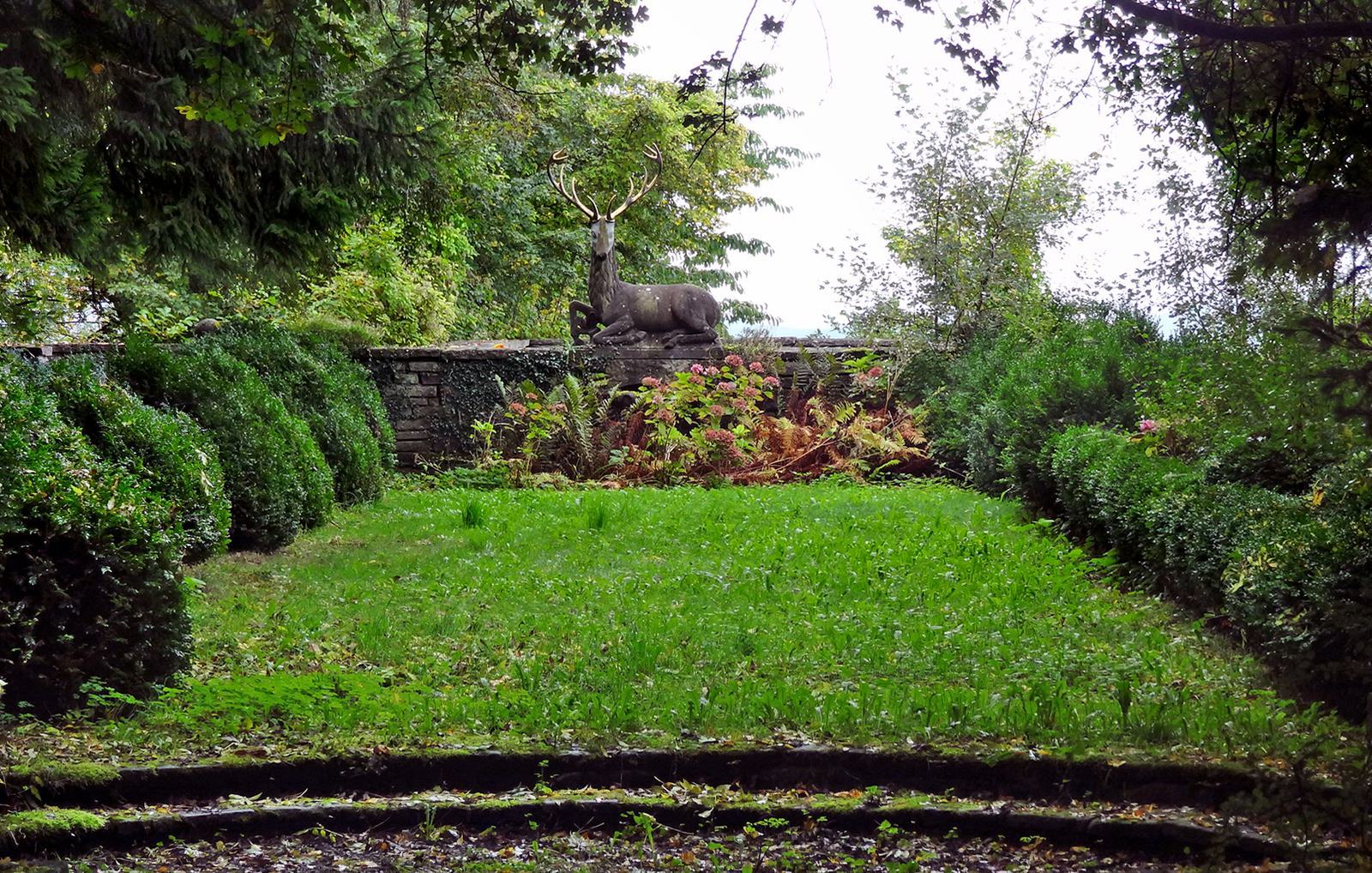
The former castle complex comprised a tower, several buildings, and a chapel. Its remains have since been restored. The known features also include an entrance gate and a garden terrace built over rubble at the northwest corner.
Castle complex and later additions
Castle complex
The tower, buildings, and chapel formed the main parts of the castle complex. The visual record includes a depiction of Sandegg dated 1817 and a 1834 gouache by Hans Jakob Schmidt, an opaque water-based painting.
Entrance gate
The entrance gate bears the coat of arms of Muri Abbey and is dated to around 1810.
Northwest garden terrace
A garden terrace was built on the castle rubble at the northwest corner of the ruins. It collapsed in autumn 2006, and the ruins were later restored.