Schloss Rosenhof: An Austrian Hunting Lodge and Kinsky Estate
Site at a Glance
- Rating
- 4.7
- Popularity
- Very Low
- Country
- Austria
- Primary era
- Early Modern
- Eras represented
- Early Modern, Modern
- Civilizations
- Habsburg, Holy Roman Empire
- Site type
- Domestic
- Remains
- Castle
On this page8 sections
History
Schloss Rosenhof is a private castle complex in Austria, approximately 2 km east of Sandl in the Mühlviertel, within the Freistadt district. Count Alois Thomas Raymond Harrach built it in 1760 as a hunting lodge at about 964 m above sea level, near the Unter-Rosenhofer Teich.
The Harrach Estate
In 1773, the property passed to Count Ferdinand Bonaventura von Harrach, lord of the Freistadt and Harrachstal estates. Under his ownership, the hunting lodge took the name Rosenhof, derived from the names of his wife and daughter. The estate also developed into a model farm, where flax, potatoes, cabbage, and turnips were cultivated and livestock was raised.
After Ferdinand’s death, his daughter Rosa inherited the entire estate. Her marriage to Prince Kinsky in 1777 brought Rosenhof into the possession of the Kinsky family. Between 1780 and 1792, the castle was enlarged with the construction of its east wing.
Kinsky Ownership and Later History
When Princess Rosa died in 1813, the castle passed to her sole heir, Count Franz de Paula Josef Kinsky. He commissioned the west wing in 1827, giving the building its present overall form. In 1876, administration of the Kinsky estate was transferred from Harrachstal to Rosenhof, and further minor alterations followed.
Toward the end of the Second World War, the municipal archive of Freistadt was moved to Rosenhof for safekeeping. Soviet soldiers looted the castle in 1945 and damaged the archive. The war damage was repaired after 1945, and the complex underwent a comprehensive renovation in the early 1980s. After Therese Kinsky died in 1973, Josef Czernin-Kinsky inherited Rosenhof. The castle remains the residence of the Czernin-Kinsky family.
Forestry and Timber Transport
The estate includes forestry administration facilities and a sawmill in subsidiary buildings, together with extensive woodland around Sandl. Its ponds were chiefly created to supply enough water for timber rafting on the Aist. During the nineteenth century, logs were floated each spring through the Flammbach, Schwarze Aist, and Waldaist into the Aist. They were assembled into rafts at Au an der Donau and then floated toward Vienna. This labor-intensive and dangerous transport system ended in 1947, when trucks and railways made timber transport cheaper.
Remains
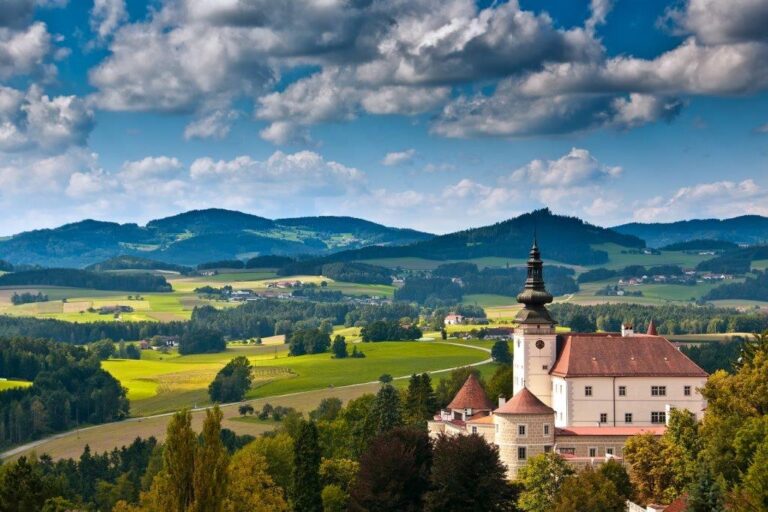
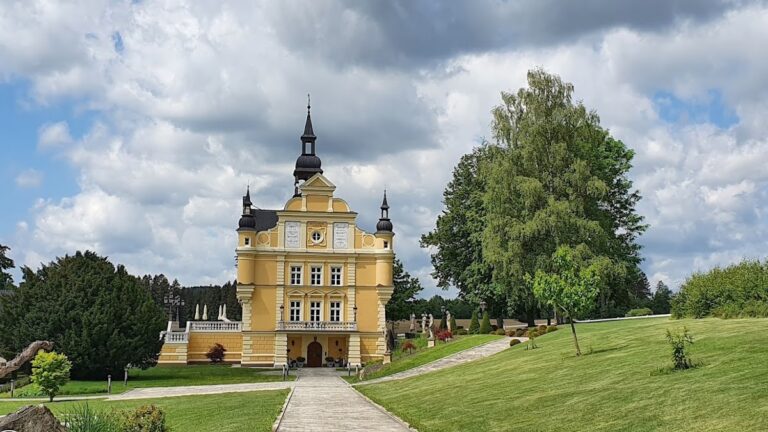
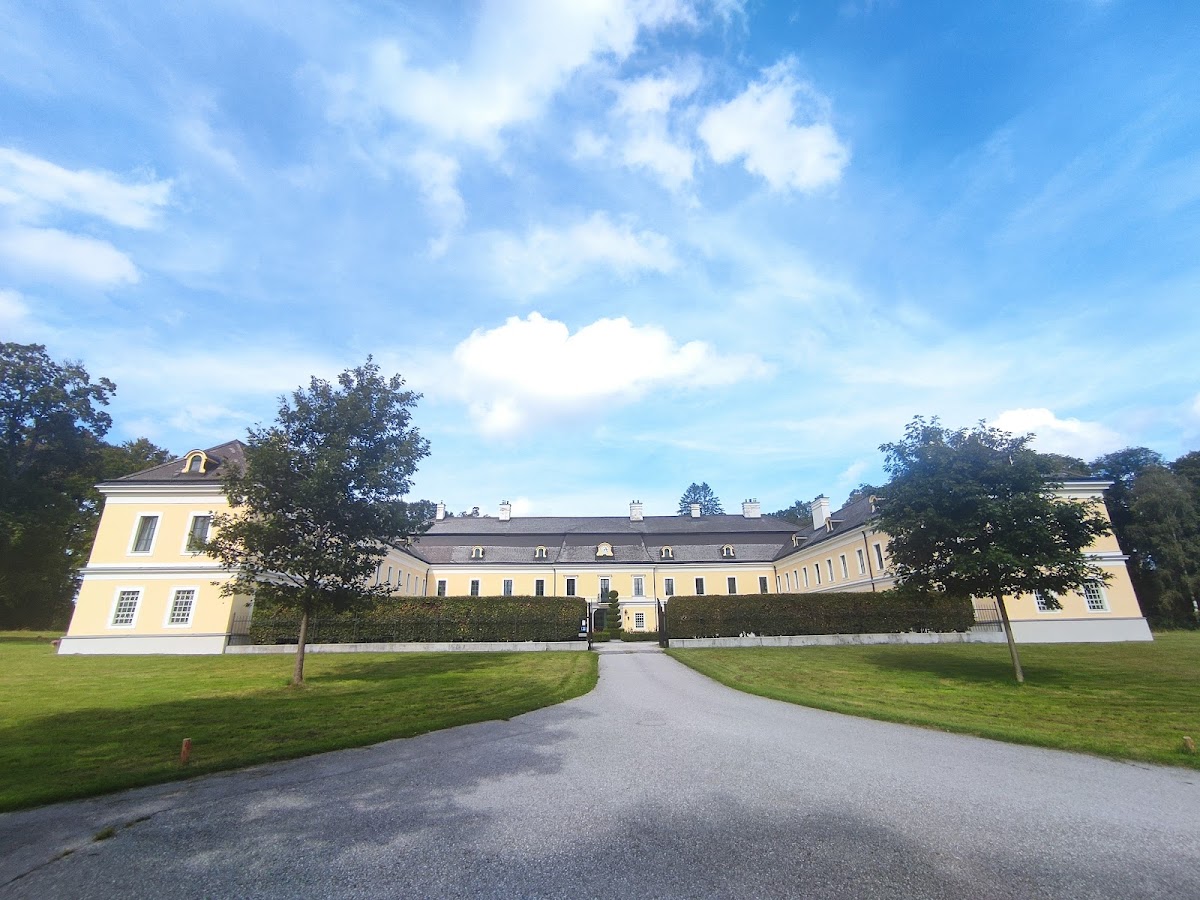
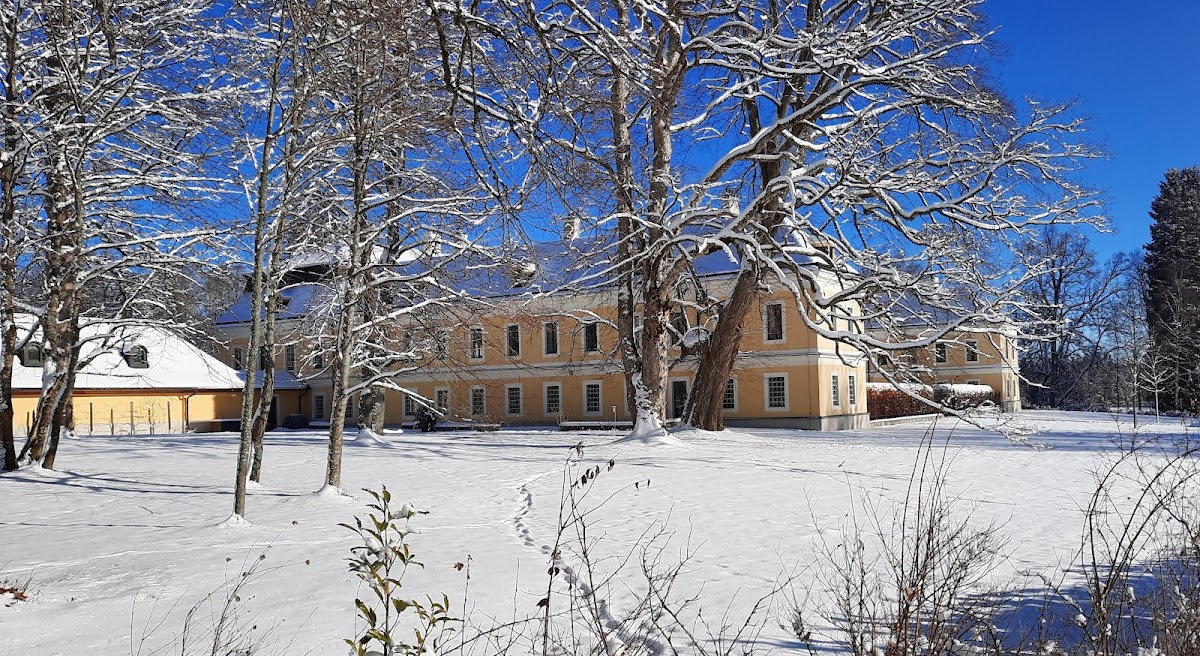
Schloss Rosenhof is a two-storey building set in an extensive park at the edge of dense forest near the Czech border, with a view toward Sandl. Its horseshoe-shaped plan encloses a formal courtyard. The central section has a broken mansard roof, while the two side wings carry hipped roofs. The roof structure probably dates from the eighteenth century, and the dormers appear to have been added in the nineteenth century.
Exterior Architecture
The facade is deliberately plain. A projecting three-bay central section contains the entrance gate, which is flanked by columns. Round-arched dormers with lateral volutes pierce the roof above the central section, and the garden side bears the Kinsky coat of arms. During the comprehensive renovation of 2010, a heating plant and a garage were added at the rear. Each is connected to the original castle by a passage.
Interior and Furnishings
The present furnishings were transferred from other castles belonging to the Kinsky family. A painting of the Pardubice steeplechase, a major horse race held in Pardubice in the Czech lands, hangs in the staircase. The ballroom occupies the building’s northwestern corner. Its white-and-blue interior dates from 1792 and represents Josephinian Classicism, a restrained classical style associated with the reforms and cultural climate of Emperor Joseph II in the late eighteenth-century Habsburg lands.
Ponds and Estate Buildings
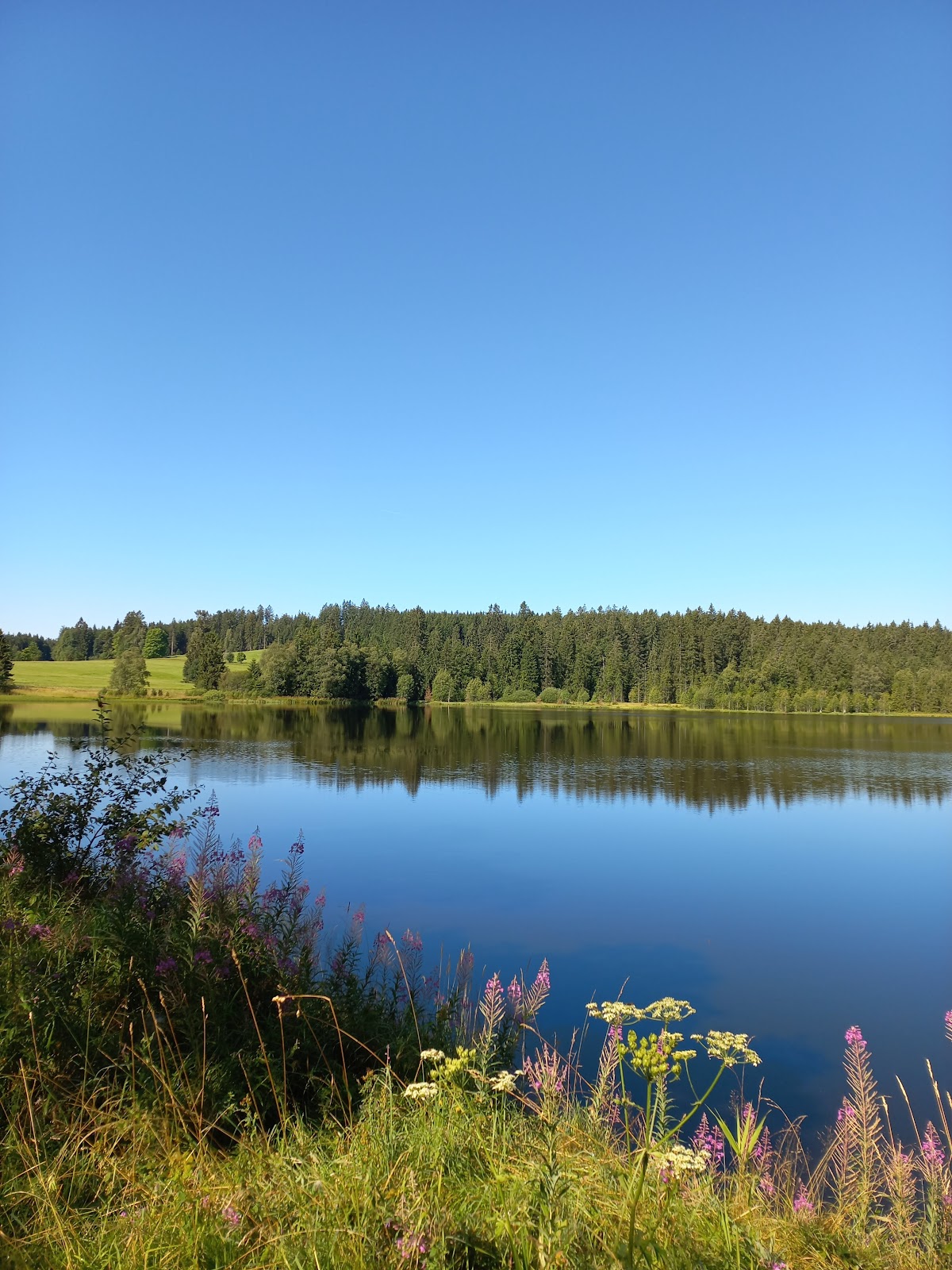
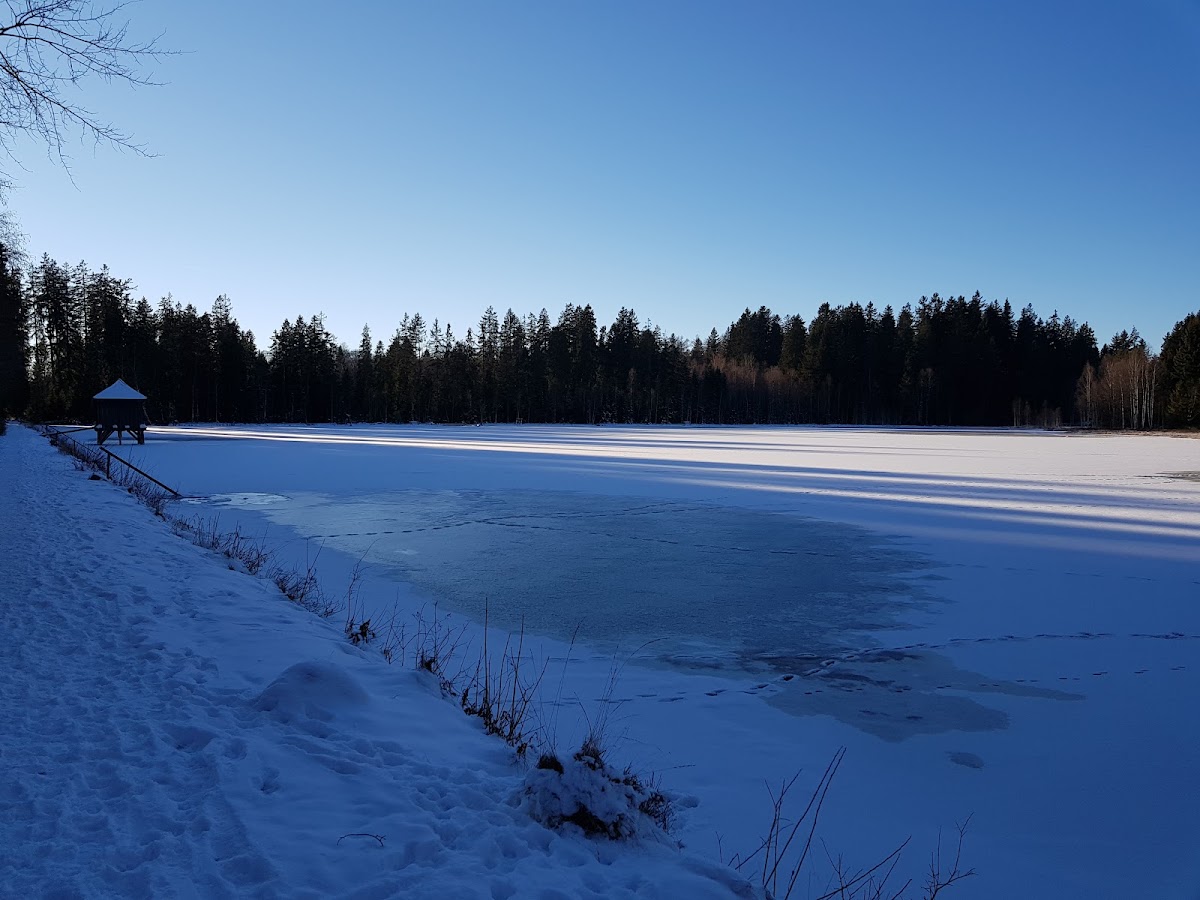
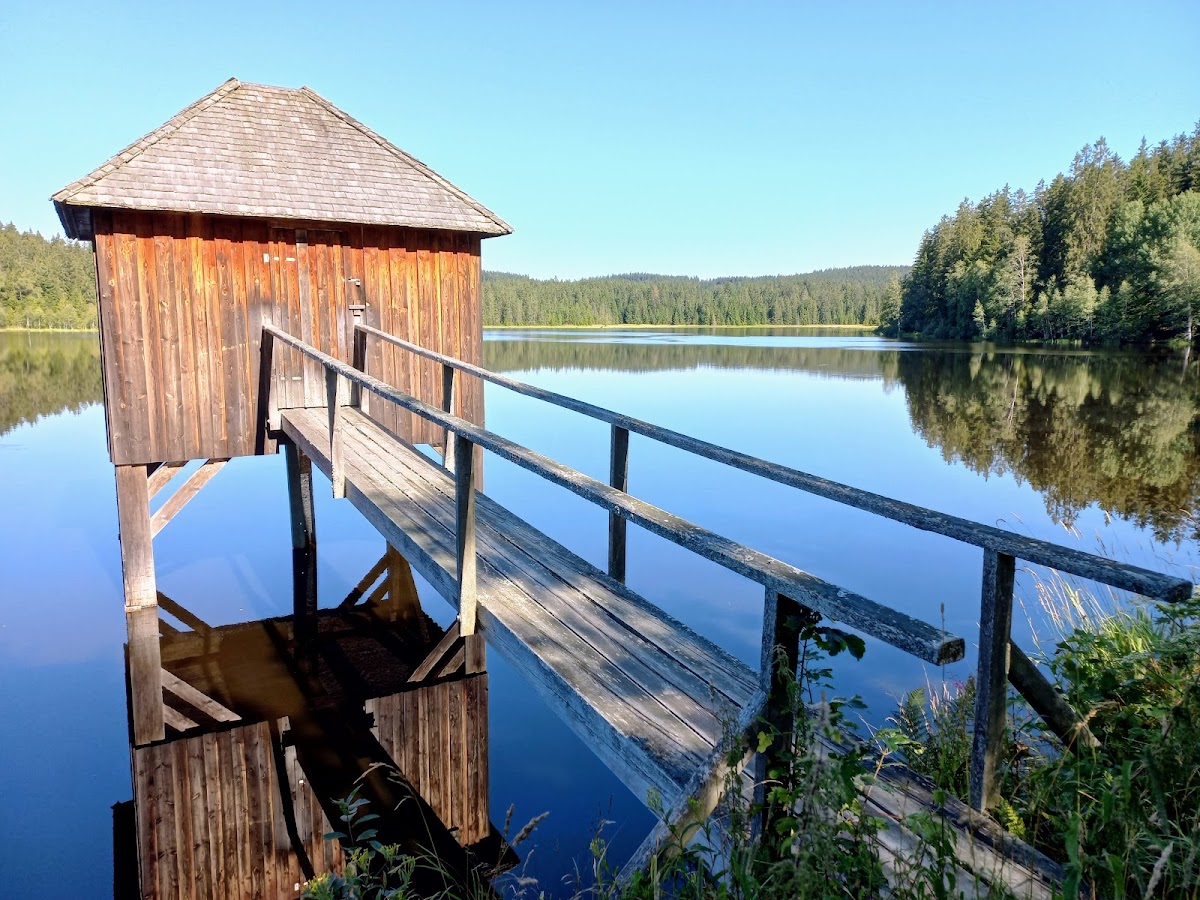
Two ponds belong to the Rosenhof estate. The lower pond is the smaller of the pair and is used as a public bathing pond. The wider estate also contains forestry administration buildings and a sawmill in subsidiary structures, reflecting the continuing connection between Rosenhof and the surrounding woodland.
Nearby sites