Reideben Castle: A Renaissance Castle in Wolfsberg, Austria
Site at a Glance
- Popularity
- Low
- Country
- Austria
- Primary era
- Early Modern
- Eras represented
- Medieval, Early Modern
- Civilizations
- Habsburg, Holy Roman Empire
- Site type
- Domestic
- Remains
- Castle
On this page11 sections
History
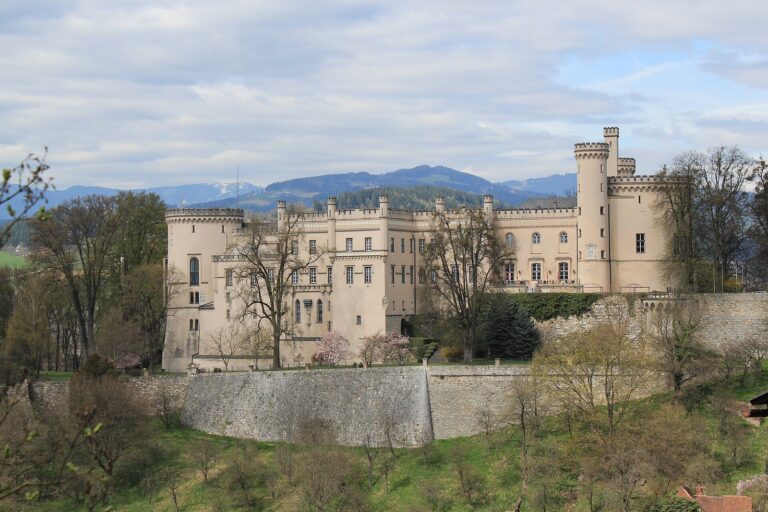
Reideben Castle is a Renaissance castle on the western slope of Hartelsberg in Wolfsberg, Austria. Its architectural character belongs to a European movement that drew on classical models. The estate’s history reaches back to the 14th century, while its present form is probably associated with its late 16th-century owner Alexander von Freyberg.
Farmstead and the name Reideben
In 1354, Niklas der Sax owned a farmstead at St. Urban, beside the church near the present castle. Around 1448, the estate passed to Leonhard von Presing, and the building acquired the name Reideben.
Destruction and Renaissance rebuilding
Reideben was largely destroyed in 1480 during the Turkish Wars, conflicts between the Ottoman and Habsburg powers. In 1580, David von Presing sold the estate to Alexander von Freyberg, who probably gave the castle its present form. Alexander’s son Helfried sold it in 1629 because of his Protestant faith.
Ecclesiastical and private ownership
After several changes of ownership, Reideben passed to the Diocese of Bamberg in 1672. A diocese is an ecclesiastical district administered by a bishop. Count Otto von Dernbach acquired it in 1686, followed by the cathedral chapter of St. Andrä in 1693, a body of clergy associated with a cathedral.
In 1808, the estate passed with the chapter’s other property to the Imperial-Royal Religious Fund, a state-administered fund for religious purposes. Anton von Pettenkofen bought Reideben at auction in 1819, and Josef Rainer von Harbach acquired it at auction in 1835. Hugo Henckel von Donnersmarck bought the castle in 1846, and it has remained in his family’s ownership.
Remains
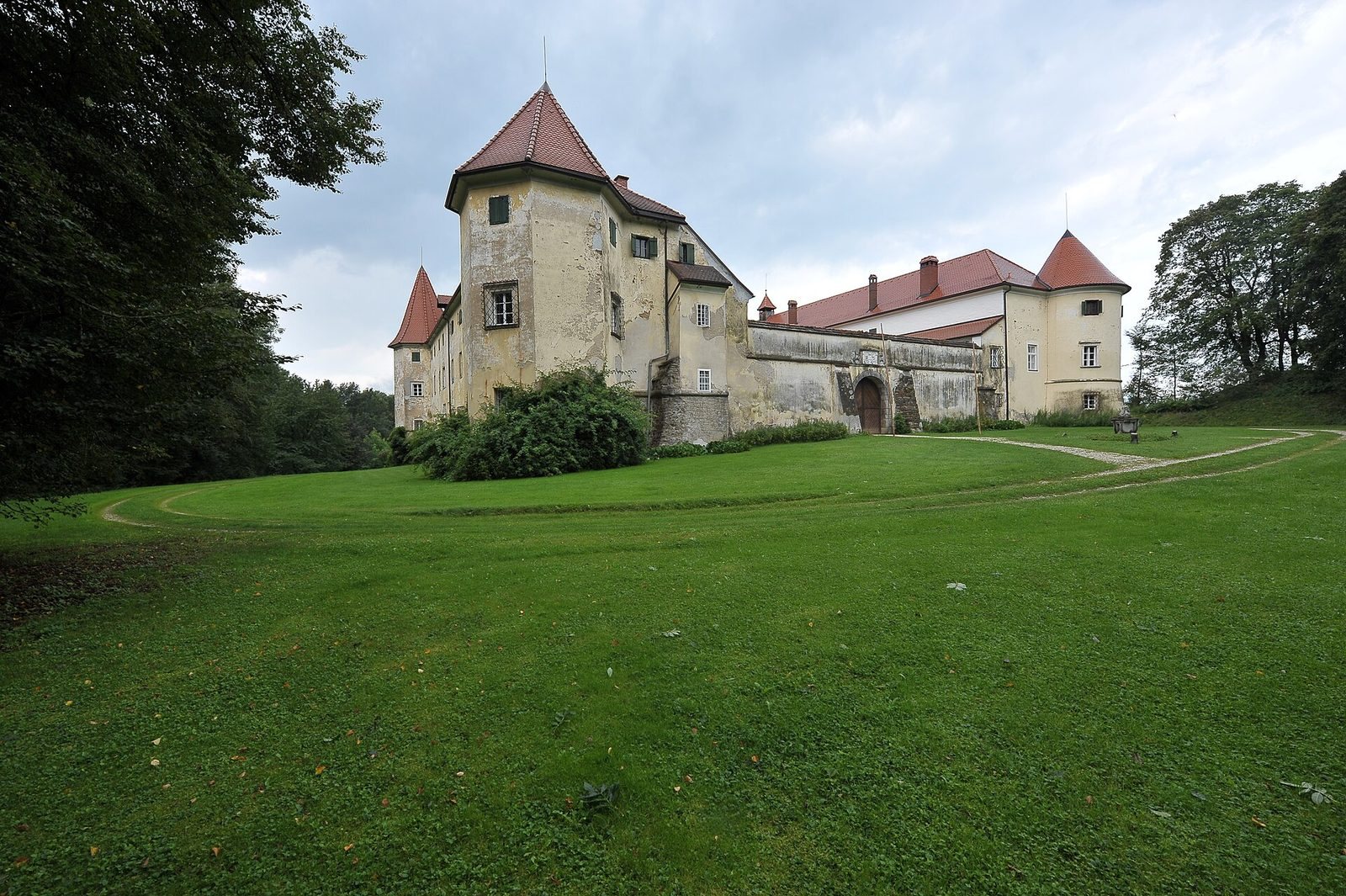
The Renaissance castle is arranged around a rectangular courtyard enclosed by three wings and a wall on the east side. Its four corner towers have different shapes, and the complex incorporates carved stonework and heraldic features from more than one building.
Castle and courtyard
Wings and towers
The building has three two-storey wings with an attic storey, an upper level above the main floors. At the corners stand a square tower to the northwest, octagonal towers to the southwest and southeast, and a round tower to the northeast. When the building took the name Reideben around 1448, it comprised the present south wing and half of the west wing. A wall then enclosed the remaining side of the courtyard.
Entrances and galleries
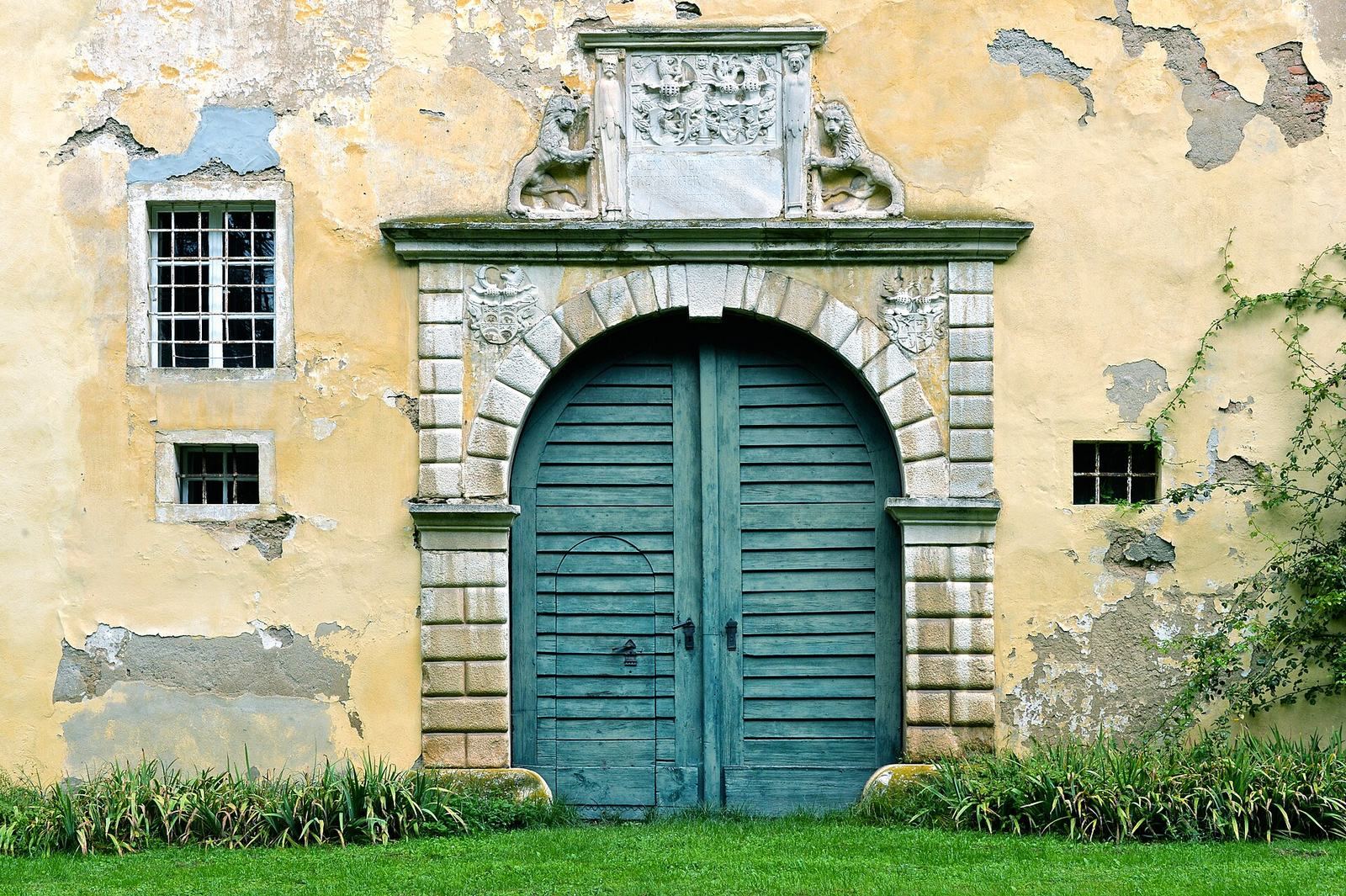
A round-arched portal made of carefully cut stone blocks stands on the south side and bears the date 1591. Above it, two lions support the arms of Alexander von Freyberg and Anna von Kronegg. The spaces between the arch and its frame display the arms of their mothers’ families, Resch von Gerolzhausen and Häll von Suntheim. Above the east gate, two lions dating to around 1600 support the combined arms of Henckel and Auersperg. The lions came from Schloss Himmelau. Within the courtyard, galleries of arches run along the ground floor, while the upper floor has twice as many arch openings.
Carved stonework
Transferred carvings
Carved stones at the castle include an overdoor panel, figures of the four Evangelists (the traditional authors of the Gospels), and a figurative corbel, a projecting stone support, brought from Waldenstein. Heraldic stones bearing the arms of Häll-Hermann and Herberstein were made around 1580 and came from Schloss Himmelau.
Bishop’s Stone
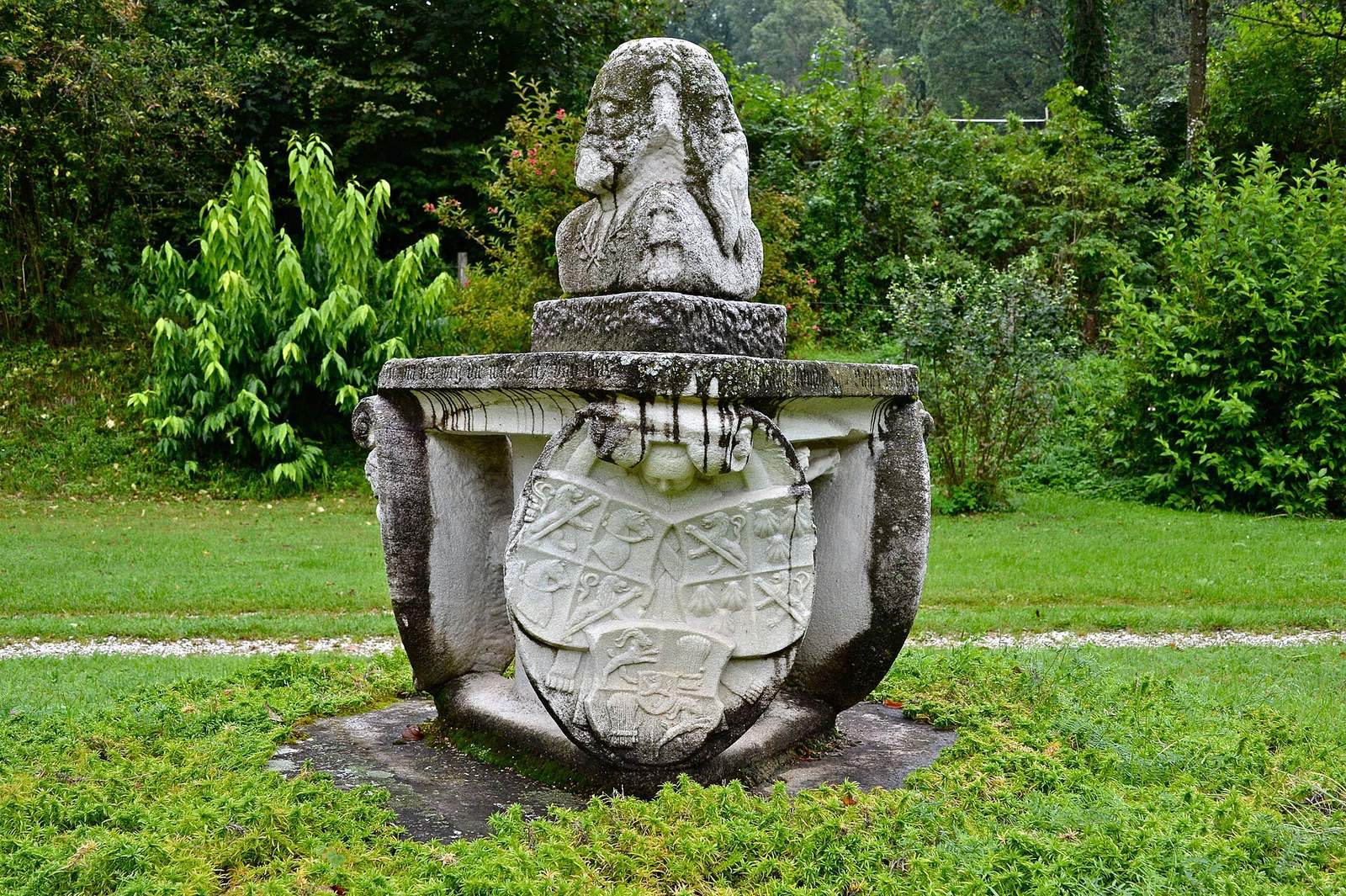
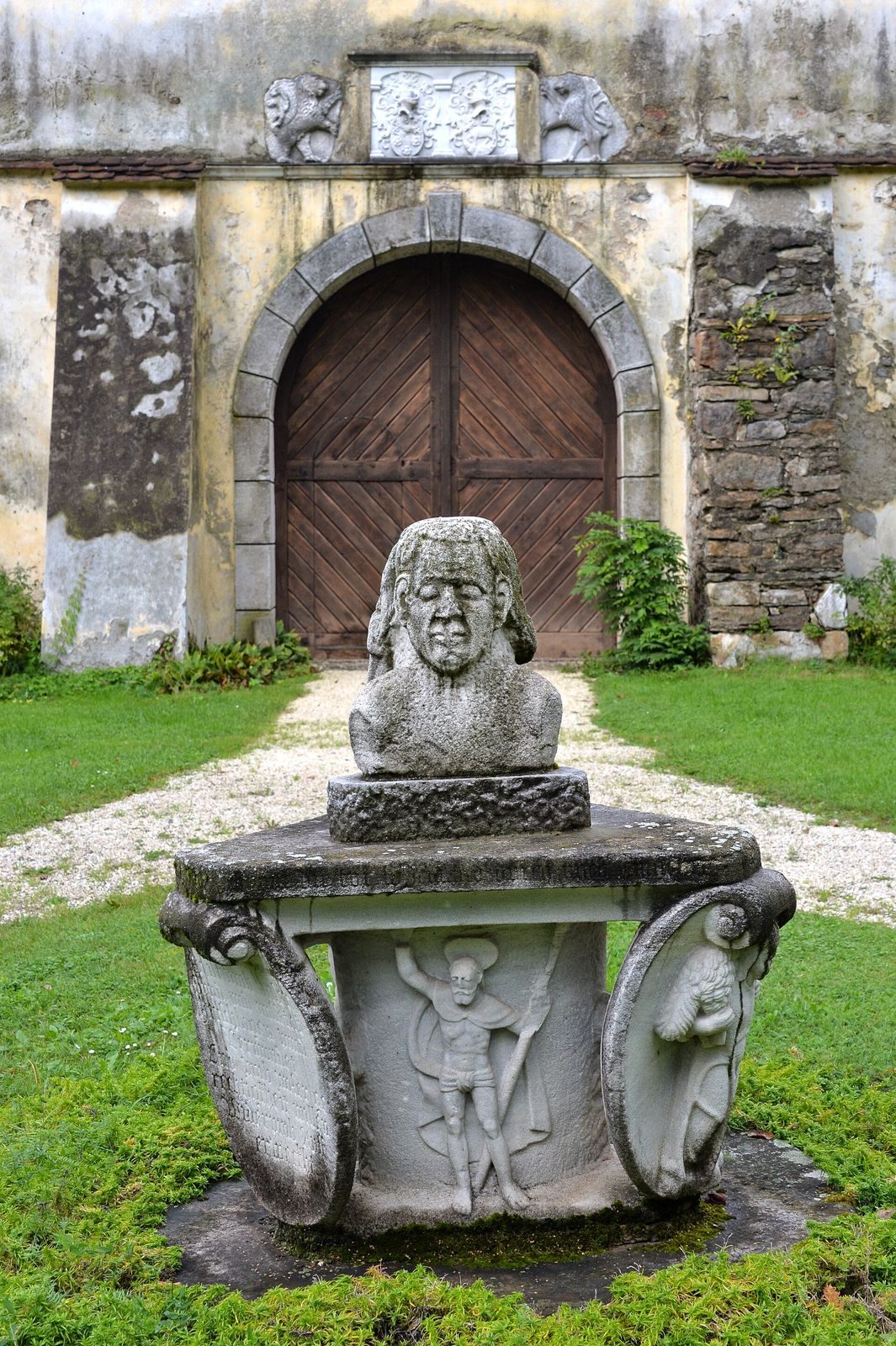
The so-called Bishop’s Stone stands before the east gate, while a replica is in Wolfsberg Park, where the original formerly stood. A triangular slab rests on a stone cylinder and three heraldic cartouches, framed displays for coats of arms. The slab carries a stone sculpture of three heads and the arms of Bamberg bishops Johann Georg I Zobel von Giebelstadt and Martin von Eyb. It also bears the arms of Johann-Friedrich Hoffmann, Baron von Grienpichl, a vicedom, an administrative official whose duties in an ecclesiastical territory could include managing its temporal affairs.