Raab Castle: A Moated Castle in Austria
Site at a Glance
- Popularity
- Low
- Country
- Austria
- Primary era
- Early Modern
- Eras represented
- Early Modern
- Civilizations
- Duchy of Bavaria, Holy Roman Empire
- Site type
- Military
- Remains
- Castle
On this page5 sections
History
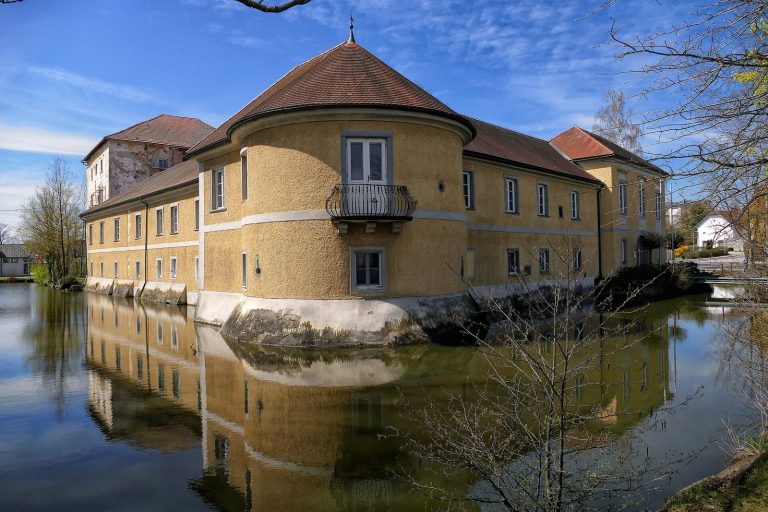
Raab Castle is a moated castle in Raab, Austria, largely rebuilt in the early sixteenth century. It served as the seat of a lordship and later housed a district court.
Medieval records and transfers
The settlement of Raab was first recorded in 955. By 1145, the noble family de Rurippe held an estate there; a record names Ruetbertus de ruhrippe. The Rurippers followed the lords of Wesen and probably died out in the thirteenth century.
An agreement dated 1 May 1300 transferred the Rurippe estate to the Waldeck family. The lordship passed to the Trauners in 1382, and in 1387 Hans Aichberger of Aichberg near Wesen inherited the castle and the Raab Hofmark, a manorial estate that could hold local jurisdictional rights. Amalai Aichberger’s marriage to Lazarus Messenpeck in 1443 brought the property to the Messenpeck family. When their son Hanns died without an heir in 1495, Raab passed to Nikolaus von Sandizell. Duke George of Bavaria confiscated it the following year and sold it in 1500 to Ludwig, Bishop of Chiemsee.
Rebuilding and changes of ownership
Bishop Sebastian Cataneus had the castle largely rebuilt at the beginning of the sixteenth century. Administrators managed it afterward. Count Johann Veit von Maxlrain acquired the Raab Hofmark in 1685. It passed by inheritance to the Bavarian barons von Neuhaus in 1704, then by sale to the counts Tattenbach-Rheinstein in 1717. The Tattenbachs, whose principal seat was at St. Martin, combined Raab with the lordships of Einburg and St. Martin under a family entail, an arrangement limiting the estate’s transfer outside a designated family line.
The Tattenbach counts died out in 1821, after which the Arco-Valley counts acquired Raab. The order of these transfers is unclear: the Arco-Valley counts are also said to have sold the castle, without its associated land, to Raab innkeeper Obermayr in 1807. After Obermayr went bankrupt, hatmaker Völkl acquired the castle at auction in 1826.
District court and restoration
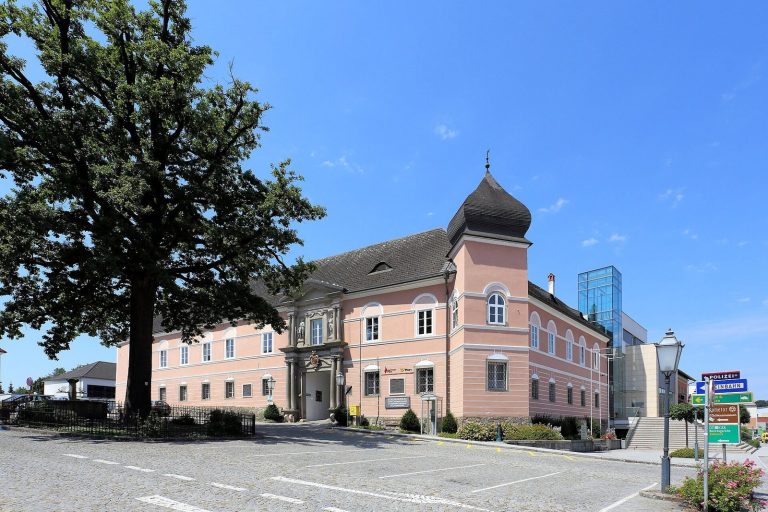
The municipality of Raab bought the castle in 1849 to house a newly established district court, and the property passed to the state in 1850. A comprehensive restoration in 1983–1985 repaired the deteriorated building and renovated its moat. The district court closed in 2002, and the castle is now privately owned by the Pilstl family.
Remains
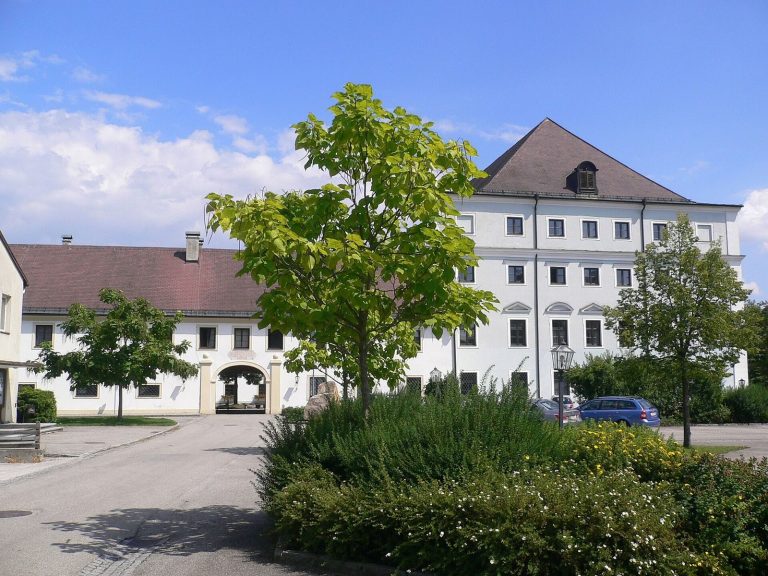
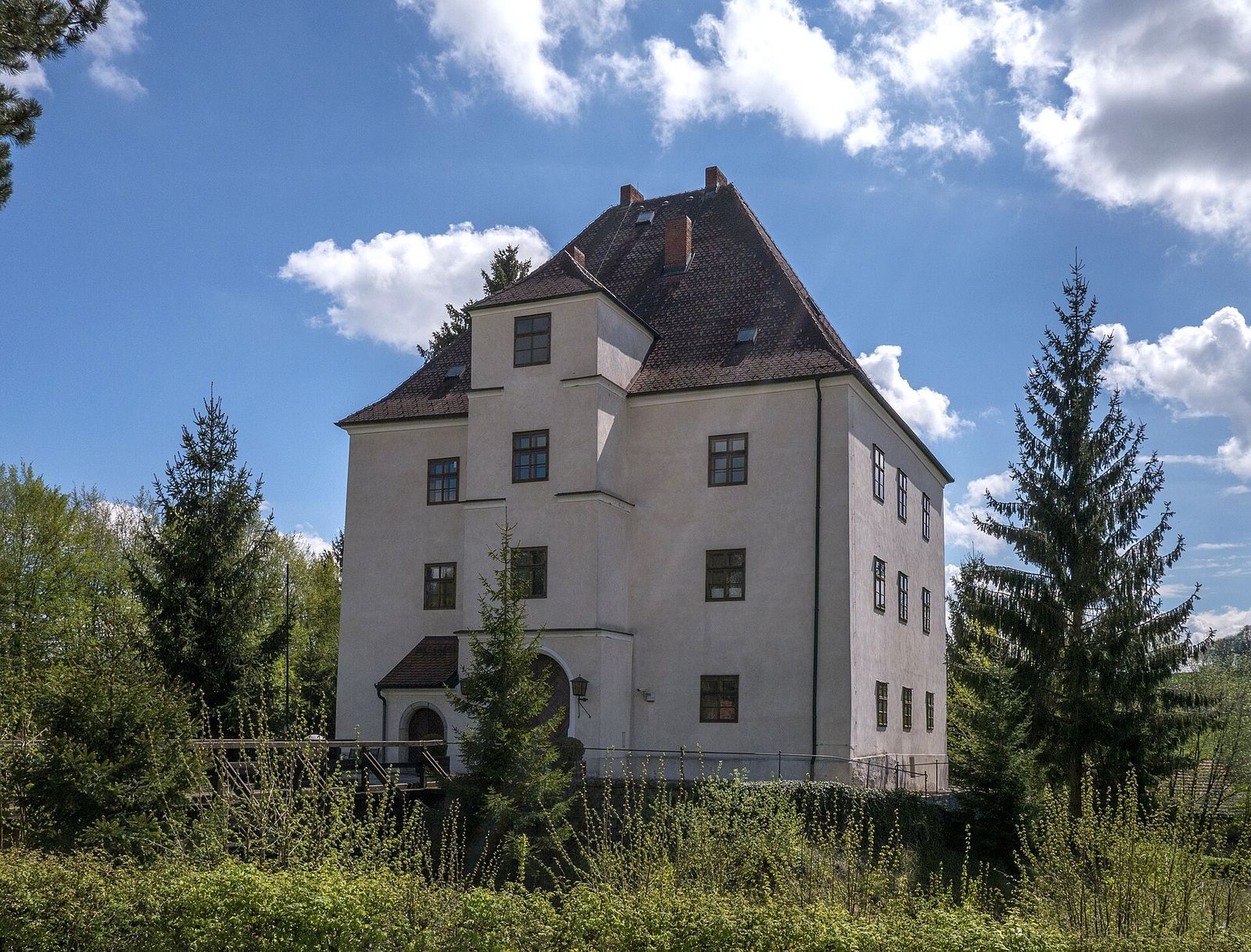
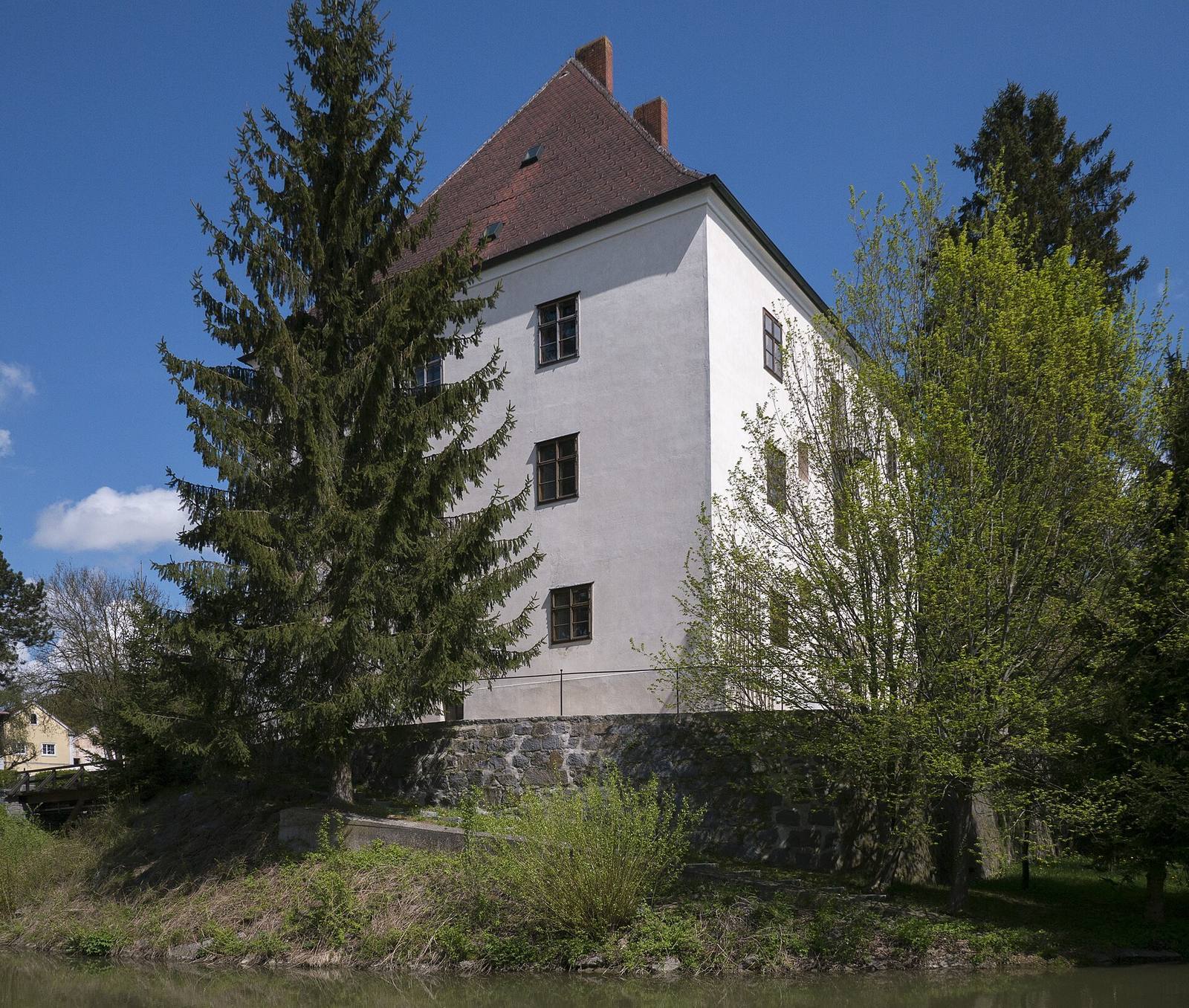
The largely sixteenth-century castle is a well-preserved, three-storey rectangular building with a hipped roof. It occupies almost the entire hill enclosed by its moat. A wooden bridge crosses the moat to the entrance, while a projecting stair tower was added later on the north facade.
The original entrance lies to the left of the present gate. The ground-floor rooms dating from the sixteenth century have vaulted ceilings. Removal of the original bay windows left the facades plain. The moat was renovated during the restoration of 1983–1985.