Luitpoldshöhe Hunting Lodge: A Royal Retreat in Bavaria
Site at a Glance
- Popularity
- Medium
- Country
- Germany
- Primary era
- Modern
- Eras represented
- Modern
- Civilizations
- German, Kingdom of Bavaria
- Site type
- Domestic
- Remains
- Elite Residence
On this page5 sections
History
A royal hunting lodge
The Luitpoldshöhe Hunting Lodge is a royal hunting retreat near Rohrbrunn in Bavaria, Germany. Prince Regent Luitpold had it built in 1889 as his principal base in the Spessart. A prince regent governs on behalf of a monarch unable to rule. Luitpold held that role from 1886 until his death in 1912, first acting for his legally incapacitated nephew, King Ludwig II, and then governing for Ludwig’s brother Otto I, who was considered unable to rule because of mental illness.
Luitpold’s public appearances and hunting helped make him popular. Hunts, particularly those for wild boar, also gave him opportunities to meet local people. He visited poor forest farmers and donated to children in nearby villages. Royal senior building official Max von Siebert designed the lodge in the Franconian half-timbered style, and Würzburg master builder Karl Buchner supervised its construction, using craftsmen and artists from Würzburg.
The building was relatively modest because state finances had been heavily burdened during Ludwig II’s reign. Its cost of 37,000 marks was regarded as an expression of Luitpold’s simplicity in contrast with Ludwig’s extravagance.
Forestry residence and vacancy
After Bavaria’s monarchy ended in 1918, the lodge passed to the Bavarian Forestry Administration. From 1920 to 1996 it was the official residence of the Rohrbrunn forestry director. Following the forestry office’s closure, its districts were reassigned to Altenbuch, Marktheidenfeld, and Rothenbuch. The lodge then stood vacant and deteriorated for about ten years, while its grounds went unused.
Debate over the lodge’s future
In spring 2006, the Bavarian palace administration said it had no interest in retaining the lodge, judging its artistic and historical value to be low. Local residents and politicians protested, recalling Luitpold’s popular presence and charitable acts. That April, members of the Bavarian parliament urged that the building not be sold and that a new use be found. They argued that it represented the region’s relationship with Bavaria and that it and the Pompejanum in Aschaffenburg were the only significant buildings associated with the Wittelsbachs, Bavaria’s ruling dynasty, in Lower Franconia.
In 2007, the palace administration announced plans to sell the lodge together with a neighboring forestry farm built between 1957 and 1961, with a prospective buyer’s intended use to be considered. A private buyer acquired the lodge in 2011 and planned to live there with his family.
Remains
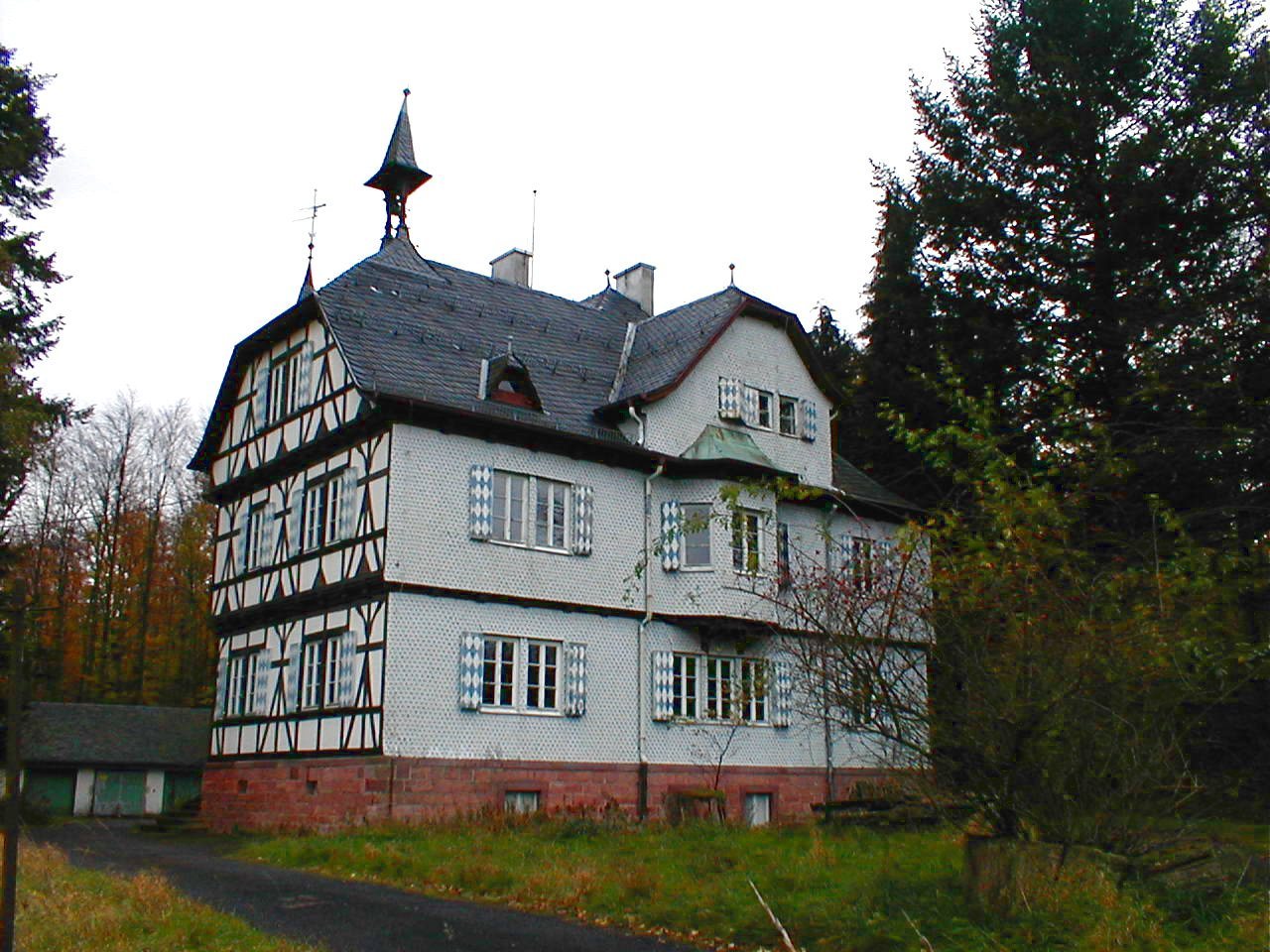
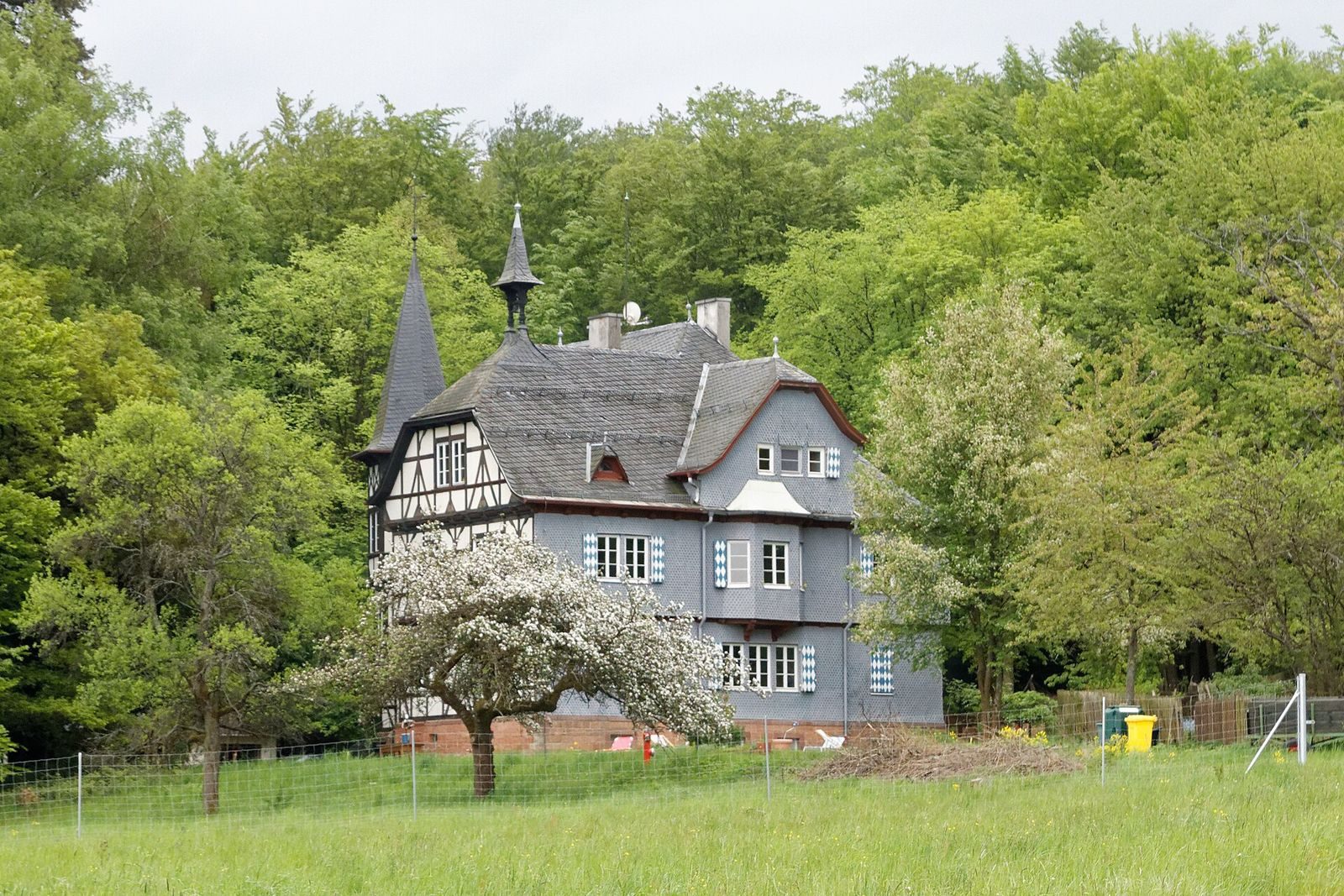
The lodge is a substantial Franconian half-timbered building, constructed with a timber frame and infill between the timbers. It has 19 rooms, almost all wood-paneled, and its weather-facing side is covered with shingles. A projecting bay with a tower roof and a roof turret containing a bell distinguish the exterior. The bell was originally rung when Luitpold arrived and departed. The building has about 400 square metres of usable floor area, and its grounds cover 26,600 square metres. It belongs to Weibersbrunn municipality and lies within an exclave in the unincorporated Rohrbrunner Forest.