Schloss Liebieg: A Medieval Lower Castle and Neo-Gothic Residence in Germany


Site at a Glance
- Rating
- 3
- Popularity
- Very Low
- Country
- Germany
- Primary era
- Medieval
- External website
- Open
- Eras represented
- Medieval, Modern
- Civilizations
- Holy Roman Empire, Kingdom of Prussia
- Site type
- Domestic
- Remains
- Castle
On this page12 sections
History
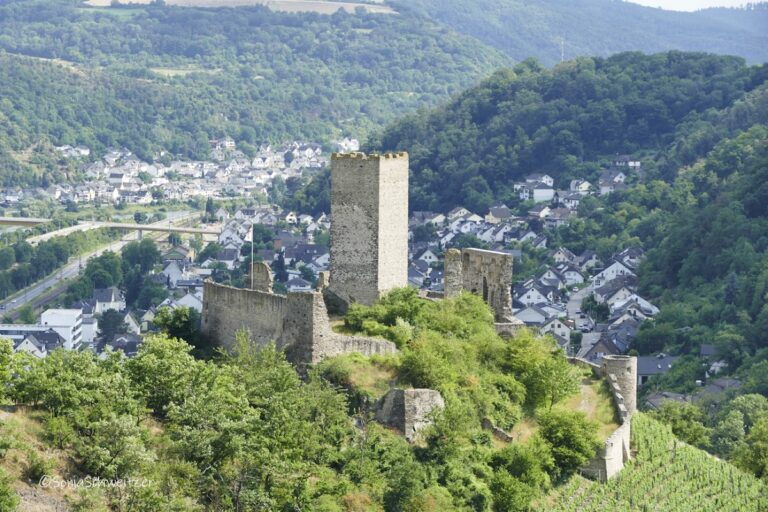
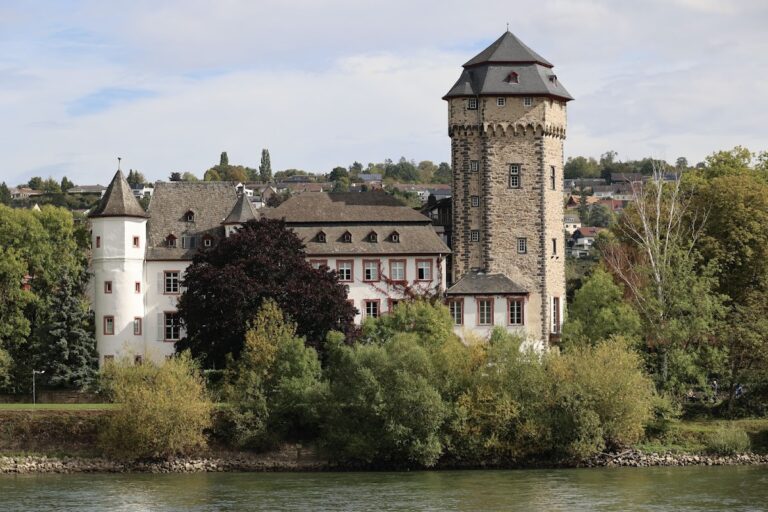
Schloss Liebieg is a medieval lower castle in Kobern-Gondorf, Germany, probably built between 1255 and 1272 and transformed into a Neo-Gothic country residence in 1859–1860. Also known as the Niederburg, it stands on the Moselle opposite the upper castle known as Schloss Gondorf.
Medieval origins and noble ownership
The knight Marsilius von Gondorf probably commissioned a castle on the site between 1255 and 1272. He served as Schultheiß, a local municipal or judicial official who could represent a territorial lord, in Trier and Münstermaifeld. A member of the Koblenz patrician family von der Arken, Marsilius acquired the complex in either 1322 or 1336.
From 1493 to 1762, the castle belonged to the Eifel noble family Muhl von Ulmen. It then passed by inheritance to the von Hees family. At the end of the eighteenth century, the French administration nationalized the castle, which was already in ruins, and sold it at auction to the Koblenz merchant Haßlacher. In 1830, ownership passed to the Koblenz banker Simon Clemens.
The Clemens and Liebieg families
Johann Peter Clemens commissioned the Cologne architect Vincenz Statz to remodel the castle in 1859–1860 as a Neo-Gothic country residence. Neo-Gothic architecture adapts forms associated with medieval Gothic buildings. Around 1900, the von Liebieg family added a Neo-Romanesque extension, reviving the forms of Romanesque architecture.
The castle entered the von Liebieg family through Johann Peter Clemens’s daughter Angelika, who married the Bohemian-born Freiherr and Reichsrat Theodor von Liebieg in 1879. A Reichsrat was a member of a state council or upper legislative body in the Habsburg political context. The property later acquired the name Schloss Liebieg.
The von Liebieg family had been ennobled in 1868 and became one of Europe’s wealthiest families. Under Theodor’s younger brother Heinrich von Liebieg, its industrial enterprise, which included textile, porcelain, chemical, and mechanical-engineering factories, became the largest in the Habsburg monarchy. The family also collected art and supported the arts. Theodor and Angelika belonged to and supported the Rhenish Historical Association, a society of Rhenish nobles and propertied bourgeoisie that sought to strengthen Rhenish identity in the Prussia-dominated Rhineland.
Archaeology, decline, and heritage protection
Angelika von Liebieg was an active amateur archaeologist and collected medieval artworks. Excavations in the castle park from 1878 to 1890 uncovered about 1,400 graves belonging to a Roman-Germanic mixed population from the Migration Period and the early Middle Ages. The Migration Period refers broadly to the late Roman and early medieval centuries, when major movements and settlements of peoples took place across Europe.
After the family’s economic decline, particularly following the expropriation of its properties in the former Czechoslovakia, Schloss Liebieg passed through changing uses. Much of Angelika’s collection of excavated objects and artworks from the thirteenth to the eighteenth century was sold from the 1930s onward. Further grave goods entered the Wilhelm Hack Museum in Ludwigshafen as the “Gondorf Grave Find,” while the remaining collection and interior furnishings entered the art and antiques trade in 1972. Since the early 1990s, the privately owned complex has been used for events and for presenting antiques, modern furniture, and art. Ownership changed again in 2019.
A Neo-Gothic chapel built in the park in 1892 originally served as the von Liebieg family burial chapel. In 2006, its new owner sought permission to demolish it because renovation costs greatly exceeded the property’s income value. The Administrative Court and Higher Administrative Court of Koblenz prohibited demolition. In 2010, Germany’s Federal Constitutional Court, the country’s highest court for constitutional matters, ruled that preventing demolition to protect the monument was lawful. Schloss Liebieg is protected under the heritage-protection law of Rhineland-Palatinate and appears in the state monument register.
Remains
The surviving complex combines medieval castle fabric with the Neo-Gothic alterations of 1859–1860 and the Neo-Romanesque extension added around 1900. Its principal medieval building faces the Moselle, while the park contains the burial chapel and the archaeological area where the graves were excavated.
Castle buildings
Medieval main building and tower
Before the nineteenth-century remodeling, the medieval complex consisted of a three-story main building above a basement, facing the Moselle. A narrow square tower was attached directly to it. During the 1859–1860 work, the tower gained an additional story, a hipped roof that slopes upward from all sides, and a gallery.
Neo-Gothic and Neo-Romanesque additions
The remodeled residence retains the medieval structure while incorporating Neo-Gothic forms commissioned by Johann Peter Clemens. Around 1900, the complex was enlarged with a Neo-Romanesque extension. Together, these phases give the castle its combination of medieval, Neo-Gothic, and Neo-Romanesque fabric.
Park archaeology and collections
Burial grounds
Excavations carried out in the park between 1878 and 1890 revealed about 1,400 graves. They belonged to a Roman-Germanic mixed population and date from the Migration Period and the early Middle Ages. Grave goods from the burial grounds became associated with the “Gondorf Grave Find,” with additional pieces preserved at the Wilhelm Hack Museum in Ludwigshafen.
Art and archaeological objects
The former castle collection included medieval and early-modern handicrafts, sculptures, and stained glass dating from the thirteenth to the eighteenth century. Angelika von Liebieg’s collection also contained excavated finds from the park and medieval artworks. Much of this material was dispersed from the 1930s onward, and the last pieces of the collection and the interior furnishings entered the art and antiques trade in 1972.
Family burial chapel
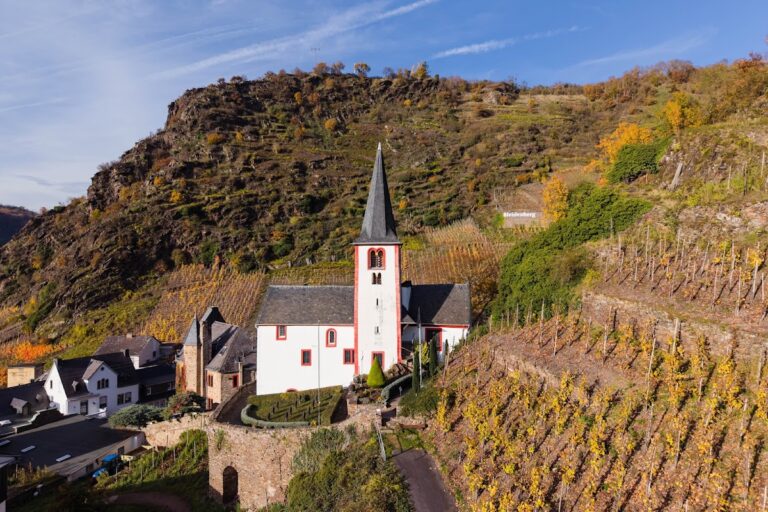
The Neo-Gothic chapel in the castle park was built in 1892 as the von Liebieg family’s burial chapel. Its survival was secured through the 2006–2010 legal proceedings, when Germany’s Federal Constitutional Court upheld the prohibition on demolition under heritage-protection rules.