Schloss Kellenberg: A Water Castle near Jülich, Germany
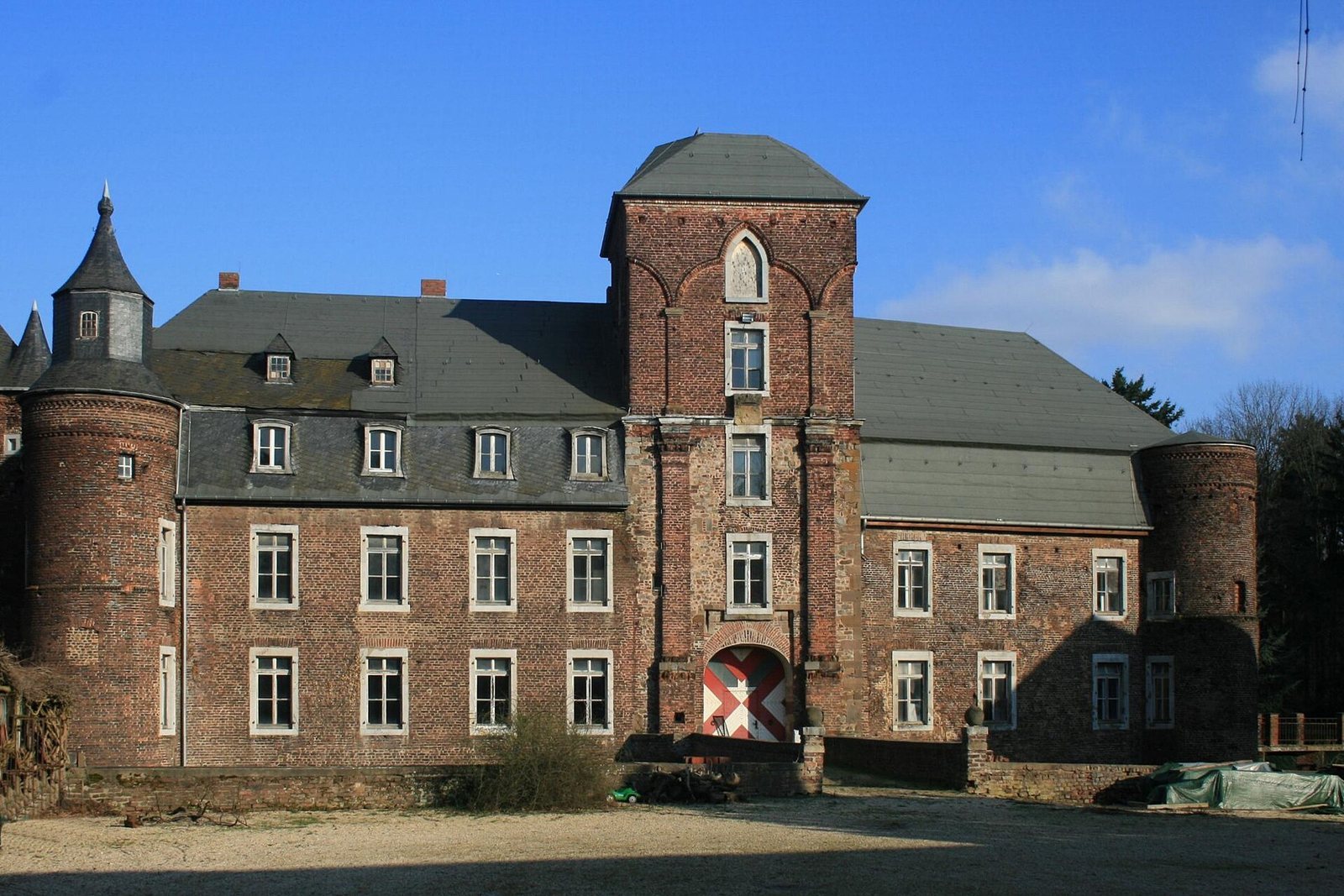
Site at a Glance
- Popularity
- Medium
- Country
- Germany
- Primary era
- Medieval
- Eras represented
- Medieval, Early Modern
- Civilizations
- Duchy of Jülich, Holy Roman Empire
- Site type
- Domestic
- Remains
- Castle
On this page7 sections
History
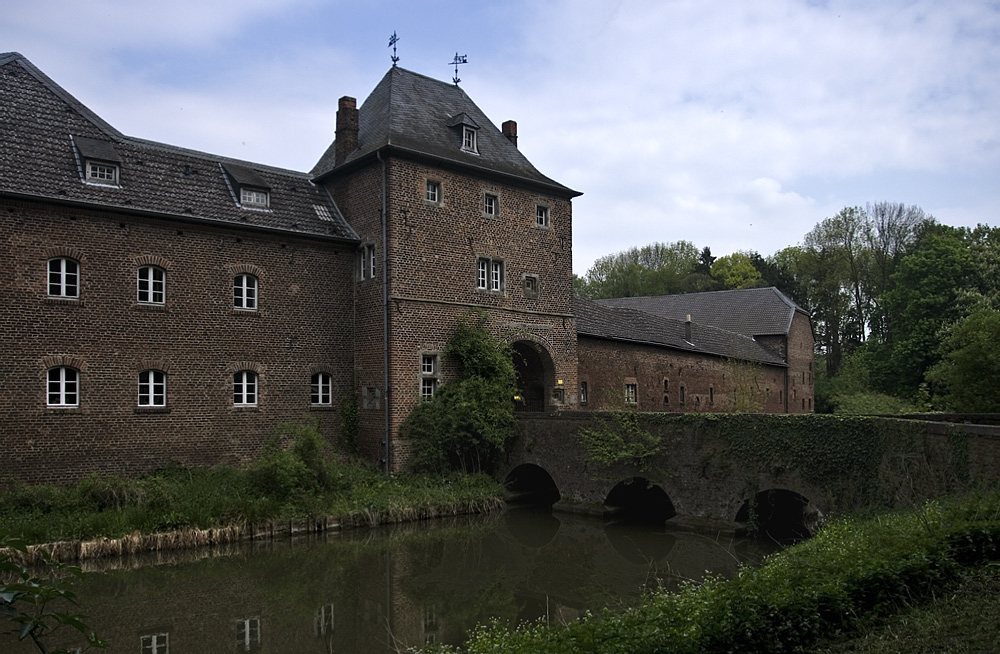
Schloss Kellenberg is a water castle on the Rur at the northern edge of Barmen, a district of Jülich in Germany. Its first known owners were Edmund von Barmen and Gerhard Mulart von Hullhoven. In 1429, Gerhard’s daughter brought the estate by marriage to Wilhelm von Wevelinghoven, hereditary marshal of Cologne. Ownership later passed to Scheiffardt von Merode, under whose family the present complex was built during the fifteenth and sixteenth centuries.
From the Merodes to Jan van Werth
In 1626, Otto Heinrich Waldbott von Bassenheim, who held Kellenberg as a pledge from Wilhelm Scheiffart von Merode, lord of Bornheim, sold the house and estate to Johann Karl von Utenhove. Johann Karl’s son, Johann Ludwig, later incurred debts, and his wife, Francoise de Besancon, sold Kellenberg in 1638 to Johann Graf von Werth, also known as Jan van Werth. An imperial general in the Thirty Years’ War, the European conflict fought from 1618 to 1648, Jan bought the castle for his only daughter, Lambertine Irmgardis.
Lambertine married Winand Hieronymus Reichsfreiherr Raitz von Frentz, a title meaning imperial baron. Winand was the son of the former lord of Schloss Schlenderhan, where Jan had worked as a horse groom in his youth. After Jan’s death, a legal dispute concluded in 1655 with his German estates passing to Lambertine and, through her, to the Raitz von Frentz family. Kellenberg remained with that family until its male line at the estate died out. Lambertine’s descendants continued to live there until April 2022.
The Nulandt memorial
On 27 February 1681, Johann Dietrich Freiherr von Nulandt drowned in the Rur near Kellenberg when his carriage sank in a marsh. He was commandant of Düren and an Amtmann, a territorial administrative official, of Aldenhoven. He also served as a colonel and infantry-regiment commander for Palatinate-Neuburg, a German principality within the Holy Roman Empire. His family erected a large cross in his memory. Vandalism destroyed the original in the early 1970s, and a replica was made accessible to the public on 3 September 2016.
Hoensbroech ownership and later changes
The 1888 marriage of Cunigunde Maria Raitz von Frentz and Clemens Wenzeslaus Graf von und zu Hoensbroech brought Kellenberg into the Hoensbroech family. The family retained ownership until 2009. On 1 April 1992, a fire almost completely destroyed the main castle.
In early 2009, the North Rhine-Westphalia Building and Property Management Agency (BLB) bought the entire castle for €3.1 million, at a price set by an appraisal it had commissioned. The agency wrote off the property’s value in full only months later. Irregularities in other BLB projects led to investigations into bribery, embezzlement, and disclosure of confidential information. Suspicions relating to the Kellenberg purchase gained no support, and the investigation of the sellers was discontinued in 2013. In 2017, former BLB managing director Ferdinand Tiggemann received a seven-and-a-half-year prison sentence from the Düsseldorf Regional Court for bribery and breach of trust in other cases. The Aachen Regional Court dismissed the BLB’s lawsuit against the sellers, which alleged usury, in 2019. After the agency offered Kellenberg for sale through public bidding in November 2022, the Hoensbroech family bought it back in November 2023.
Remains
The castle complex
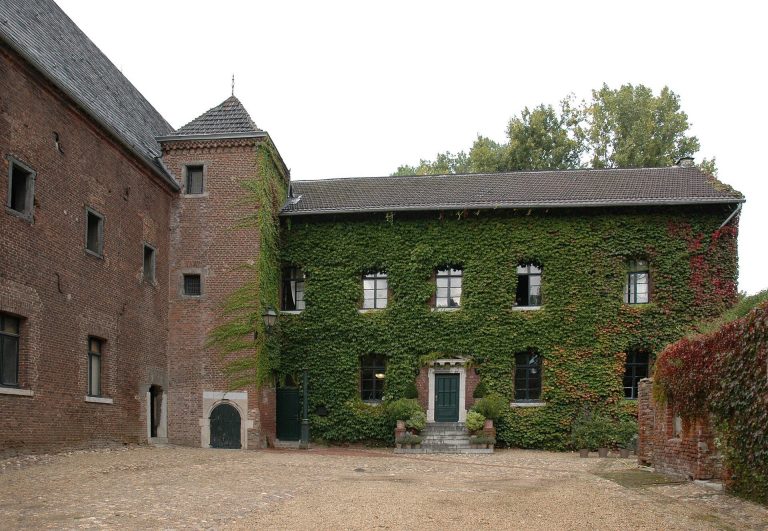
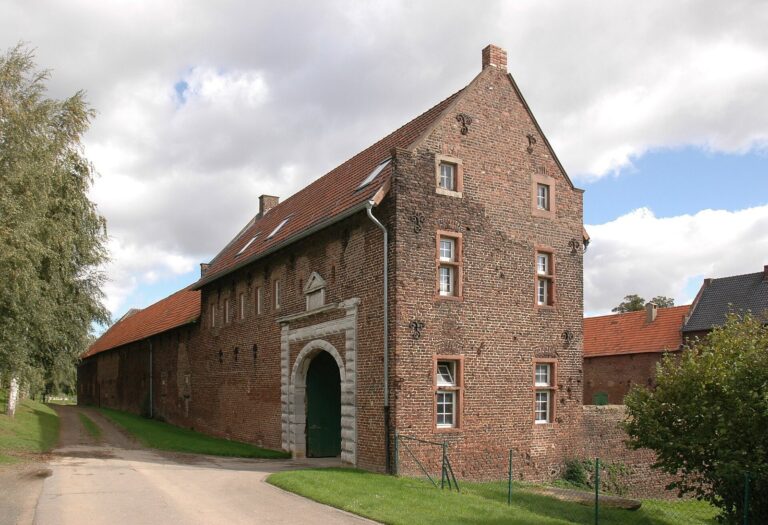
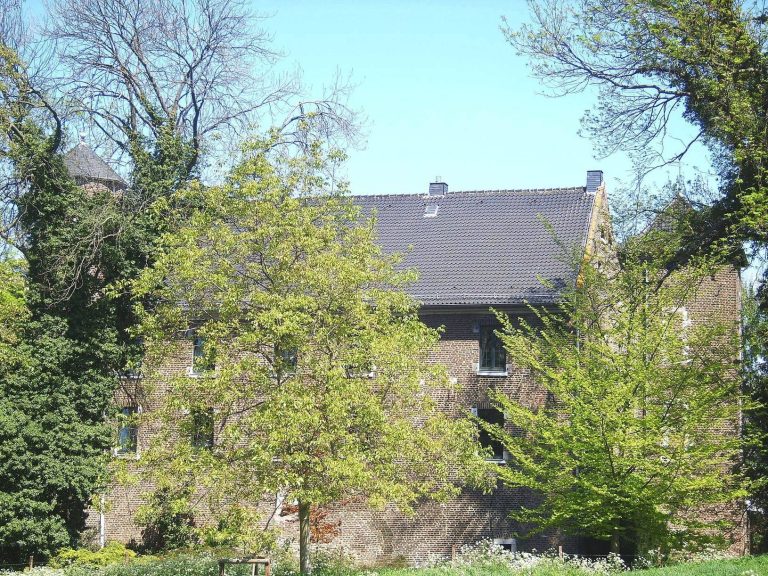
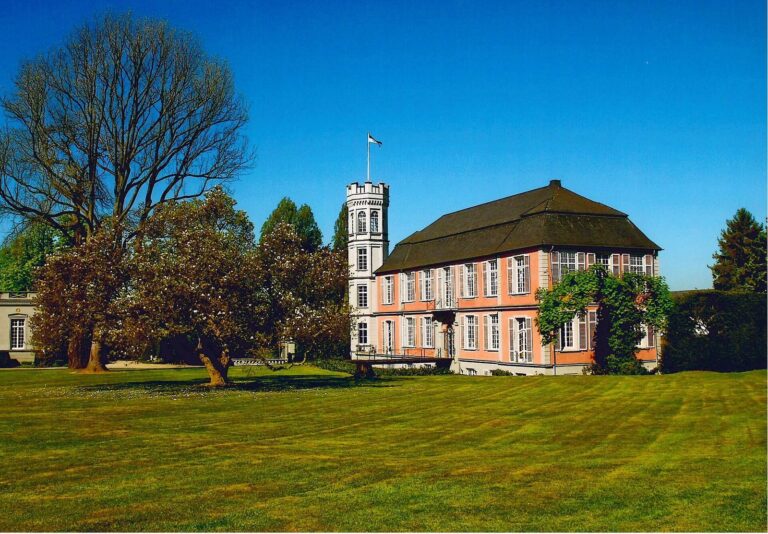
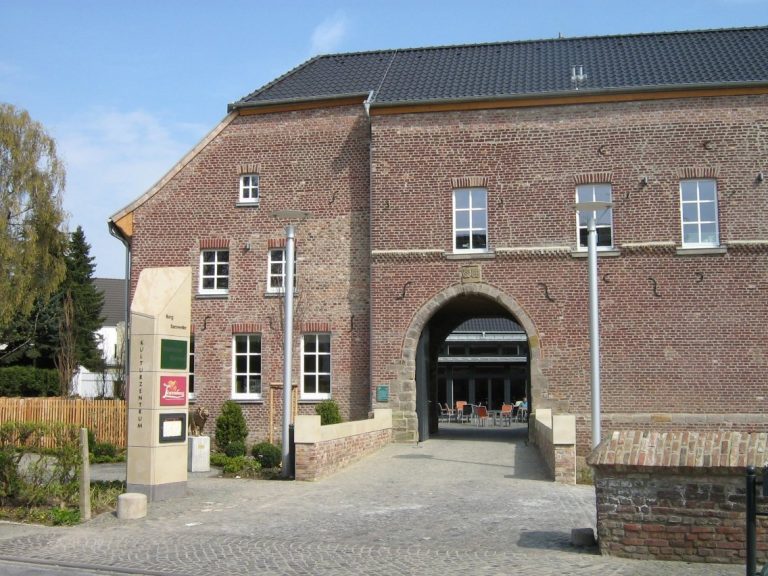
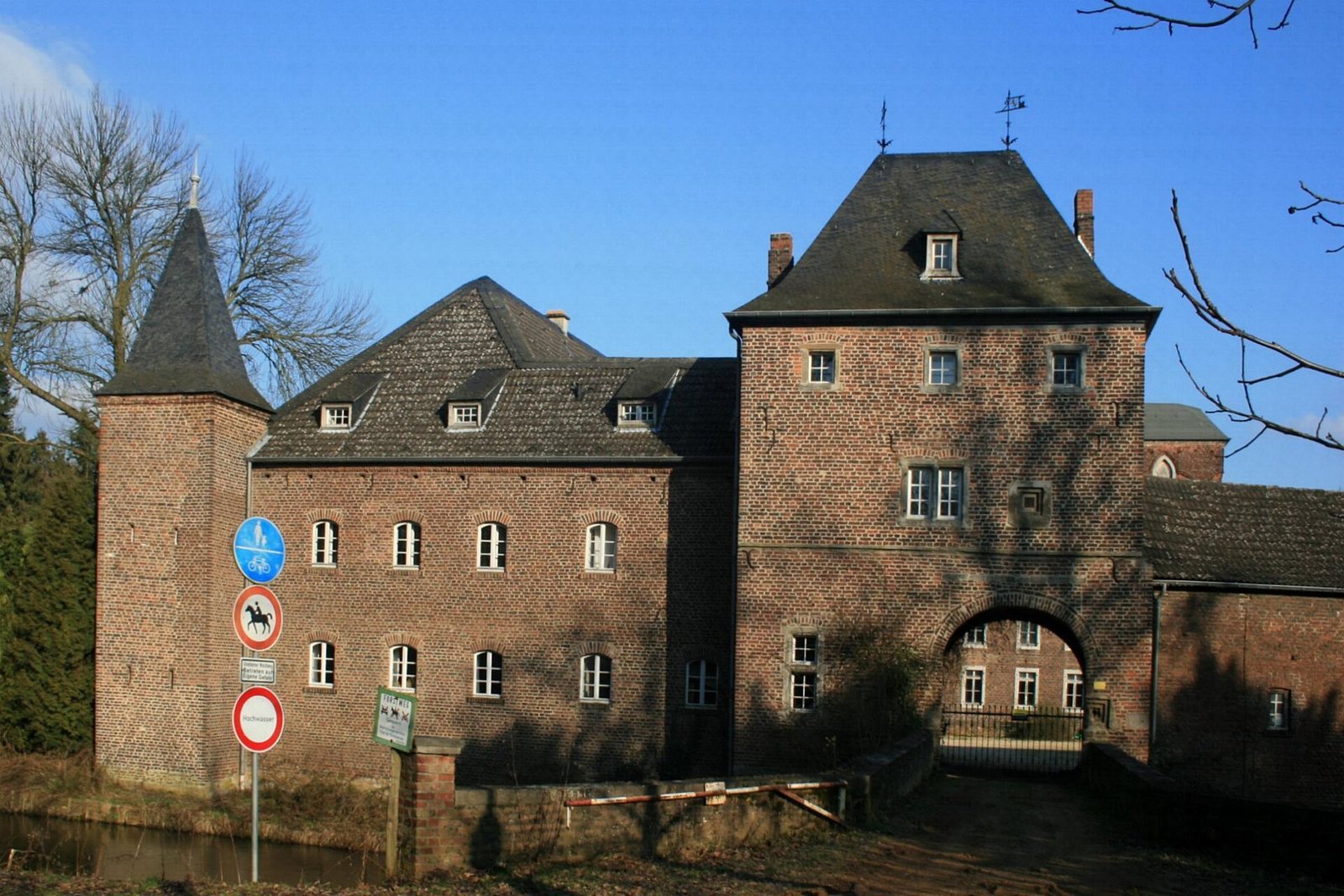
The complex has a main castle with a manor house, enclosed by a moat, and an outer bailey, the outer castle enclosure used for service buildings. Farm buildings stand in the outer bailey, and much of its moat survives.
The Nulandt cross
The present memorial is a replica of the original, a large, elaborately designed cross made of Belgian granite. It stands in Kellenberg Forest near the original location.