Salzau Manor: A Noble Estate and State Cultural Center in Schleswig-Holstein
Site at a Glance
- Popularity
- Medium
- Country
- Germany
- Primary era
- Modern
- Eras represented
- Modern
- Civilizations
- German, Kingdom of Prussia
- Site type
- Domestic
- Remains
- Manor House
On this page12 sections
History
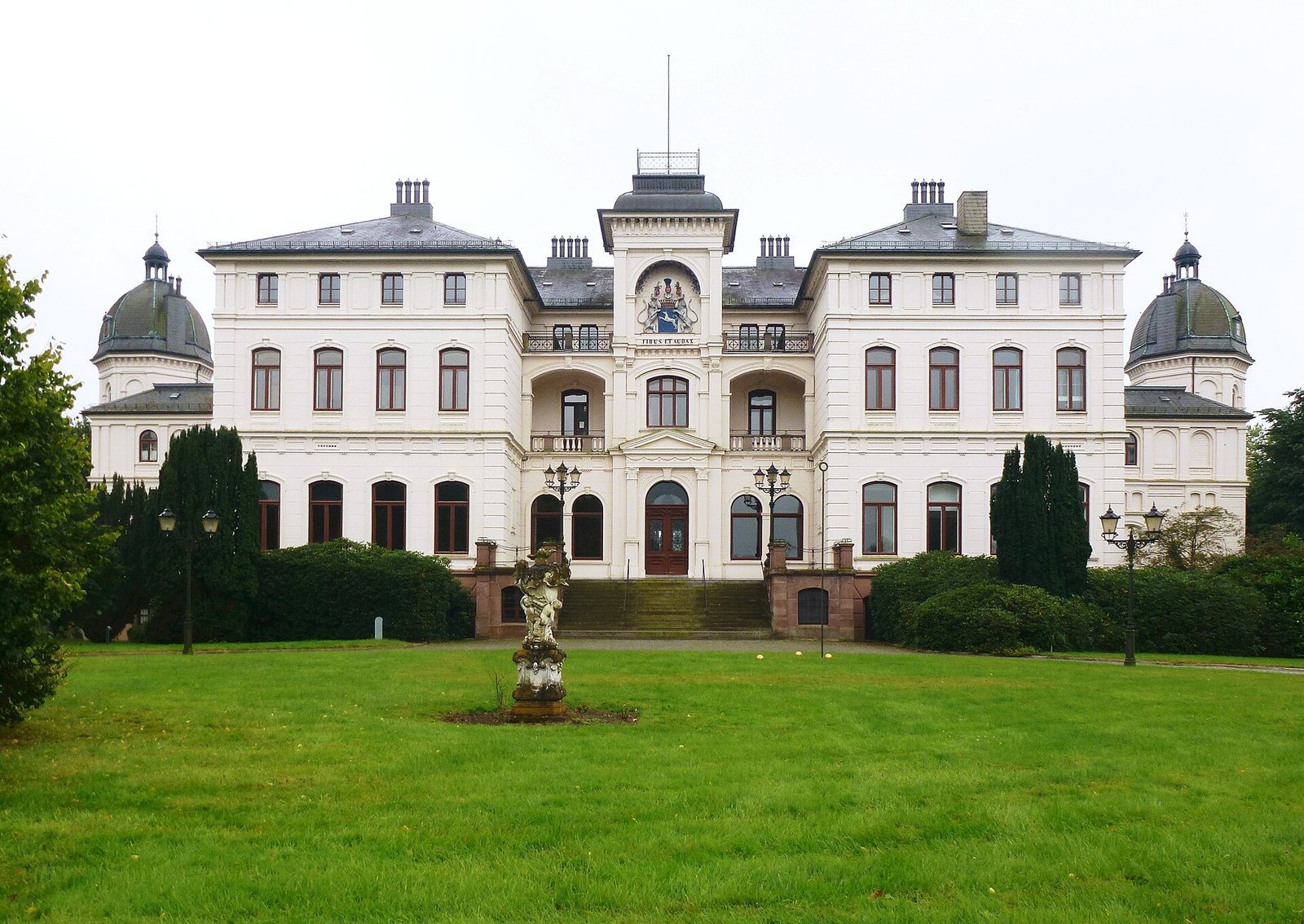
Salzau Manor is a historic knight’s estate in Fargau-Pratjau, Schleswig-Holstein, Germany, first mentioned in the latter half of the thirteenth century. Its name recalls the knight Otto von Salzau. The manor house was rebuilt in 1881 in a revival of Baroque design known as neo-Baroque, while the estate’s later history included postwar housing and use as a state cultural center.
Medieval and early modern estate
The estate enters the historical record when Queen Mechthild, widow of King Abel of Denmark, bequeathed it 30 marks. The Rantzau family, a noble family associated with Holstein, owned Salzau in the sixteenth century. The von Blome family held the estate from the eighteenth into the twentieth century.
After acquiring Salzau in 1759, Wulf von Blome began reshaping the park as an English landscape garden, a naturalistic design less formally geometric than a regular garden. His friend Johann Wilhelm von Stolle helped extend woodland by planting trees and cultivated fruit trees. Salzau also had a patrimonial court, meaning the landowner exercised legal authority over people living on the estate. This role ended when Prussia took over the court system in 1867.
The von Blome manor
In 1819, Count Otto von Blome and his uncle, also named Otto, received Danish feudal-count rank, a title associated with feudal tenure. Otto brought together the family’s holdings across about a dozen estates and rebuilt Salzau’s manor house in 1881. His only son, Count Gustav von Blome (1829–1906), was born to his second wife, Princess Klementine Bagration (1810–1829). Gustav’s sons Arnold (1861–1926) and Johannes, known as Hans (1867–1945), owned Salzau in succession. A large library built up through Wulf von Blome’s collecting was sold at auction in 1929.
Postwar changes and cultural use
After Count Christian von Thun and Hohenstein’s Bohemian estate was expropriated in 1945, he and his wife Josephine, Hans von Blome’s only daughter, lived at Salzau for a year before moving to a nearby secondary residence on the estate. The manor also housed refugees from Pomerania, East Prussia, and Silesia until 1955.
In 1964, construction entrepreneur Wolfgang Maser bought the manor, which needed renovation. His business became insolvent, and the estate was sold through foreclosure in 1971 to a Hamburg real-estate broker whose plan for a sanatorium failed. Three years later, 31 men considered at risk of alcoholism moved into the building, but the home’s manager abandoned the project amid financial difficulties and official objections. Merchant Ottmar Schrayvogel acquired Salzau in the mid-1970s and moved in with his family and 18 Arabian horses in 1976. He later went bankrupt, and the estate remained empty for several years.
Schleswig-Holstein purchased Salzau in 1985 and established the State Cultural Center, which became part of the state’s cultural infrastructure. It hosted seminars, conferences, exhibitions, theatre, fairs, readings, and gatherings for artists. Salzau also served as a venue for the Schleswig-Holstein Music Festival and JazzBaltica. The festival’s international orchestra academy, founded by Leonard Bernstein in 1987, was based there; the estate also supported the Ars Baltica cultural-cooperation project and rehearsals by the state youth orchestra.
The state decided to sell the property in 2010, and the cultural center closed in 2011. Plans for a combined conference and cultural center with a hotel had not achieved sufficient use, and festival events ended at Salzau. A sale agreed in 2013 was reversed the following year. From September 2015 to March 2016, the estate served as an initial reception facility for refugees. In 2017, Schleswig-Holstein sold the manor to a company from Timmendorfer Strand.
Remains
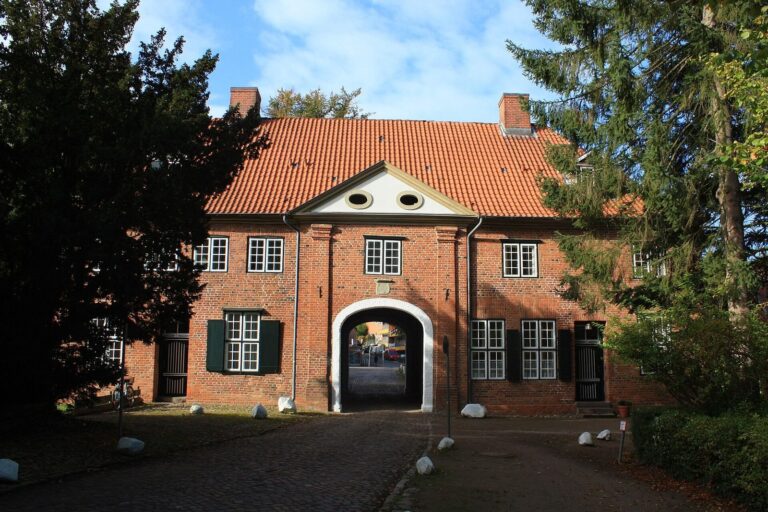
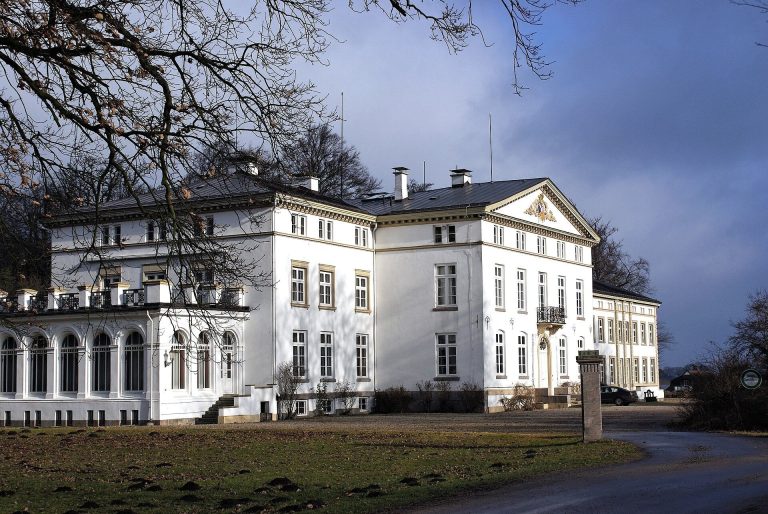
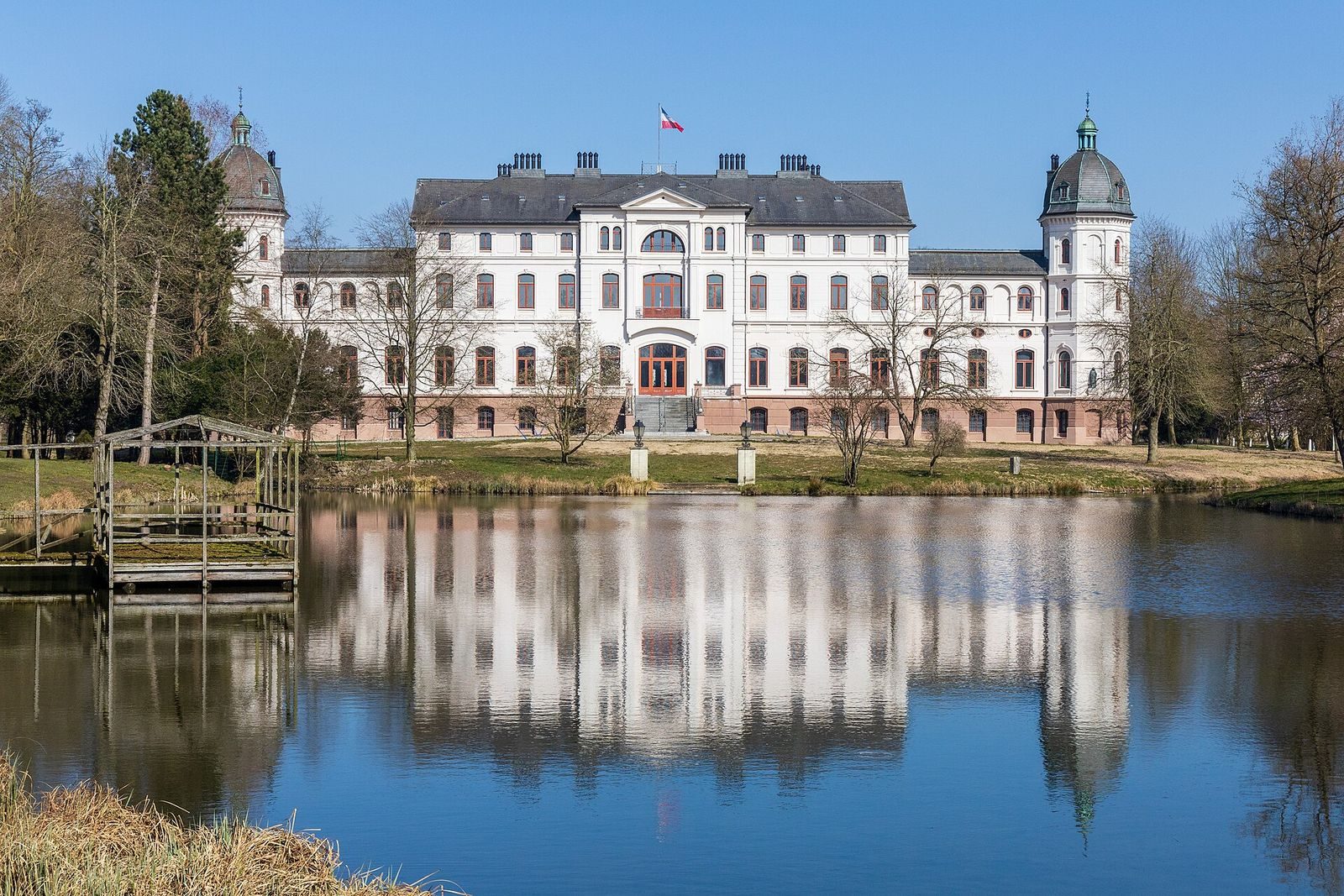
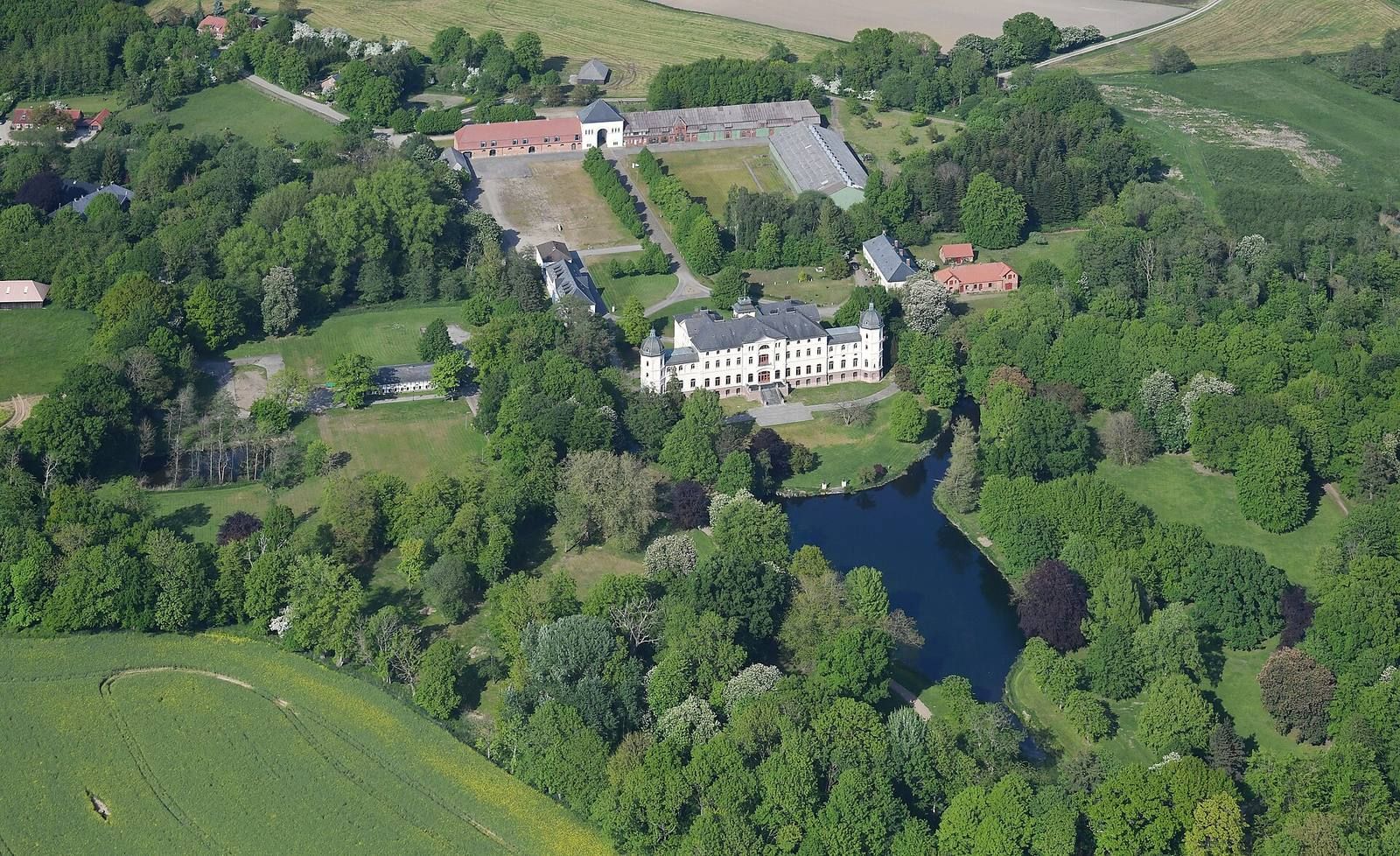
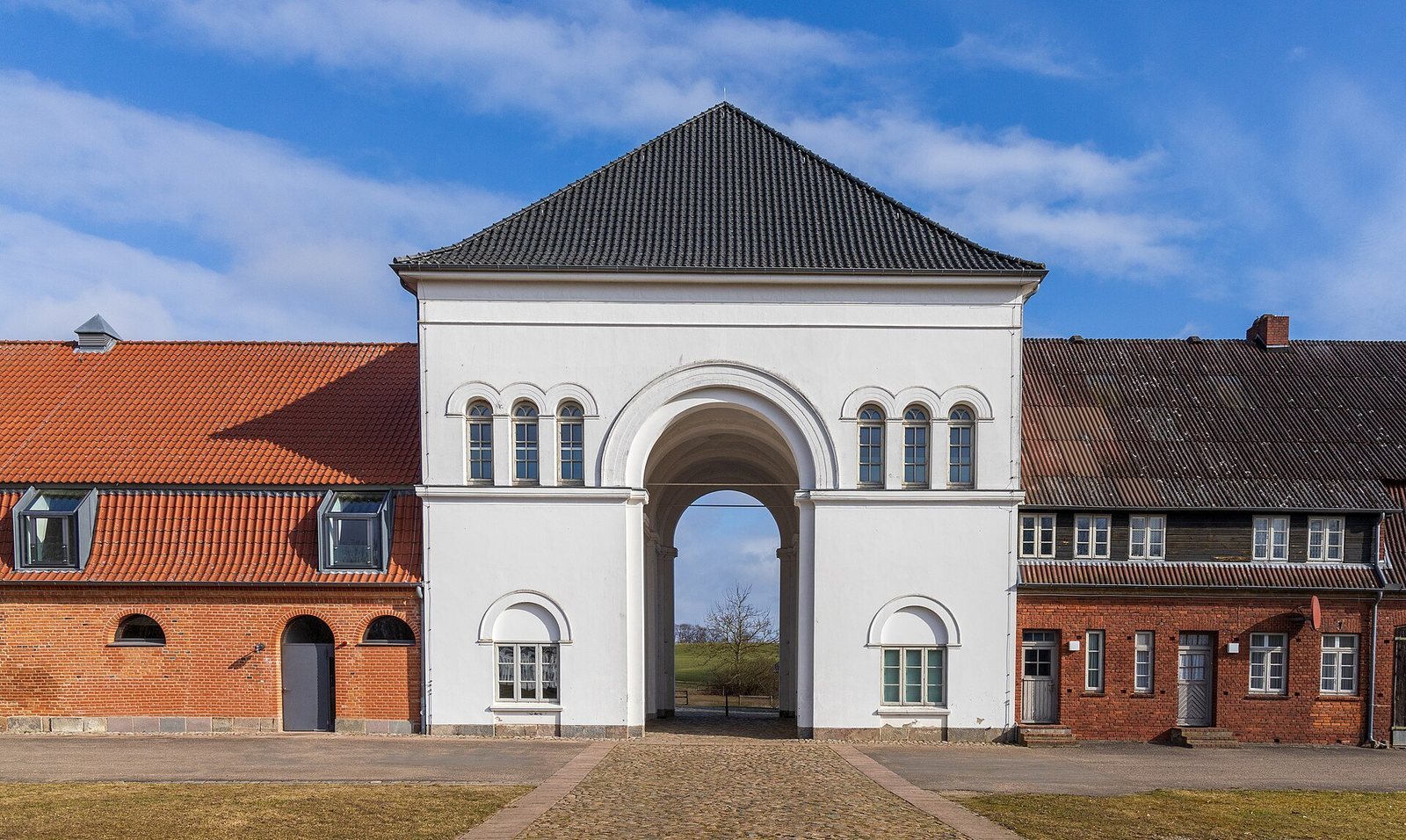
The estate includes an 1881 neo-Baroque manor house, a gatehouse, a former horse stable, a castle garden, and a lake. A 2017 property description listed five ancillary buildings and a total land area of 122,313 square metres.
Manor house
Renaissance-era predecessor
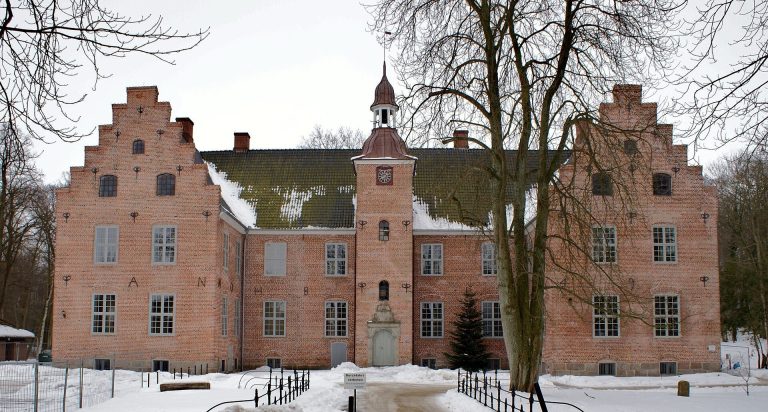
The manor house that preceded the present building was a Renaissance-style structure, drawing on Renaissance forms, and an example of Schleswig-Holstein’s regional double-house type, with two joined house sections. It burned in the nineteenth century. A panel made around 1590 depicts Salzau as a house of several connected sections with a tower.
Neo-Baroque house
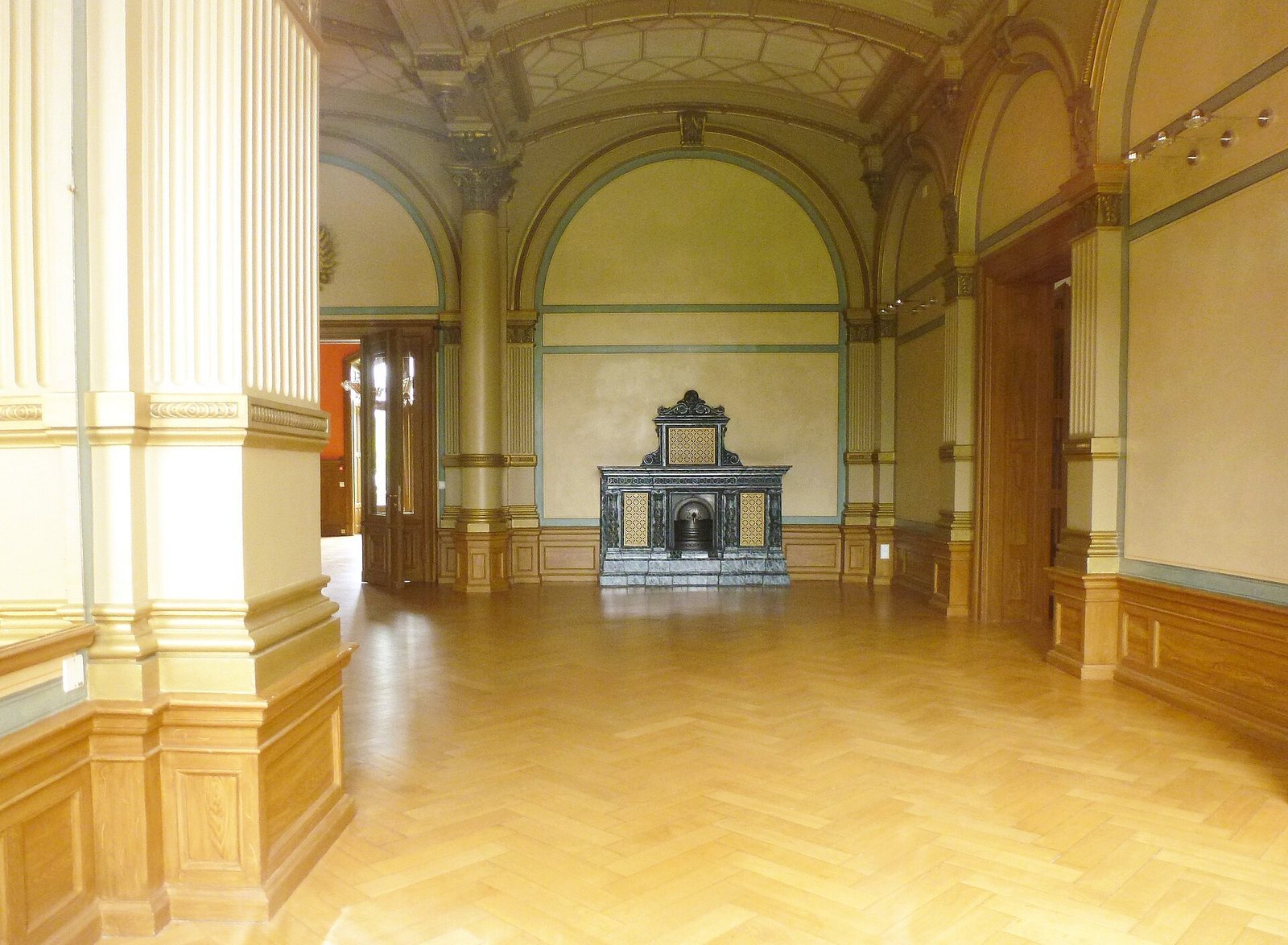
Rebuilt in 1881, the present manor revives Baroque design. Contemporaries considered it oversized even for a large estate, comparing it with houses built by wealthy British landowners of the Victorian period and Silesian coal barons. The building has grand halls, numerous plain bedrooms intended for musicians, and a ballet hall on the second upper storey. Its residential and usable floor area was listed as 4,066 square metres.
Other estate buildings
Gatehouse
The gatehouse contains apartments and catering facilities.
Former horse stable
The former stable has plain rooms intended for musicians.
Concert barn
A fire destroyed the concert barn in 2014.