Jettenhofen Castle: A Medieval Estate and Episcopal Residence
Site at a Glance
- Rating
- 5
- Popularity
- Very Low
- Country
- Germany
- Primary era
- Early Modern
- Eras represented
- Medieval, Early Modern
- Civilizations
- Holy Roman Empire
- Site type
- Domestic
- Remains
- Castle
On this page12 sections
History
Jettenhofen Castle is a former noble residence in Jettenhofen, within Freystadt, Bavaria, Germany. First recorded in 1245 and 1248 as the seat of Heinrich von Uttenhofen, it remained an isolated estate for centuries. A settlement began to develop beside it only after 1708.
Lordship and rebuilding
The estate combined land held as a fief, property granted by a superior under specified obligations, from the Prince-Bishopric of Eichstätt, an ecclesiastical territory whose bishop also exercised secular authority, with privately owned land. The Uttenhofen family held the seat before ownership passed to the Seckendorffs and, by 1375, the Schenks of Geyern. The Uttenhofen family line ended around 1447.
Wilhelm Schenk von Geyern sold the privately owned share to Erasmus von Rosenberg, an official at Uffenheim. Erasmus’s son Hieronymus, a knight and court official in Eichstätt, transferred that share to Bishop Gabriel von Eyb as a fief in 1492. During Hieronymus’s tenure, the castle and forecourt were associated with 75 Tagwerk of meadows, a traditional land measure whose size varied by region, four orchards, four ponds, and a sheep farm of 700 to 800 animals. The estate also included woods with hunting and bird-catching rights, and property in 23 surrounding villages.
When Hieronymus died without male heirs in 1507, his nephews Konrad and Philipp, sons of his brother Leonhard, took over the lordship. The Swabian League, an alliance of political estates in the Holy Roman Empire, destroyed the castle in 1523. With the bishop’s consent, Konrad and Philipp sold the property in 1530 to their brothers-in-law, Rudolf and Walter von Hirnheim of Hochaltingen. From 1562, Rudolf began building the residential house that survives today.
Episcopal administration and settlement
After the Hirnheim family died out in 1585, the fief reverted to the Bishop of Eichstätt, who did not grant it again. In 1586, the castle became the seat of an episcopal administrative office responsible for managing nearby estates and revenues. From about 1690, its responsibilities also covered the Eichstätt estate of Thannhausen, which had its own manorial jurisdiction.
The office’s first administrator was Paulus Mangold. Its administrator also served as the bishop’s local bailiff, representing him in the area, under the administrator of Obermässing, who held authority to hear serious criminal cases. The bailiff lived in the former castle. The bishop later granted the estate to farmers. In 1708, the episcopal chamber sold it to Hans Geidl of Forchheim and Hans Rupp of Meckenhausen on condition that they divide the farm into four parts. By 1736 to 1737, four quarter-farms and a shepherd’s house had formed the hamlet of Jettenhofen.
Boundary settlement and later ownership
Electoral Bavaria, the territory ruled by the Bavarian elector, and the Prince-Bishopric of Eichstätt disputed their southern boundary near the Neumarkt district. A treaty in 1523 assigned Jettenhofen to Eichstätt, but disagreements over sovereignty and taxation continued until 30 January 1767. A new treaty again allocated the castle to the prince-bishopric.
In 1801, ten woodland parcels were described as having belonged to the estate since ancient times. One, the Wolfsleite, had been used for wolf pits during the preceding century. After the Prince-Bishopric was secularized, transferring church territory and property to secular authorities, its woodland became part of the state forest. In 1802, the castle and hamlet passed to Ferdinand III, Grand Duke of Tuscany. He sold the castle and its associated land in 1804, after which ownership changed several times.
The castle is protected as an architectural monument. Its archaeological designation identifies evidence in the area of the former castle and refers to an earlier medieval castle.
Remains
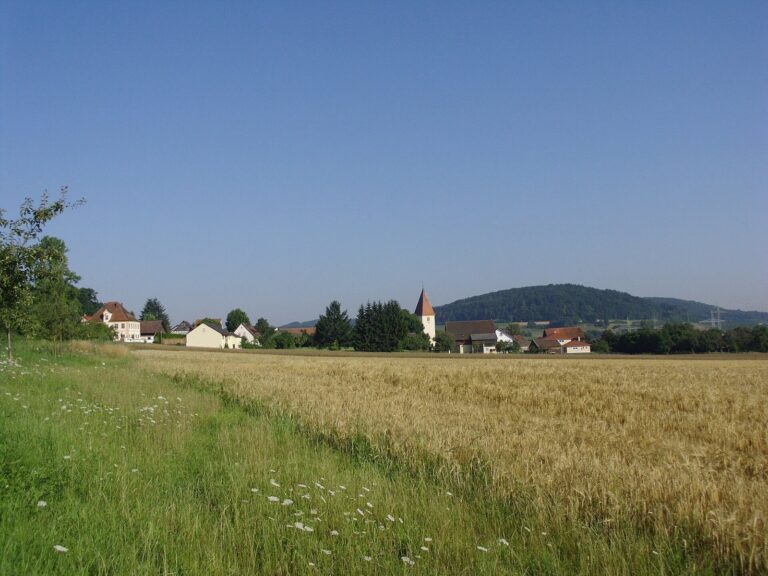
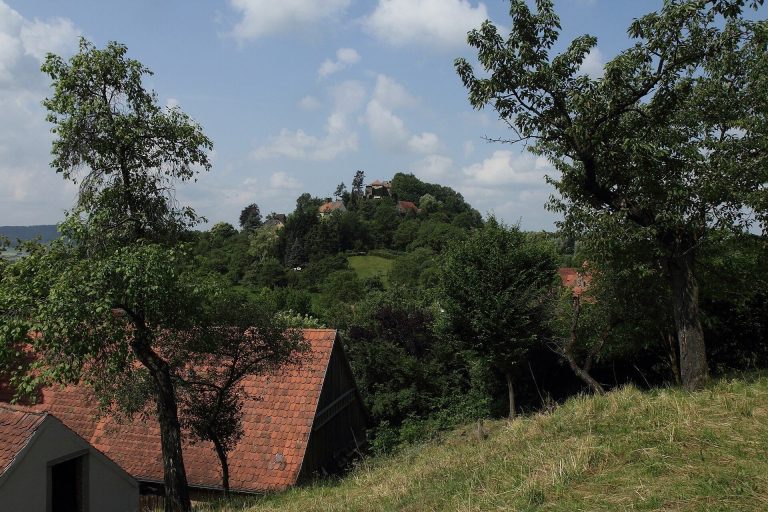
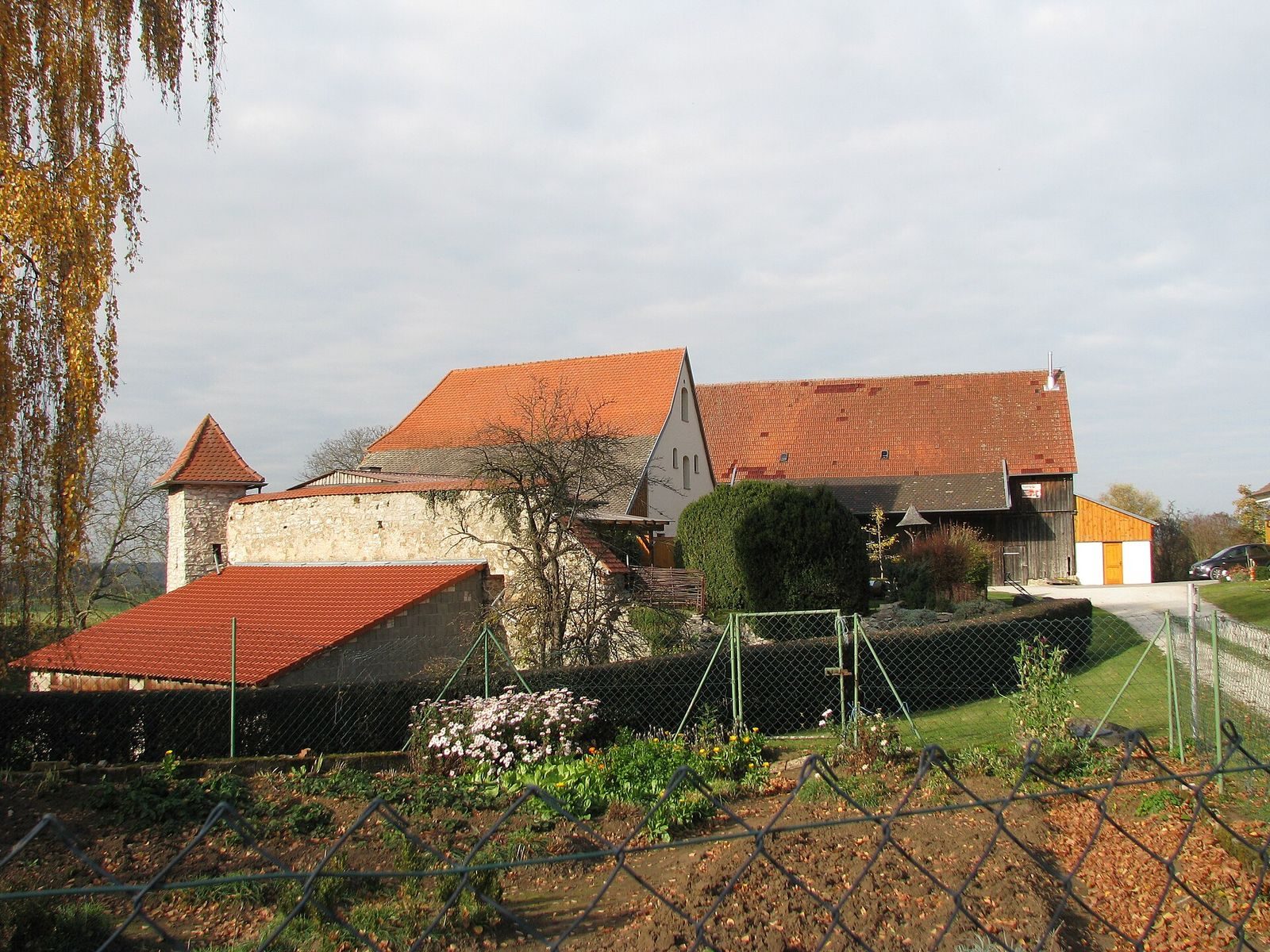
The former castle stands north of Jettenhofen in a hilly, wooded hollow, at an elevation of 422 metres. Its enclosure had an approximately egg-shaped plan, bounded by a broad moat and a perimeter wall. The surviving residential buildings formed part of this enclosed complex.
Enclosure and entrance
Moat and perimeter wall
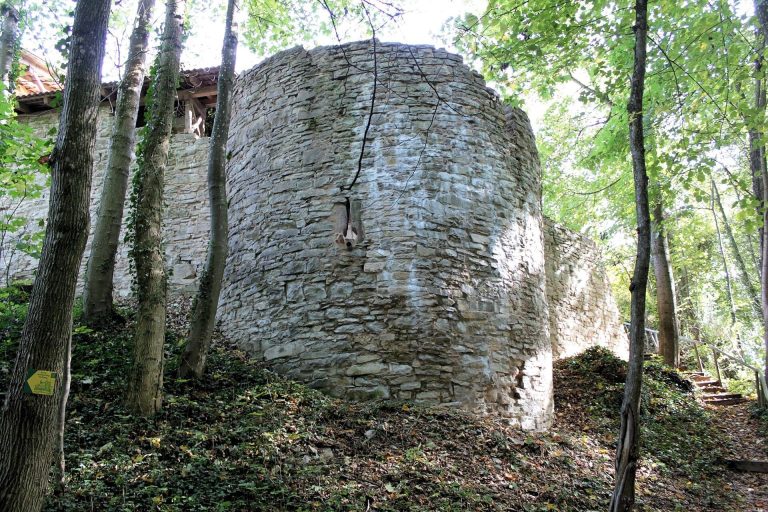
The moat is now dry, and only sections of the perimeter wall survive. In 1801, the moat was described as deep, bordered by a bank, and boggy because of springs within it.
Drawbridge and towers
A drawbridge connected with a gatehouse formed part of the enclosure. One of the two towers in the perimeter wall survives in part; around 1800, it was used as a sheepfold. A gate tower situated beyond the moat has disappeared.
Buildings
Residential building
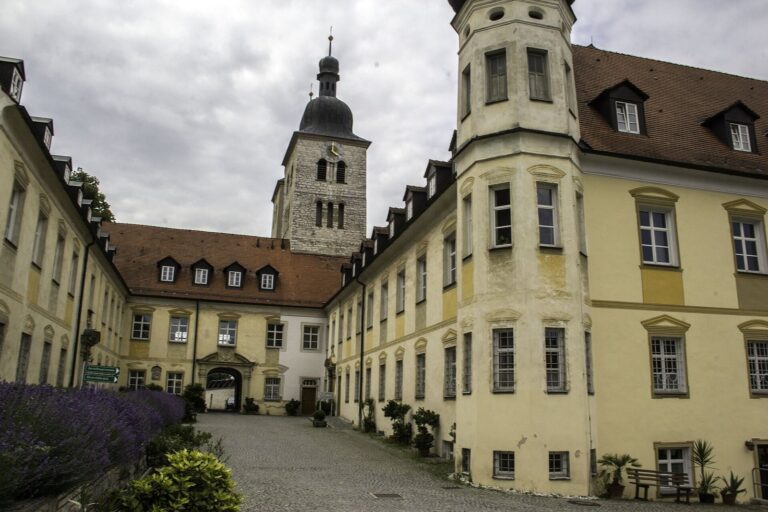
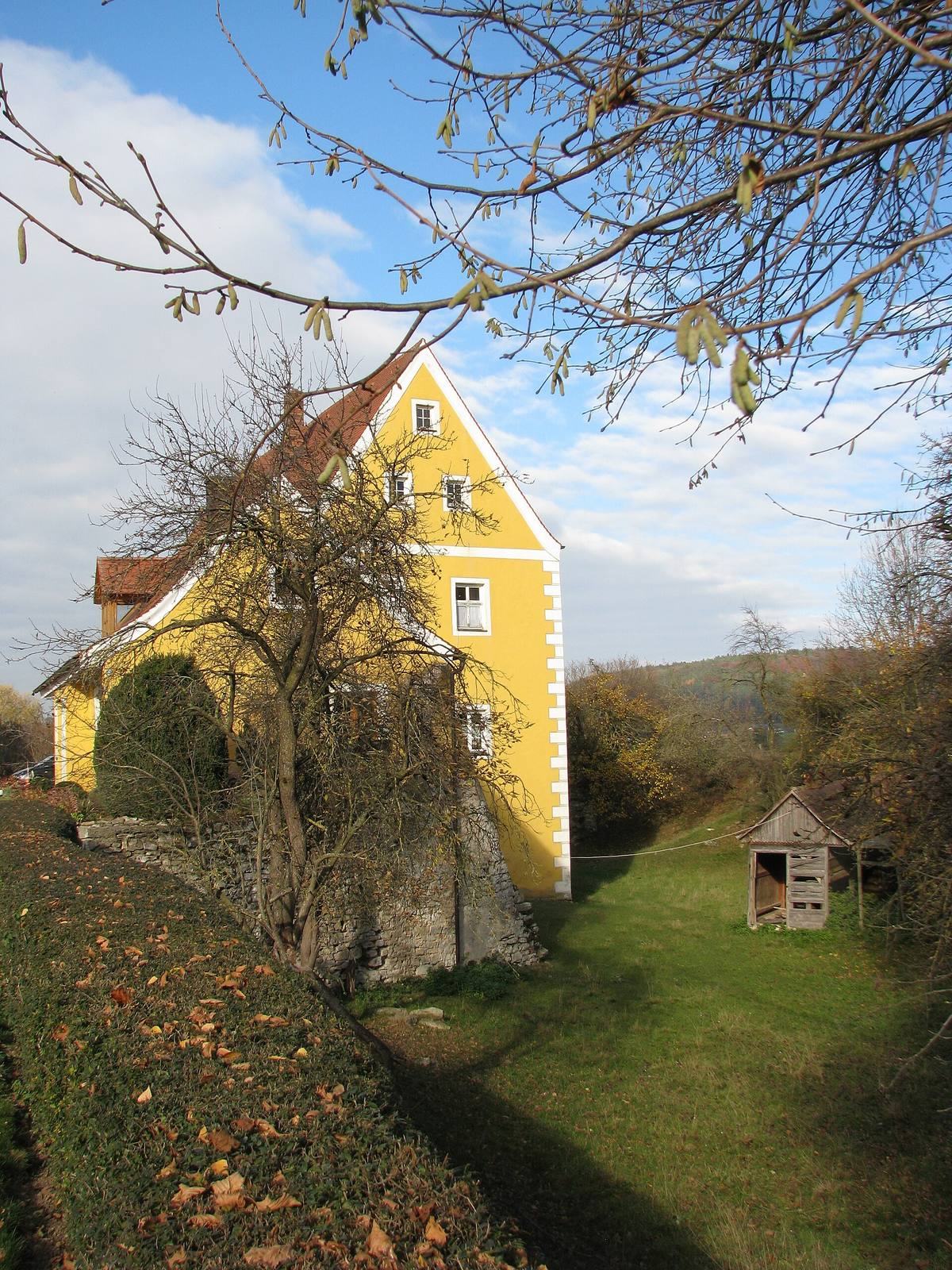
The surviving residential building has two storeys. Its construction began under Rudolf von Hirnheim in 1562.
Former granary
Beside the residence stands a three-storey building with high gables and a pitched roof, formerly used as a granary.
Chapel
The castle chapel occupied a rounded projection at a corner facing the moat and contained a small altar.