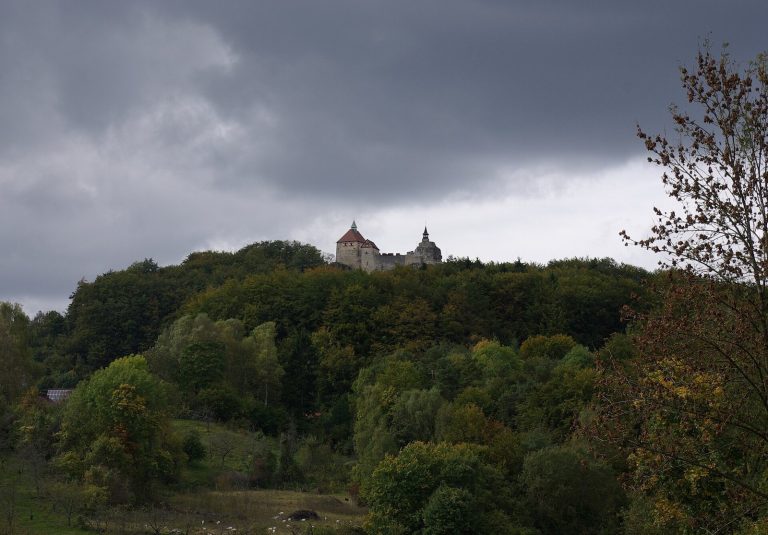
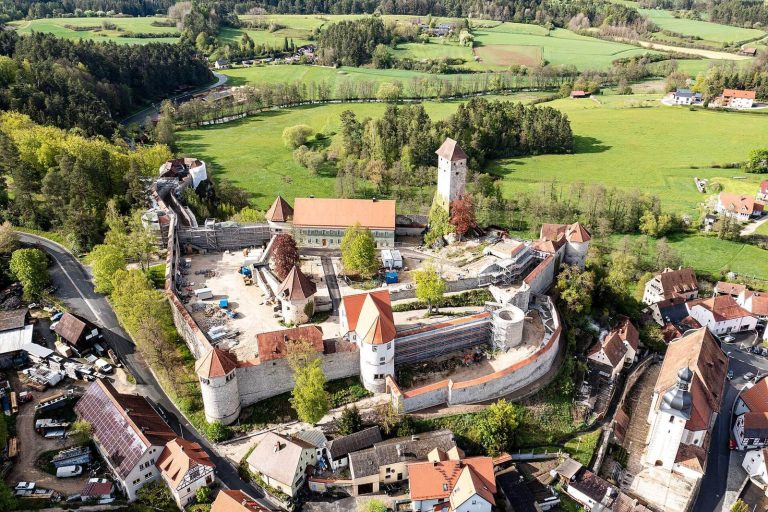
Artelshofen Castle: A Gothic Water Castle in Vorra, Germany
Site at a Glance
- Rating
- 4.7
- Popularity
- Low
- Country
- Germany
- Primary era
- Early Modern
- External website
- Open
- Eras represented
- Early Modern
- Civilizations
- Holy Roman Empire
- Site type
- Domestic
- Remains
- Castle
On this page11 sections
History
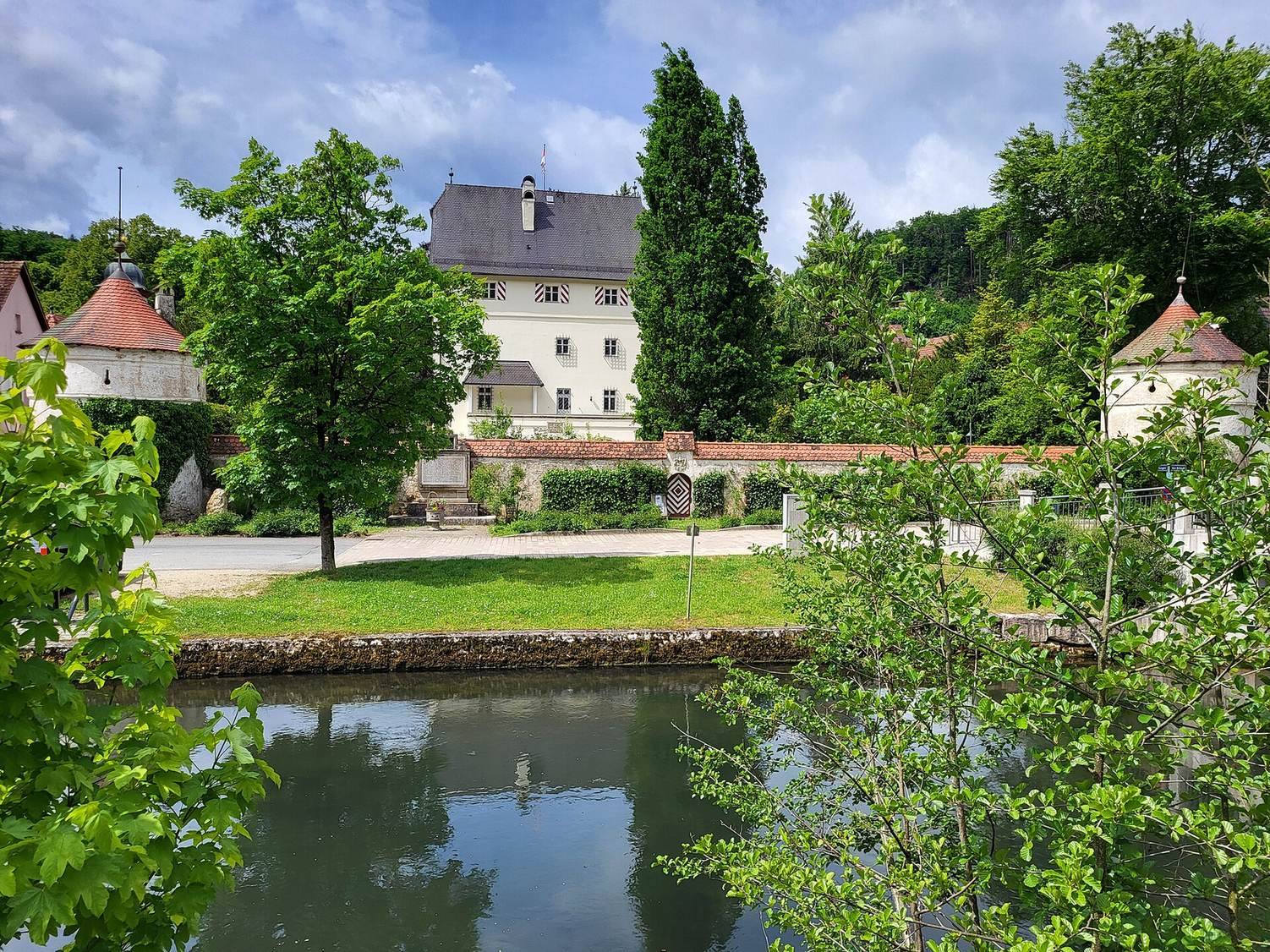
Artelshofen Castle, also known as Schloss Artelshofen, is a Gothic water castle in Vorra, Germany, on the west bank of the Pegnitz. A water castle is a fortified residence associated with water defenses, such as a moat. The site’s origins probably lie in the late 13th century, and construction is dated to about 1300–1361. It was first recorded in 1361 as the seat of Heinrich von Sittenbach.
Medieval origins and changing ownership
Heinrich may have belonged to a ministerial family associated with Sulzbach. Ministerials were members of the service nobility who served powerful lords and could hold land or military responsibilities. The Sittenbach family retained the estate at least until 1408. Erhart Holdolt held it briefly in 1434, and the Freudenberg family possessed it by 1452. Albrecht von Freudenberg sold the lordship to the Egloffsteins in 1453. Wolfram von Egloffstein of Artelshofen sealed a document in 1457, and his family kept the estate into the early 16th century.
Rebuilding and destruction in the 16th century
After brief transfers through Amaley Groß and Leonhard von Ploben, the Plobens transferred possession to Anton Tucher in 1522, while retaining rights in the property. Tucher was a Nuremberg patrician, a member of the city’s influential civic elite. Hans Ebner von Eschenbach acquired Tucher’s ownership rights in 1531, then obtained the remaining possession rights from Jörg Holzschuher, Leonhard von Ploben’s son-in-law, in 1535. Ebner may have been responsible for extensive rebuilding in 1550.
Margravial troops burned the castle in 1552 during the Second Margrave War, a mid-16th-century conflict involving margravial forces in Franconia. The building had been fully restored by 1572, when Lazarus Harsdorfer acquired the estate. It was not extended again after that rebuilding.
Family estates and trusts
The Harsdorffer family held the estate from the early 1570s until its sale to Hans Jakob Tetzel in 1626. In 1722 it became part of a family foundation, and it remained with the Tetzels until 1748. After the death of the last Tetzel of Artelshofen, the foundation’s long-serving administrator, Hieronymus Wilhelm Ebner, obtained the property through a court ruling. He dissolved the family foundation and, two years later, established his own fideicommissum, an entailed estate intended to remain within a family. When this branch of the Ebner von Eschenbach family died out in 1793, the Haller von Hallerstein family administered the trust until it ended in the early 1810s.
Ownership and preservation in modern times
Nuremberg merchant Karl Benedikt Schwarz bought the manorial lordship from a group of heirs in 1816. The Bavarian king ennobled him so he could exercise the lordship. Schwarz established another family foundation, whose property rights ended when fideicommissa were legally abolished in 1919. The estate was then divided between his sons: Benedikt Gottlieb received Henfenfeld, while Paul August Benedikt von Schwarz received Artelshofen. Paul transferred Artelshofen to Wilhelm von Holzschuher in 1931 or 1932. The Holzschuher family retained it until the early 21st century; an ancestor belonging to the Holzschuher von Harrlach had owned the estate in the 16th century.
Heinrich Bischoff acquired the estate in 2005 and became the holder of patronage rights over its small castle church. He established a foundation for the church’s preservation in 2011, then founded a charitable foundation for Schloss Artelshofen in 2014. Its work focuses chiefly on conserving the monument and landscape, preserving cultural property, protecting nature, and supporting social engagement. The property is privately owned and has been maintained by the foundation since 2014.
Remains
The castle and its water defenses
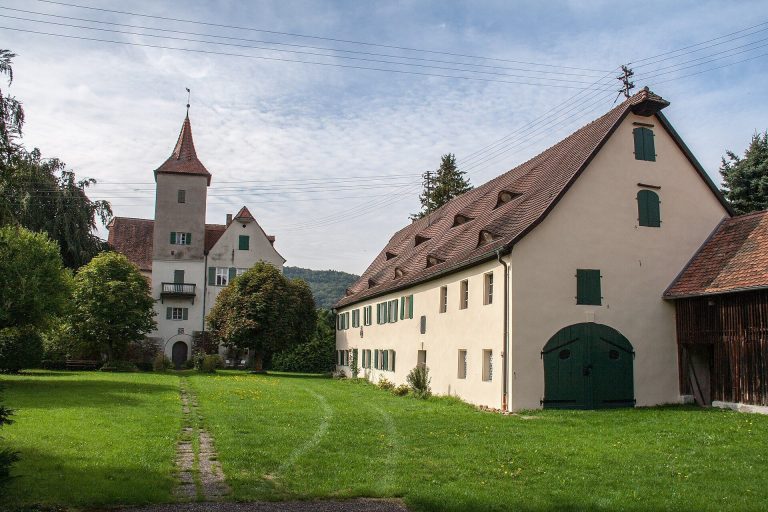
The castle stands on the west bank of the Pegnitz. It was probably a residential tower surrounded by a moat, forming a water-protected residence. The main building is generally well preserved, and much of its fabric reflects the mid-16th-century rebuilding. Work in 1550 extended the building southward and added a projecting third upper storey.
Walls and ancillary defenses
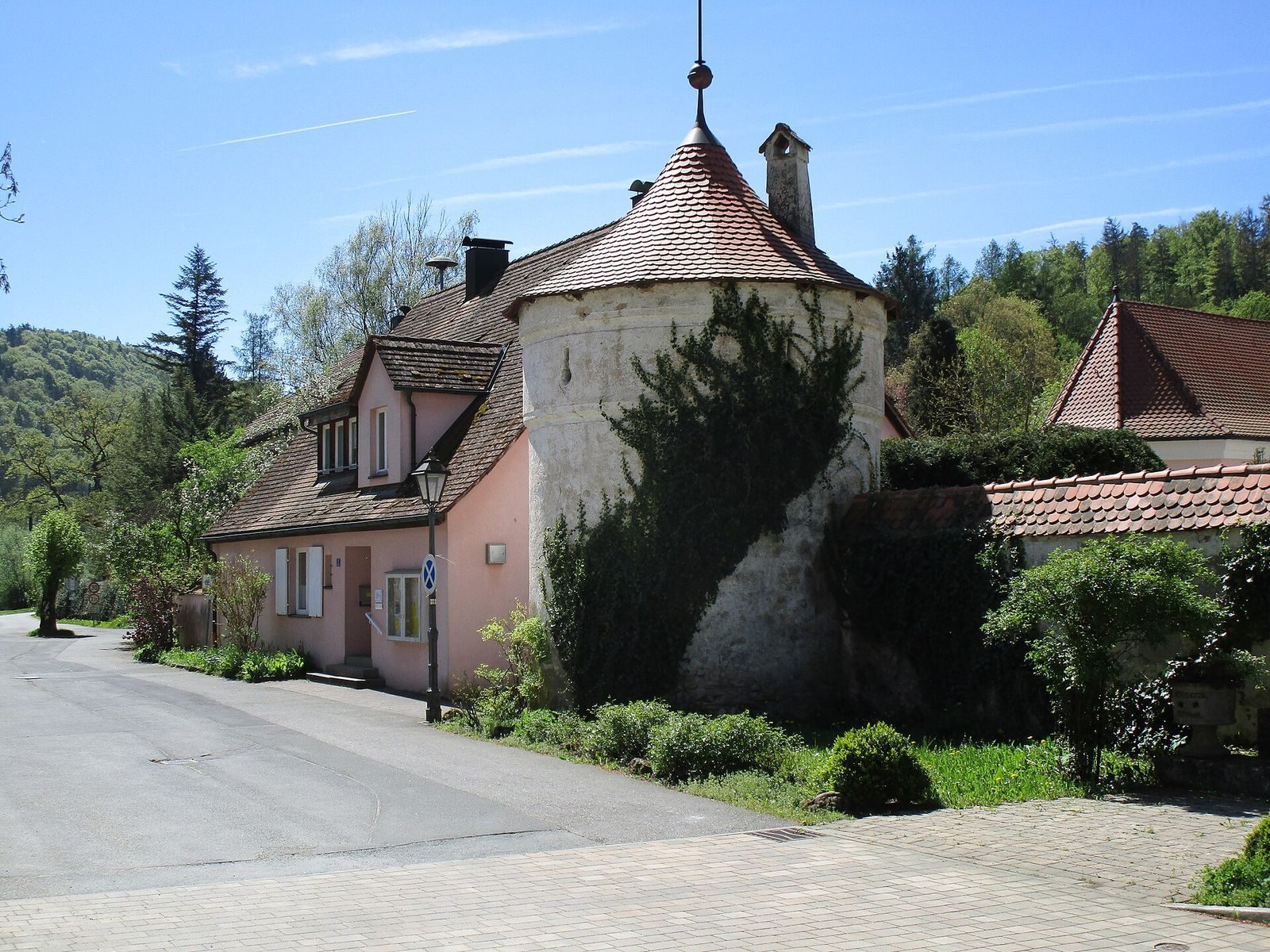
In 1818, Karl Benedikt Schwarz had the inner ring wall demolished and the moat drained to make the property easier to use. Later in the 19th century, ahead of the planned Fichtelgebirge Railway, ancillary buildings and the southern fortification were demolished.
Other estate buildings
Manor house
The manor house underwent extensive modernization in the 1930s.
Castle church
A small castle church is associated with the estate.