Hohenbuchau Castle: A Country Estate and Its Surviving Park
Site at a Glance
- Popularity
- Medium
- Country
- Germany
- Primary era
- Modern
- Eras represented
- Modern
- Civilizations
- German, Kingdom of Prussia
- Site type
- Domestic
- Remains
- Park
On this page8 sections
History
Hohenbuchau Castle was a country estate in Georgenborn, within the municipality of Schlangenbad, Germany. Its mansion was built in 1895, replacing an earlier country residence on land acquired for an estate in 1863.
From country estate to industrialist’s mansion
In 1863, Prussian cavalry captain Constantin von Zachau bought about 125,000 square metres of land and began creating a country estate. The residence was completed in 1872. He sold the property in 1879 after accumulating gambling debts.
The next owner, manufacturer Ferdinand Krauskopf, had made rubber boots and other goods in Germany using a rubber-hardening process developed and patented by American inventor Charles Goodyear. Punitive tariffs led him to move his factory to St. Petersburg, and the business later passed among American, German, and Russian owners. Krauskopf died soon after purchasing the estate, which his son, Russian citizen Baron Ferdinand von Krauskopf, inherited. Before the First World War, the Russian American India-Rubber Co. was a leading rubber-footwear producer, turning out 150,000 pairs of rubber shoes daily as well as automobile tires.
In 1895, the earlier residence was replaced by a castle-like mansion designed by Wiesbaden architect Alfred Schellenberg. The mansion was described as the dream of a man with 120 million gold marks, Germany’s currency under the prewar gold standard.
War, confiscation, and redevelopment
The First World War and the expropriation of property in the Soviet Union cost von Krauskopf much of his wealth. He sold Hohenbuchau to Salomon Soskin, who spent little time there and later gave the estate to his wife, Katharina Soskin. She preferred to live in Paris.
During the Nazi period, the estate was confiscated as enemy property. The mansion housed the Reich Labor Service, the Nazi state labor organization, a school for locomotive drivers of Germany’s national railway, and the Waffen-SS, the armed branch of the SS, as well as the Gestapo, the regime’s secret state police.
After the Second World War, Katharina Soskin recovered the property but did not maintain the mansion or park. A major fire broke out on 28 December 1947. From 1947 to 1952, the mansion also served as a convent for the Grey Sisters, a Catholic congregation displaced from Silesia. Soskin sold the estate to the housing company GeWoBau in 1961. Architect Richard Neutra was commissioned to plan a modern residential district, and the mansion was demolished in 1963 to make way for it.
Remains
Surviving estate features
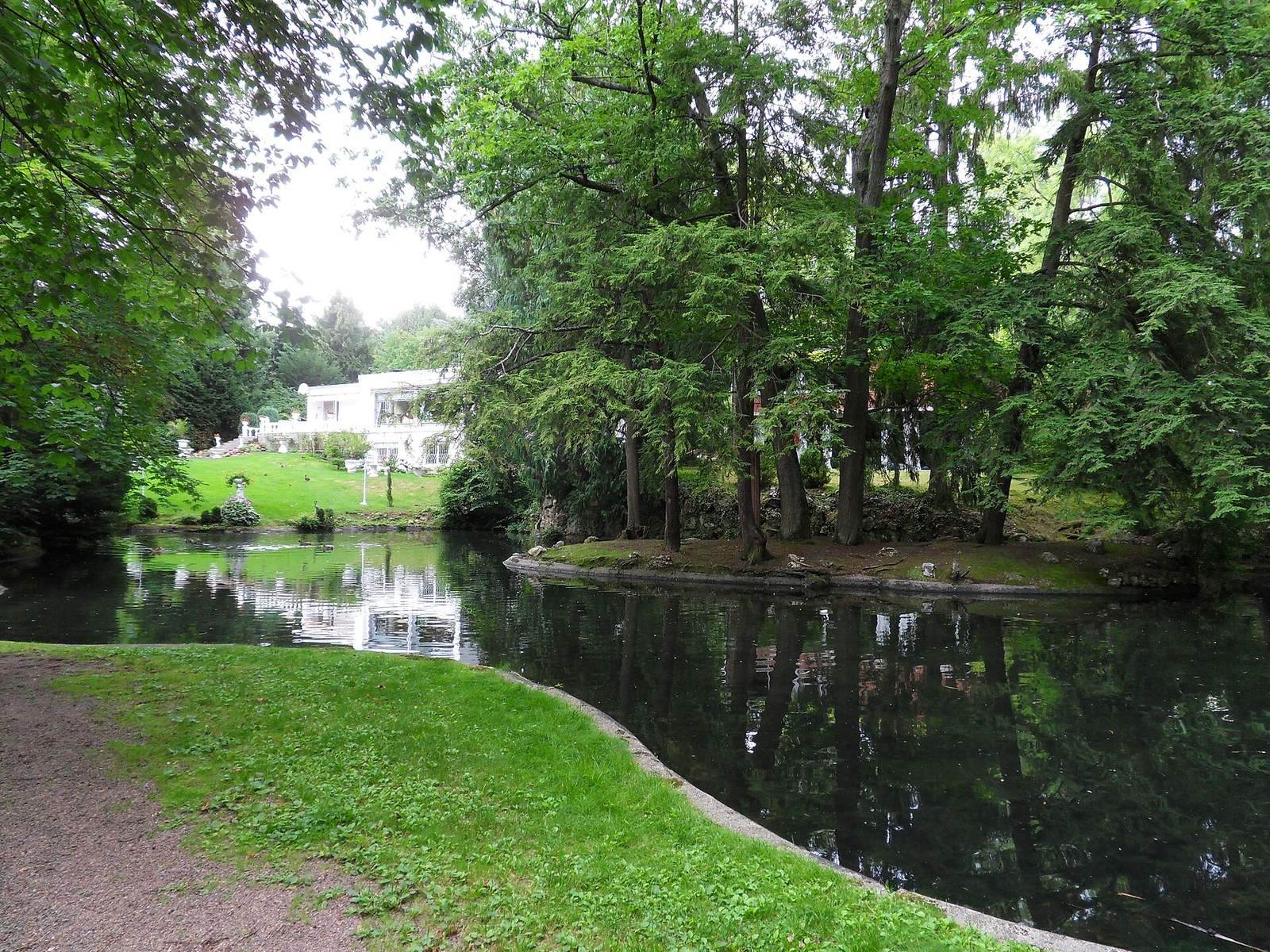
The former estate combined a castle-like mansion with an extensive park. Surviving features include parts of the park’s boundary, ponds, a staircase, and several associated buildings, within the later Hohenbuchauring residential district.
Former mansion
The mansion had a castle-like form. Its ballroom featured wall paintings by Max Friedrich Koch.
Park boundary and ponds
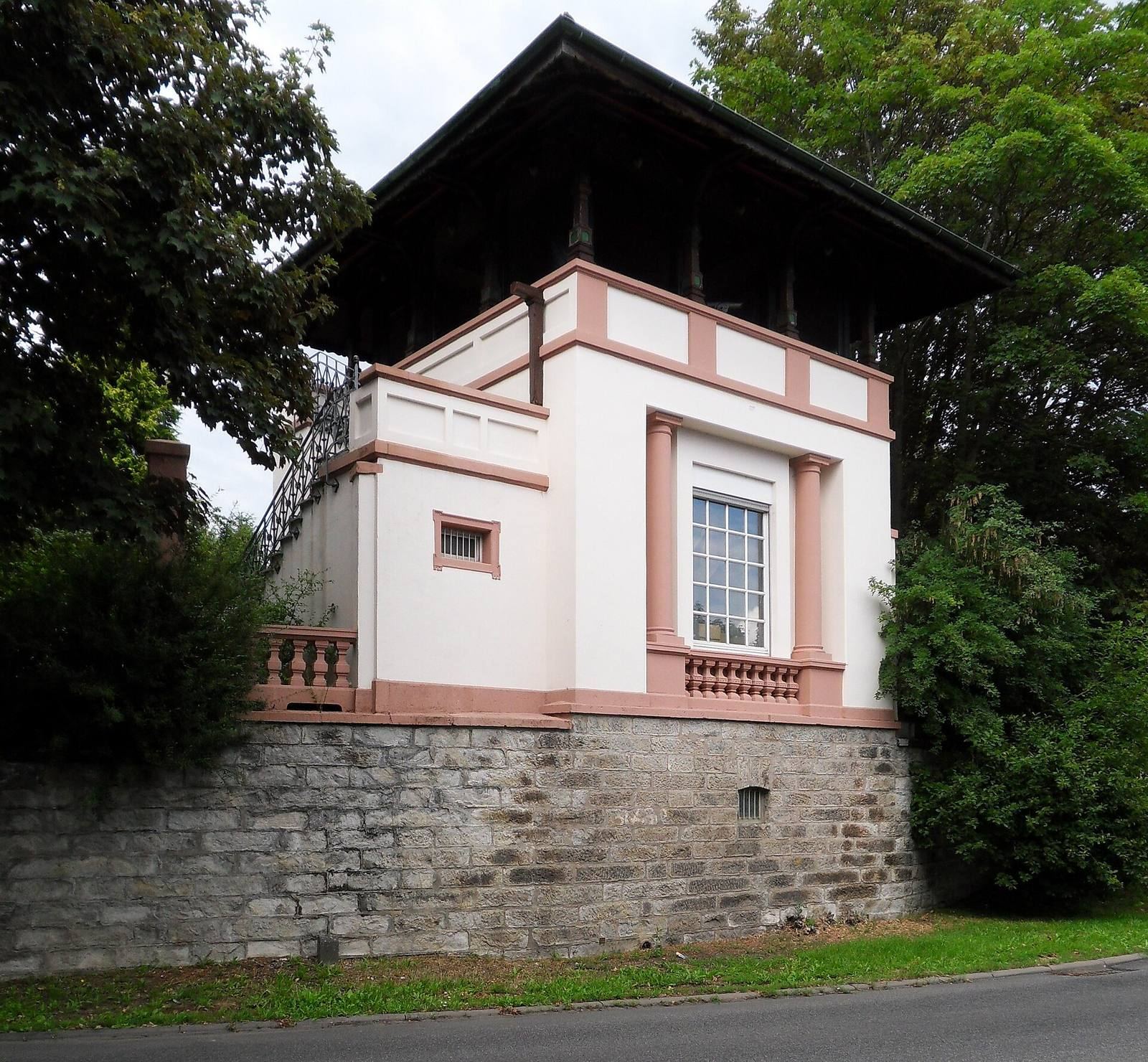
An enclosing wall with a Chinese pavilion remains, along with two ponds. A monument to Sigurd, a legendary hero of Germanic and Norse tradition, stands in a pond in the former palace park.
Staircase and associated buildings
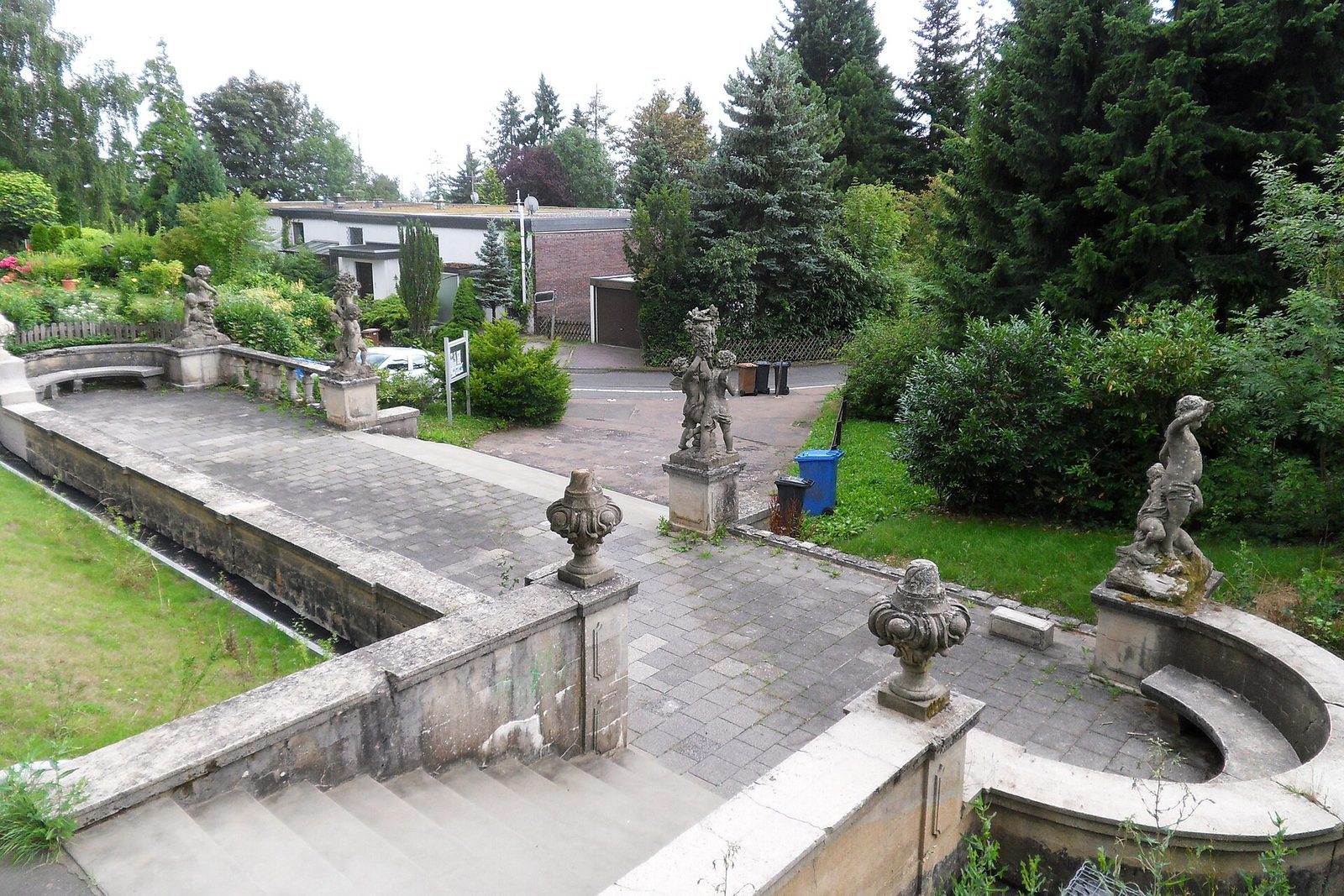
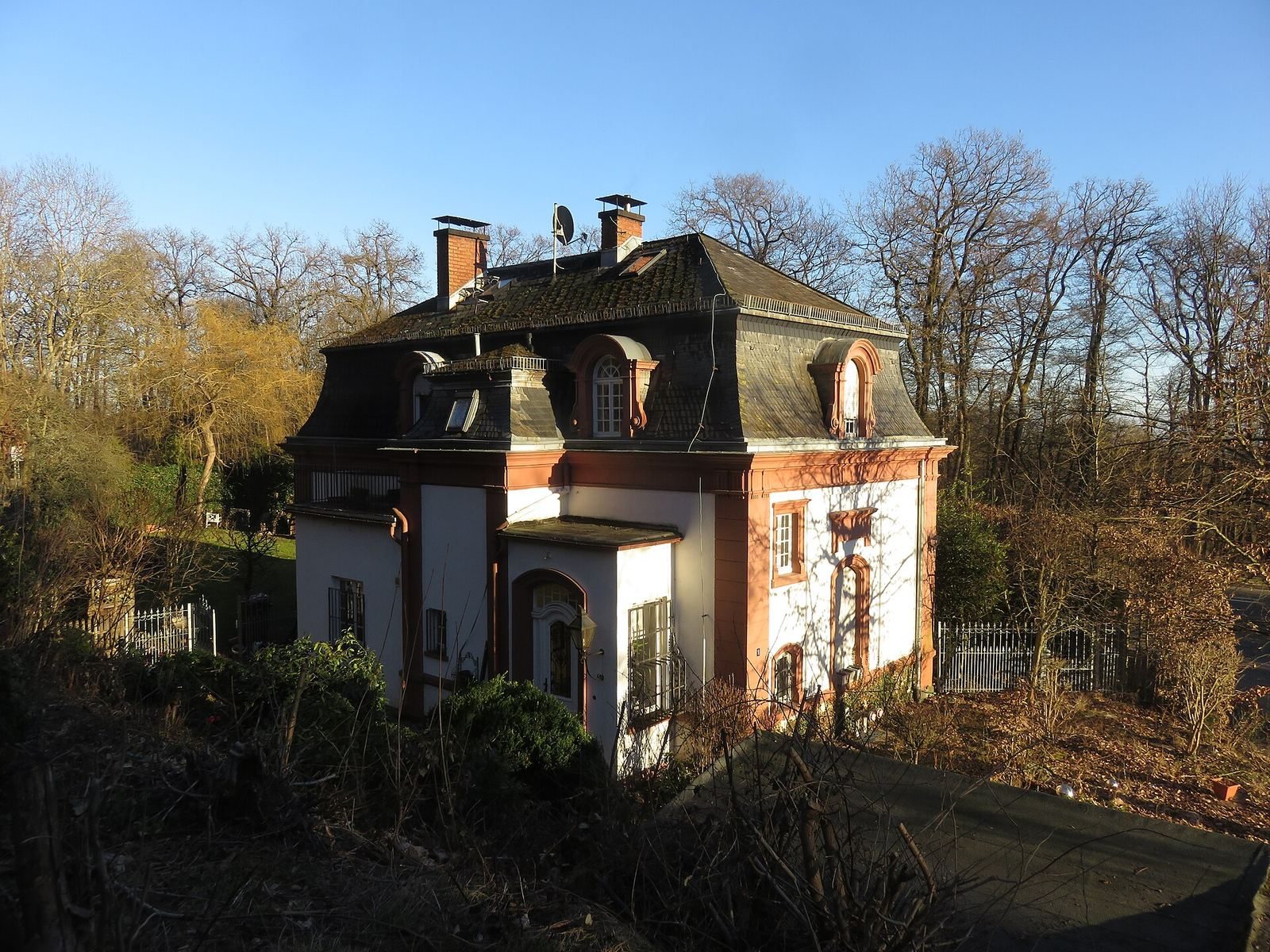
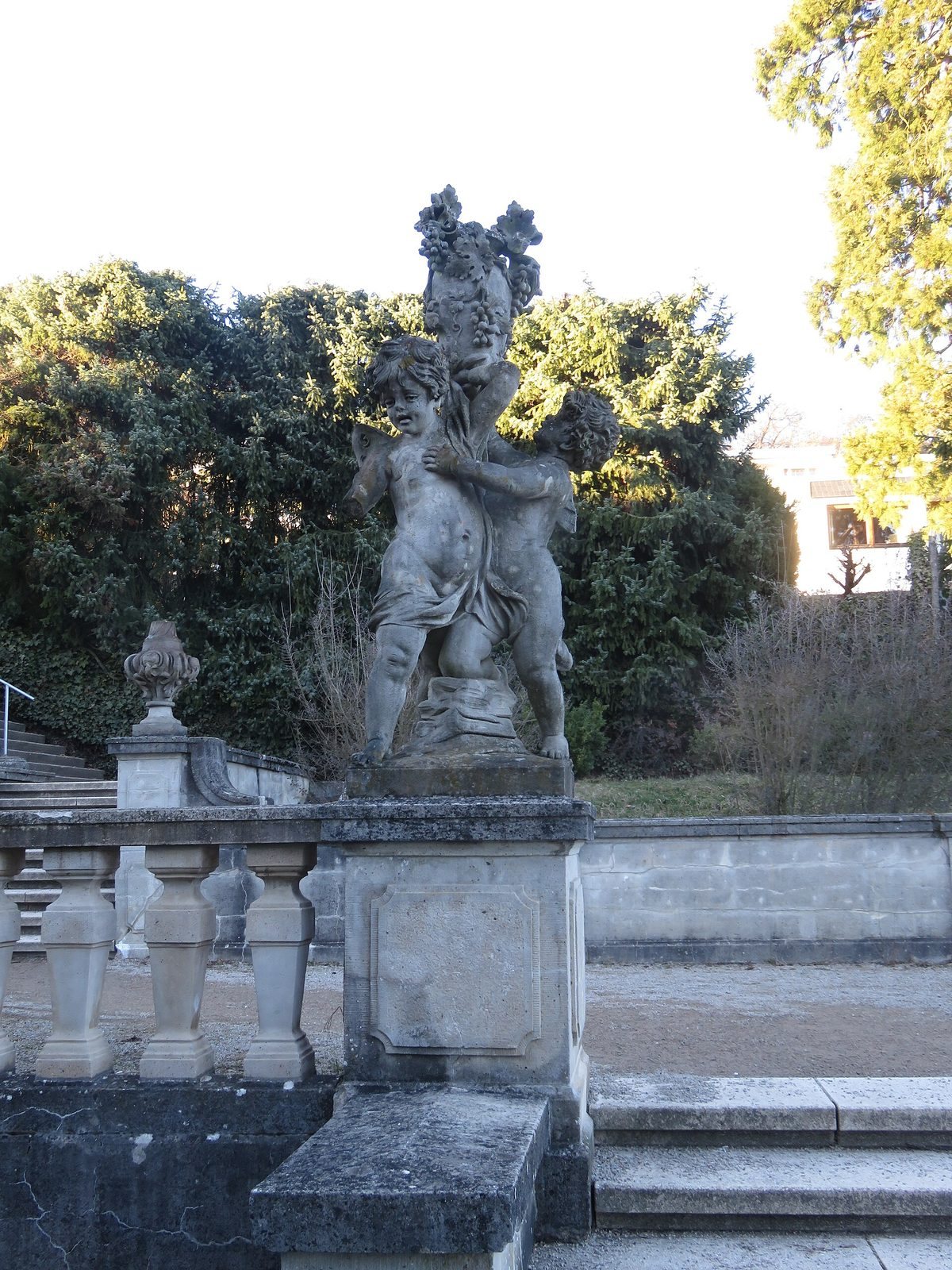
A neo-Baroque staircase, using a revival of Baroque design, survives as a remnant of the mansion. It stands in the middle of the Hohenbuchauring residential district. Other surviving features include a guesthouse known as the Swiss House, one gatekeeper’s house, the carriage house, additional walls, and giant sequoias.