Hirschbrunn Castle: An Oettingen Hunting Lodge in Bavaria
Site at a Glance
- Rating
- 5
- Popularity
- Very Low
- Country
- Germany
- Primary era
- Early Modern
- Eras represented
- Early Modern
- Civilizations
- Holy Roman Empire
- Site type
- Domestic
- Remains
- Castle
On this page8 sections
History
Hirschbrunn Castle is a former hunting lodge in Hirschbrunn, near Dornstadt in the municipality of Auhausen, Bavaria, Germany. Construction began around 1600 for the House of Oettingen, a German noble dynasty. Counts Gottfried of Oettingen-Oettingen and Wilhelm II of Oettingen-Wallerstein commissioned the work; their territories were branches of the same family.
War and change of ownership
After the Battle of Nördlingen in 1634, scattered soldiers repeatedly plundered the castle. The battle was a major engagement in the Thirty Years’ War, a European conflict fought from 1618 to 1648. In the late seventeenth century, Albert Ernest II, the last prince of the Protestant Oettingen-Oettingen line, sold the property to Count Franz Albrecht of Oettingen-Spielberg.
Enlargement and school use
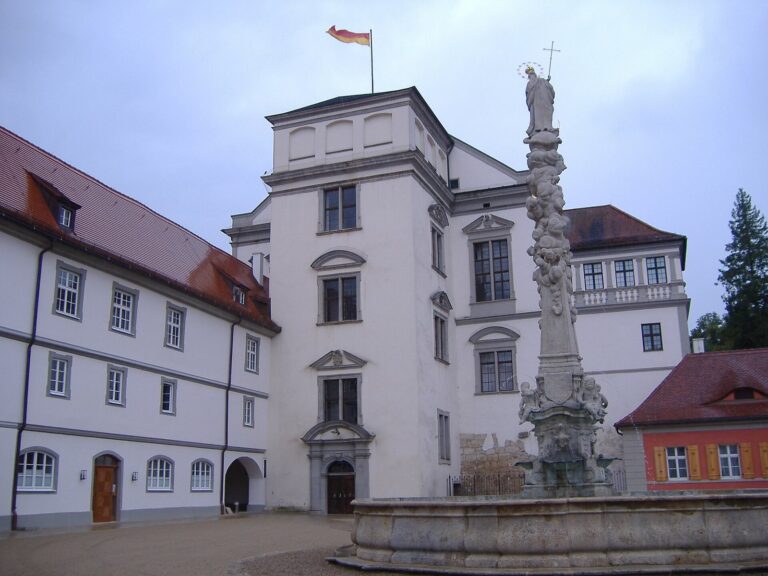
In 1692, Franz Albrecht enlarged the castle and had a chapel dedicated to Mary built. From around 1700 until 1846, the building housed a school for children from nearby villages.
Later use
After the Second World War, the castle served as a warehouse. It underwent extensive renovation in 1978 and further renovation in 1992. The Oettingen-Spielberg family owns the castle, which is now a private residence.
Remains
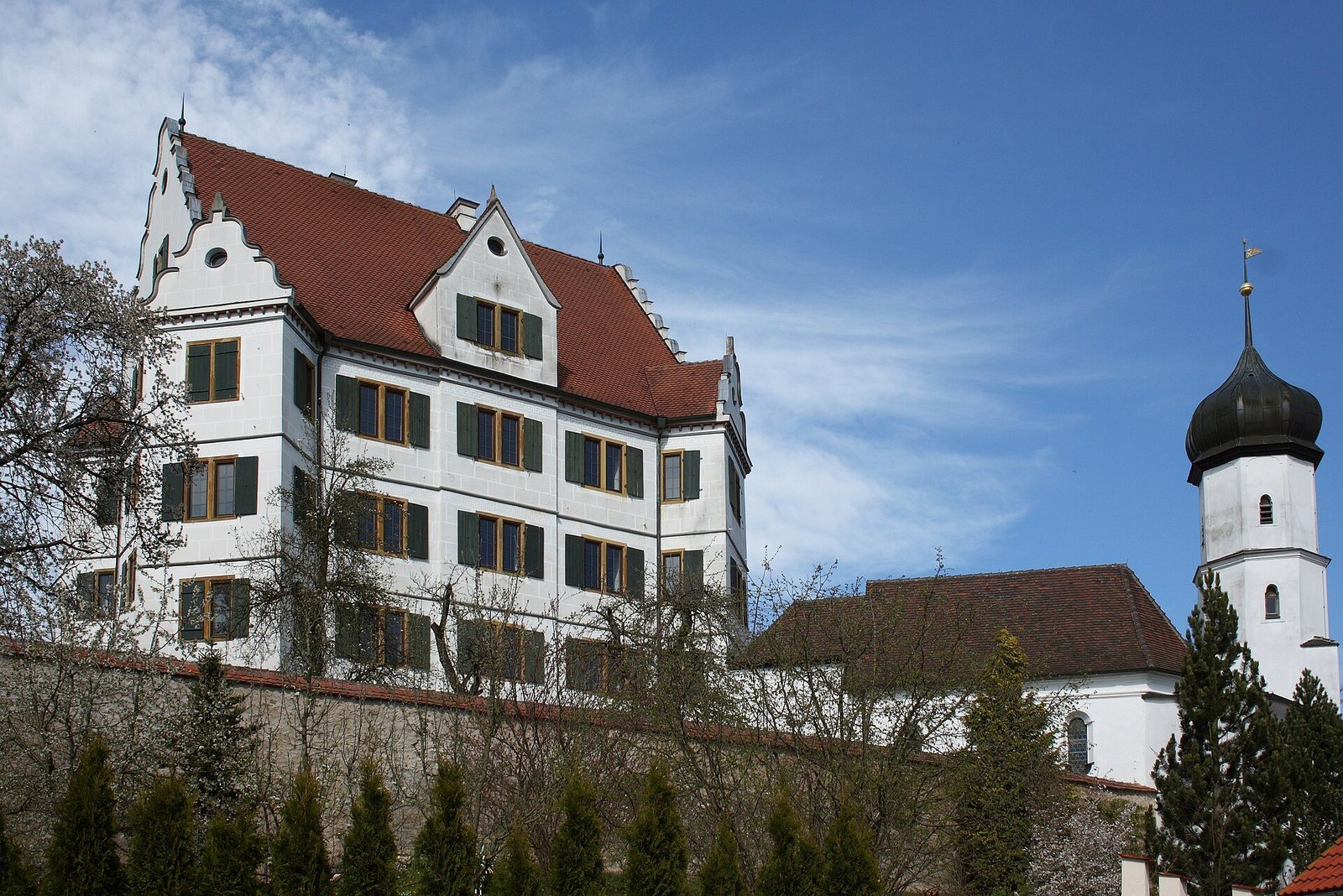
The surviving arrangement includes a principal residential building and a chapel, connected by a passage that leads to the chapel’s patron’s pew.
Principal building and chapel
Main building
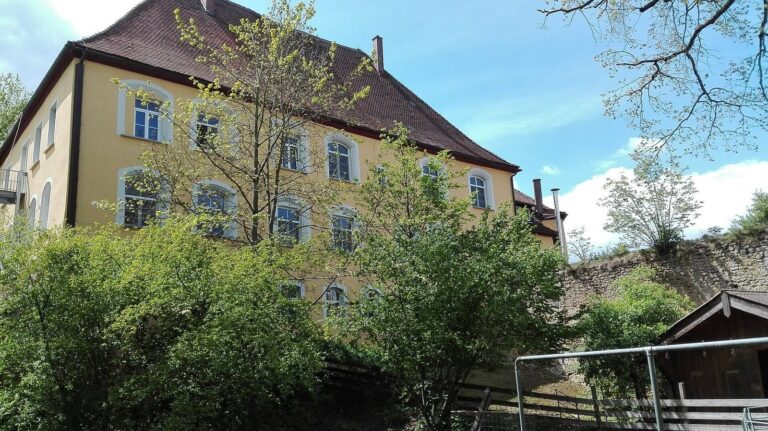
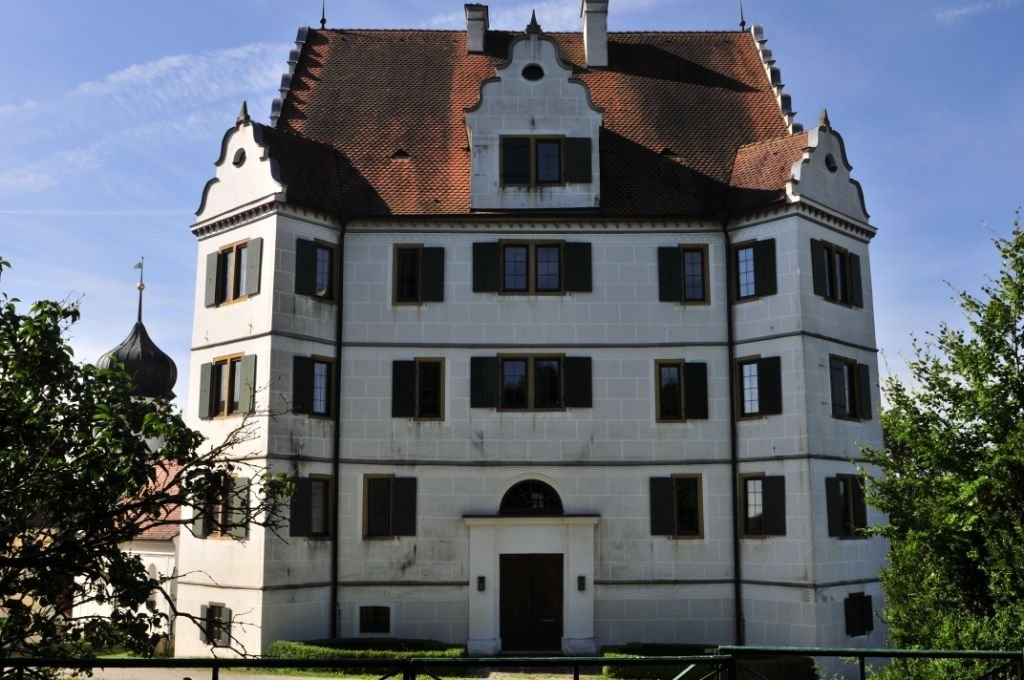
The main building is a tall, three-storey structure with a gabled form and rectangular towers at its corners.
Chapel and patron’s pew
The chapel contains a patron’s pew, reserved seating associated with the church’s patron. A connecting passage gives access to the pew from the castle.