Saint-Seine Castle: A Historic Family Residence in France
Site at a Glance
- Popularity
- Medium
- Country
- France
- Primary era
- Early Modern
- Eras represented
- Medieval, Early Modern
- Civilizations
- Duchy of Burgundy, French
- Site type
- Domestic
- Remains
- Castle
On this page4 sections
History
Saint-Seine Castle is a historic residence in France whose construction began in the seventeenth century, amid a long history of changing authority among local lords.
Medieval strongholds
From the twelfth century, the Saint-Seine family established three castles on both banks of the Vingeanne. A fortified residence, built for habitation and defense, was added at Rosières in the fourteenth century. In 1469, three fortified houses at Saint-Seine were associated with different owners: one belonged to the Duke, one to Sir Le Gouz de Saint-Seine, and a tower to Jehan, lord of Saint-Seine.
Construction and family consolidation
Construction of the castle began in the seventeenth century, when the title of lord of Saint-Seine remained contested. In 1680, Étienne-Benoit Legouz-Maillard, lord of Saint-Seine-l’Église, and Jean-Baptiste Melin, lord of Saint-Seine-la-Tour, disputed which of them was entitled to the title.
In 1728, Benoît-Etienne Legouz sold the castle to his cousin Bénigne-Germain Legouz. Through successive purchases, Bénigne-Germain brought the former lordship, an estate and the rights held with it, back together. At the end of the eighteenth century, his son transformed the castle. It has remained in the Le Gouz de Saint-Seine family since that time.
Remains
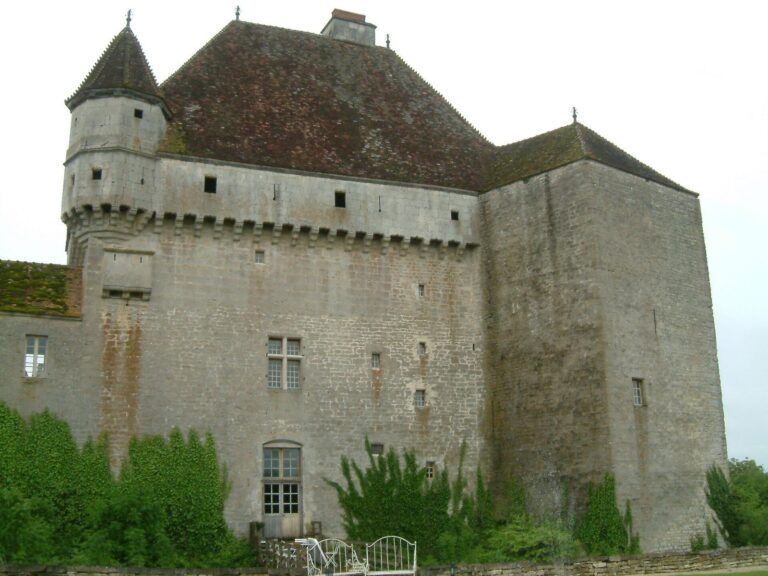
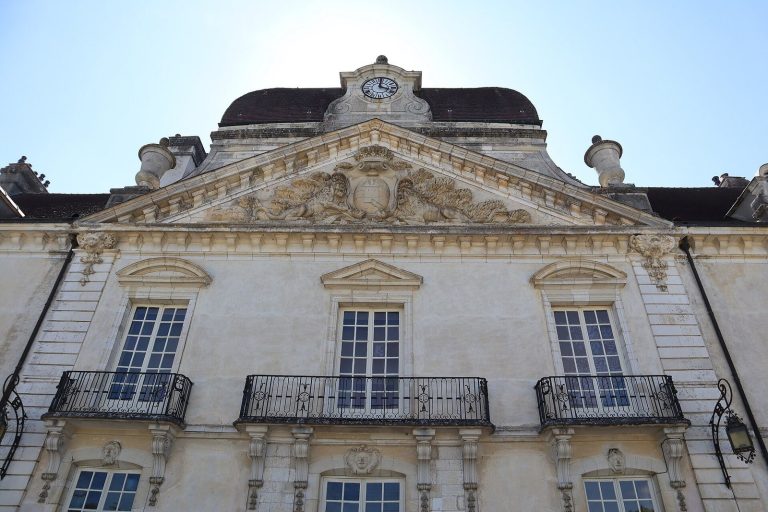
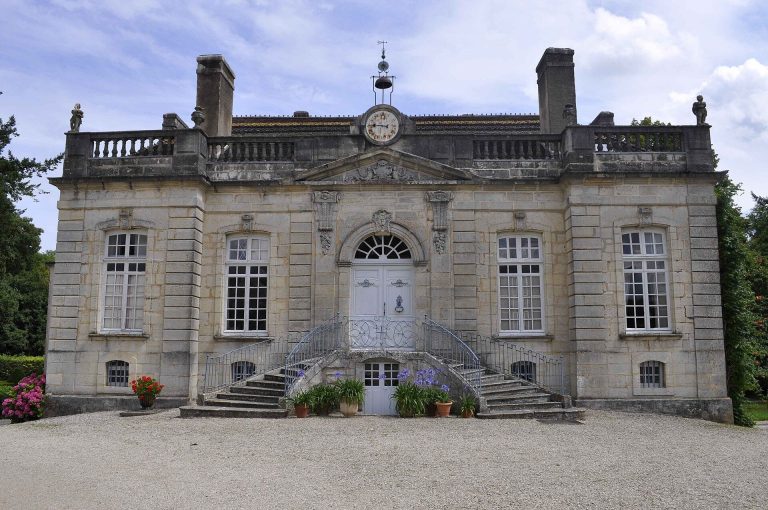
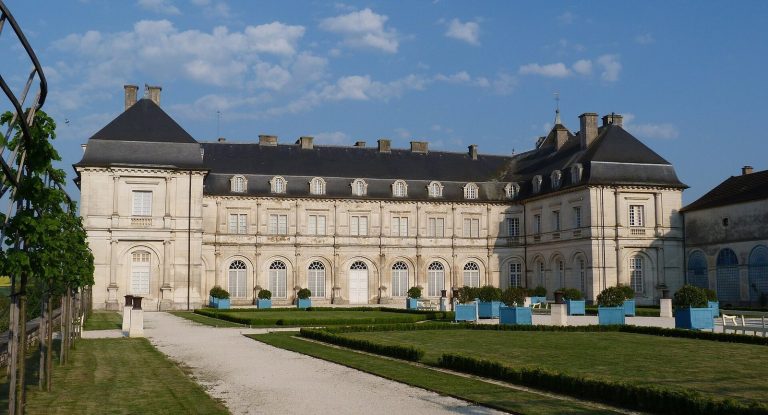
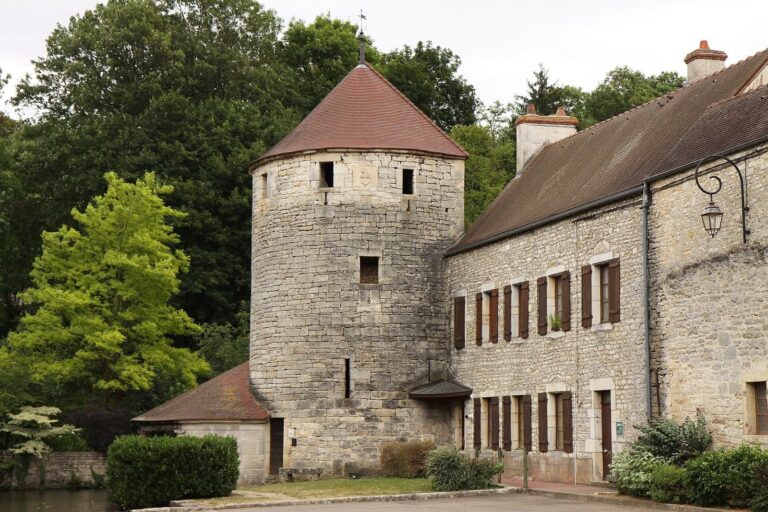
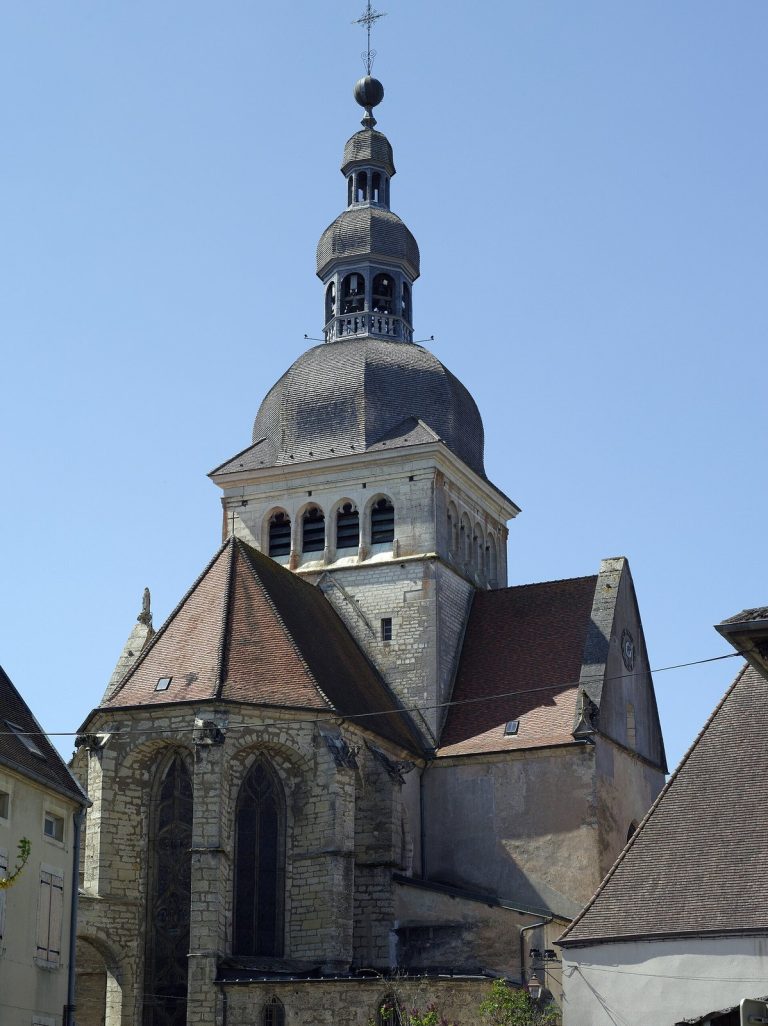
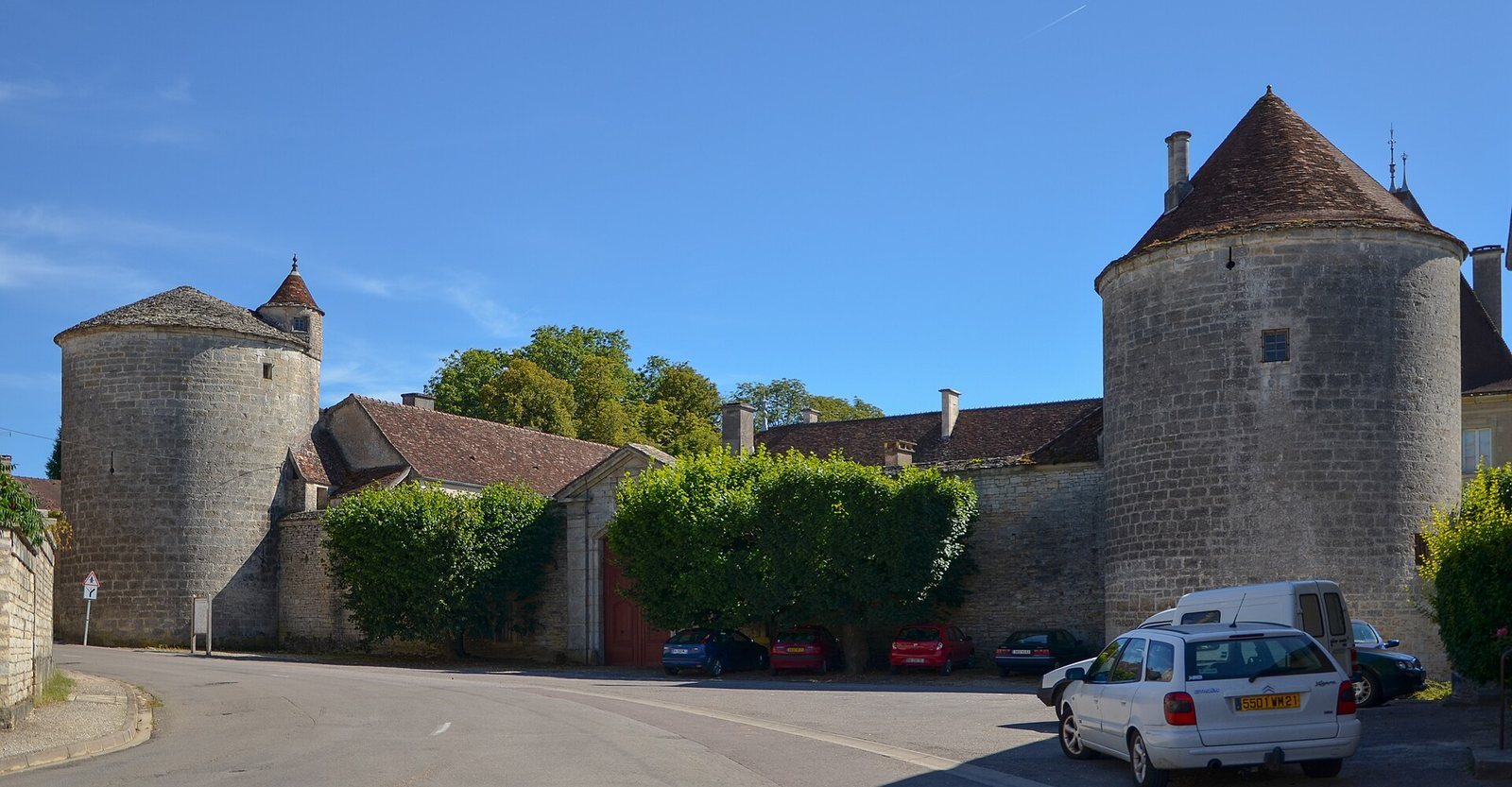
Near the church, the castle overlooks the Vingeanne valley. Its rectangular building occupies the southern side of a medieval enclosure flanked by four round towers. A monumental doorway on the north side forms the entrance. The northwest tower has openings for firing cannon, with narrow sighting slits at attic level; in the northeast tower, these openings are at the second and third levels. The two southern towers flank the later building and were modified afterward.