Gebesee Palace: A Baroque Estate in Thuringia
Site at a Glance
- Rating
- 5
- Popularity
- Very Low
- Country
- Germany
- Primary era
- Early Modern
- Eras represented
- Early Modern
- Civilizations
- Holy Roman Empire
- Site type
- Domestic
- Remains
- Elite Residence
On this page5 sections
History
Gebesee Palace, in Gebesee, Germany, is a Baroque complex established in 1740 after the medieval castle on the site was demolished. The castle’s construction date is unknown, while the palace and its associated buildings reflect an eighteenth-century rebuilding.
Medieval Castle and Early Ownership
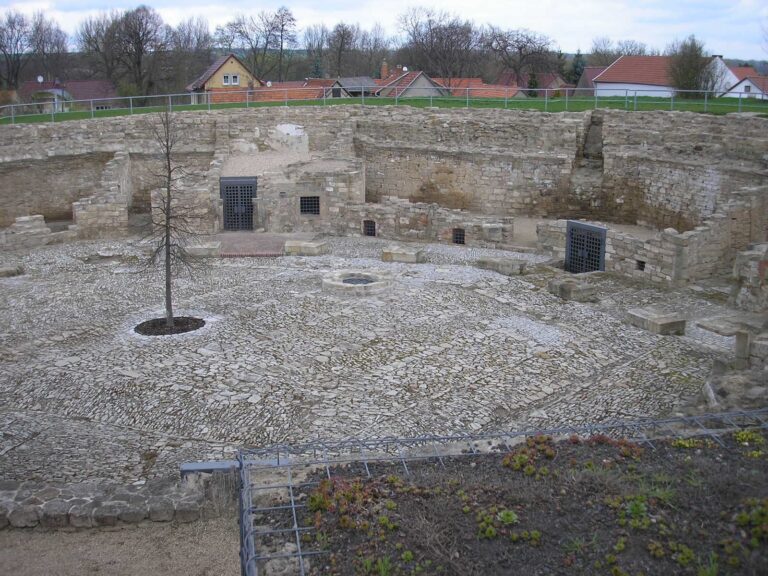
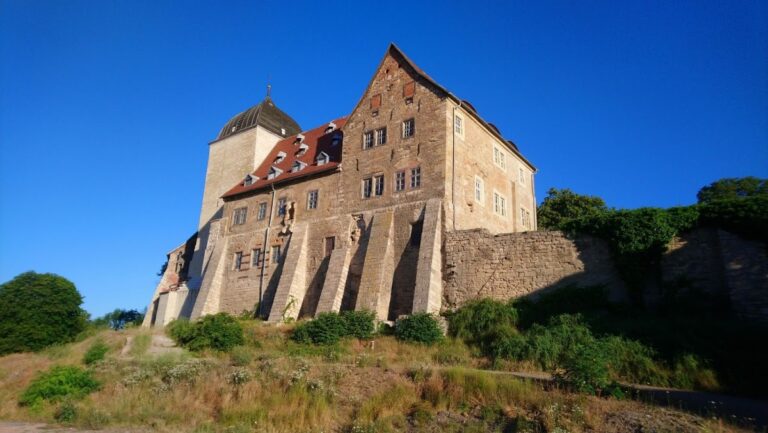
Around 772, Charlemagne, a Frankish king who became emperor in western Europe in the ninth century, maintained a royal estate near Gebesee. It was separate from the grounds of the later palace. The medieval castle at Gebesee belonged to the Landgraves of Thuringia, territorial rulers in central Germany. In 1375, the city of Erfurt besieged the castle but did not capture it.
Adam von Beichlingen bought the castle in 1519. When the Counts of Beichlingen line ended in 1567, the estate reverted to the dukes of Saxony. During the Thirty Years’ War, a major European conflict fought from 1618 to 1648, cavalry captain Caspar von Rahna acquired the castle through marriage in 1634. After his descendant Georg Hartmann von Rahna died in 1703, the complex fell into decay.
Rebuilding under the von Oldershausen Family
In 1712, the brothers Ludwig and Lewin Heinrich von Wurmb of Großfurra received Gebesee as a fief, a landholding granted with obligations to a superior. They were fined 3,000 gulden, a currency used in German-speaking territories whose value varied by place and period, for failing to register. Heinrich Ludwig and Friedrich Wilhelm von Wurmb succeeded them in 1722.
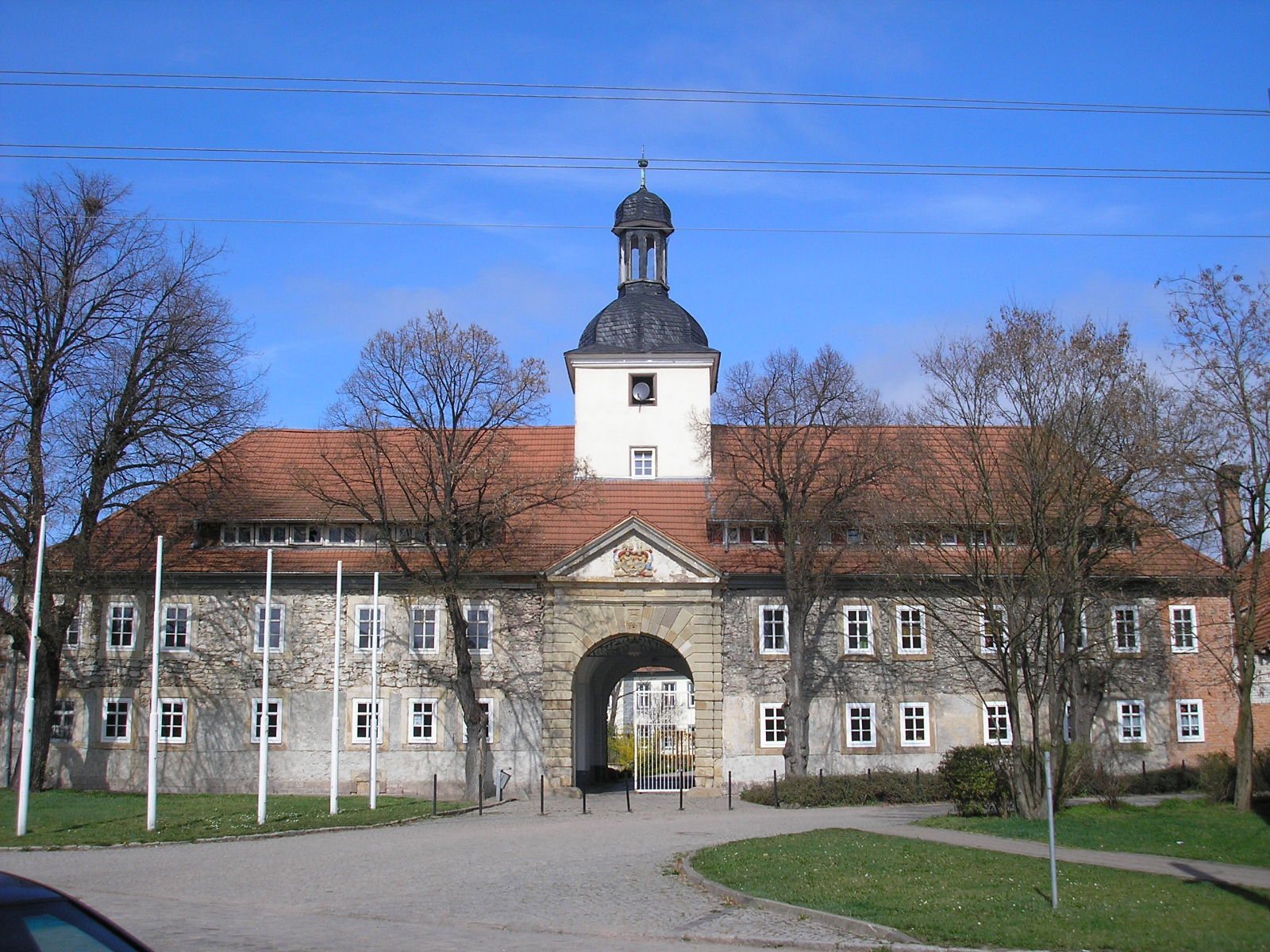
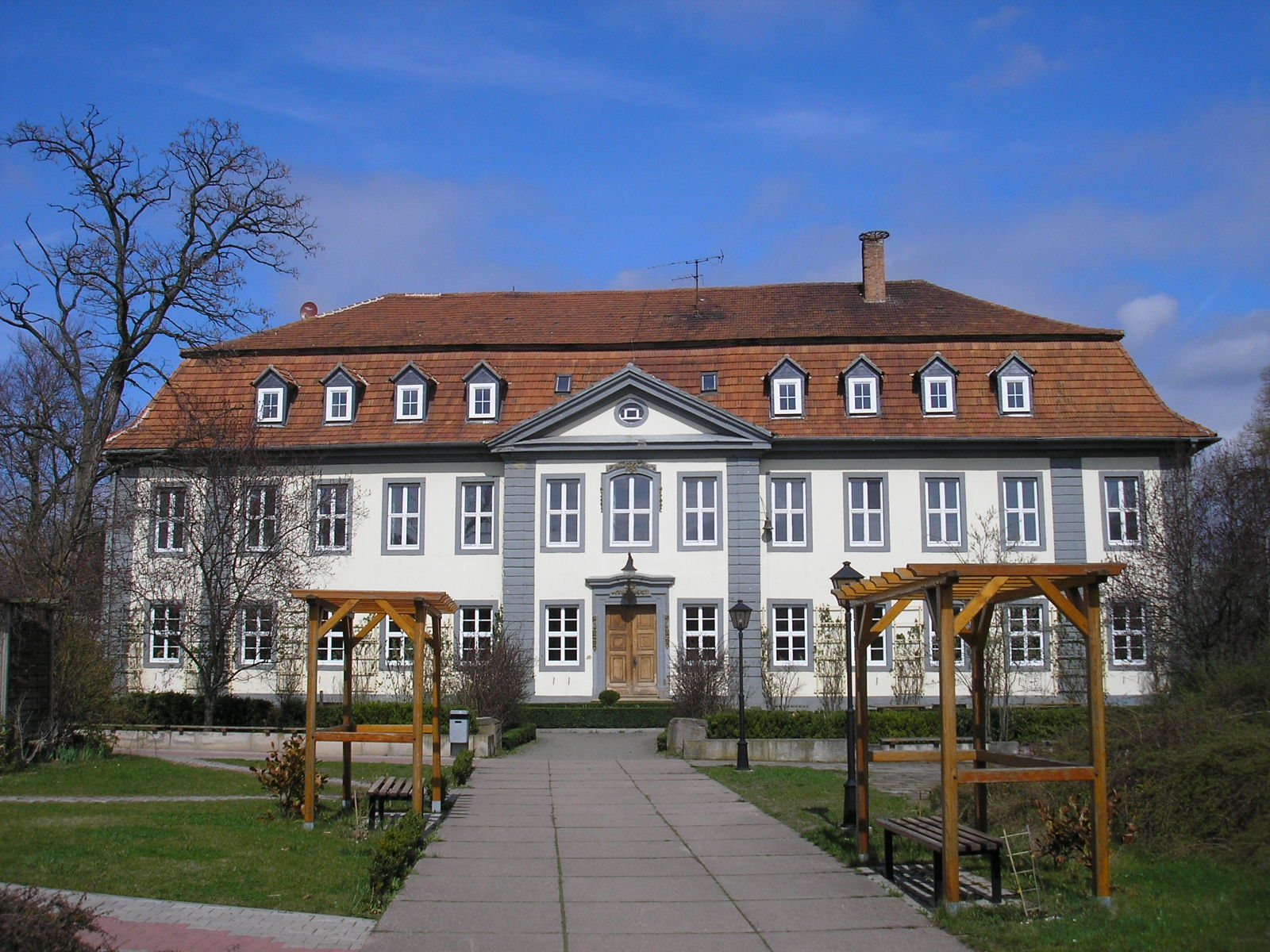
In 1724, the Wurmb brothers sold the estate for 56,500 gulden to their brother-in-law, Jobst Adam von Oldershausen. He was married to their sister Sibylle Lucretia von Wurmb and held the hereditary office of marshal in the Principality of Brunswick. Jobst Adam died in 1726. In 1734, his sons Jobst Ludwig Adam and Burckhard Friedrich Anton divided the estate. Under their inheritance agreement, Burckhard received it alone and was granted the fief in 1737. He had the castle ruins demolished and a Baroque palace built in 1740, together with an administrative building and an arched gatehouse.
Family Estate and Changing Uses
In 1845, the childless Hans Georg Friedrich August von Oldershausen agreed to transfer the estate to seven other relatives entitled to inherit the fief. Among them was Carl von Oldershausen, later mayor of Erfurt, who lived at Gebesee with his family. Carl’s son Jobst was born there on 3 May 1846. On 5 February 1850, the heirs sold the estate for 182,000 Reichstaler, another historical currency whose value varied by place and period, to Adolph Eduard von den Brincken, a senior official in the service of the Duke of Brunswick.
Later members of the von den Brincken family included Egon, a senior adviser, chamberlain, and envoy, and his younger brother Lothar (1831–1908), a district administrator and senior government official. Lothar was also a Knight of Justice in the Order of St John, a Christian religious and chivalric order. The brothers jointly held the right of church patronage for the Gebesee region.
At the end of 1918, the palace and more than 300 hectares of land were sold to Hermann Bulle, a factory owner from Altenfeld known as the “Glass King.” Before 1922, the Sachsenland settlement company, based in Halle, was registered as the owner. The estate then covered 365 hectares and was managed by an administrator named Krehuhn. In early 1923, the German Foundation for Rural Boarding Schools acquired it in exchange for its training establishment in Ilsenburg and adapted it as a school and boarding facility.
The Hermann-Lietz School, named for the German educator associated with the rural boarding-school movement, operated at Gebesee from 1923 until either 1948 or 1951. From 1933, it repeatedly resisted efforts to turn it into a National Socialist educational institution. After Nazi rule ended, it continued for a time as a youth education institution. During the GDR, the socialist East German state that existed from 1949 to 1990, the site was used as a youth reformatory, a state residential institution for young people considered to need corrective education. From 2008 it served special education through Internat Schloss Gebesee. A local agricultural business took over in 2010, and the property also housed seasonal agricultural workers during the strawberry harvest.
Remains
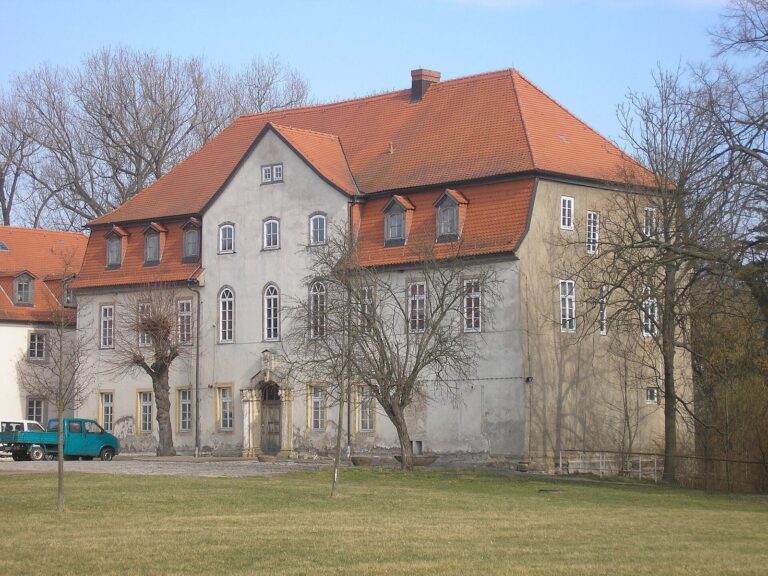
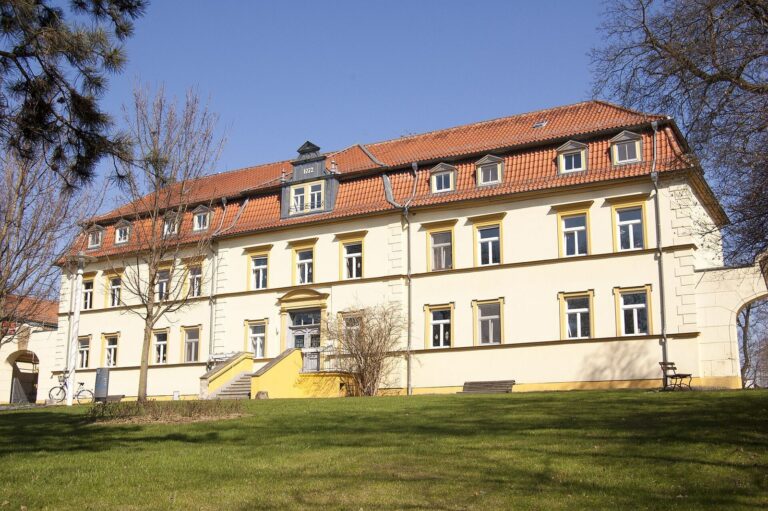
The surviving complex comprises the Baroque palace and two associated buildings, an Amtshaus (administrative building) and a Torbogenhaus (arched gatehouse). The two buildings stand alongside the palace and formed part of the eighteenth-century rebuilding.