Gaeunsa: A Buddhist Temple and Center of Monastic Education in Seoul
Site at a Glance
- Rating
- 4.4
- Popularity
- Medium
- Country
- South Korea
- Primary era
- Modern
- External website
- Open
- Eras represented
- Modern
- Civilizations
- Japanese, Joseon
- Site type
- Religious
- Remains
- Temple
On this page10 sections
History
Gaeunsa is a Buddhist temple on the foothills of Anam Mountain in Seoul, South Korea. The Korean Buddhist monk Muhak founded it in 1396, during the transition to the Joseon dynasty, and it was first called Yeongdosa.
Relocation and institutional change
Yeongdosa stood near the temple’s present location, on ground now occupied by Korea University’s College of Science and Engineering. In 1779, after Wonbin Hong, a royal consort of King Jeongjo, died young, her tomb, Myeonginwon, was established beside the temple. Gaeunsa then moved a short distance east and took its present name. The timing is uncertain: another chronology places the move during King Yeongjo’s reign, before Jeongjo’s, and a monk credited with carrying it out cannot be identified with certainty.
In 1912, under Japan’s Temple Ordinance, Gaeunsa was assigned as a principal branch temple of Bongeunsa, and its first abbot was appointed. The temple belongs to the Jogye Order, a major Korean Buddhist order associated with Seon, the Korean tradition of Buddhist meditation, and is a subordinate branch temple of Jogyesa.
Education and twentieth-century history
Daewonam, a hermitage associated with Gaeunsa, was founded in 1845. Park Hanyeong, a Buddhist monk and scholar, later established a specialist lecture hall there to train Buddhist scholars. In 1926, Park stayed at Gaeunsa, where a college for Buddhist monks was established that year. The temple developed into a prominent center of Buddhist reform and education during the twentieth century.
On 31 March 1945, the grave of Min Won-sik, a suffrage activist, lay within the temple grounds. Its location became unknown after the 1945 liberation or during the Korean War.
In the 1970s, the Seon monk and scholar Tanheo lived at Daewonam and worked on translating Buddhist scriptures. Before 1980, Gaeunsa displayed a sign reading ‘General Affairs Office’ while asserting the legitimacy of the Jogye Order’s Supreme Patriarch. The Central Sangha University, an institution for monastic education, was based at the temple from 1981 until it relocated to Gimpo.
Remains
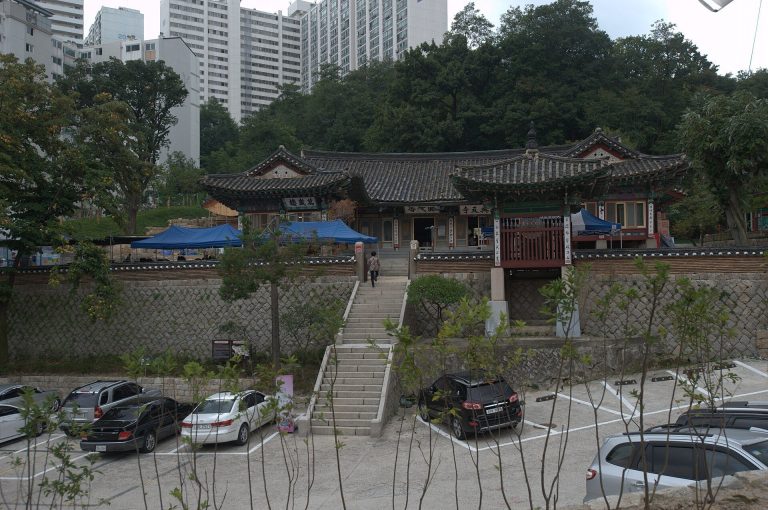
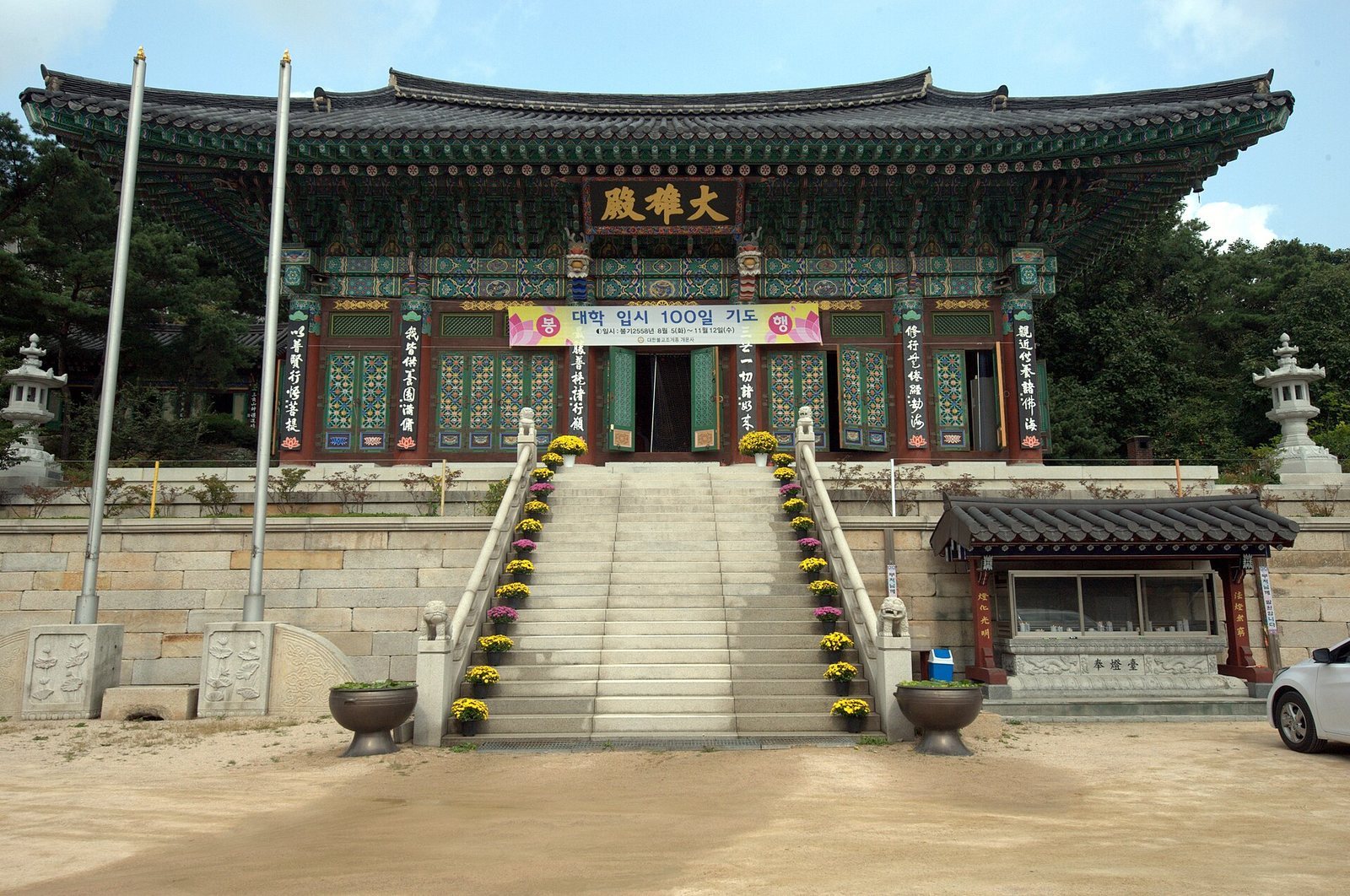
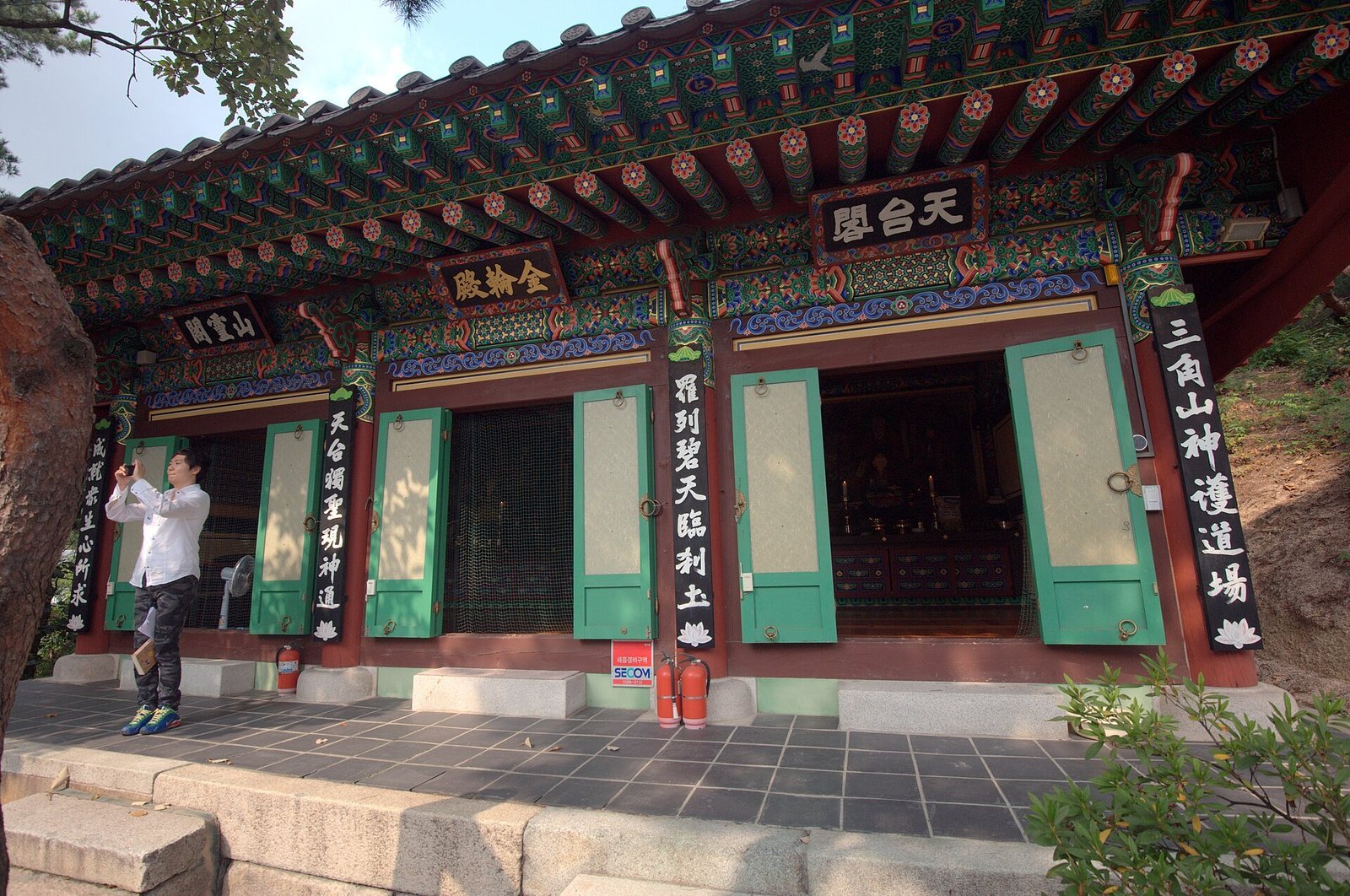
Gaeunsa occupies the foothills of Anam Mountain. Its precinct includes the Great Hero Hall, Ksitigarbha Hall, Seven Stars Hall, Solitary Sage shrine, a bell pavilion, a meditation hall, and Compassion Hall.
Main temple precinct
Principal halls
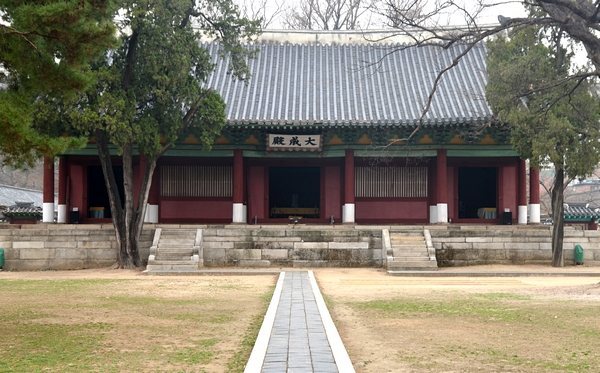
An Underworld Hall was built in 1873. The Great Hero Hall was rebuilt in 1880 and replaced by a new hall in 1993. The Solitary Sage Hall was rebuilt in 1929, and a temple service hall followed in 1932. A Seven Stars shrine was built in 1935.
Meditation hall
The temple’s meditation hall is described as the largest of its kind in the vicinity of Seoul. A finely calligraphed plaque bearing the words "Pavilion of Great Enlightenment" hangs inside.
Associated hermitages and Botasa
Hermitages
Daewonam and Chilseongam, two hermitages associated with Gaeunsa, stand about 200 metres east of the main precinct.
Botasa cliff carving
In the valley east of Gaeunsa, a seated Buddhist image is carved into a cliff face behind Botasa hermitage.