Emmerichshofen Castle: A Rococo Country Residence in Germany
Site at a Glance
- Rating
- 4.5
- Popularity
- Medium
- Country
- Germany
- Primary era
- Early Modern
- Eras represented
- Early Modern
- Civilizations
- Electorate of Mainz, Holy Roman Empire
- Site type
- Domestic
- Remains
- Castle
On this page6 sections
History
Emmerichshofen Castle is an aristocratic country residence north of Kahl am Main in Lower Franconia, Germany. Count Anselm Franz von Bentzel-Sternau built it in 1766 in the Rococo style, an ornate European style of the eighteenth century.
Von Bentzel-Sternau was a minister of the Electorate of Mainz, a state in the Holy Roman Empire ruled by the archbishop of Mainz, who also held the rank of prince-elector. He named the residence for his patron, Emmerich Joseph von Breidbach-Bürresheim, then archbishop of Mainz. The Barons Waitz von Eschen have owned the castle since the early nineteenth century.
Remains
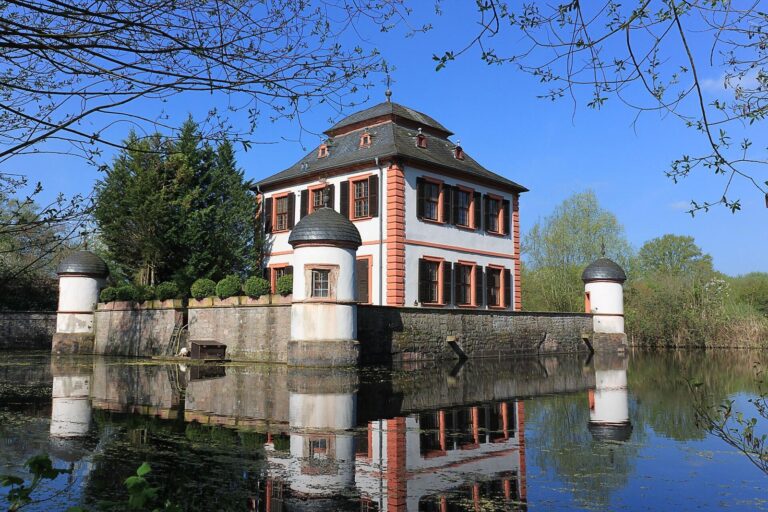
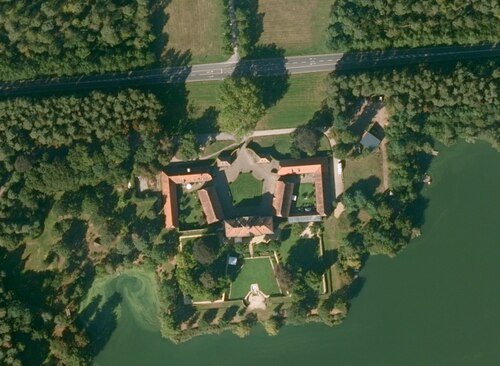
The castle stands in a wooded lake landscape within the Kahler Seenplatte, a lake district around Kahl am Main. Its main residence and lower secondary buildings form several courtyards, while a garden extends behind the house.
Buildings and courtyard
Main residence
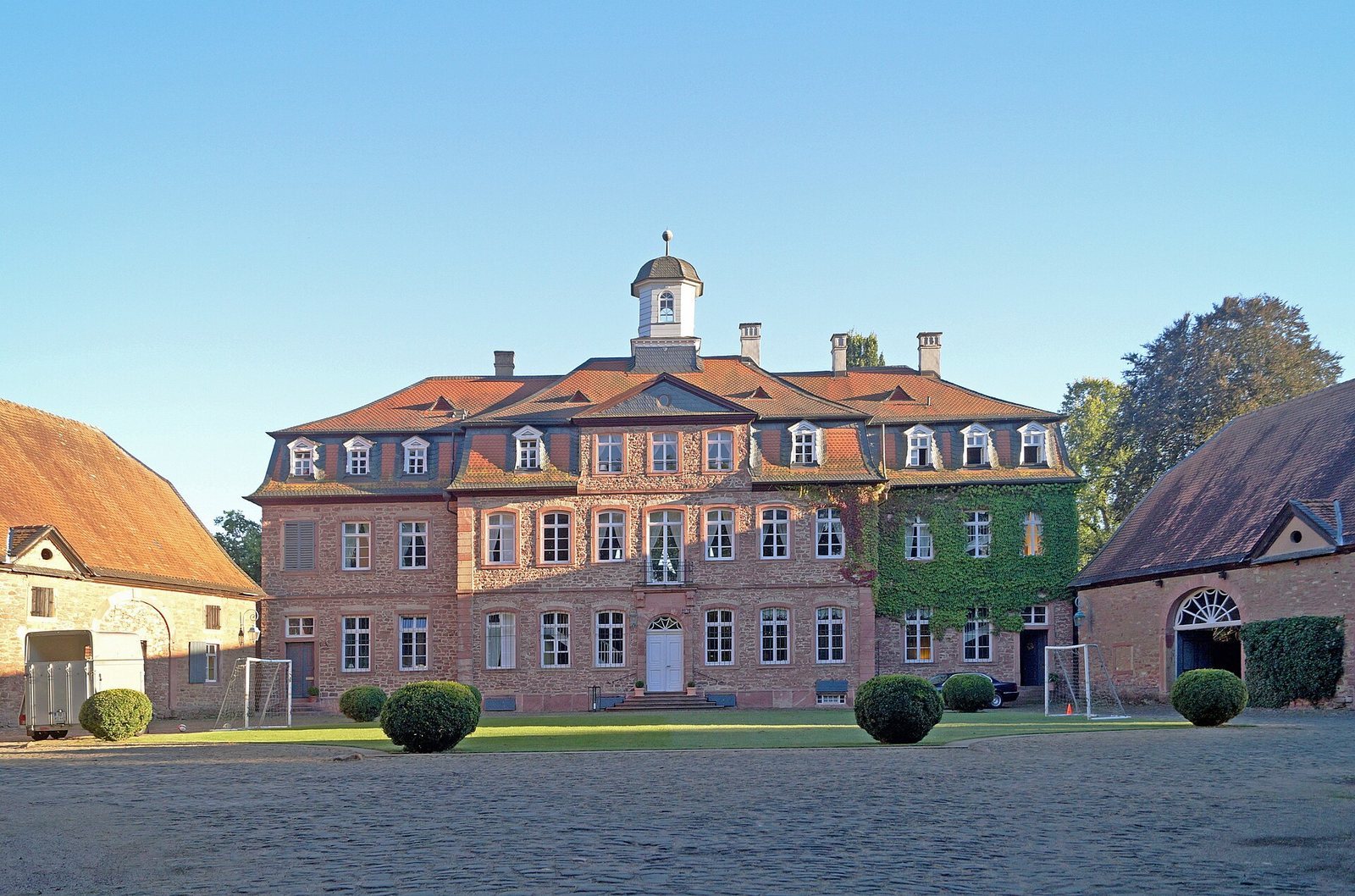
The two-storey main building has a mansard roof, with two slopes on each side and a steeper lower slope, as well as a finished attic and a roof turret. Central sections projecting from the building emphasize both of its long sides.
Secondary buildings and courtyard
The lower ancillary buildings have simpler gable roofs with partly sloping ends. Together with the main house, they enclose several courtyards. The trapezoidal castle courtyard is closed at the front by an outward-curving wall, with two buildings serving as gatehouses and guardhouses.
Garden and park
A large garden terrace lies behind the castle within an English landscape garden, designed to evoke natural scenery rather than formal geometric patterns. Wall-like wings at the narrow ends of the main building may originally have been intended as arcades, or rows of arches forming a walkway, to mark the end of the park.