Ebersberg Castle: A Historic Estate in Thurgau
Site at a Glance
- Popularity
- Medium
- Country
- Switzerland
- Primary era
- Modern
- Eras represented
- Early Modern, Modern
- Civilizations
- Swiss
- Site type
- Domestic
- Remains
- Castle
On this page9 sections
History
Early record and family ownership
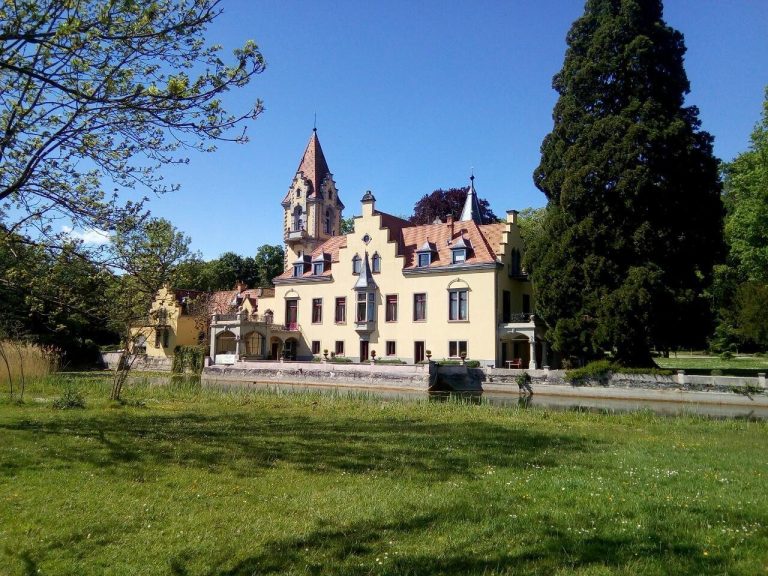
Ebersberg Castle is a historic estate at the edge of Emmishofen, in Kreuzlingen, Switzerland. It was first recorded in 1530 as Ober-Girsberg, when Niclaus I de Gall-Aigen, a long-distance merchant based in Konstanz, acquired it. His father, Bernhardin de Gall, also known as Gallo, had moved from Como to Konstanz and gained citizenship there in 1501.
During the Reformation, the sixteenth-century movement that brought major religious changes across Europe, Andrea de Gall sold the estate and entered the service of the Landgrave of Hesse, a territorial ruler in the Holy Roman Empire. Andrea became an ancestor of the Hessian von Gall family. A family named Kunz owned the property during the seventeenth and eighteenth centuries, giving rise to its former name, Kunzenhof.
Villa and rebuilding
In 1816, prominent surgeon Johann Nepomuk Sauter bought the estate for 20,000 gulden, a historical currency used in parts of Europe. He remodeled the residence as a stately villa and had a garden laid out. The building was destroyed by fire in 1848.
The von Zeppelin estate
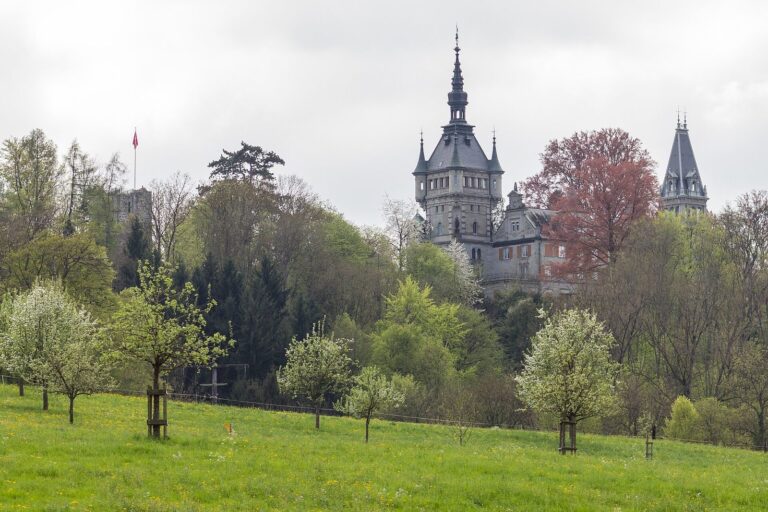
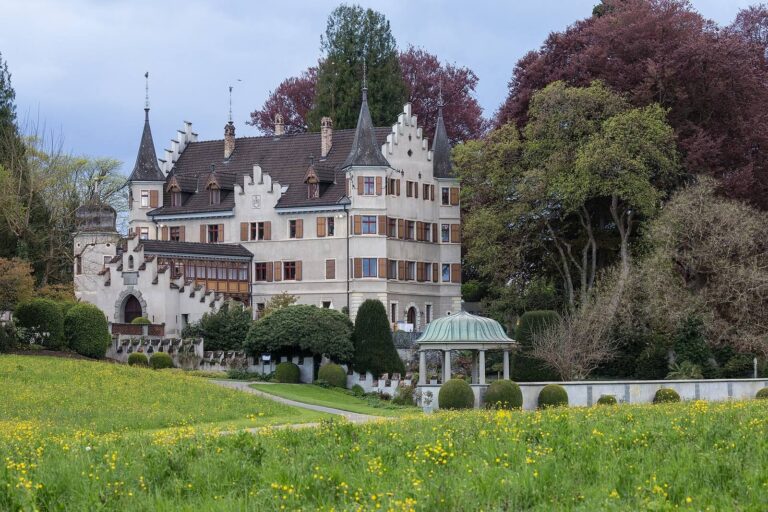
Konstanz textile manufacturer and banker Moritz Macaire bought the estate on 9 July 1867 for 82,000 Swiss francs. He died two months later, and his heirs sold the property in 1869 to Count Eberhard von Zeppelin, brother of airship designer Ferdinand von Zeppelin. Eberhard enlarged the estate, developed the residence into a castle, and named it Ebersberg after himself.
Twentieth-century owners
After Eberhard von Zeppelin died in 1906, the estate passed through several owners. Jacob von Salis of Graubünden acquired it in 1928, renovated the castle, and turned the property into the canton of Thurgau’s largest poultry-farming estate.
German industrialist Friedrich Flick bought the castle in 1960 as a holiday residence. After his death in 1972, the estate passed to his son, Friedrich Karl Flick. Following the son’s death in 2006, his daughter Elisabeth von Auersperg-Breunner took ownership and sold it in mid-November 2011.
Remains
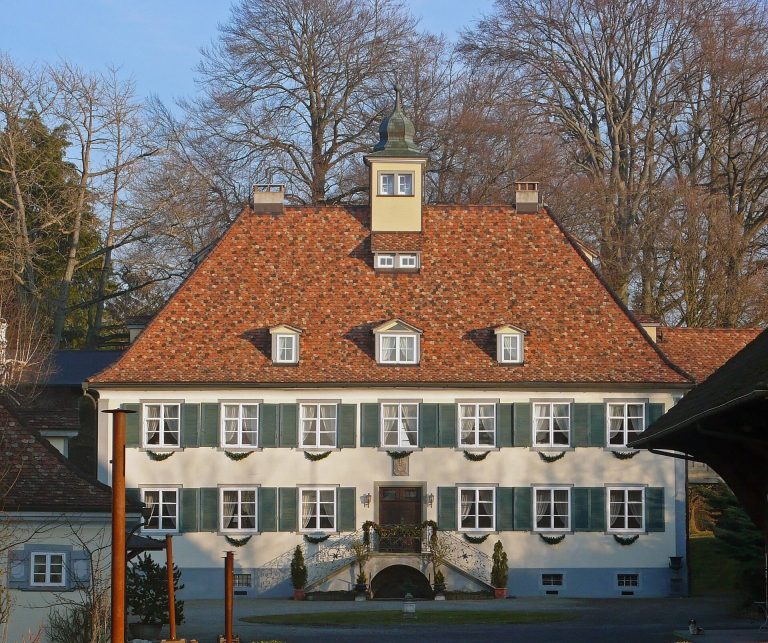
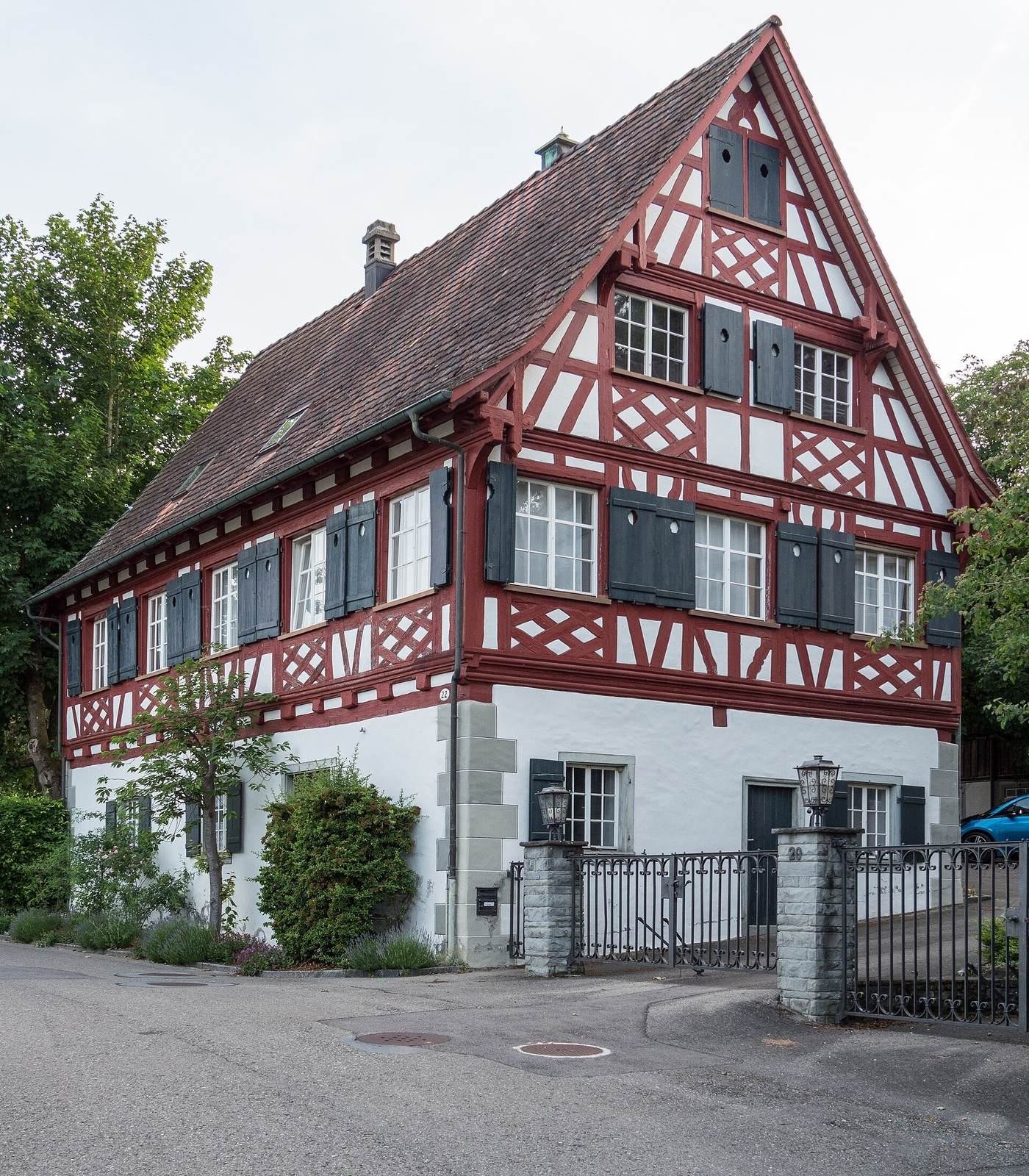
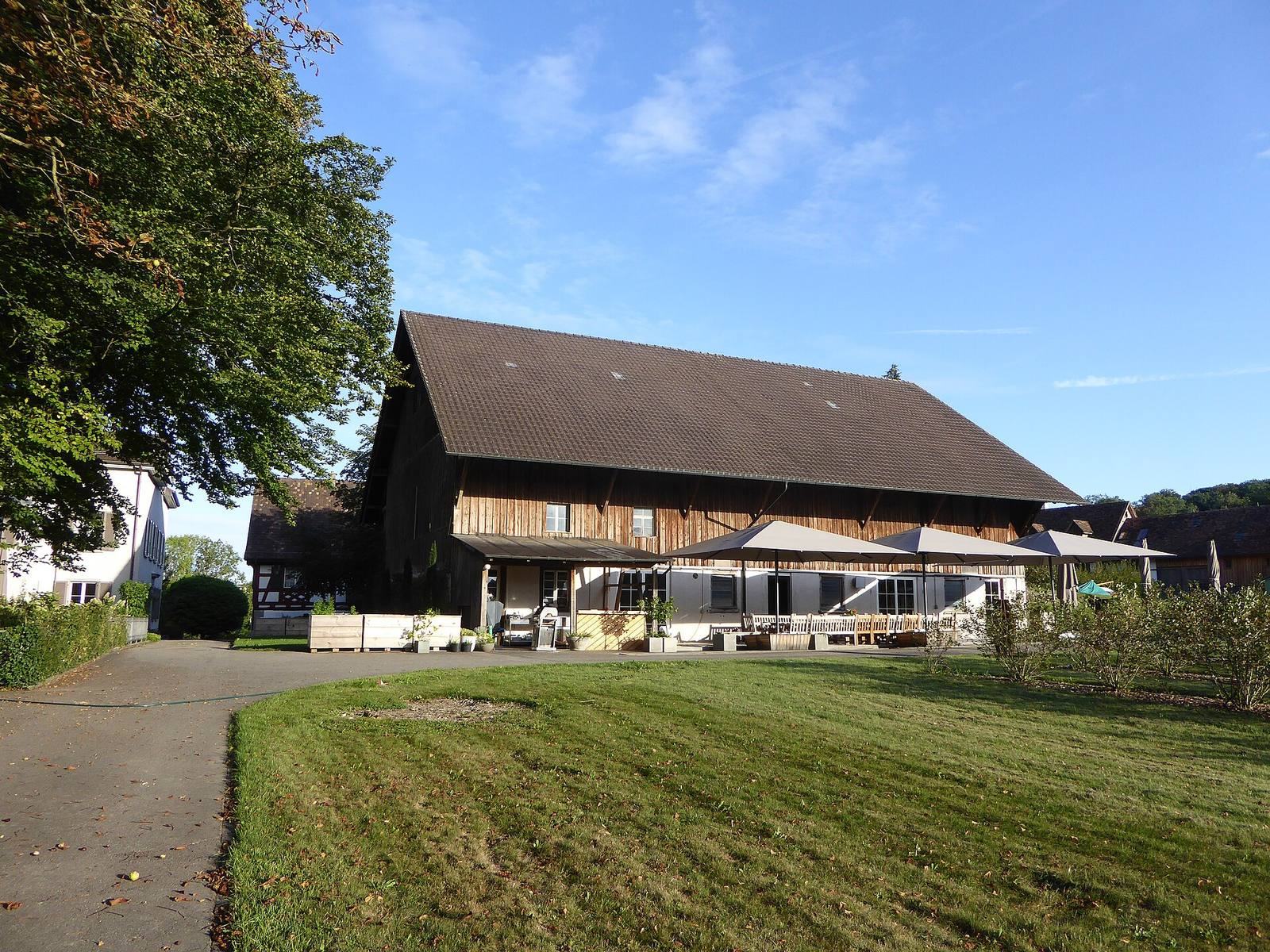
The estate lies at the edge of Emmishofen, and its residence is a castle. A wine-press building and a tenant house were built beside the castle in 1798; the tenant house still exists.
Castle and associated buildings
Castle residence
After the 1848 fire, the residence was rebuilt in the late Biedermeier style, a Central European artistic style associated with the first half of the nineteenth century. Interior work in 1960 gutted and refurnished the building, following plans by architect Georg Felber.
Wine-press building and tenant house
The wine-press building and tenant house were constructed beside the castle in 1798. The tenant house survives.