Scherzingen Reformed Church: A Historic Protestant Church in Thurgau
Site at a Glance
- Popularity
- Very Low
- Country
- Switzerland
- Primary era
- Early Modern
- Eras represented
- Early Modern, Modern
- Civilizations
- Swiss
- Site type
- Religious
- Remains
- Church
On this page13 sections
History
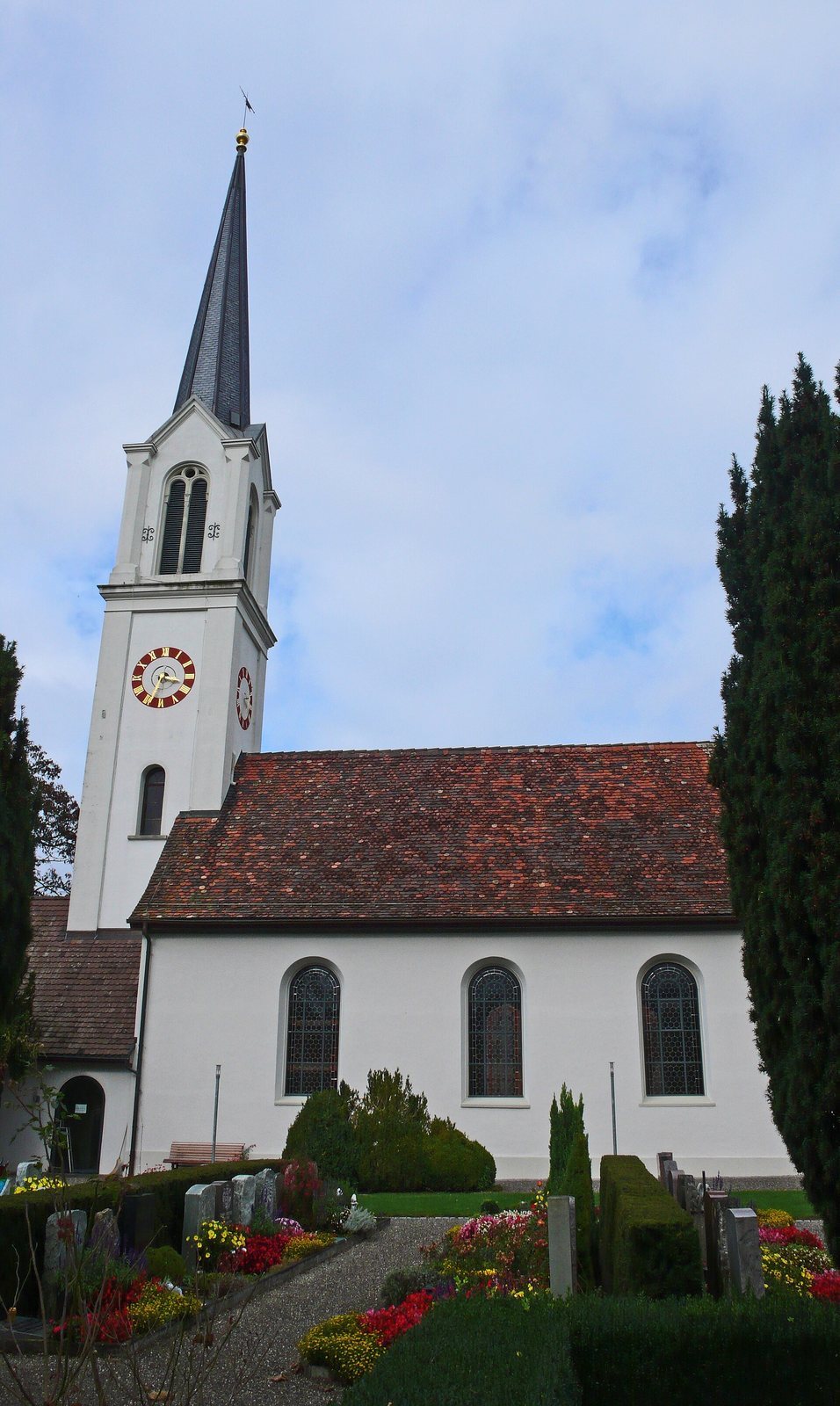
The Scherzingen Reformed Church stands in Scherzingen, within the municipality of Münsterlingen, Switzerland. Built in 1617–18, it is the oldest church building of the Reformed tradition in Thurgau. Its creation followed decades of conflict over Protestant worship at Münsterlingen Abbey, a Benedictine women’s monastery.
Reformation and shared worship
Reformation ideas reached Thurgau after the movement began in Zurich in 1523. In 1524, Münsterlingen Abbey’s priest adopted the Reformed faith, was imprisoned, and was eventually forced to leave the region. Between 1522 and 1539, the abbey’s nuns also became Protestant despite prohibitions from the Catholic cantons and Thurgau’s bailiff. A Protestant preacher served in the abbey church in 1528–29 and ended the Mass. In 1529, Huldrych Zwingli, a leading figure in the Swiss Reformation, led the first Thurgau synod, an assembly of church representatives.
In 1532, the prioress resisted the politically enforced return of the Mass and left the abbey for Constance. After Constance became Catholic again in 1547, Protestant pastors from Tägerwilen to Altnau met at a synod in St. Gallen rather than at their former gathering place in Constance. That same year, three Benedictine nuns from Uri re-established Münsterlingen Abbey. They occupied the choir of its old church, while Protestant worship continued in the rest of the building, making it a shared church.
From 1584, Catholic cantons and the Thurgau bailiff pressed to end Protestant services in the abbey church. A proposal set out in 1594 called for a separate Protestant church near Scherzingen, with two bells and patronage rights held by the abbey. The abbey would pay for a pastor’s residence, the pastor’s and sexton’s salaries, and assistance for poor Protestants; the congregation would pay tithes to the abbey. The bailiff of Schwyz put the arrangement into effect in 1596.
A separate church and parish
The church was built in 1617–18 under the responsibility of Barbara Wirth of Wil, then abbess of Münsterlingen. Protestants asked for it to be placed nearer the road, and their request was accepted on the condition that they pay for any damage their choice caused. A formal baptism register began in 1618. Joh. B. Collinus became pastor in 1646 and swore an oath to the abbess. His diary, kept through 1692, records the introduction of registers for baptisms, marriages, and deaths.
During the 1656 Rappenschweiler conflict, the nuns fled to Constance. Collinus temporarily administered the abbey, its properties, and its benefice lands, property or income attached to a religious office. He also housed nearly 500 soldiers billeted at the abbey. In 1695, Bottighofen had 290 Protestants in 60 families, while Scherzingen had 151 in 31 families.
The parish’s boundaries changed in the early eighteenth century. In 1709, Kurzrickenbach-Egelshofen, now Kreuzlingen, became independent in political and church affairs, ending its former dependent relationship with Scherzingen-Bottighofen. A dependent congregation is attached to another parish rather than operating independently. In 1712, Oberhofen transferred from the dependent congregation of Güttingen to Scherzingen-Bottighofen. In 1746, two families disputed rights to three pews; they settled the matter by giving the first person to arrive the first choice of the relevant seat.
Parish and ownership changes
Thurgau established moral courts in 1808. In 1819, church governing boards took responsibility for those courts and for the office of justice of the peace. Protestants petitioned the abbey for a comprehensive church renewal in 1829 and again in 1839. After the abbey was dissolved in 1844, the congregation bought the church, parsonage, and cemetery from it in 1845.
A separate Protestant parish served the cantonal hospital at Münsterlingen from 1863 to 1870, after which pastoral care returned to Scherzingen. In 1874, the congregation rejected a men’s choir proposal to purchase a harmonium for the church by a three-quarters majority. In 1888, the congregation had 681 members. The locality figures included 464 members in Oberhofen, 102 eligible voters in Bottighofen, and 56 members in Scherzingen.
Twentieth-century congregation
In 1920, the congregation ended the rule that gravestones had to face east. In 1931, it decided to keep using a communal chalice for communion rather than adopt individual cups. In 1942, Oberhofen separated to form an independent congregation with Illighausen. That year E. Munz became the congregation’s first president who was not a theologian, after Pastor Joss voluntarily declined the position.
The church serves Sunday worship for the independent Scherzingen-Bottighofen Protestant congregation. It belongs to Deanery IV Obersee, a regional administrative division of the Protestant Church of the Canton of Thurgau.
Remains
The church’s documented features include a choir and gallery within the building, as well as a tower. Alterations to these parts over time shape the surviving fabric and interior arrangement.
Church and tower
Church building and choir
Descriptions from 1715–24 portray a building in poor repair. Its door had no lock and had been patched temporarily with old boards; the roof leaked enough for snow to fall on the congregation, and the bell beams were rotten. Itinerant students repeatedly broke the windows. The choir was renovated in 1747, when the congregation acquired 32 chairs. A heating stove was installed in 1896.
Tower
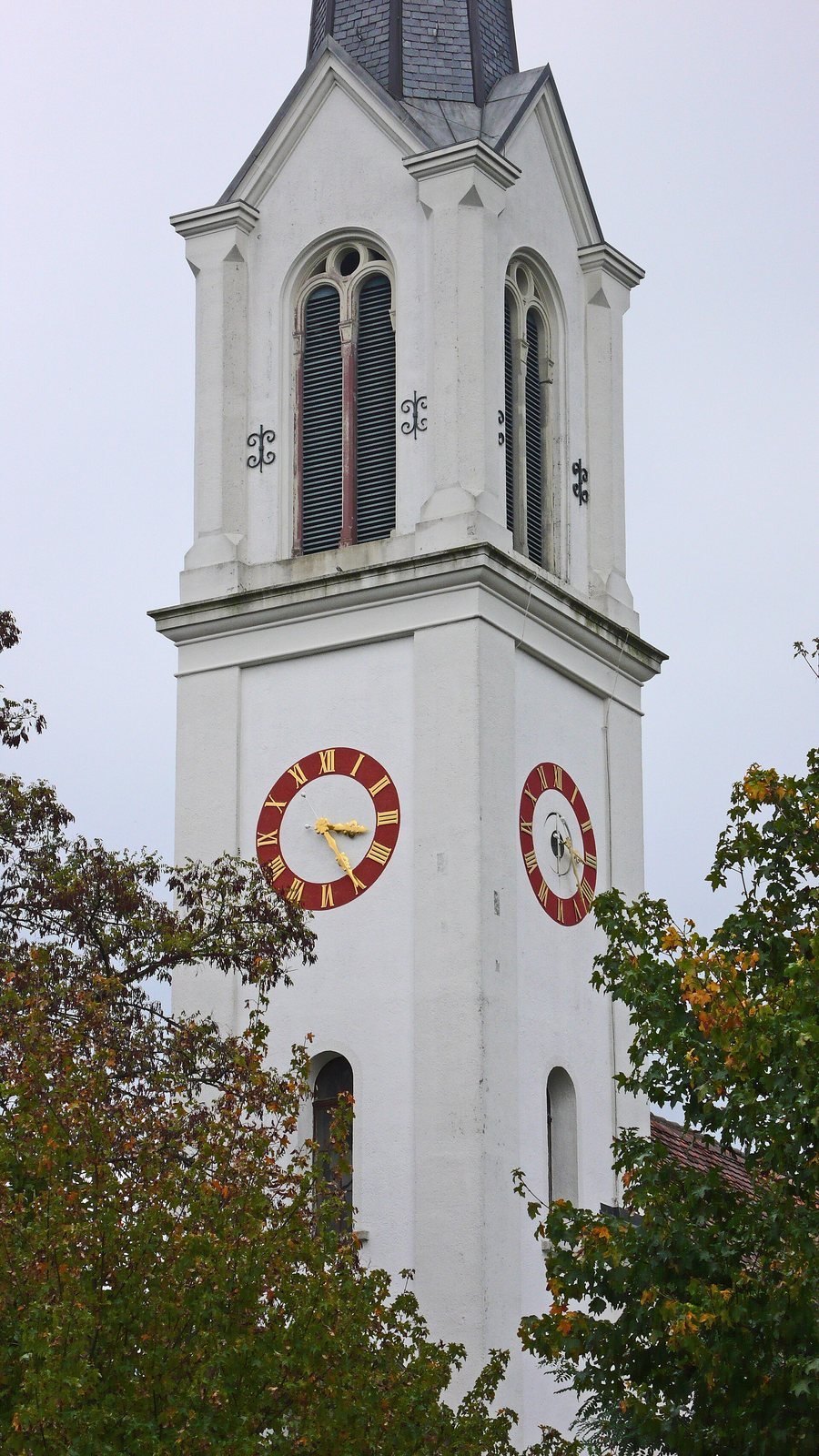
The tower and bells were erected in 1886, and the tower clock was inaugurated in 1887. Work in 1949–50 removed four small turrets, redesigned and repaired the tower roof, and renewed the church façade. A proposed tower porch to block the wind was controversial. A tool shed with toilets was also built during this period.
Interior and furnishings
Gallery, pulpit, and organs
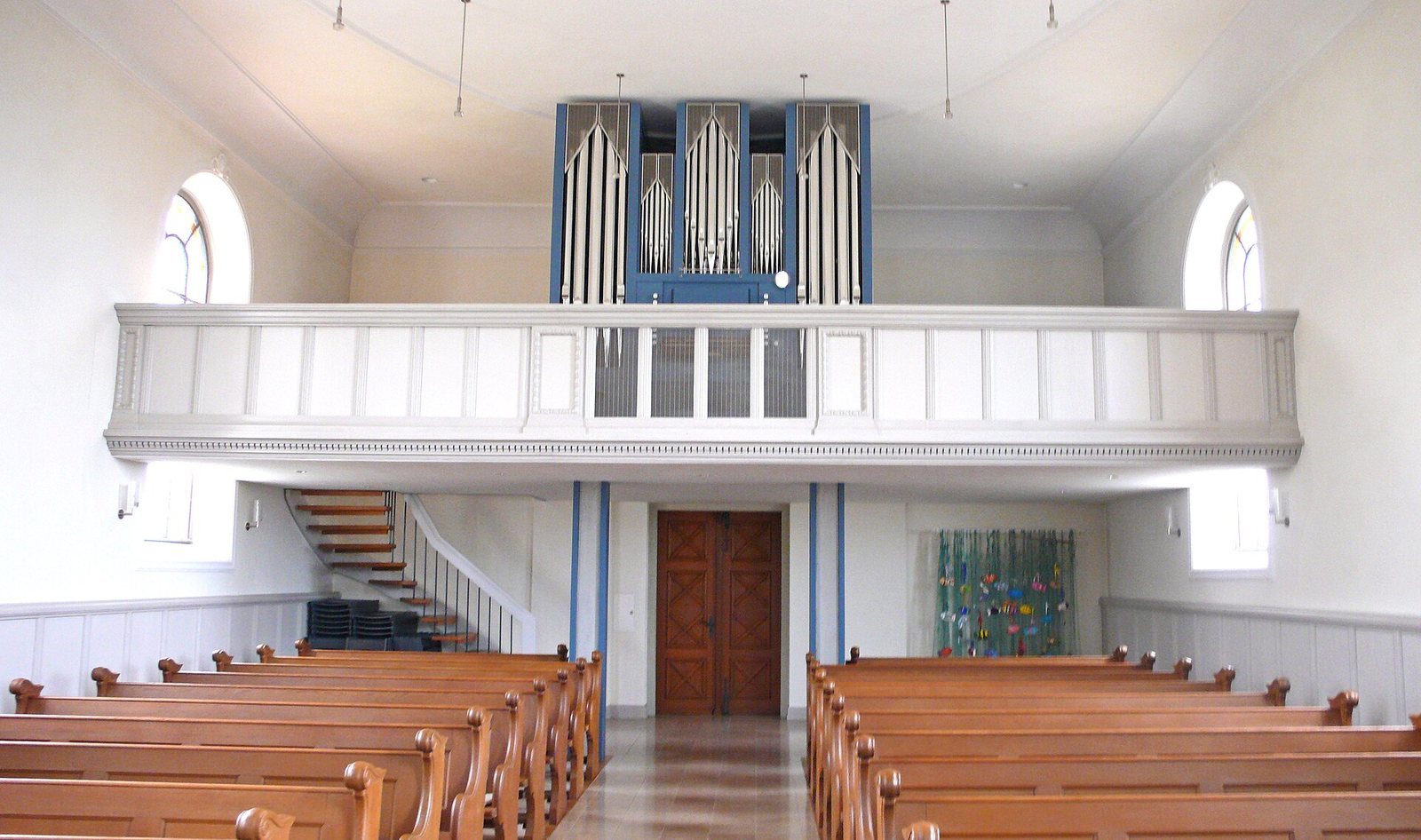
The first organ, installed in 1903, stood in the choir. A new gallery was built in 1924, and the pulpit was moved to the center, in front of the organ. The cemetery door was removed and an emergency exit made in the choir. A new organ was inaugurated in 1950, when the pulpit returned to the side. The church’s 2002 renovation was followed by the installation of a third organ on the gallery in 2003.
Windows
The windows were redesigned in 1955 with coats of arms representing local communities and the abbey. Glass windows were added to the choir during the 2002 renovation.
Communion vessels
A childless couple donated communion vessels in 1647, and they remained in use in 2012.