Schloss Ditterswind: A Former Aristocratic Residence in Germany
Site at a Glance
- Popularity
- Medium
- Country
- Germany
- Primary era
- Modern
- Eras represented
- Early Modern, Modern
- Civilizations
- German, Holy Roman Empire
- Site type
- Domestic
- Remains
- Castle
On this page7 sections
History
Medieval landholding and the Stein family
Schloss Ditterswind is a former aristocratic residence in the village of Ditterswind, in Lower Franconia, Germany. The place-name has been interpreted as referring to a settlement of Slavic, or Wendish, people established by a German landholder. In the Middle Ages, several co-heirs held land in the locality. The lords of Stein zu Altenstein were among them from the fourteenth century and had established themselves in Ditterswind by the seventeenth.
The Stein family began building a new castle around 1711, possibly incorporating elements of an older structure. Work continued until 1743, partly because of persistent financial difficulties. In the early eighteenth century, the family’s main line had left its ancestral castle for the more modest Schloss Pfaffendorf in the valley.
Nineteenth-century rebuilding
The Fuchs von Bimbach und Dornheim family owned the property toward the end of the eighteenth century. The von Deuster family acquired it in 1841 and held it until 1950; the family was ennobled in 1884. In 1880, it began rebuilding and enlarging the complex in Neo-Renaissance forms, which adapted features associated with Renaissance buildings.
Postwar and institutional use
American troops briefly occupied the castle at the end of the Second World War, after which it became a transit camp for refugees. In 1947, Carl von Deuster made rooms available to the Inner Mission, a German Protestant movement for organized Christian social welfare.
The Rummelsberger Anstalten, a Protestant organization providing social-care services, acquired the castle in 1950. It housed a children’s home until the 1960s, then became a home for people with intellectual and multiple disabilities in 1967. Residents were largely integrated into village life. The Rummelsberger Diakonie left in December 2015, and the castle stood empty thereafter. It has been privately owned since 2017. Postwar alterations changed the building, which received a thorough repair from 1984 to 1987.
Remains
Exterior
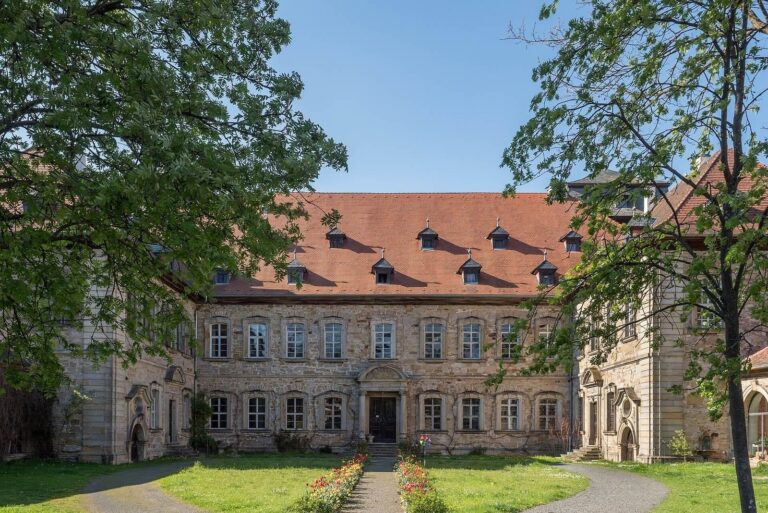
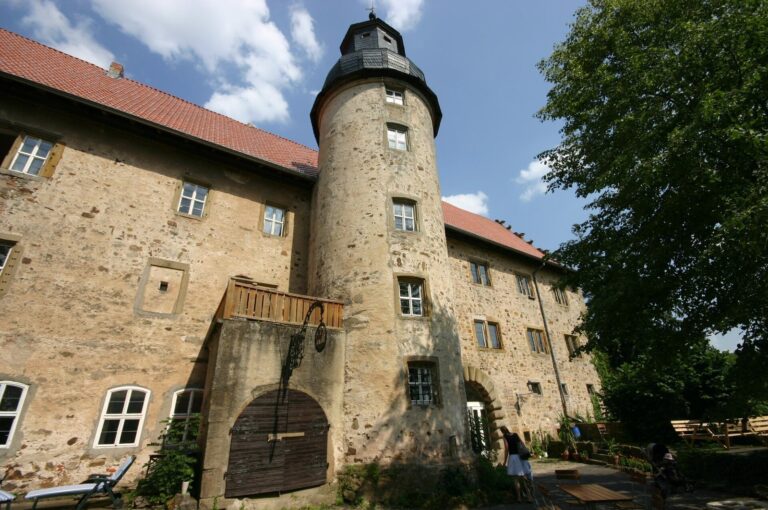
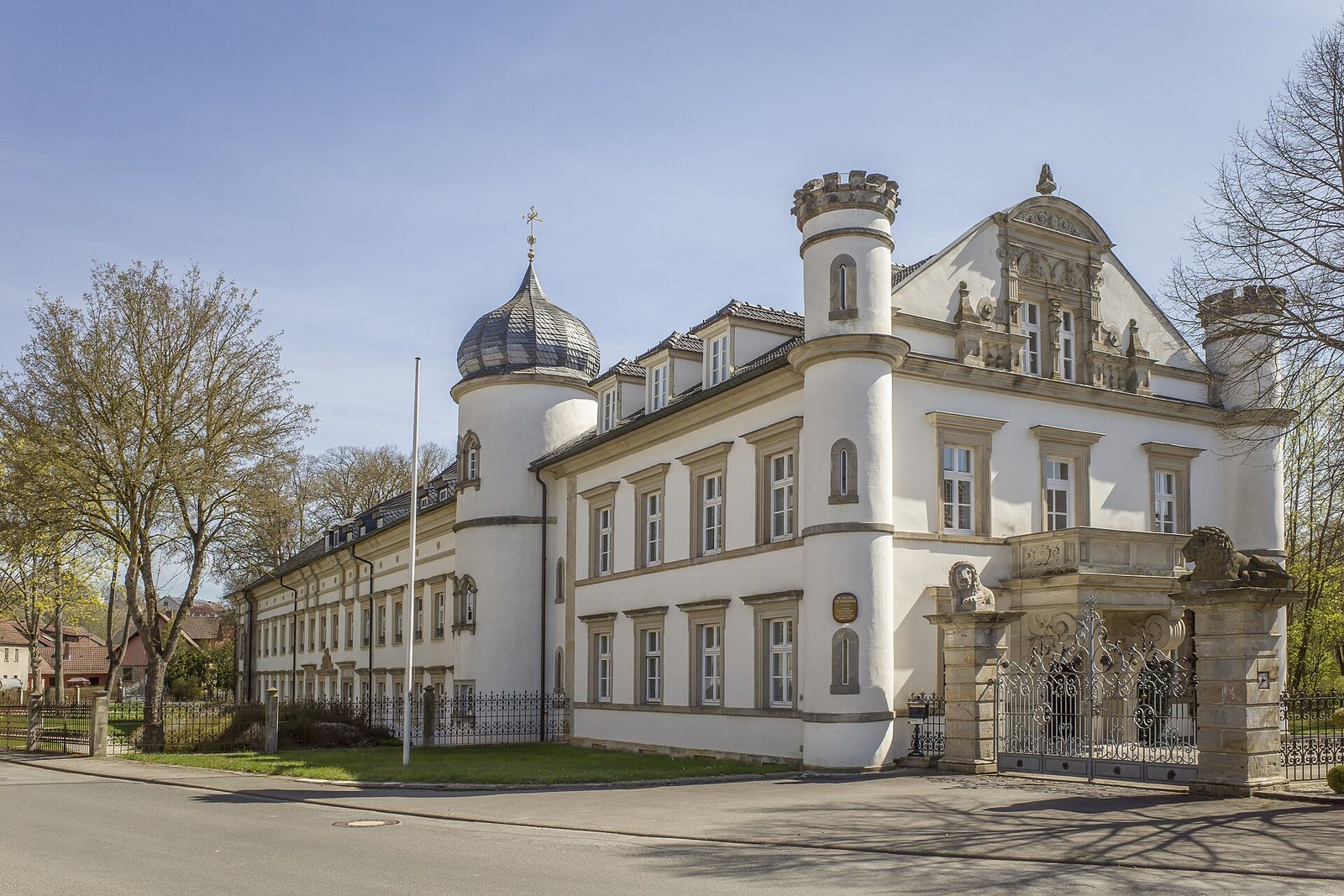
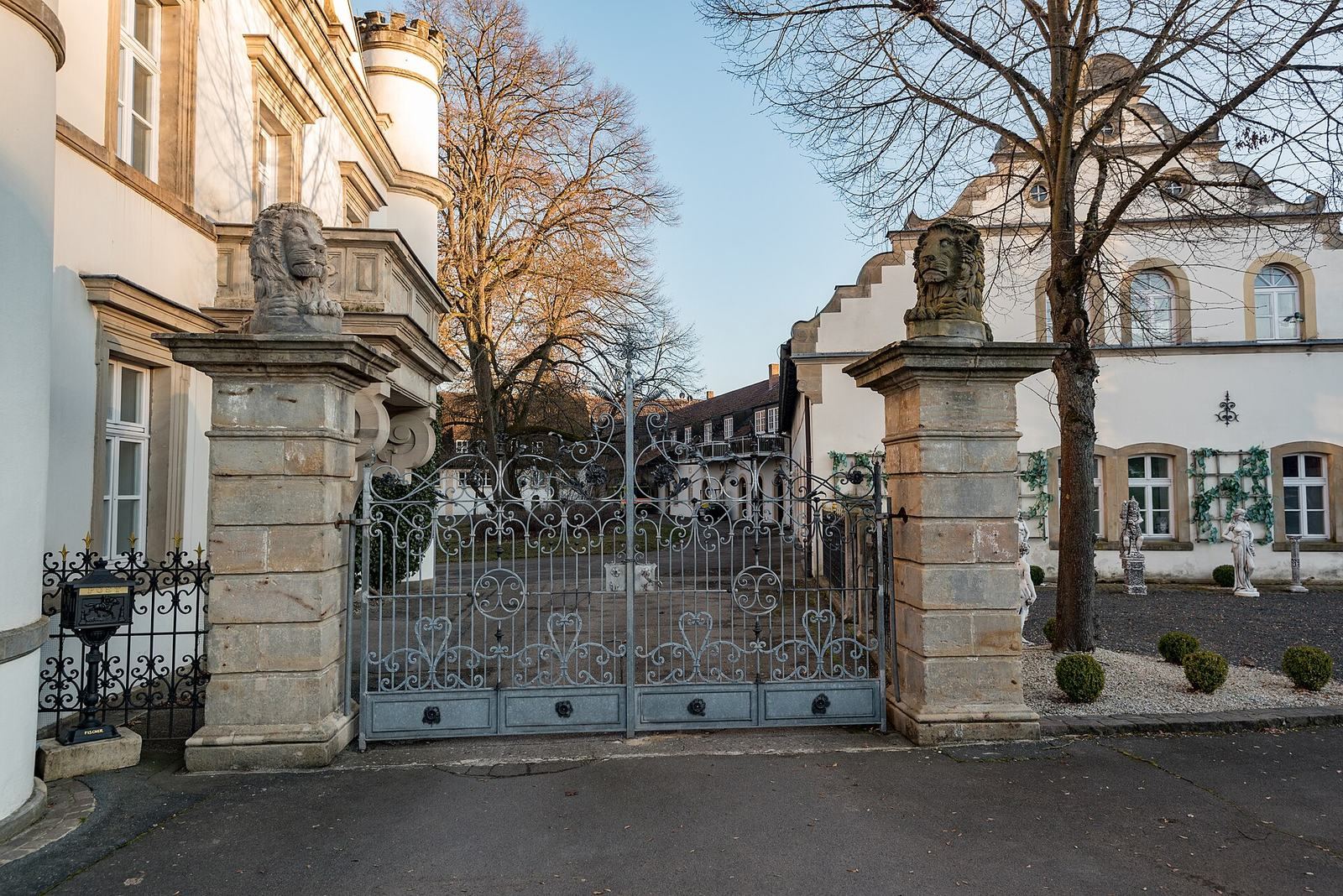
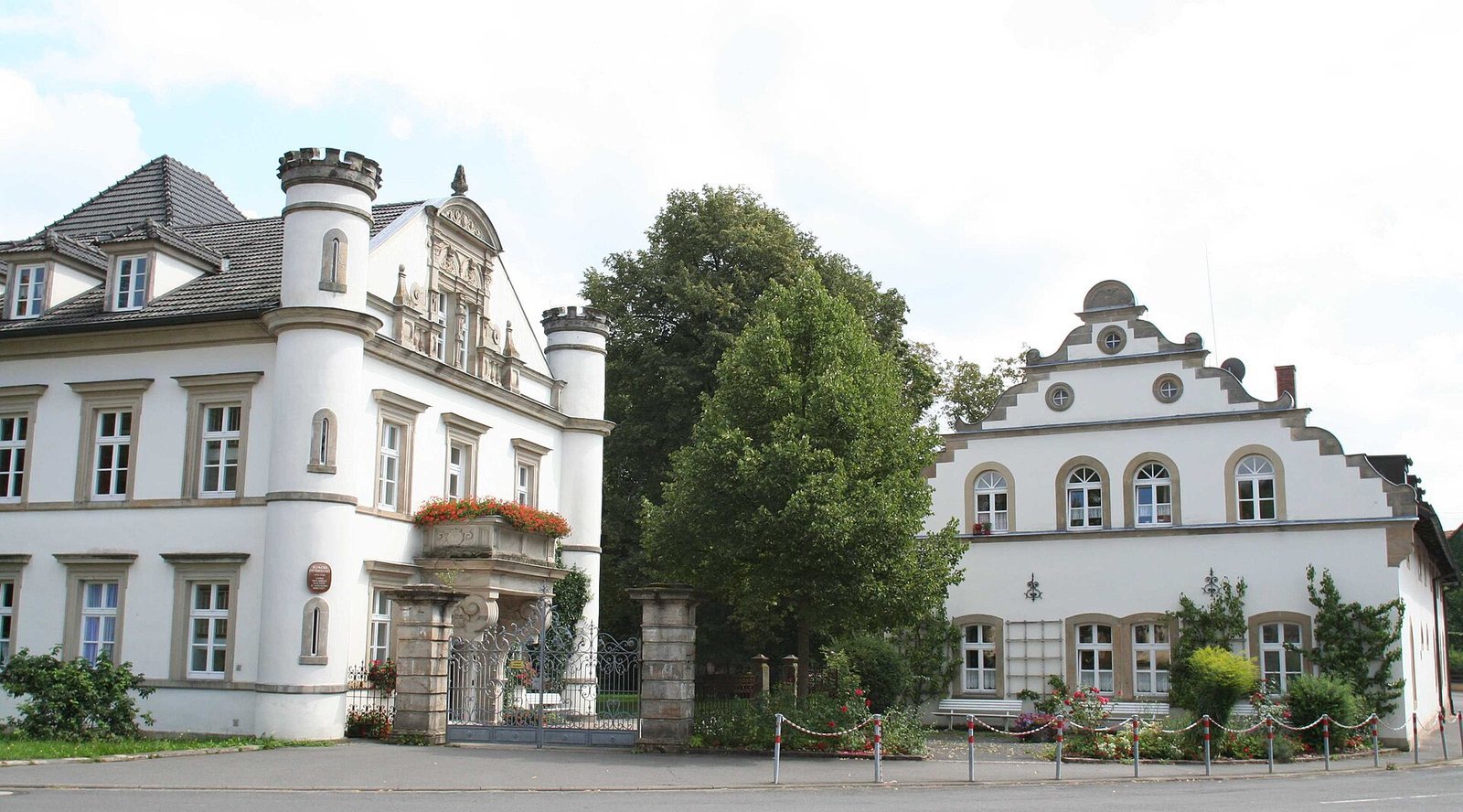
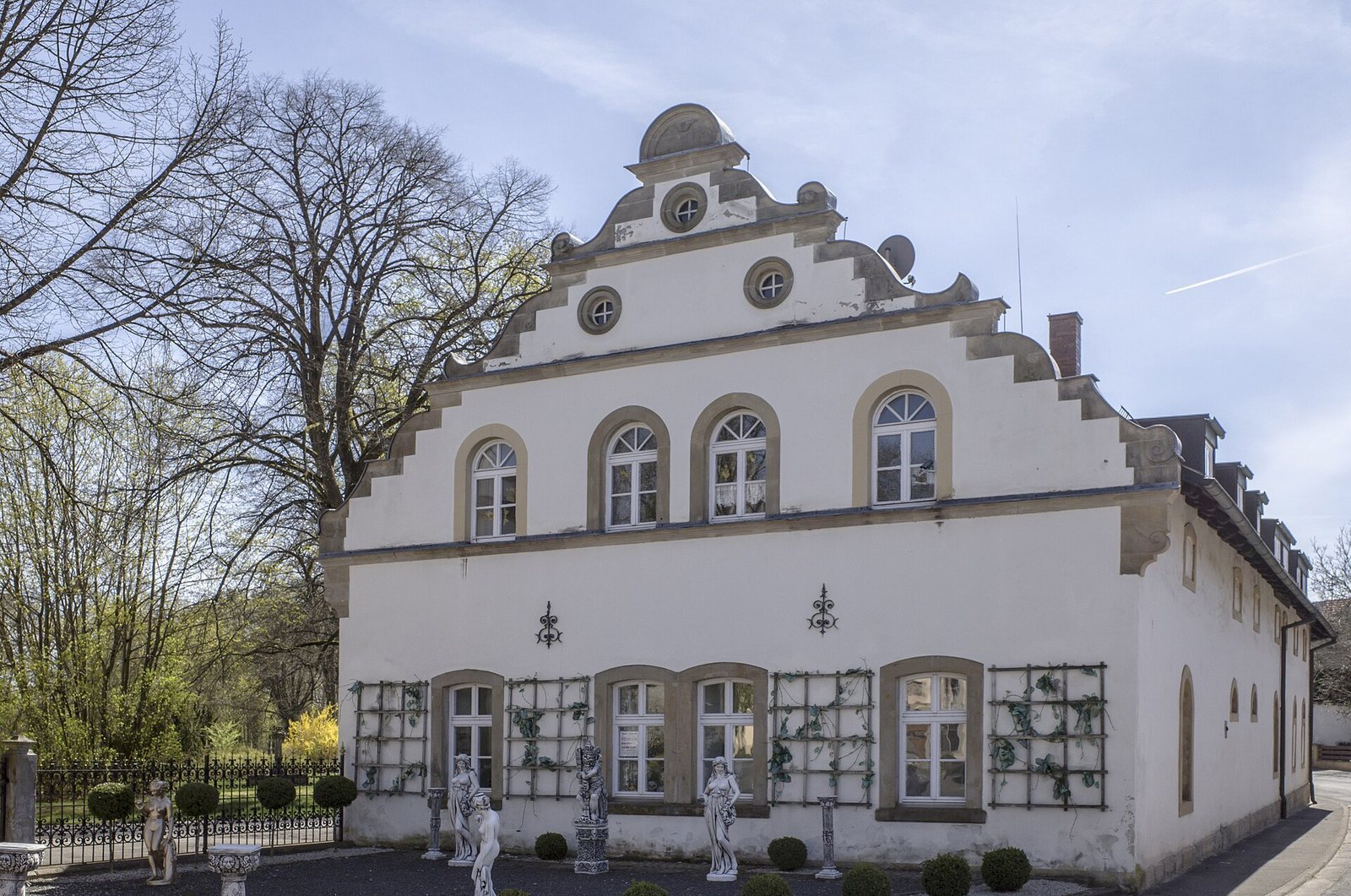
The complex stands at the center of Ditterswind and is largely Historicist, an approach that draws on architectural styles from earlier periods. Its long, two-storey wing has 23 window bays. The older castle building was raised, and an extension was added to the west, with narrow battlemented turrets at its corners. On the street side, a projecting round tower with an onion-shaped dome marks the division between the older and newer parts. The older building bears the Stein von Altenstein coat of arms, associated with the completion of the work in 1743. The west side has a decorative gable screen in Renaissance forms and a stone balcony on large brackets above the main entrance. On the park side, a decorative gable and a substantial tower with a hipped roof distinguish the newer building. A plain service building was added on the east side several decades ago.
Interior and park
Changes of use substantially altered the interior. The park covers about three hectares and chiefly served as a recreational area for residents of the care home.