Palazzo Soranzo Van Axel: A Late Gothic Palace in Venice
Site at a Glance
- Popularity
- Medium
- Country
- Italy
- Primary era
- Medieval
- Eras represented
- Medieval
- Civilizations
- Venetian
- Site type
- Domestic
- Remains
- Elite Residence
On this page11 sections
History
Palazzo Soranzo Van Axel is a late Gothic palace in Venice’s Cannaregio district, Italy, commissioned by Venetian nobleman Nicolò Soranzo and built between 1473 and 1479.
Ownership and later changes
After Soranzo, the palace passed first to the Venier family and then to the Sanudo family. In 1652 it became the property of the Van Axel family, wealthy merchants from Axel in the Netherlands, near Ghent. The family joined Venice’s recognized political nobility, known as the patriciate, in 1665.
A dispute with an adjoining nunnery led a Venetian court, the Republic of Venice’s judicial authority, to require a setback. The ruling shaped the building’s later form.
Restoration and present use
Restoration has included work on the palace’s exterior. The building is also used as an exhibition venue for the Venice Biennale, an international arts exhibition.
Remains
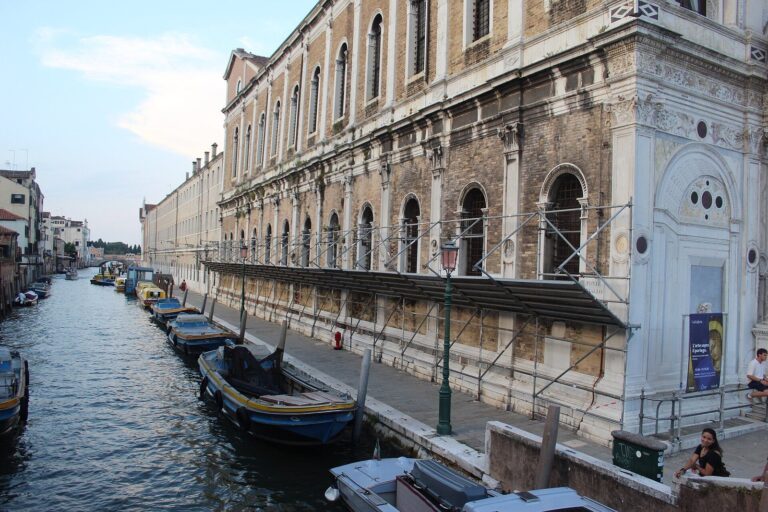
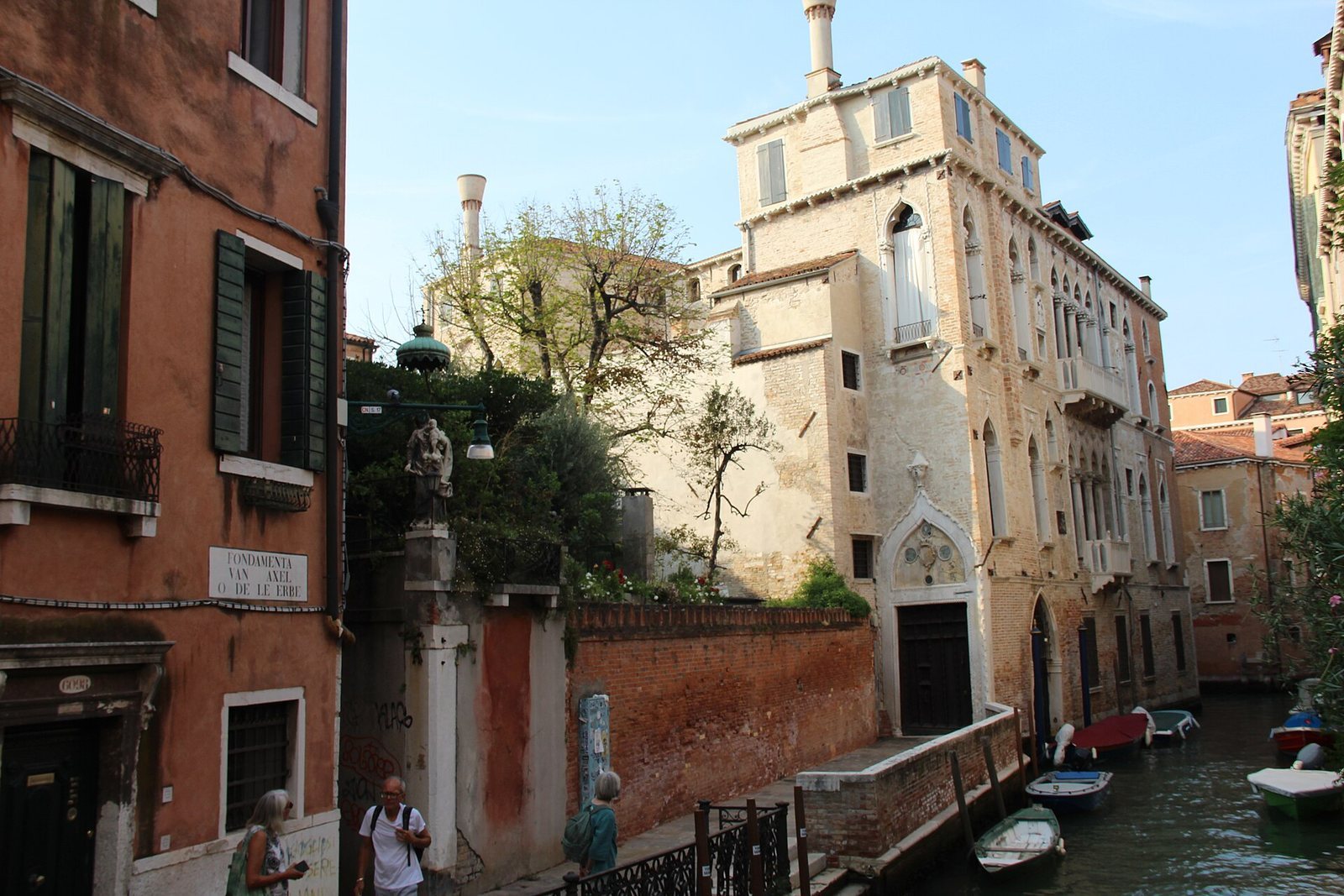
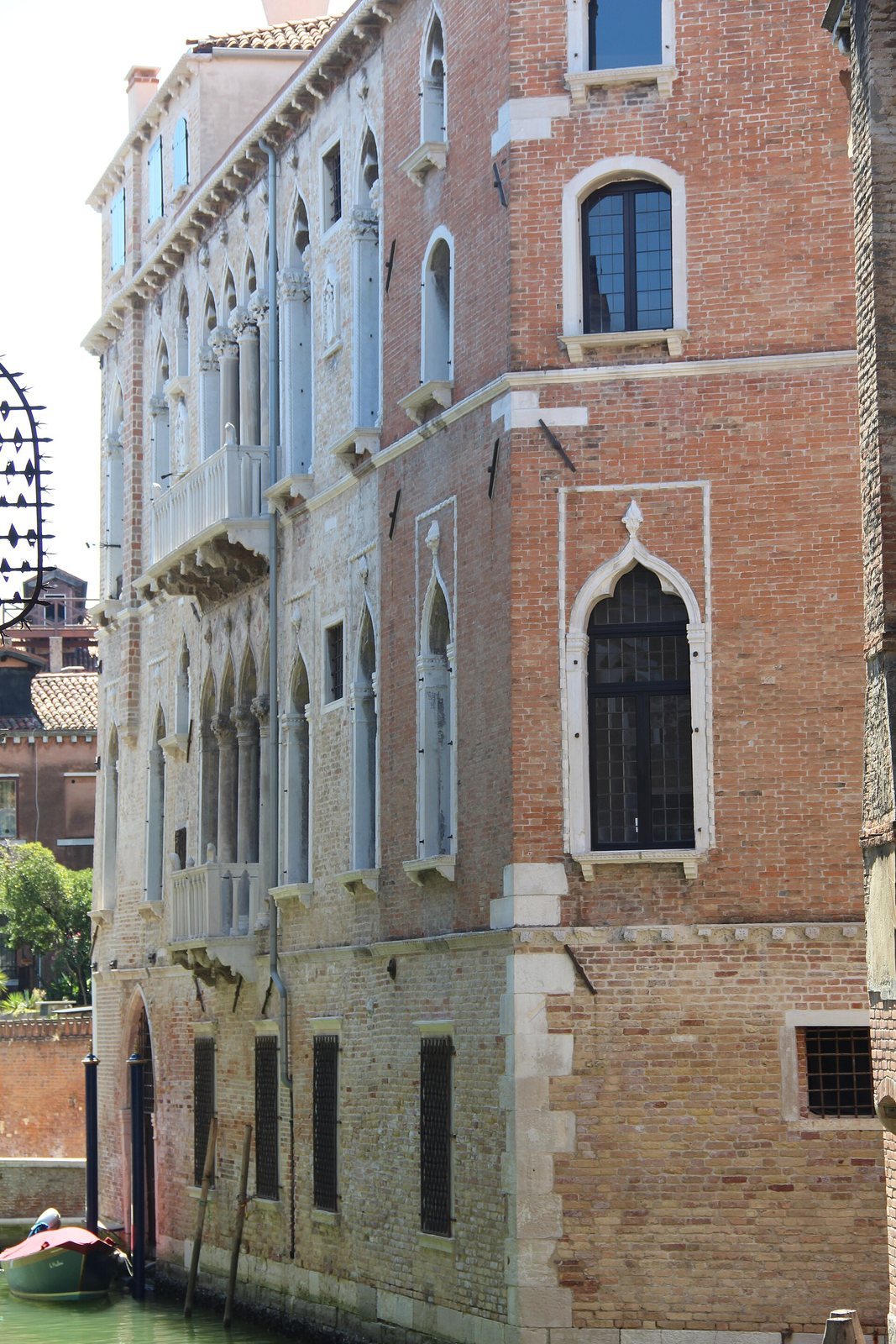
The palace stands where two canals meet, and its overall plan is irregular. Its late Gothic structure incorporates material taken from an earlier palace belonging to the Gradenigo family, a prominent Venetian patrician family. That predecessor was built in the Byzantine Empire, the medieval continuation of the Roman Empire centered on Constantinople.
Layout and internal spaces
Courtyards and principal floors
The building contains two internal courtyards and external staircases. It has two principal floors, used for formal reception and residence.
Reception halls
L-shaped reception halls make use of the palace’s frontage on both canals at their meeting point.
Facades and entrance
Principal facade
The principal facade has windows divided into four openings. Their pointed arches have opposing curves, and balustrades are supported by balconies.
Entrance portal
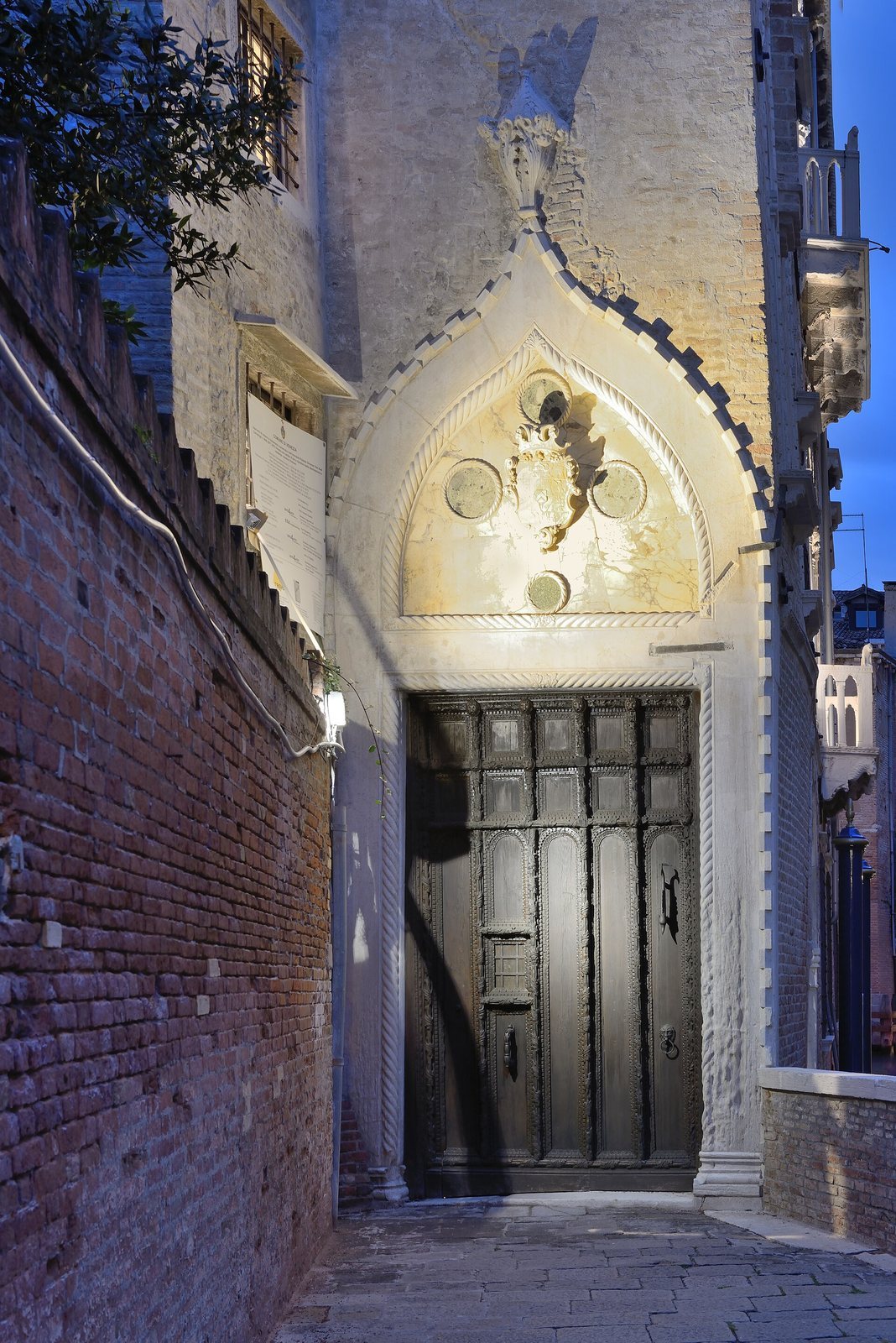
The large entrance on the Fondamenta de le Erbe, a street or quay beside a canal, retains its original wooden elements. Above it is a lunette, a semicircular feature, together with the Van Axel family coat of arms.
South section
A narrow section, only a few metres wide, closes the south side of the palace and rises above the setback.