Blankenhain Castle: A Medieval Noble Seat in Germany
Site at a Glance
- Popularity
- Low
- Country
- Germany
- Primary era
- Early Modern
- Eras represented
- Medieval, Early Modern, Modern
- Civilizations
- German, Grand Duchy of Saxe-Weimar-Eisenach, Holy Roman Empire
- Site type
- Domestic
- Remains
- Castle
On this page8 sections
History
Blankenhain Castle is a high-medieval castle in Blankenhain, Germany, built in 1150. A witness named Gottfried von Blankenhain appears in a record from 1147, three years before the castle’s construction.
The lords of Blankenhain
The lords of Blankenhain were probably a collateral branch of the lords of Mellingen. From the 13th century, they were vassals of the archbishops of Mainz, subordinate holders who owed allegiance or service. Blankenhain became their seat in 1256.
Gleichen and Hatzfeld rule
When Heinrich, the last of the old lords of Blankenhain, died in 1416, the estate passed to the brothers Ernst X and Ludwig I, Counts of Gleichen. The castle underwent substantial expansion around 1500. During the Thirty Years’ War (1618–1648), a major European conflict, its keep, the principal fortified tower, was demolished.
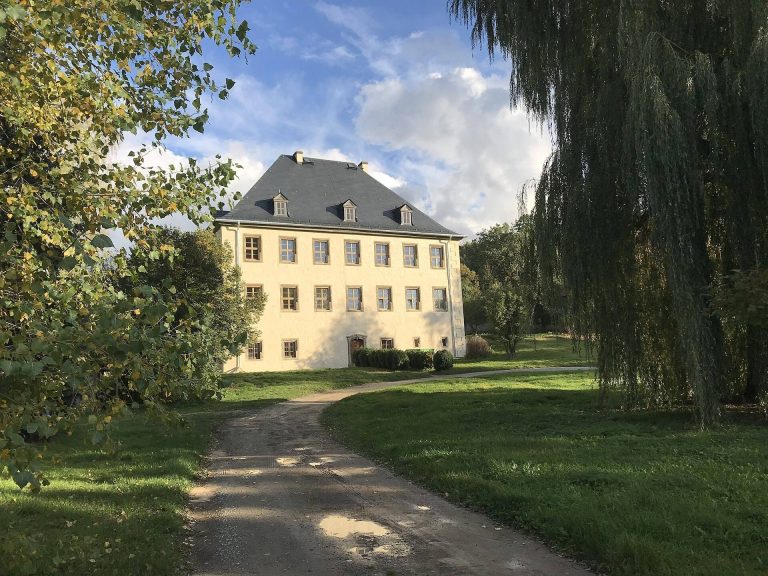
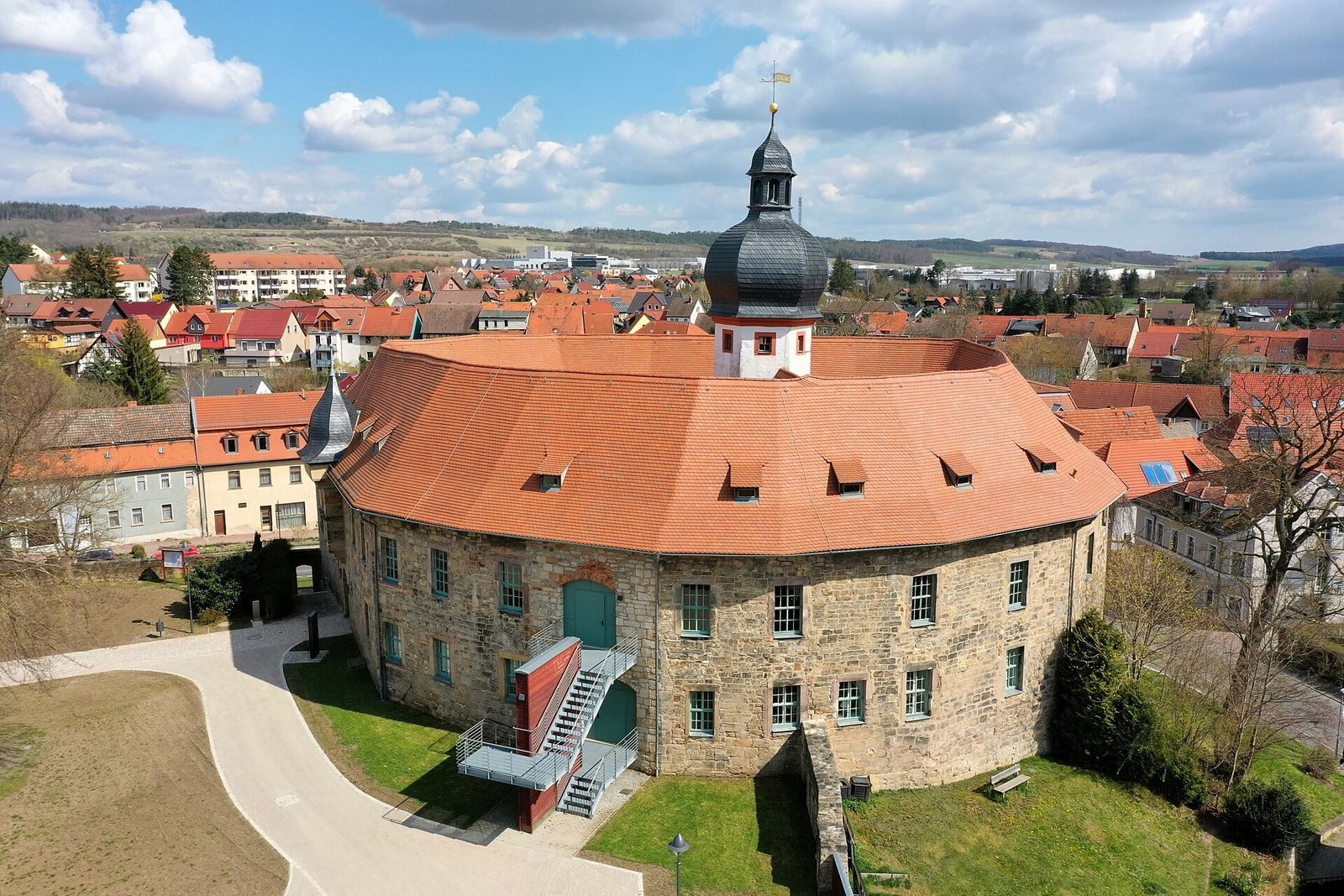
In 1639, Melchior von Hatzfeld, a German nobleman and military commander, acquired Blankenhain along with Gleichen Castle, the village of Wandersleben, the Lower Castle of Kranichfeld, the jurisdiction of Hochheim, and the Silesian lordship of Trachenberg. After a fire in 1667, Countess Hatzfeld brought the castle largely into its present form between 1680 and 1690.
Territorial changes and modern use
After Count Karl Friedrich von Hatzfeld died, Blankenhain reverted in 1793 as a fief, land held under feudal tenure, to the ecclesiastical Electorate of Mainz. This church-ruled principality was also a territorial power within the Holy Roman Empire. Prussia took possession in 1802, but its 13 years of rule were interrupted by French administration from 1811 to 1813. During that interval, Blankenhain belonged to the Principality of Erfurt, a short-lived state under French administration, together with the Erfurt State.
Under the treaties of Paris and Vienna in 1815, the lordship of Blankenhain and Niederkranichfeld passed to the Grand Duke of Saxe-Weimar-Eisenach, a German grand duchy. The castle passed to the State of Thuringia in 1919. During the Second World War, it was used as an Adolf Hitler School under the direction of Herbert Reiher.
Remains
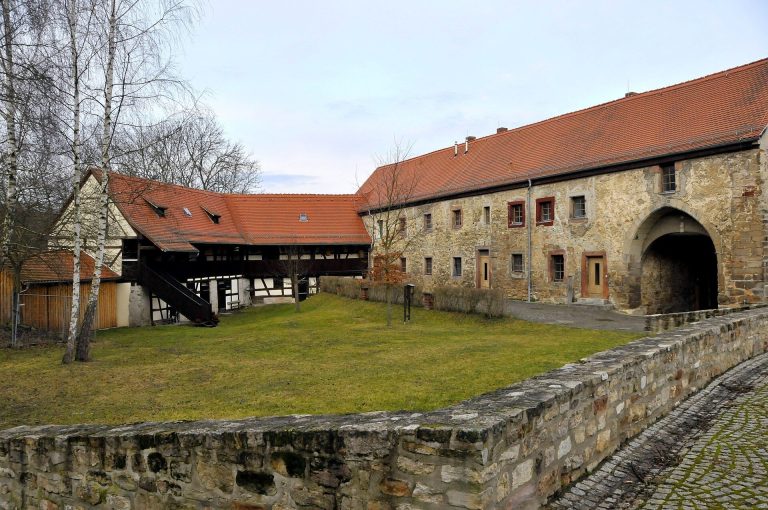
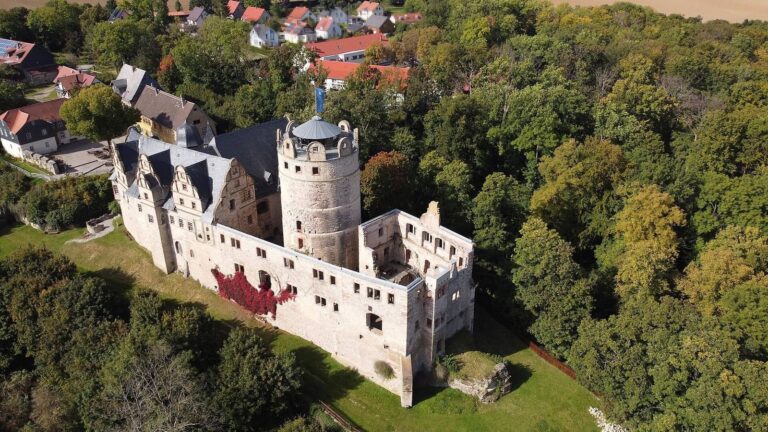
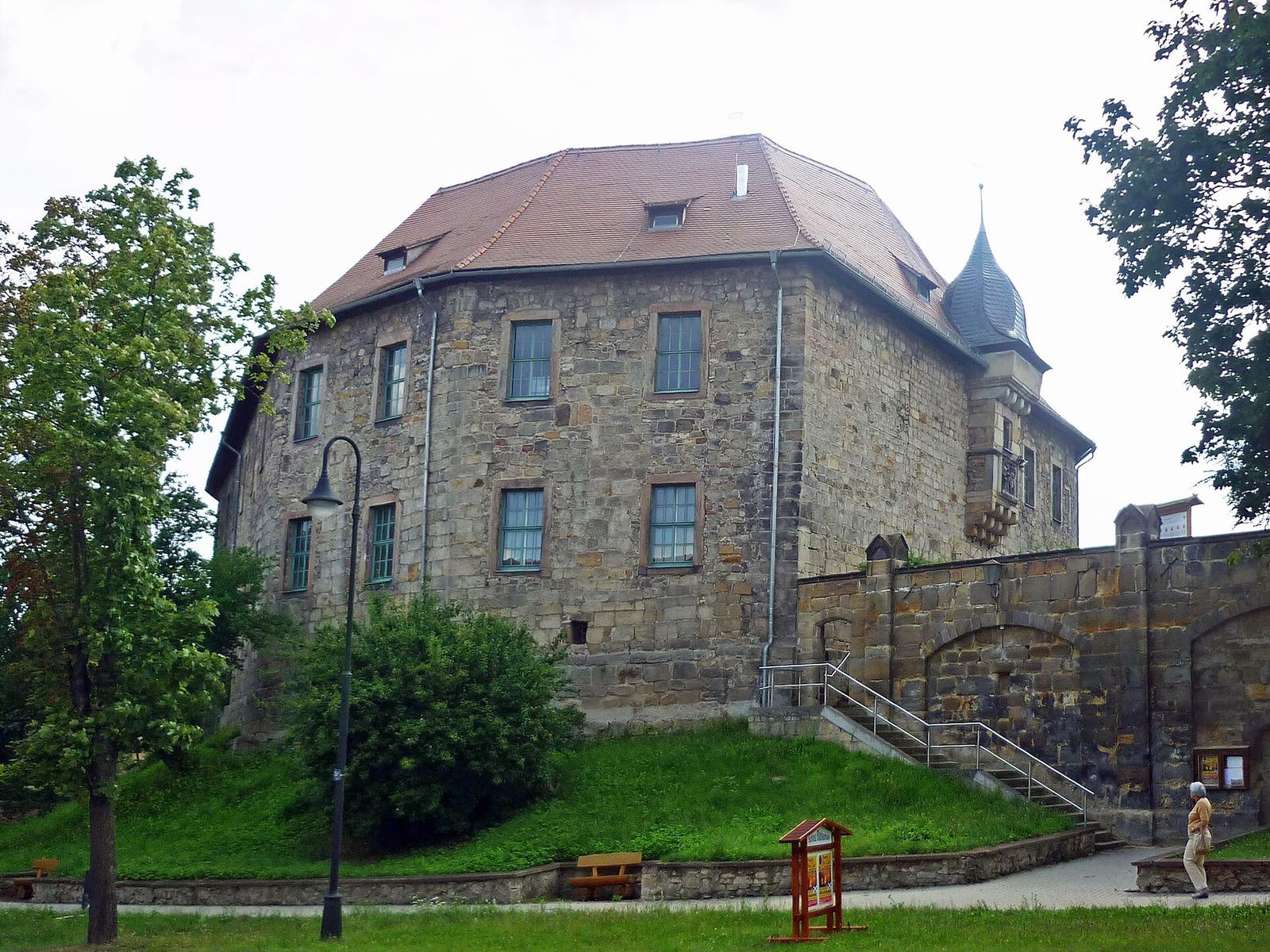
The castle occupies a raised plateau in Blankenhain, within the sheltered valley of the Schwarza and among the highlands between the Saale and Ilm. North–south and west–east trade routes once crossed at this location.
Surviving architecture
Medieval vaults and early fabric
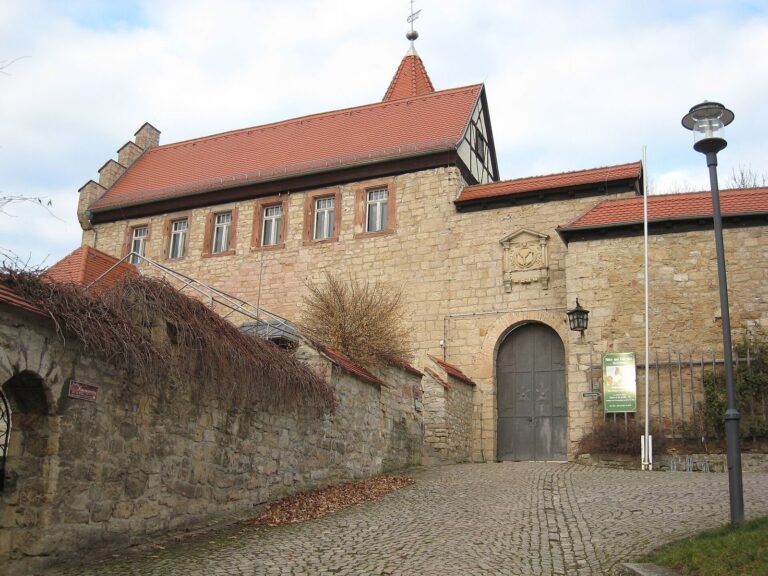
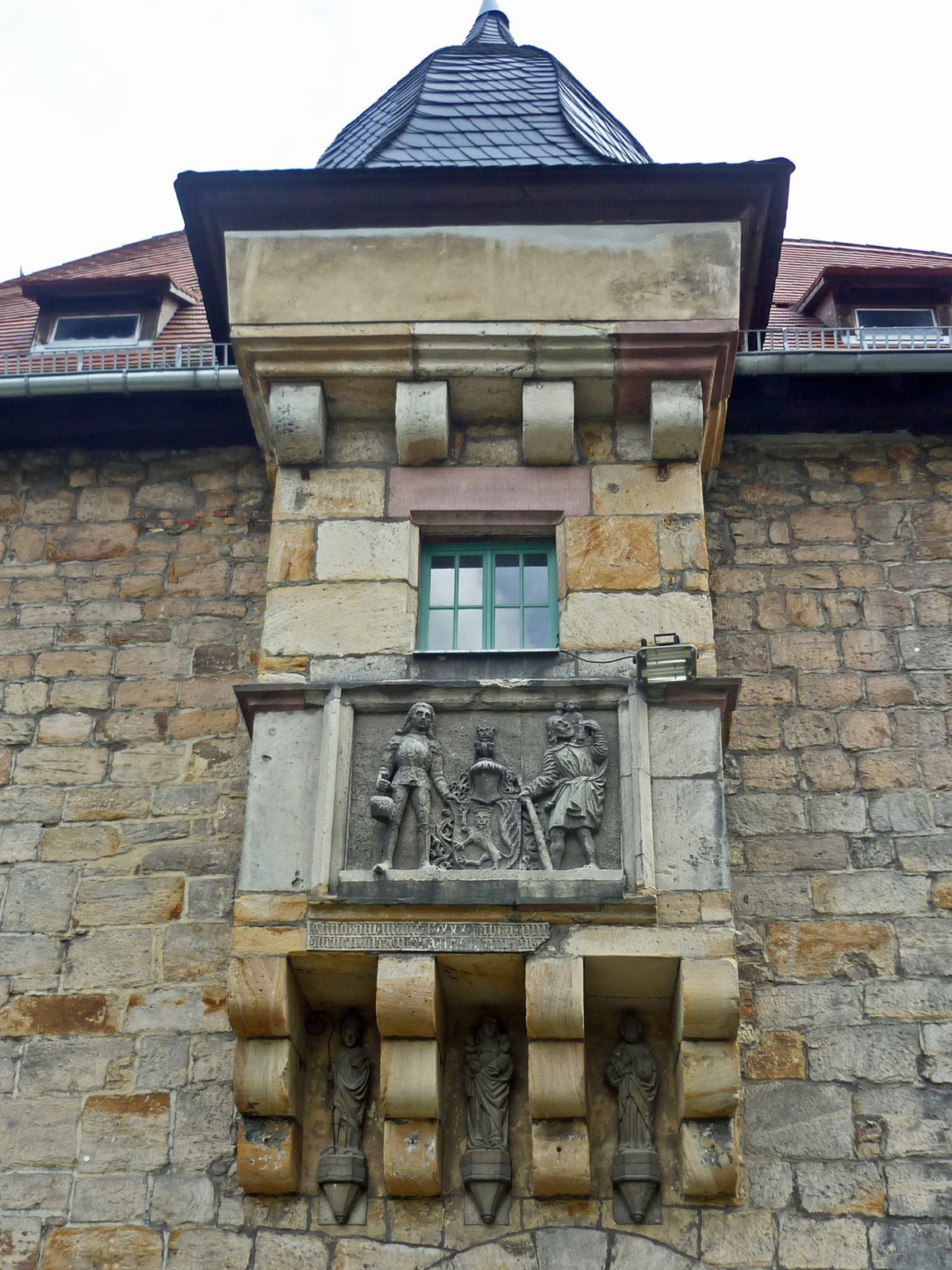
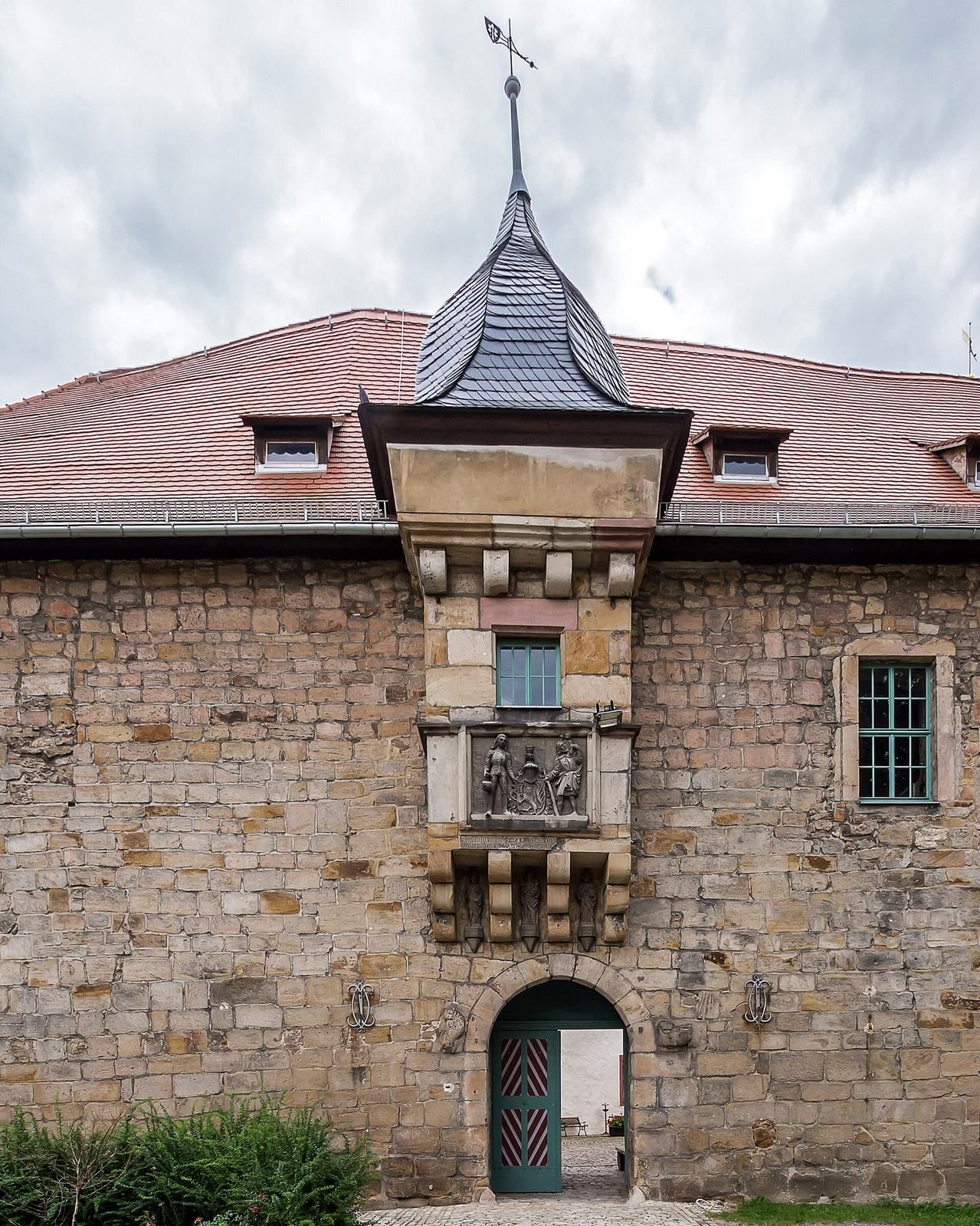
Medieval vaults survive within the castle. Apart from these, the oldest surviving parts date to around 1500.
Central building
A central building was constructed between 1861 and 1880, replacing the section of the castle wall on its footprint.