Castle Kochberg: A Former Knightly Estate in Germany


Site at a Glance
- Rating
- 4.7
- Popularity
- Low
- Country
- Germany
- Primary era
- Early Modern
- External website
- Open
- Eras represented
- Medieval, Early Modern, Modern
- Civilizations
- Holy Roman Empire
- Site type
- Domestic
- Remains
- Castle
On this page10 sections
History
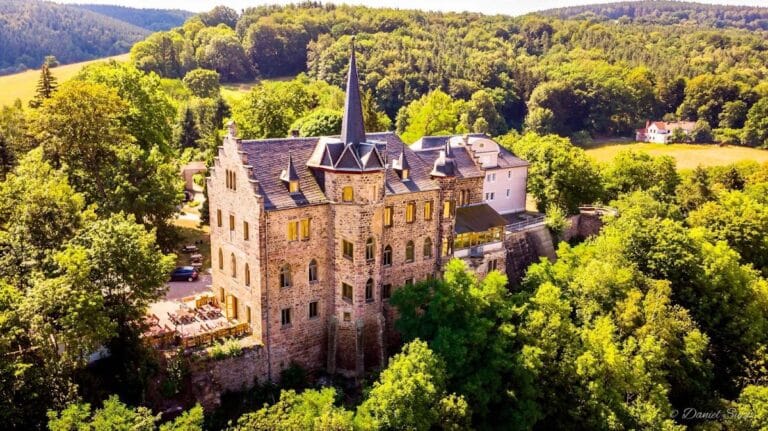
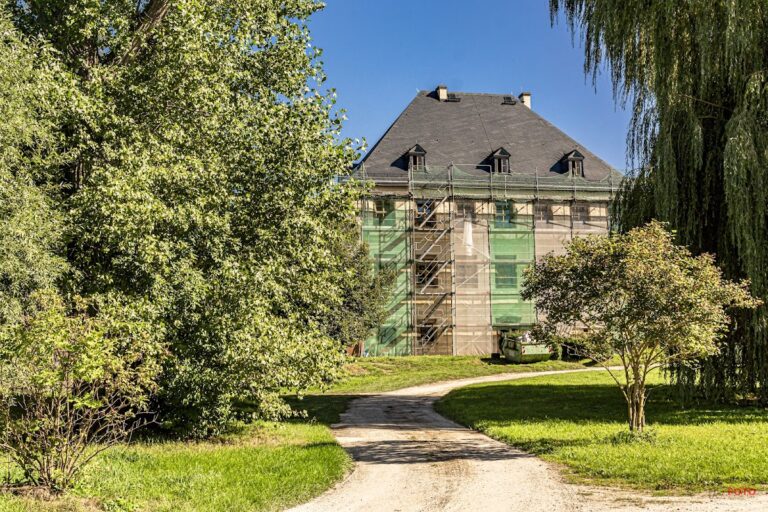
Castle Kochberg is a former knightly estate in Germany, located in Großkochberg near Rudolstadt in central Thuringia. Its origins reach back to a medieval water castle, with the oldest surviving part associated with a residential tower first mentioned in 1380. The complex later developed around the central courtyard known as the Plattenhof.
Medieval origins and noble succession
A noble family bearing the name von Kochberg appears in records from the thirteenth century and probably took its name from the castle. The medieval residential tower formed part of the early water castle, establishing the foundation for the later estate.
After Hartmann von Kochberg died in 1506, his widow married Siegfried von Schönfeldt. Through this marriage the castle passed to the Schönfeldt family. Johann Theobald von Schönfeldt the Elder and Georg Christian von Schönfeldt later sold the estate to Balthasar von Kochberg.
The Barons von Stein-Kochberg acquired Castle Kochberg in 1733. Ownership subsequently continued within the family, including through Gottlob Carl Wilhelm Friedrich von Stein, the eldest son of Charlotte von Stein and Gottlob Ernst Josias Friedrich Freiherr von Stein. Parts of the estate archive have survived, preserving evidence of the family’s administration and connection with the property.
Goethe, the Stein family, and cultural memory
Castle Kochberg became closely associated with Johann Wolfgang von Goethe through his friendship with Charlotte von Stein, a German court lady, writer, and correspondent. Goethe first visited the castle on 6 December 1775 and made his last recorded visit there on 5 September 1788. He also produced several drawings of the estate.
Members of the von Stein zu Kochberg family held court and honorary offices. Felix von Stein zu Kochberg (1800–1872) was a landowner and a retired Prussian senior government councillor. His son Felix Ludwig Wilhelm Karl Freiherr von Stein (1828–1891) served as chamberlain to the Duke of Saxe-Meiningen and became an honorary knight of the Order of St John, a Christian chivalric order with medieval religious, charitable, and military origins.
The last heir descended from Charlotte von Stein was her great-great-grandson Felix von Stein, born at Großkochberg in 1869. He had served as chamberlain to the Duke of Saxe-Meiningen and as an Imperial German consul, and he died in 1938.
Restoration and continuing use
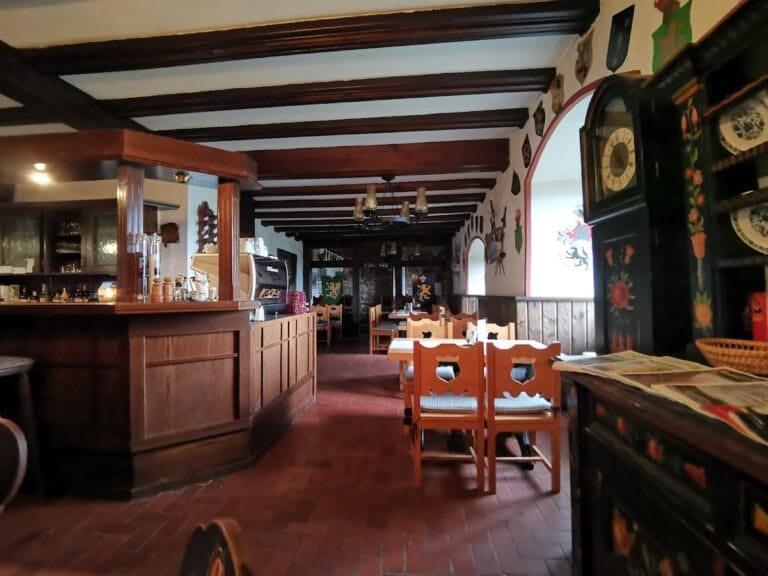
A Goethe memorial site opened at the castle on 27 August 1949. Following extensive restoration, the castle reopened to the public in 1975. Until the end of the German Democratic Republic, it operated as a recreation home run by the GDR Cultural Fund. An attempt was made to use it as a hotel in the early 1990s.
The castle closed in 2011 for further restoration, and the restored ensemble reopened in April 2012. It is now owned by the Klassik Stiftung Weimar and includes a castle museum. Descendants of the Stein family living in Denmark have pursued restitution claims concerning parts of the furnishings. Negotiations have included the possibility of securing some objects as long-term loans and acquiring others.
Remains
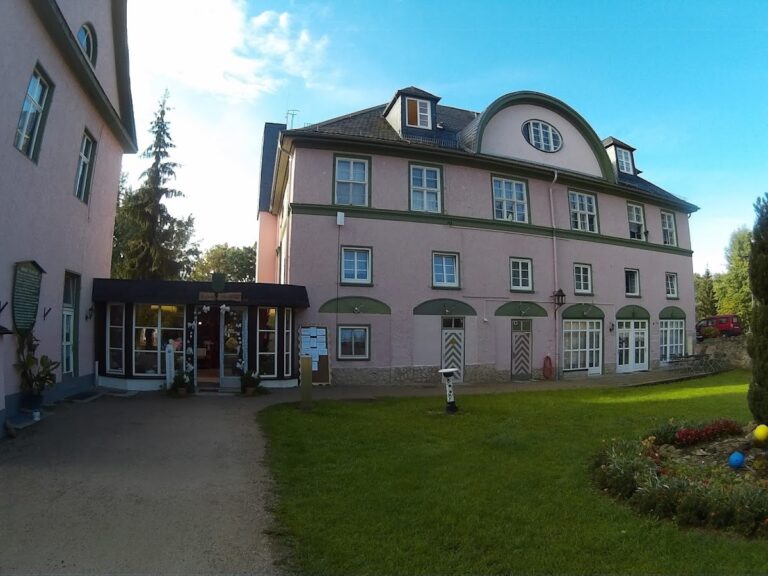
The surviving complex is arranged around the Plattenhof, a central courtyard once described in older chronicles as being on the upper side of the village. Its buildings preserve elements from the medieval water castle, the Renaissance period, and later changes to the estate. The main castle group connects with the park and a service courtyard through bridges.
Castle buildings and water system
Medieval residential tower
The oldest building component is the southeastern Hohe Haus, a medieval residential tower connected with the water castle first recorded in 1380. A second Hohe Haus on the western side of the complex is the dominant building today. Dating from the seventeenth century, it was constructed in the Renaissance style, an architectural movement associated with balanced proportions, ordered façades, and renewed use of classical forms.
Moat, entrance, and bridges
An account from 1659 describes a spring in the castle park and a pipe system that carried water from the Bergteich, or Mountain Pond, into the square moat around the castle. At that time, access probably took place through a single eastern drawbridge. A drawbridge could be raised to control passage across the moat.
The park was later laid out to the west and north of the castle. One bridge links it with the central group of castle buildings, while another runs south toward the service courtyard. These surviving relationships show how the fortified medieval estate was connected with its later garden and working areas.
Castle museum
The castle museum contains two writing desks associated with Goethe, regarded as its most valuable exhibits. Their presence reflects the connection between the physical estate and the memory of Goethe’s visits to Charlotte von Stein.
Liebhabertheater
At the entrance to the castle park stands the Liebhabertheater, housed in a former two-storey Baroque garden house. Baroque architecture is known for theatrical spatial effects, elaborate ornament, and strongly articulated forms. Around 1800, Carl von Stein commissioned the building’s remodeling and enlargement, adding a columned portico, a roofed entrance supported by columns, and a large, bright stage room.
The interior was finished with marbled paper and retains 75 seats. Since its restoration and reopening in 1975, the theater has served as a venue for opera, theater, chamber music, and readings. The Liebhabertheater Schloss Kochberg association operates its theatrical activities, with particular attention to historical performance practice.
The theater’s later cultural history includes the first performance in 1993 of Philipp Christoph Kayser’s Scherz, List und Rache, a Goethe opera composed in 1787. The performance connected the restored theater with the eighteenth-century literary and musical circle associated with Castle Kochberg.