Schloss Berg: A Medieval Castle Rebuilt as a Renaissance Palace
Site at a Glance
- Rating
- 4.5
- Popularity
- Very Low
- Country
- Germany
- Primary era
- Early Modern
- Eras represented
- Medieval, Early Modern, Modern
- Civilizations
- German, Holy Roman Empire
- Site type
- Domestic
- Remains
- Castle
On this page8 sections
History
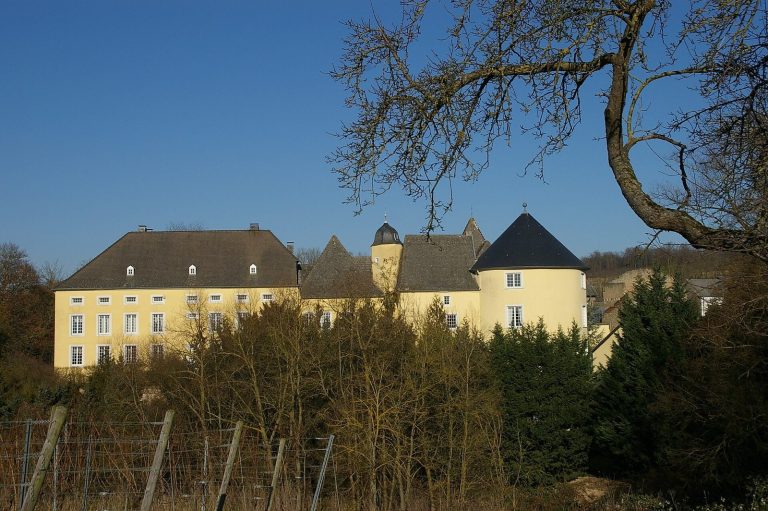
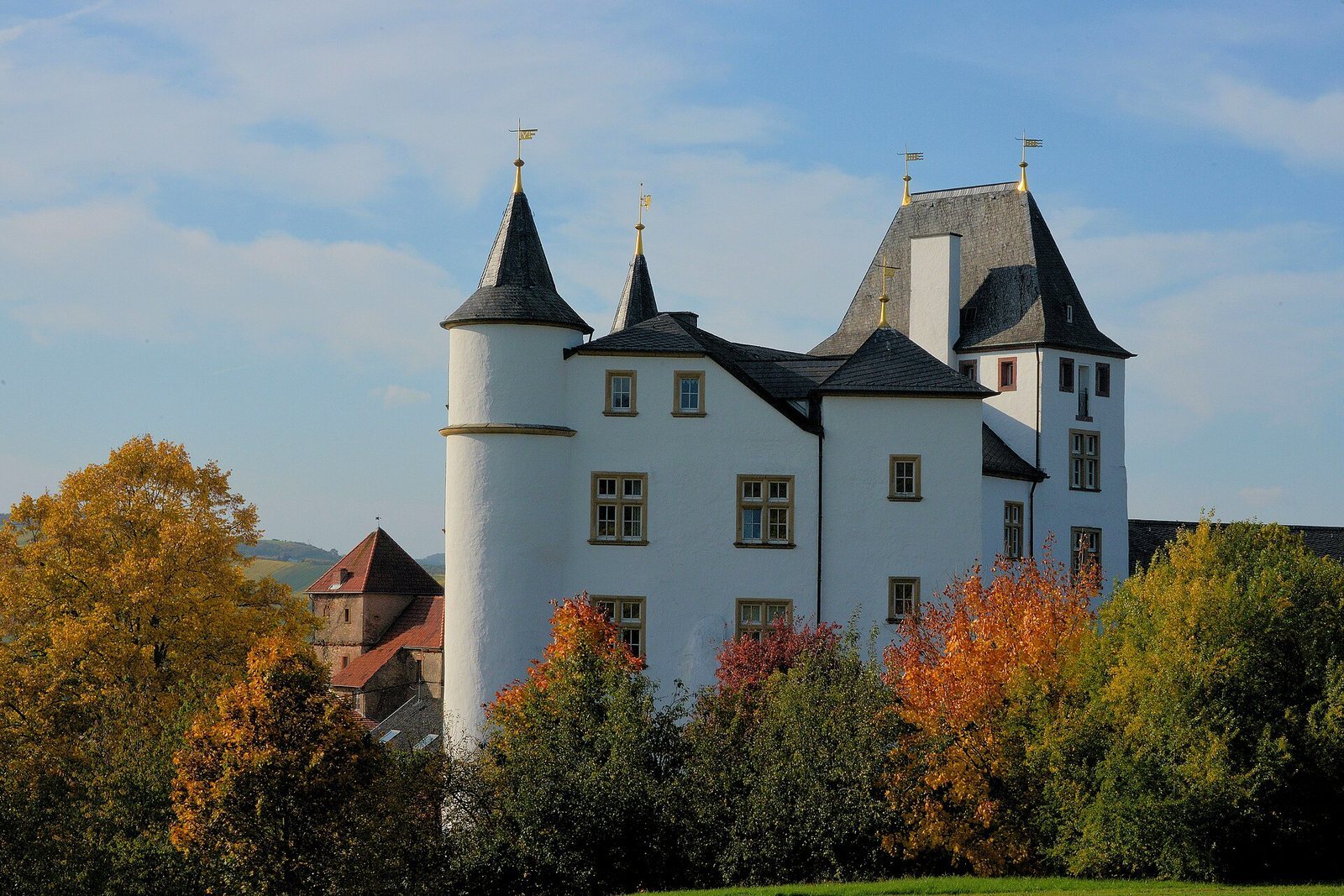
Schloss Berg is a small castle on the Upper Moselle at the edge of Nennig in Saarland, Germany. It probably began as a water castle, a fortified residence surrounded or defended by water, in the ninth or tenth century; its visible architecture is Renaissance in character.
Medieval origins
In 1180, the knights Bovo and Reiner de Berg witnessed an agreement recorded by the Archbishop of Trier that granted an inheritable right to use land in return for rent. Egidius von Berg was lord of the castle in 1202.
Palace conversion and changing ownership
Arnold von Sierck acquired the castle in 1413. In 1580, Johann von Kriechingen und Pittlingen had it transformed into a palace. The Renaissance, a European cultural period that revived forms and ideas from classical antiquity, accounts for the building’s present visible style despite its medieval beginnings.
From 1760, rights to the castle were divided among several principalities, leaving ownership arrangements uncertain. In 1769, France transferred its property rights to Maria Theresa, the Habsburg ruler and empress. Following the Congress of Vienna, the 1814–15 settlement that reshaped European territories after the Napoleonic Wars, the castle passed into Prussian possession in 1815. Prussia was a historic German kingdom and state. The castle entered private ownership in 1910.
Destruction, rebuilding, and new uses
The castle was almost entirely destroyed during the winter of 1944–45. Saarland took ownership in 1950 and began rebuilding it in 1955. From 1958 to 1984, the restored building served as a residential school camp.
Saarland-Sporttoto GmbH, the state’s lottery and sports-betting operator, acquired the castle in 1986 and arranged its conversion for hotel use. A hotel opened there in 1990, alongside a casino in a modern annex. The Victor’s Group, led by Hartmut Ostermann, became the hotel operator in 1997. A gourmet restaurant opened in the castle the following year under chef Christian Bau and has received three Michelin stars, the Michelin Guide’s highest rating, every year since 2010.
A larger luxury hotel with wellness facilities opened beside the castle in 2001. The castle became part of a wider hotel complex that also includes a country inn below it.
Remains
Castle and grounds
Castle and casino annex
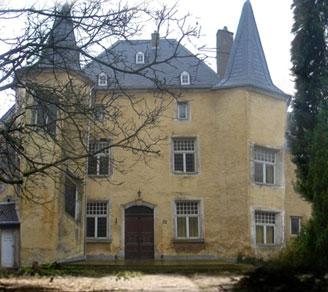
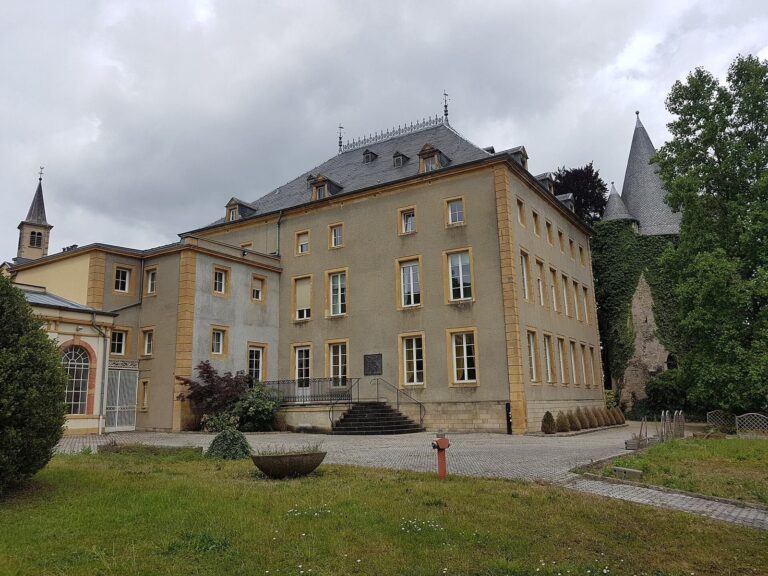
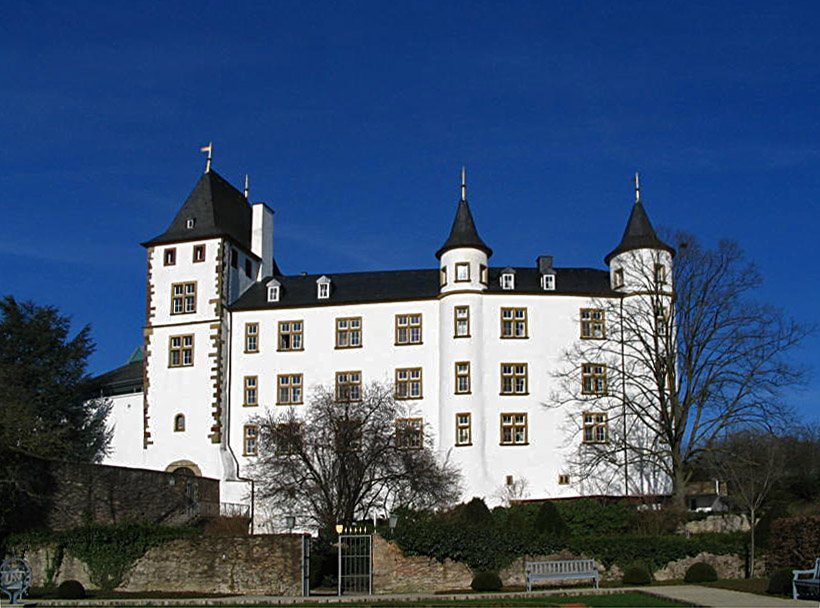
The small castle retains a Renaissance appearance, reflecting its conversion from a medieval building into a palace. Its upper floors contain hotel rooms and suites. A modern annex houses the casino.
Garden and hotel complex
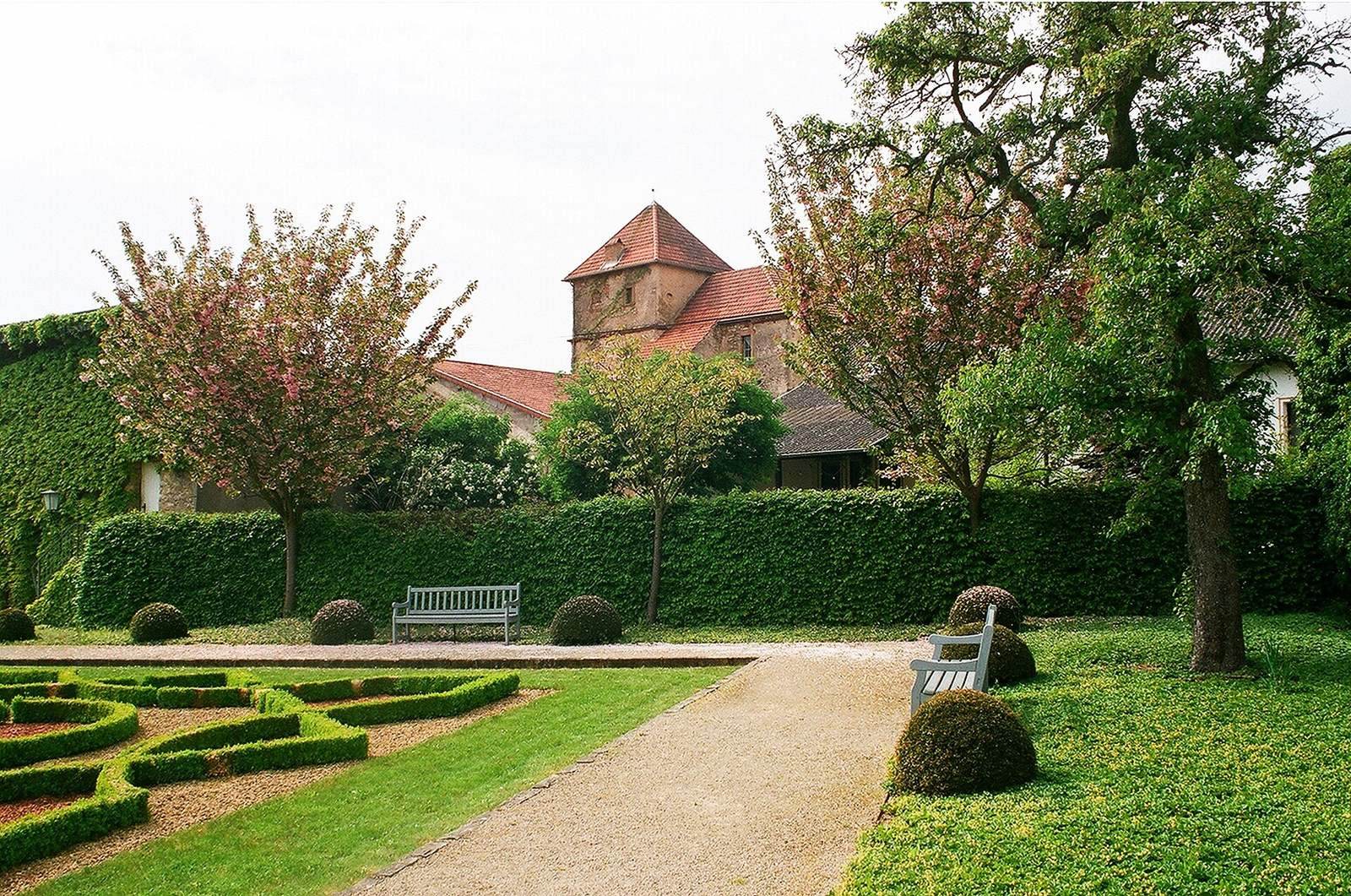
A garden lies below the castle and is laid out in the style of a Renaissance garden. The surrounding hotel complex includes a larger hotel with a wellness area beside the castle, as well as a country inn lower down.