Au Castle: A Noble Residence in Bavaria
Site at a Glance
- Popularity
- Medium
- Country
- Germany
- Primary era
- Early Modern
- Eras represented
- Medieval, Early Modern, Modern
- Civilizations
- Duchy of Bavaria, Electorate of Bavaria, German, Holy Roman Empire, Kingdom of Bavaria
- Site type
- Domestic
- Remains
- Castle
On this page10 sections
History
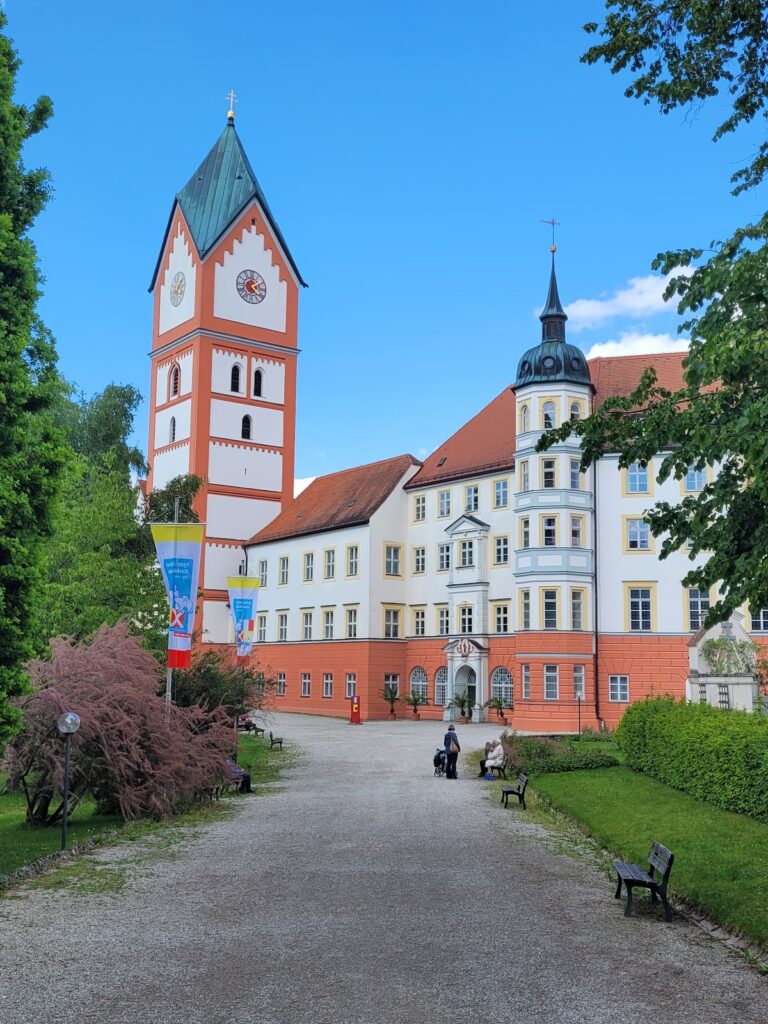
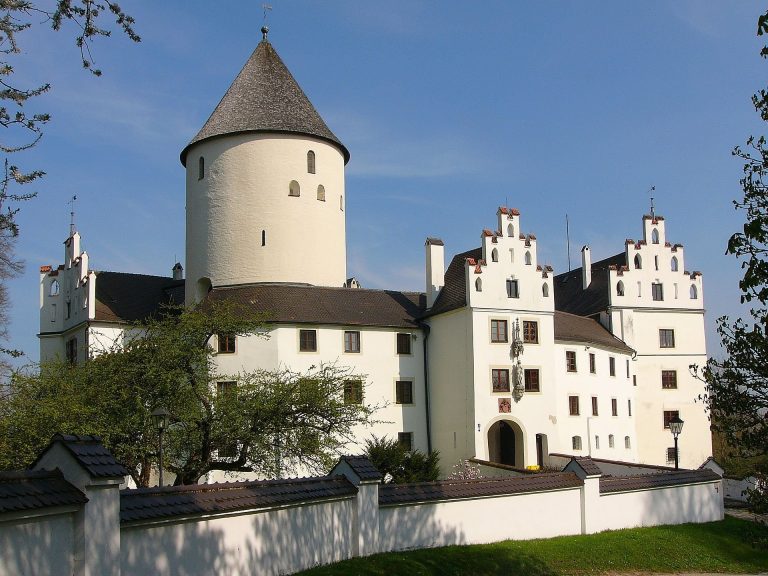
Au Castle stands in the center of Au in der Hallertau, in Bavaria, Germany. First documented around 1000, it was rebuilt to its present dimensions between 1544 and 1578 and later remodeled in the Neo-Renaissance style, a nineteenth-century revival of Renaissance forms.
Medieval associations
The Counts of Moosburg, a medieval noble family, are the earliest family known to have been associated with the castle. The last member of the family died in 1281.
Fire and rebuilding
The old castle burned completely during the War of the Landshut Succession, a conflict over succession to the Duchy of Bavaria-Landshut that lasted from 1503 to 1505. Reconstruction followed between 1544 and 1578, establishing the complex’s present dimensions.
Chapel, brewery, and later ownership
A record from 1590 names Schweiger as Au’s court brewmaster, an official responsible for brewing at a noble court. This date refers to the brewmaster, not to the brewery’s foundation. The chapel of St. Karl Bartholomäus was built in 1690.
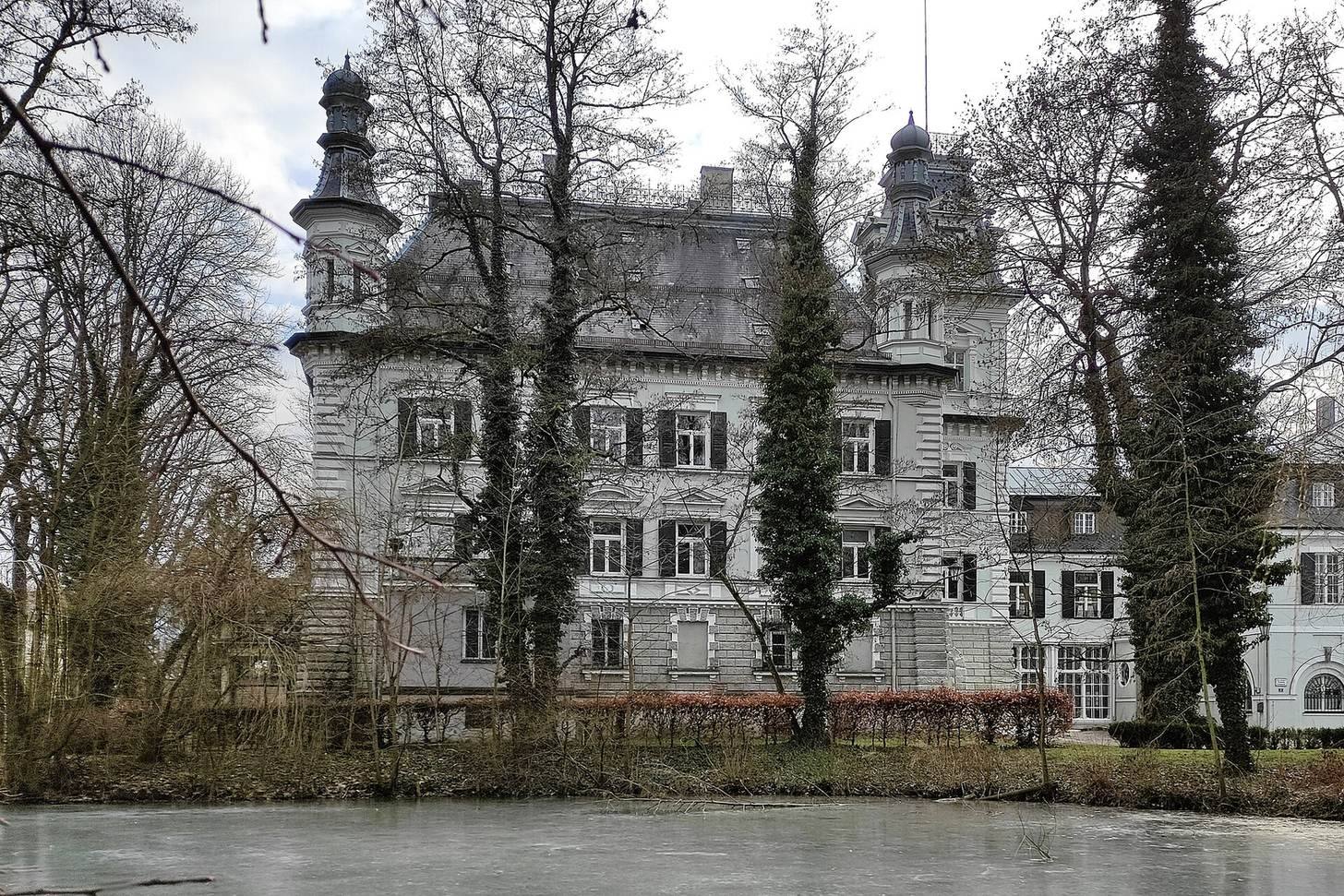
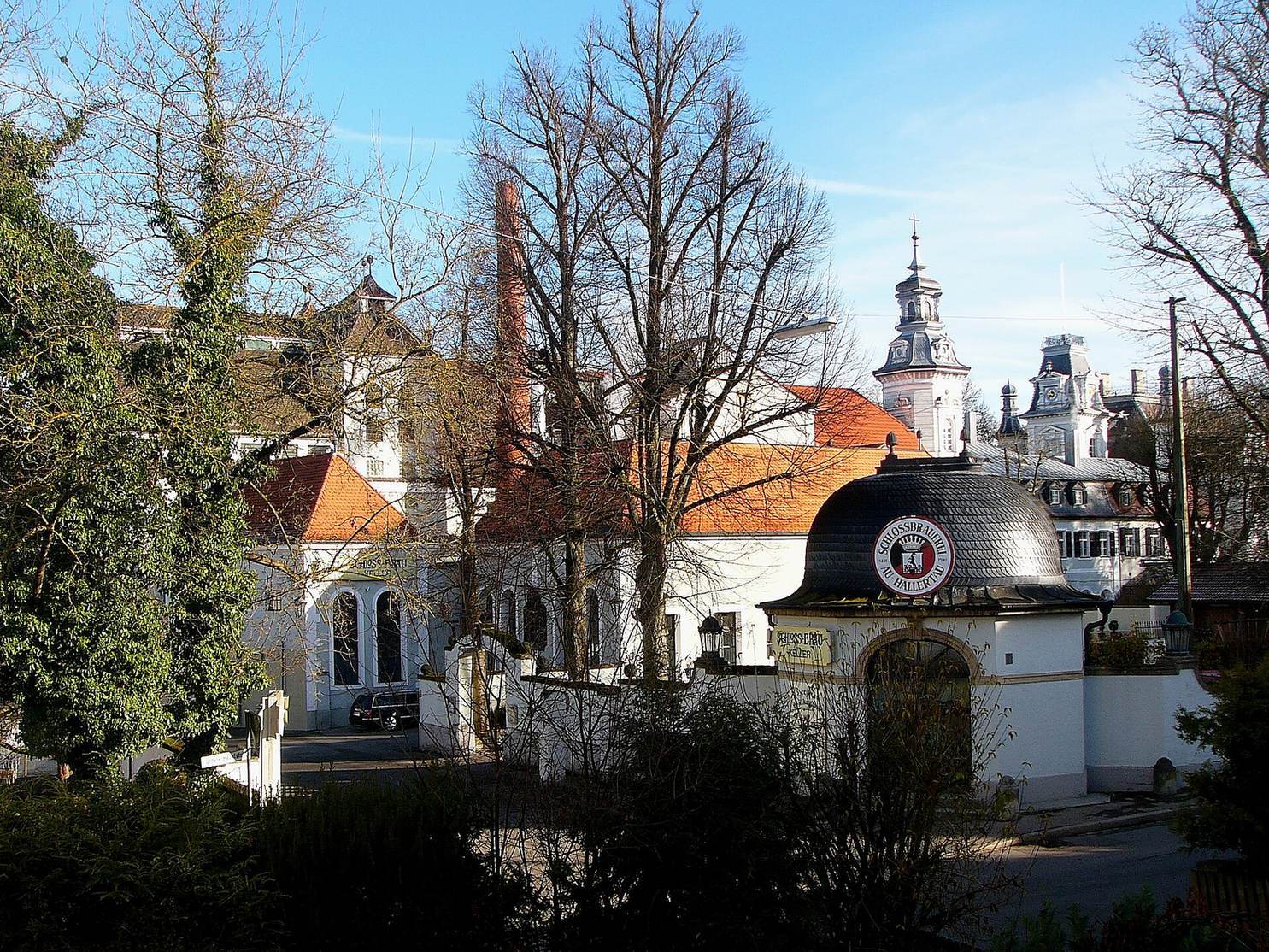
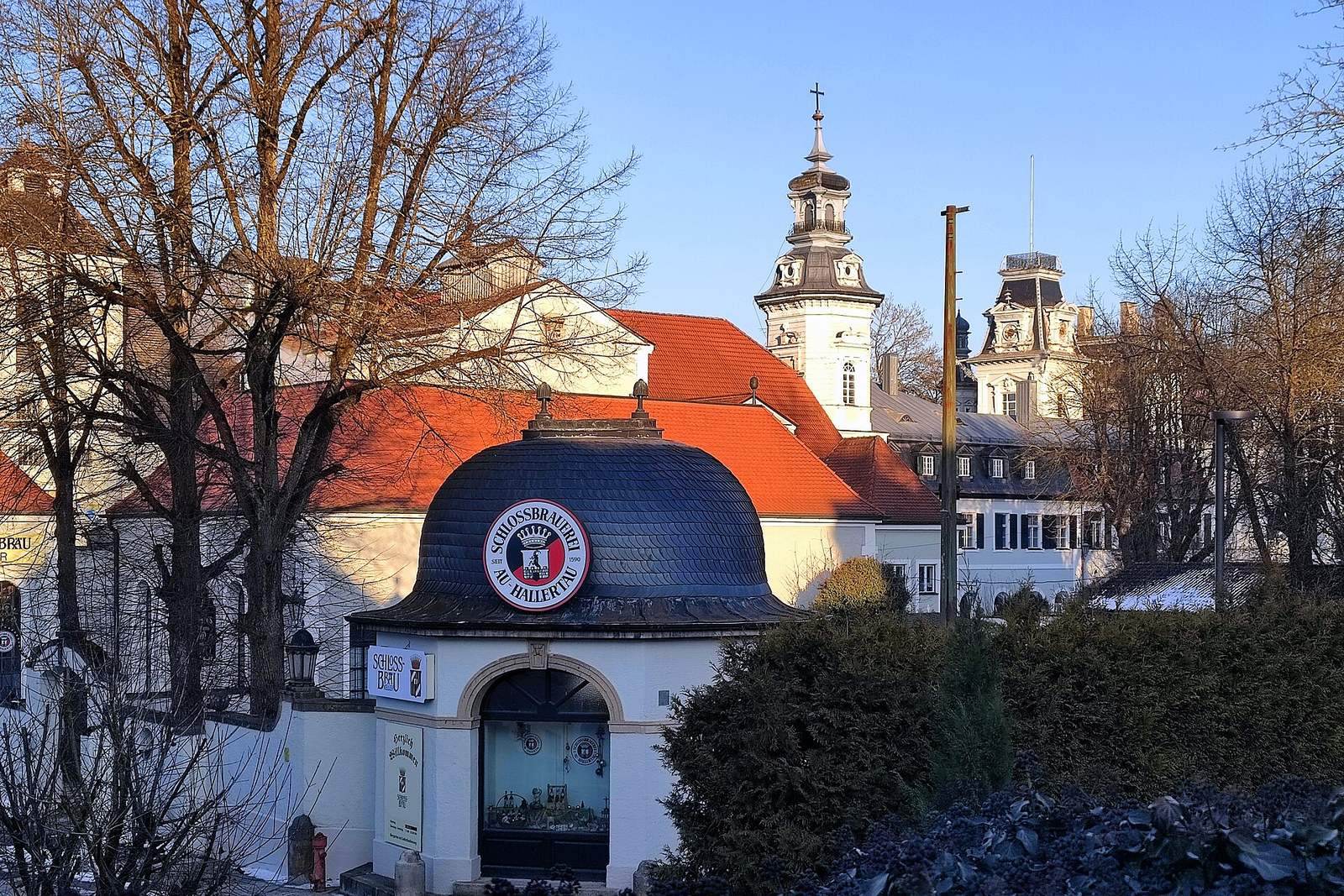
The Beck von Peccoz family, whose members held the title of baron, has owned the castle and its brewery since 1846 and continues to live at the castle. The chapel was remodeled in 1868. In 1880, the owners commissioned Munich architect Schoch to remodel the castle in the Neo-Renaissance style.
Remains
The surviving site combines a rectangular castle complex with its grounds and an associated archaeological area. The castle was remodeled in Neo-Renaissance forms.
Features of the complex
Castle complex
The castle has towers at its corners, including oriel towers, which project from the upper storeys as windowed bays.
Chapel
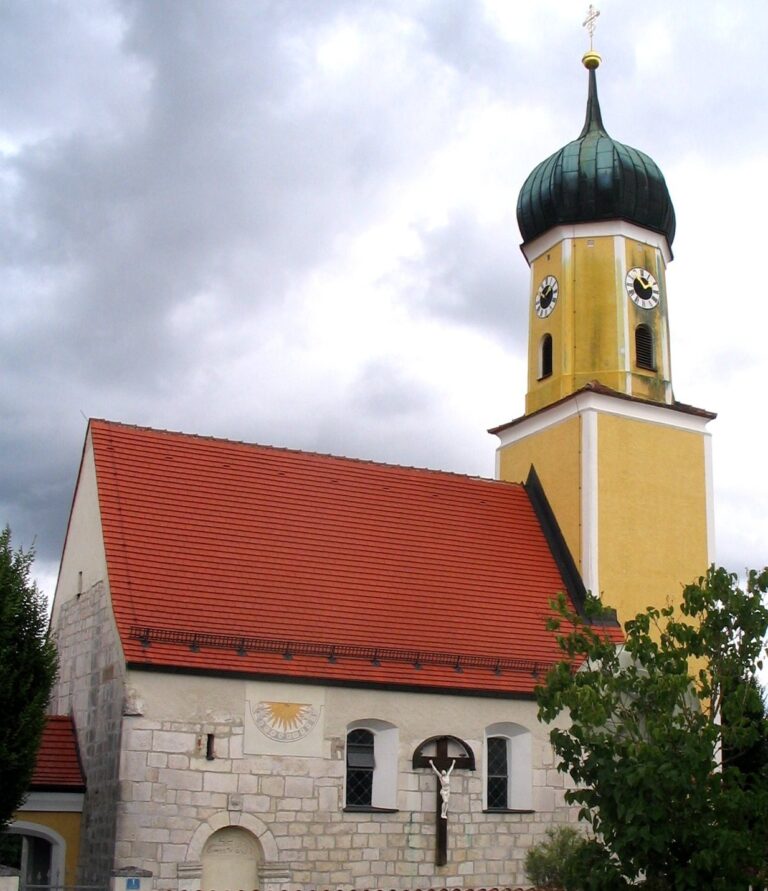
The complex includes the chapel of St. Karl Bartholomäus.
Garden and archaeological area
The layout of the castle garden dates from the nineteenth and twentieth centuries. Subsurface medieval and early-modern features lie in the area of the castle and its predecessor buildings. The associated archaeological area also includes a farmyard and a Baroque garden, a garden in a European style prominent in the seventeenth and eighteenth centuries.
Brewery
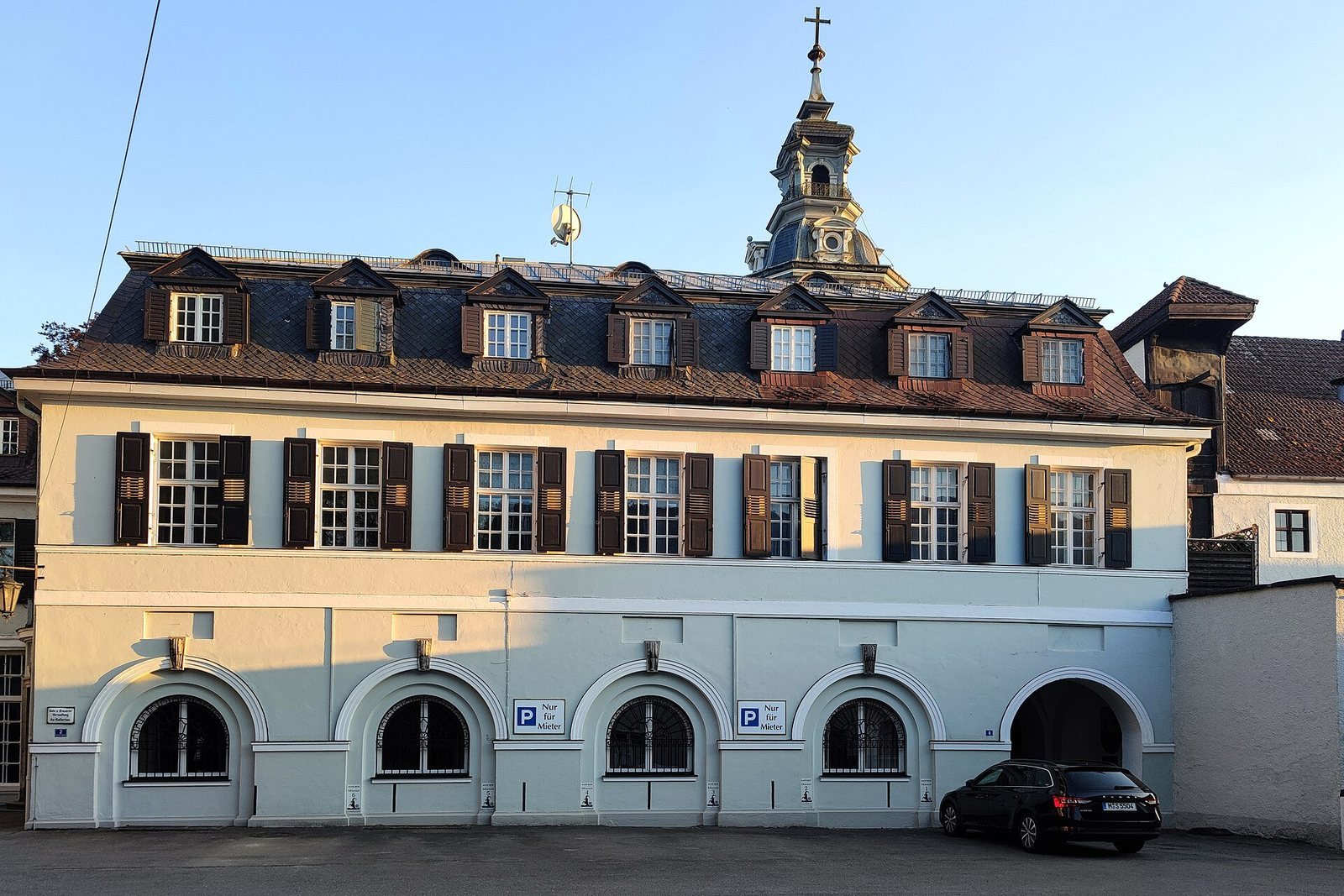
The castle grounds contain the Au-Hallertau Castle Brewery, formally named Schlossbrauerei Au/Hallertau Willibald Freiherr Beck v. Peccoz GmbH & Co.