Schloss Kronwinkl: Medieval Castle and Preysing Family Seat

Site at a Glance
- Rating
- 4.4
- Popularity
- Very Low
- Country
- Germany
- Primary era
- Early Modern
- Eras represented
- Medieval, Early Modern, Modern
- Civilizations
- Duchy of Bavaria, Holy Roman Empire
- Site type
- Military
- Remains
- Castle
On this page8 sections
History
Schloss Kronwinkl is a medieval castle in Germany, at Kronwinkl in the municipality of Eching, Lower Bavaria. Its first stone fortification was built on a low hill beside the Isar no later than the thirteenth century, although its origins may reach back to the twelfth century. The castle became the ancestral seat of the Preysing family and has remained in their possession since its construction. Its elevated position helped control the surrounding valley and an important trade route between Munich and Landshut.
The medieval Preysing seat
The castle was enlarged and rebuilt through successive phases. During the later Middle Ages, members of the Preysing family held senior positions at the court of the Wittelsbach dukes, the ruling dynasty of Bavaria for much of the medieval and early-modern period. The family received the hereditary office of Schenk, a court position traditionally associated with serving wine or managing the ruler’s cup. One branch gained a baronial title in the fifteenth century, and the family later became imperial counts.
The central fortified tower formed the core of the early stronghold. A Gothic ring wall enclosed it and created a small inner courtyard containing a forge, storage buildings, and stables. By the fourteenth century, the tower had a high entrance, while its upper floors also provided living quarters for the owning family.
From fortress to residence
During the sixteenth century, the Preysings began replacing the fortress-like residential conditions with more comfortable quarters within the walls. Further extensions in the sixteenth and seventeenth centuries produced the four-wing enclosure that defines the present complex. A slightly detached building on the northeastern side, known as the Lehenstock, was erected around 1580. The term refers to a projecting or separately positioned building associated with a castle estate.
Schloss Kronwinkl remained a residential seat through the first half of the twentieth century. The castle suffered no serious damage during either the Thirty Years’ War, the seventeenth-century conflict that brought widespread military destruction across much of Europe, or the Napoleonic Wars. Fighting during the Second World War likewise did not affect the complex.
Twentieth-century use and protection
In the early 1970s, the castle was first rented by the Munich social commune Highfish, which was associated with Uschi Obermaier and Rainer Langhans. It was later used by Amon Düül II, a German krautrock band associated with the experimental rock movement that developed in West Germany during the late 1960s and 1970s. The band released the piece Kronwinkl 12 in 1972.
The present owner is Caspar Graf von Preysing-Lichtenegg-Moos. In 2012, Ladislaja Gräfin von und zu Eltz, born Mayr von Melnhof, moved into the castle. Schloss Kronwinkl is privately owned and has been restored. It is protected as a listed architectural monument, while underground medieval and early-modern remains, the castle chapel, and the castle park are protected as an archaeological monument. The Bavarian State Office for Monument Protection monitors the condition of the protected structures.
Remains
The fortified core
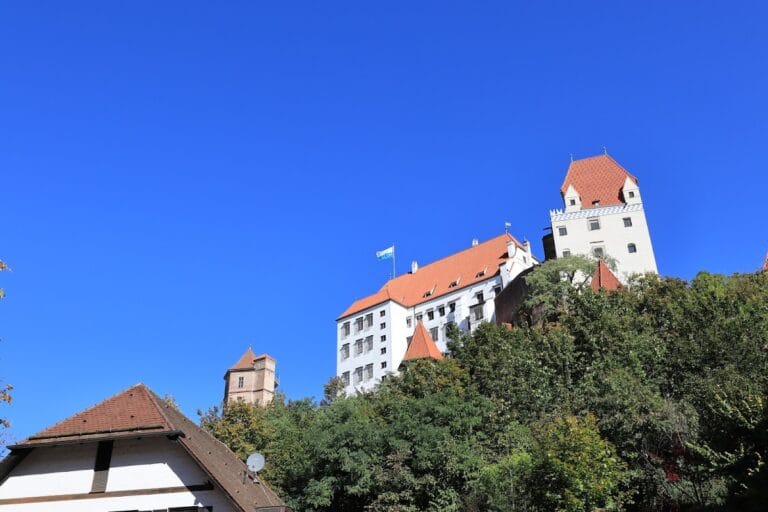
Schloss Kronwinkl stands on a small hill or elevated riverbank on the southern bank of the Isar. The castle is arranged as four adjoining buildings forming an elongated rectangle around a small inner courtyard. Its present form developed from the earlier fortress, whose outer walls were replaced by the residential wings. The main entrance lies on the south side, where a drawbridge formerly provided access.
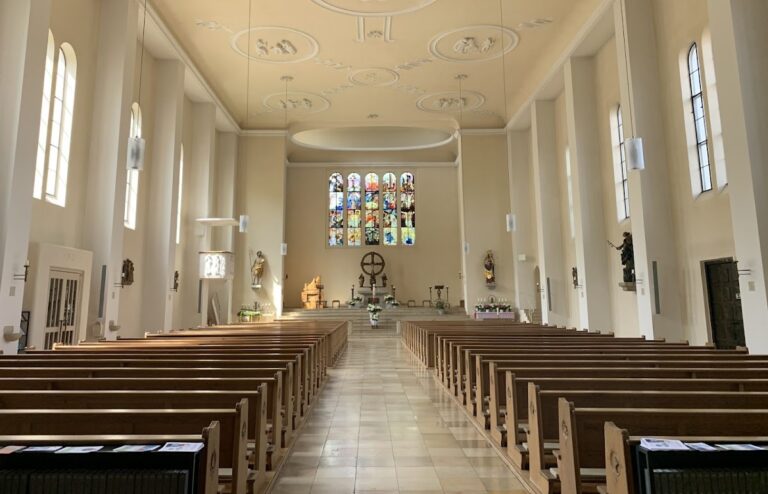
The central Bergfried, the principal fortified tower of a medieval German castle, dates from the foundation period in the twelfth or thirteenth century. Its upper levels once served both defensive and residential purposes, and the tower contains the castle chapel created in 1673. The chapel retains its furnishings. The original Gothic ring wall surrounded the tower and enclosed the early courtyard, where the working and storage buildings stood.
Residential buildings and courtyard tower
The residential wings were added against the Gothic ring wall during the sixteenth and seventeenth centuries. Their construction transformed the earlier fortified enclosure into a more comfortable residence while preserving the arrangement around the courtyard. The Lehenstock, erected around 1580, stands slightly apart on the northeastern side of the complex.
A tall round tower with a conical roof occupies much of the southwestern part of the inner courtyard. Some upper sections of the façades have stepped gables dating from 1860. The castle buildings and tower are plastered and painted white.
Park and associated buildings
A landscaped park surrounds the castle. It was laid out in the eighteenth century, and ponds and avenues were added during the nineteenth century. The park is an English landscape garden, a style designed to appear natural through lawns, plantings, paths, and water features rather than a rigid geometric arrangement.
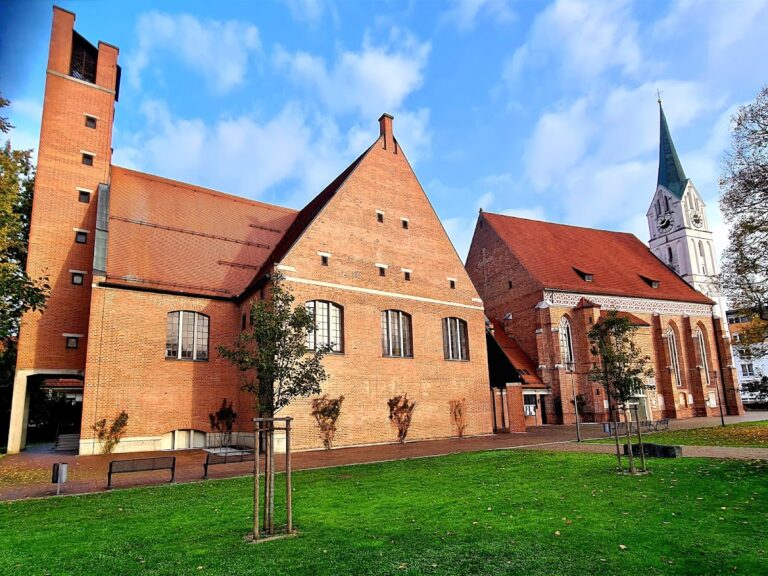
The associated Schlosswirtschaft and the Catholic Church of St Stephen stand as separately protected buildings connected with the castle complex. The church was built southeast of the main complex and is also referred to as the lower castle chapel.
Nearby sites