Schallenberg Castle: A Medieval Hilltop Castle in Upper Austria
Site at a Glance
- Popularity
- Medium
- Country
- Austria
- Primary era
- Medieval
- Eras represented
- Medieval
- Civilizations
- Holy Roman Empire
- Site type
- Military
- Remains
- Castle
On this page7 sections
History
Origins and the Schallenberg Family
Schallenberg Castle is a ruined hilltop castle at Kleinzell im Mühlkreis in Upper Austria, Austria. It probably dates to around 1231 and belonged to the Prince-Bishopric of Passau, an ecclesiastical territory whose bishop also exercised secular rule.
The earliest explicit written record of the castle and the Schallenberg name is from 1260. In a pious endowment, a donation for spiritual benefit, to Wilhering Abbey, the document identifies Heinrich as a Passau ministerial, a member of the service nobility attached to a ruler. It gives his name in Latinized form as Heinricus de Salhinberc; Heinrich had previously been known as de sancto Ulrico. The name Schallenberg may come from a Middle High German word for willow or from the Old German personal name Salcho.
By about 1300, Heinrich’s family no longer held the castle as a grant from a lord, but its members continued to use the name von Schallenberg. In 1360, Passau Bishop Gottfried von Weißeneck pledged the castle to Ulrich Leutzeneder. Dankwart Herleinsperger took over the pledge in 1378 and was also formally invested with the castle by the bishop.
Destruction and Change of Lordship
In 1428, the lordship returned to the Schallenberg family through Kaspar von Schallenberg. Hussites, followers of the Bohemian religious reformer Jan Hus, destroyed the castle in 1440 during the fifteenth-century conflicts known as the Hussite Wars. The family nevertheless held the lordship until 1660.
The castle’s decline probably began under Christoph von Schallenberg, who died in 1542. Around that time, the seat of the court moved to the Schallenberg court office at Praitenfelden, an administrative centre for the lordship. In 1660, Count Christoph Ernst von Schallenberg sold the castle and court seat to Count Otto von Seeau zu Helfenberg.
Ruin and Later Ownership
Georg Matthäus Vischer, a seventeenth-century Austrian topographer and engraver, depicted the castle as a ruin in 1674, with some walls still standing. The Schallenberg family regained ownership in 1982, and the complex was placed under heritage protection.
Remains
Site and Defences
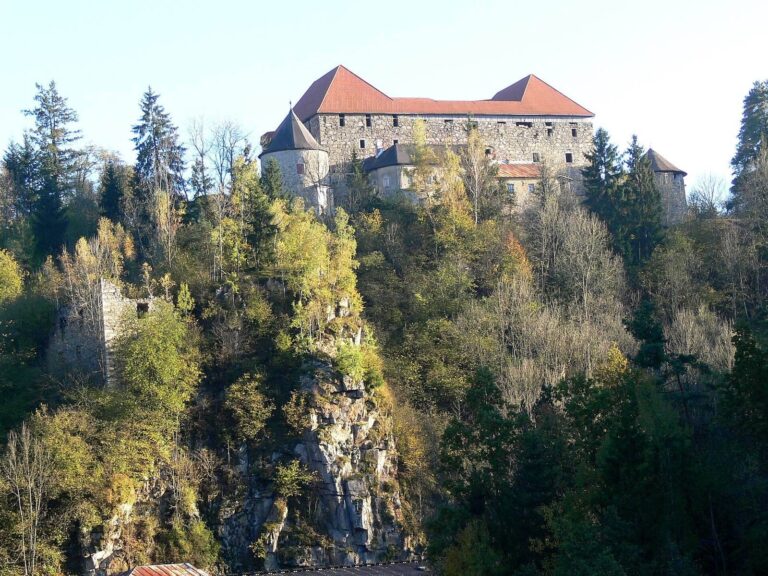
The castle site lies about 434 metres above sea level on a long rocky spur within a tight bend of the Great Mühl, above the river. Steep slopes down to the water protected it on three sides, leaving access from the southeast. Two deep transverse ditches cut into the rock survive as parts of the enclosure.
Surviving Masonry
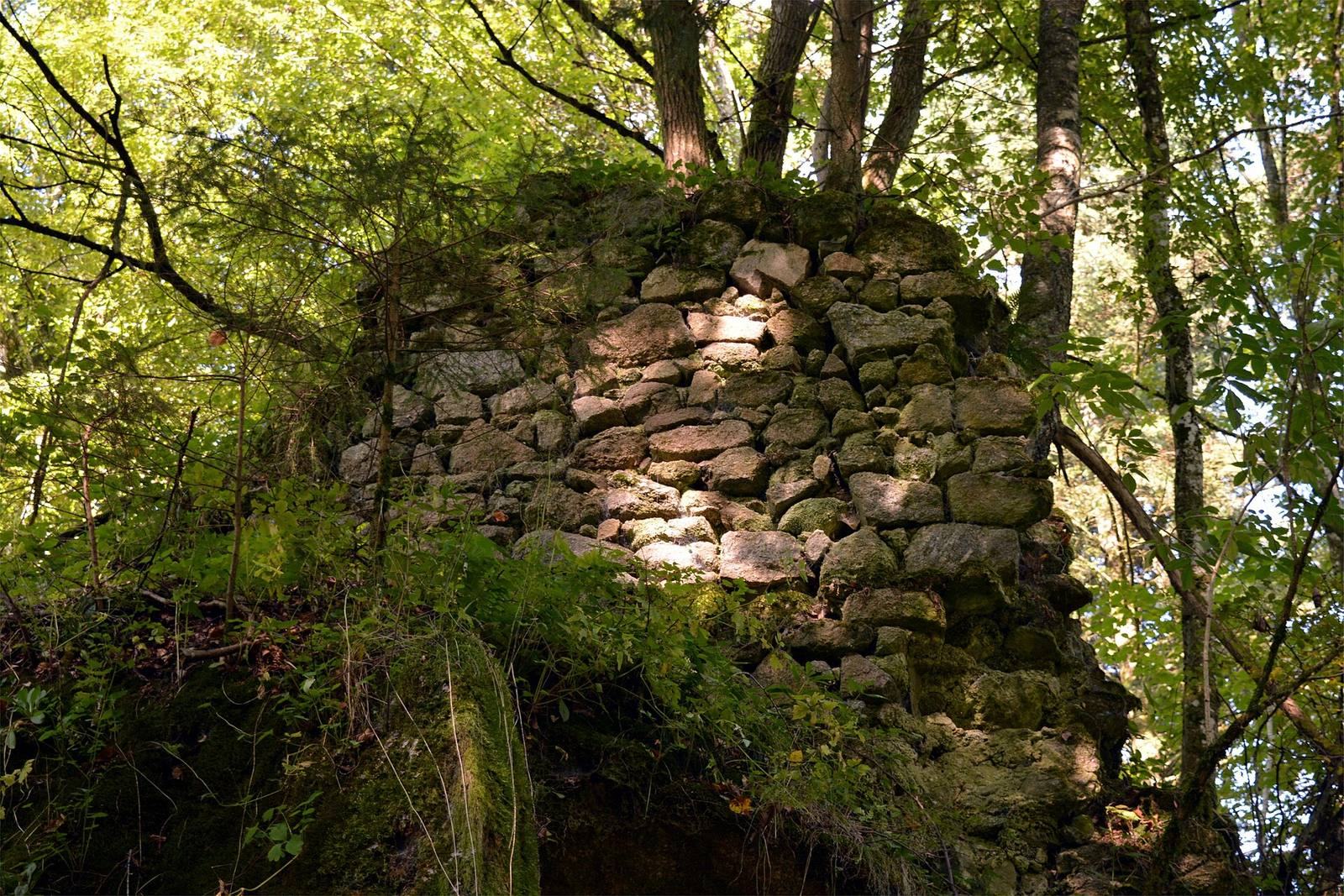
Traces of masonry include a heavily overgrown standing section about 2 by 3 metres in size and approximately 1.5 metres high. It is built from well-dressed stones.